

An Astonishing Discovery
Of no consequence whatsoever

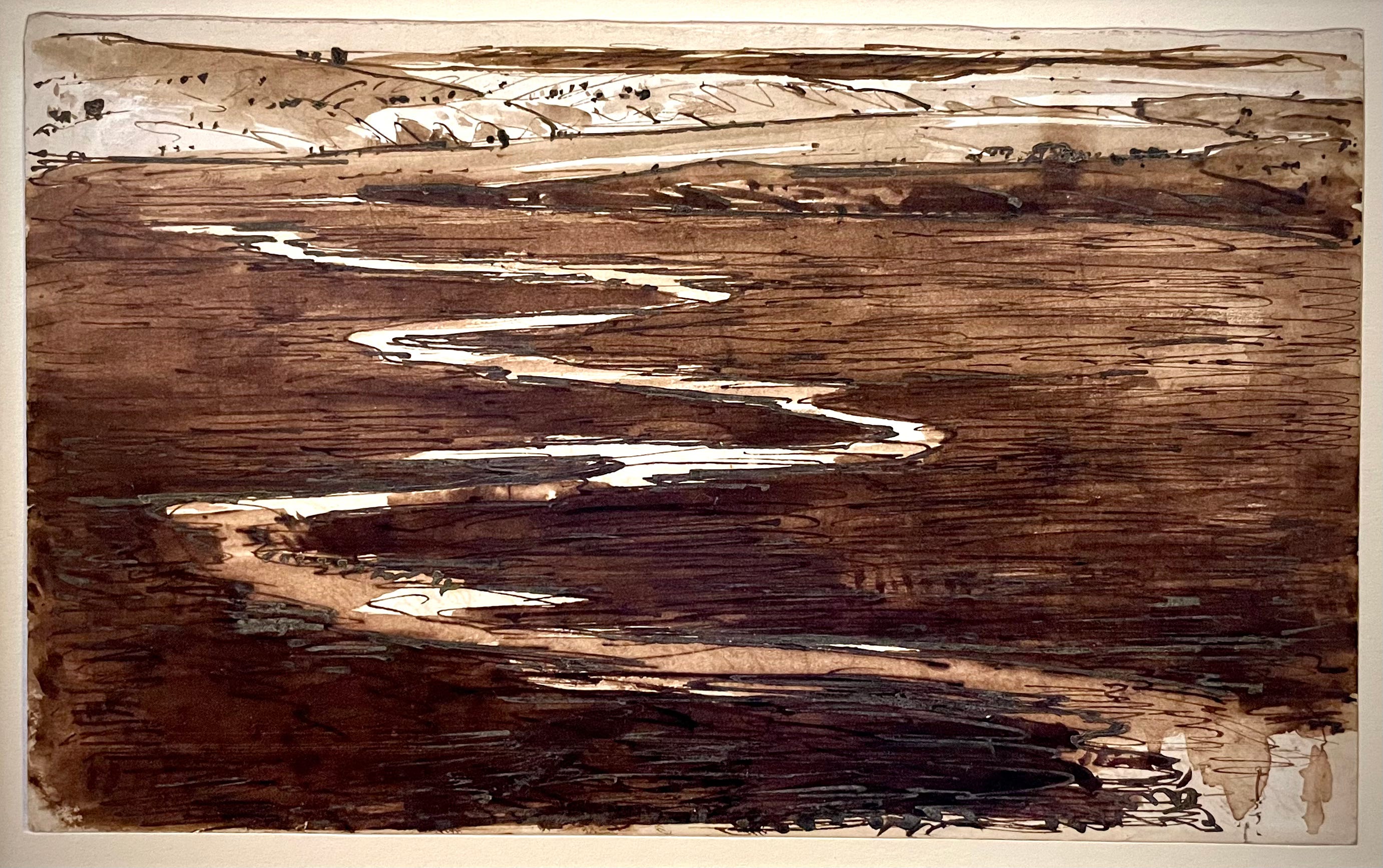
LATE IN LIFE the painter John Constable made a drawing of the river Stour, snaking off into the Vale of Dedham.
It was done in pen and ink, in July of 1830 clearly from memory (Constable was in London throughout the month), and was intended for the printmaker David Lucas, who was making a series of mezzotints of Constable’s paintings.
I went to see the drawing in the Fitzwilliam Museum last week.
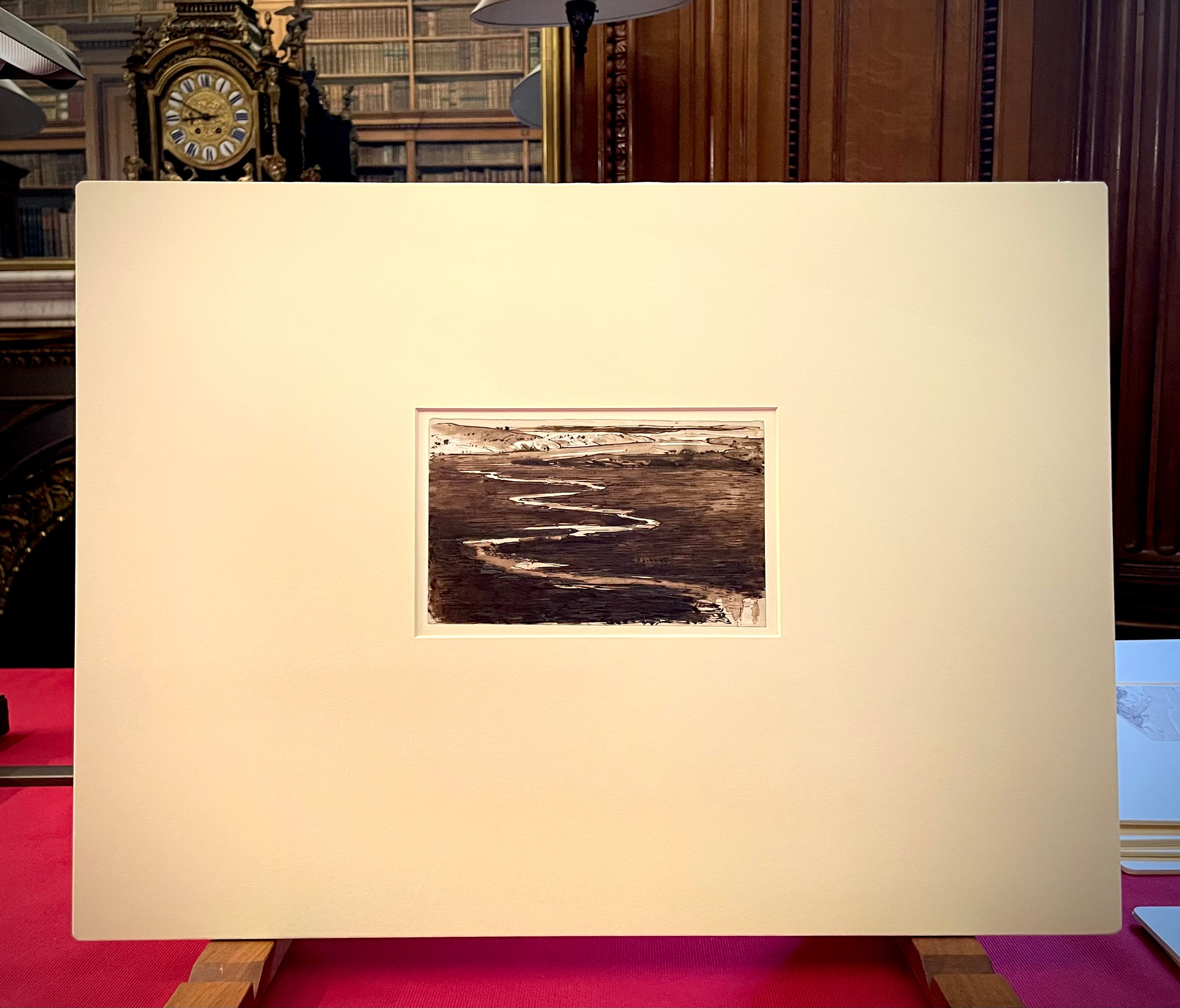
Wonderful, isn’t it? So simple and moving, and quite unlike anything else Constable made.
The best, and pretty much only source for it is Reg Gadney’s brilliant 1976 catalogue of the Fitzwilliam drawings (one of my top five reads on Constable) — helpful as Gadney transcribes the quite illegible inscription on the back, made by Lucas:
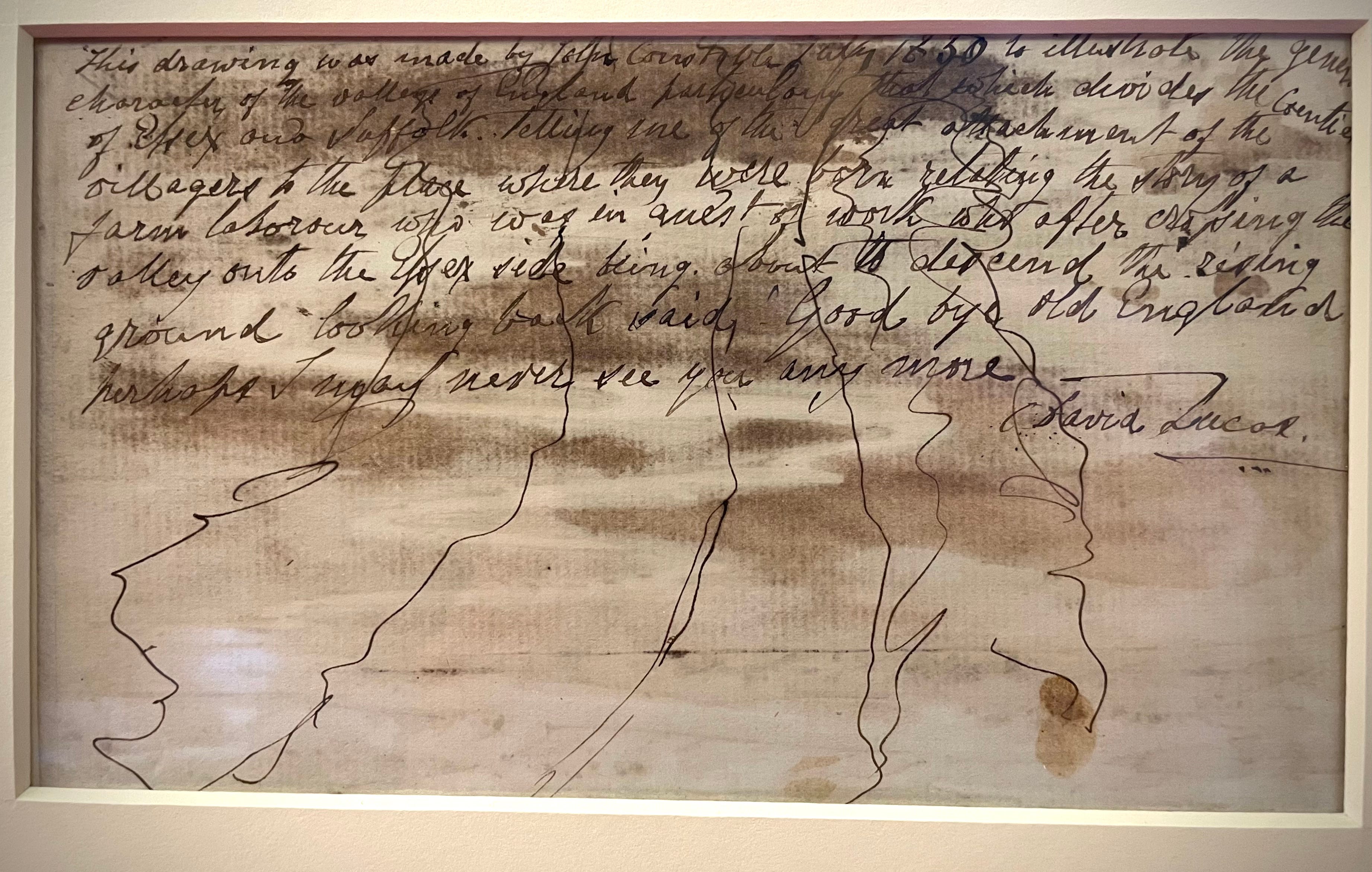
‘The drawing was made by John Constable July 1830 to illustrate the general characters of the valleys of England particularly that which divides the counties of Essex and Suffolk. Telling me of the great attachment of the villagers to the place where they were born relating the story of a farm laborer [sic] — who was in quest of work who after crossing the valley on the Essex side being about to descend the rising ground looking back said, “Good-bye old England perhaps I may never see you any more’.
It shows how important the river Stour was for Constable, not just as a motif for his paintings, but as a thread that ran through his life.
The Stour was the subject of the six great canvases that he painted over a period six years, each six foot long — so-called the ‘six-footers’.
Strangely enough, no book on Constable actually lists these six paintings, so that if you are starting out on your research, you have to dig quite deep to find out which they actually are, and in what order they were painted.
So for your convenience (and before we get onto the Astonishing Discovery), here they are, with a bit of commentary:
1. THE WHITE HORSE, 1819
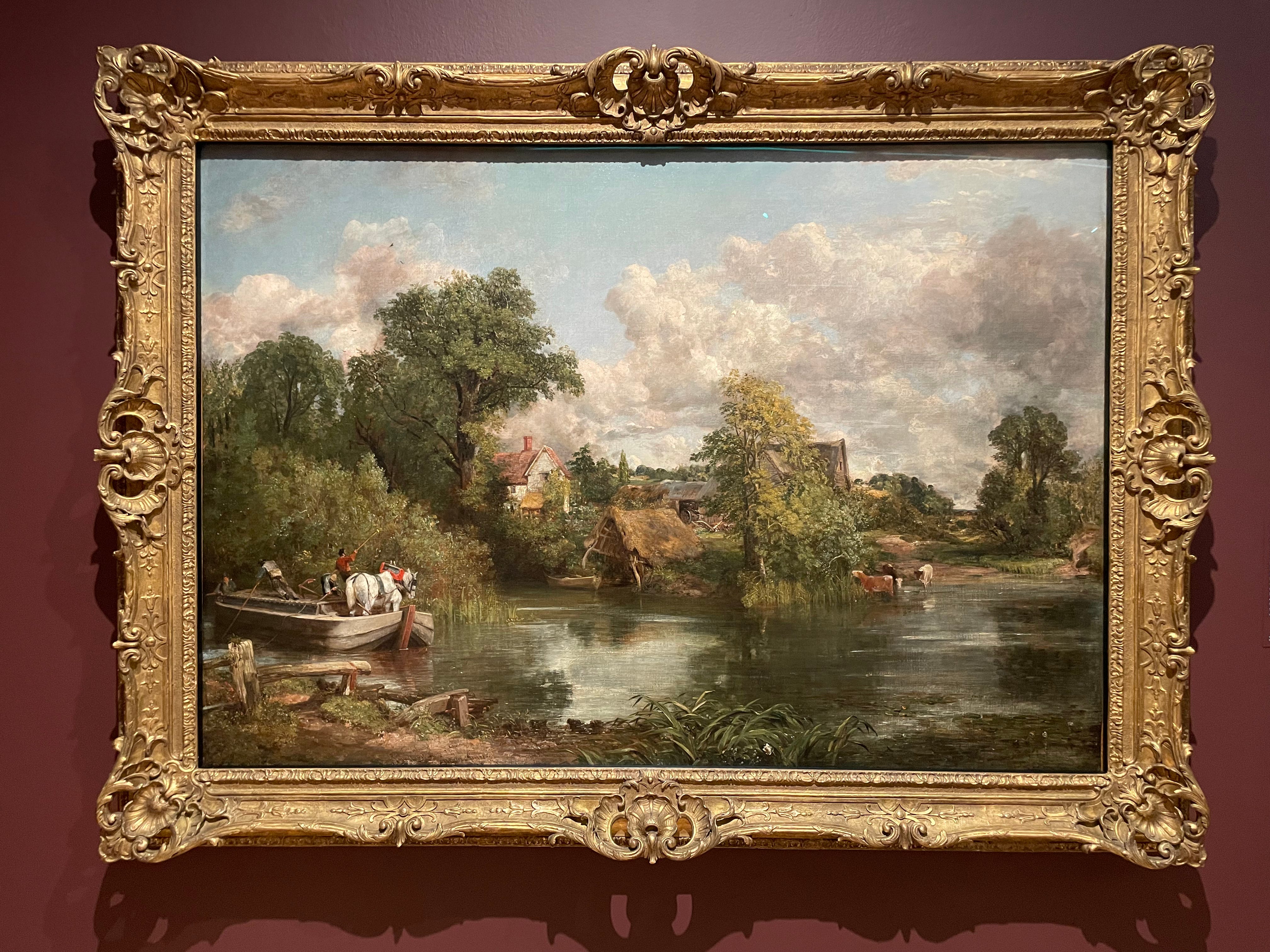
This rather cluttered composition shows a white horse being transferred by barge across the Stour from one tow path to another, with Willy Lott’s famous cottage (which Constable painted many times, but never once showed Lott himself, despite the fact that he was always in) standing in the distance, and a thatched tumbledown boathouse in the centre.
Constable is getting to grips with making such a large painting, working out how to balance the composition and give a believable sense of space.
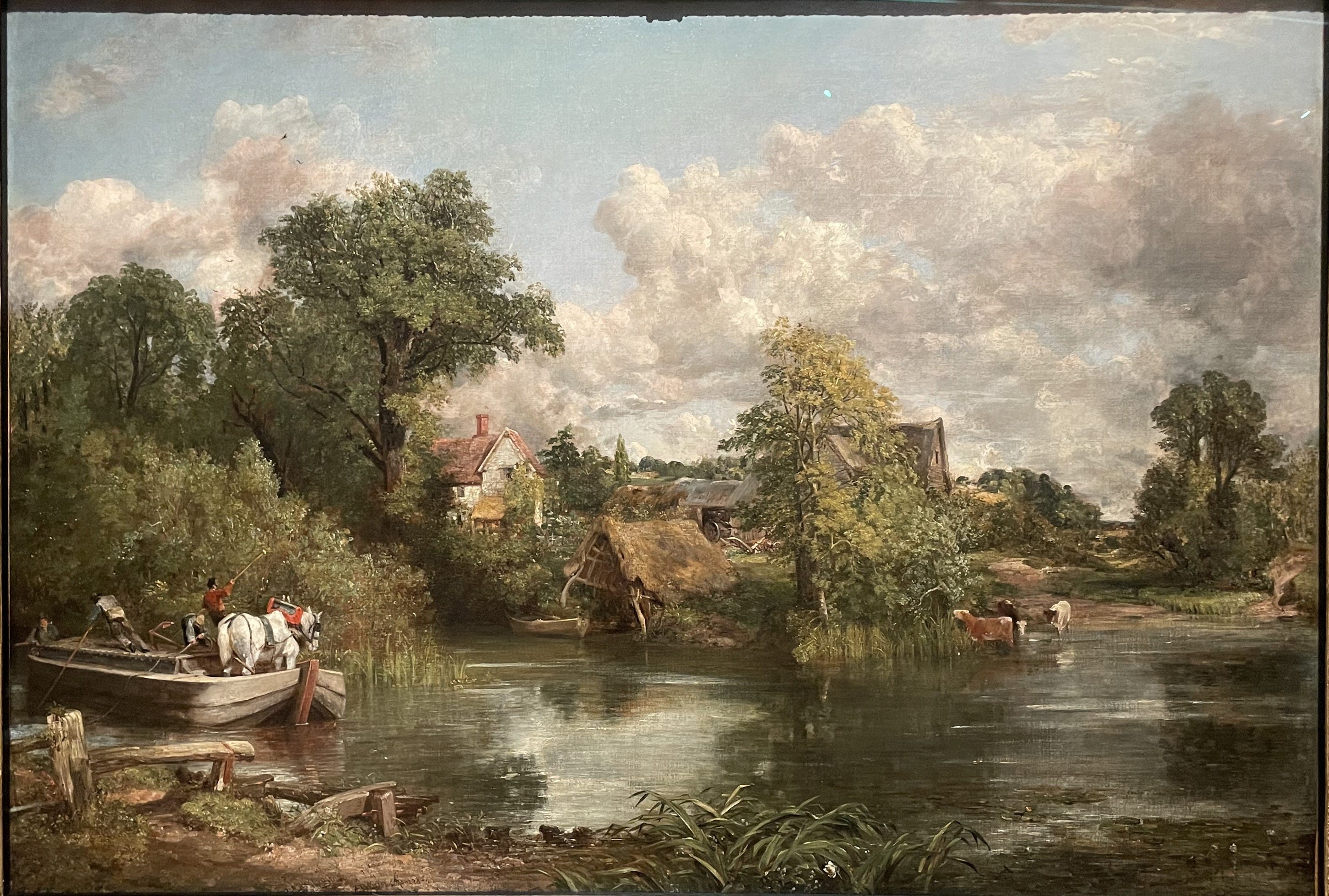
Constable painted it in London, in his Keppel Street studio, at the age of forty-two. It was well-received at the Royal Academy Summer exhibition, and led to Constable finally being elected an A.R.A. (Associate of the Royal Academy), after years of trying.
‘There are generally in the life of an artist’, Constable wrote to his great friend and supporter John Fisher ‘perhaps one, two or three pictures, on which hang more than usual interest — this is mine’. Fisher bought the painting and changed the title from ‘The Farm Yard’ (very boring) to ‘The White Horse’ (stylish).
It usually hangs in the Frick Collection in New York, this photograph is from the exhibition Turner & Constable currently at Tate Britain.
2. STRATFORD MILL, 1820
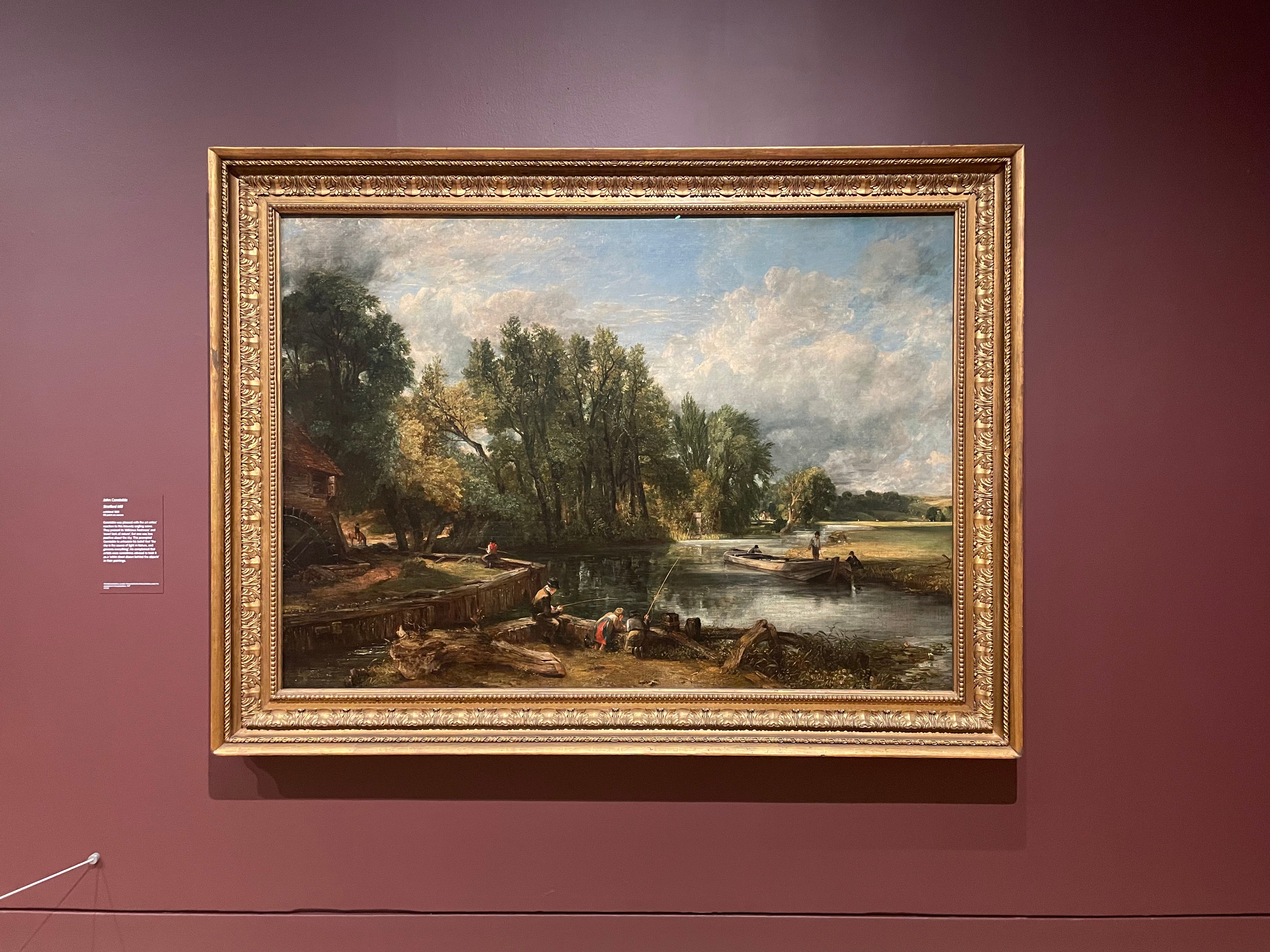
Stratford Mill was a paper mill well upstream from Flatford. For Constable this was almost like saying ‘Goodbye to Old England’, so far was it from the centre of his world (by about a mile).
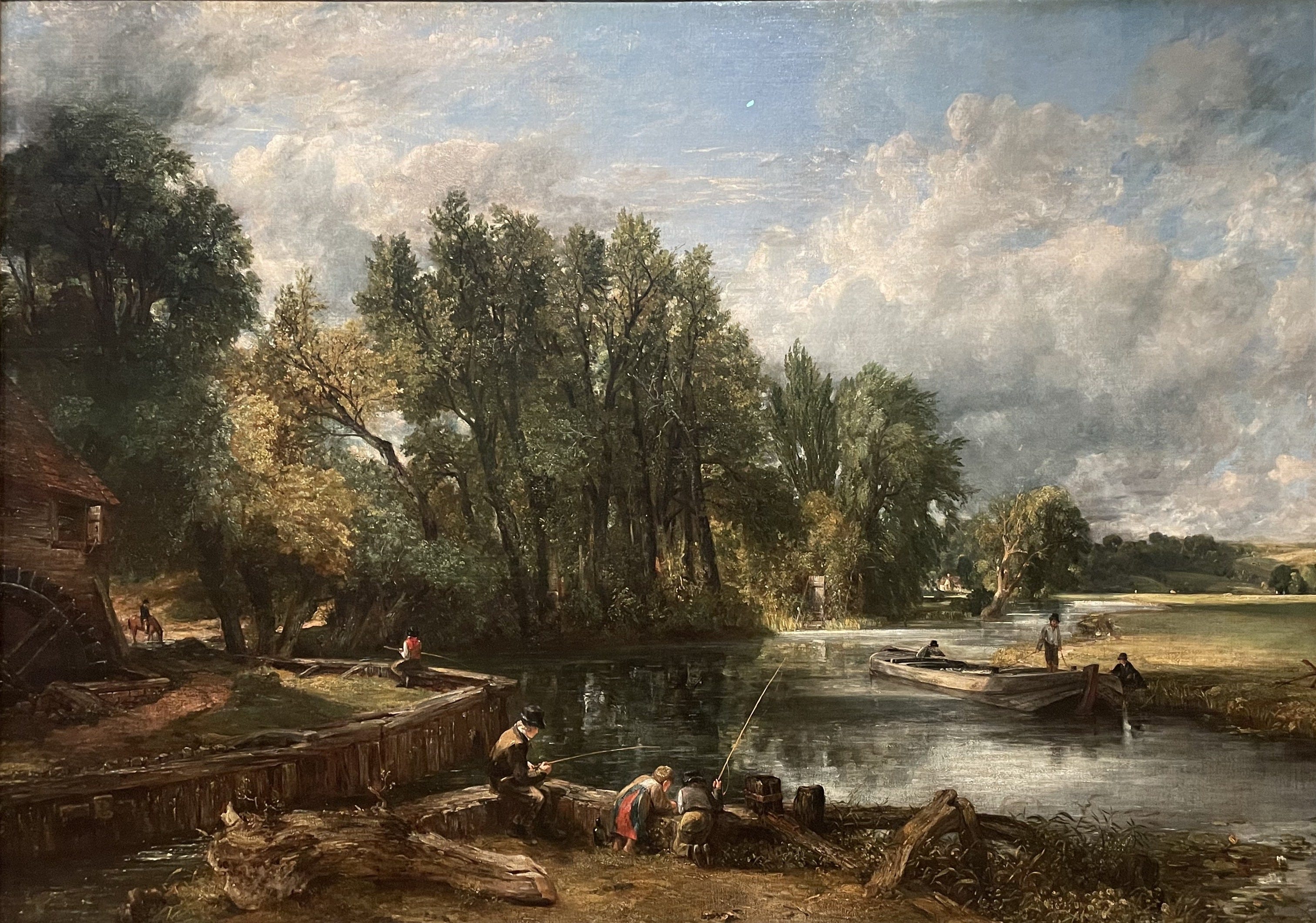
It is a less satisfying painting, with the all-too picturesque detail of the boys fishing in the foreground, and the rather empty landscape to the right. It is the only one of the six-footers to include a mill, which would be interesting if we could see more of it. I like the anchor lying on the bank to the far right, and the view of a house through the trees, but find it hard to linger. Constable talked to Lucas of the ‘natural history’ of the painting, for example that the leaning trees at the centre indicated the direction of the prevailing wind. It’s as if he is trying to find some resistance to painting itself.
It was acquired (in lieu of tax) by the National Gallery in London in 1987, and is also currently at Tate Britain, hanging alongside The White Horse.
3. THE HAYWAIN, 1821
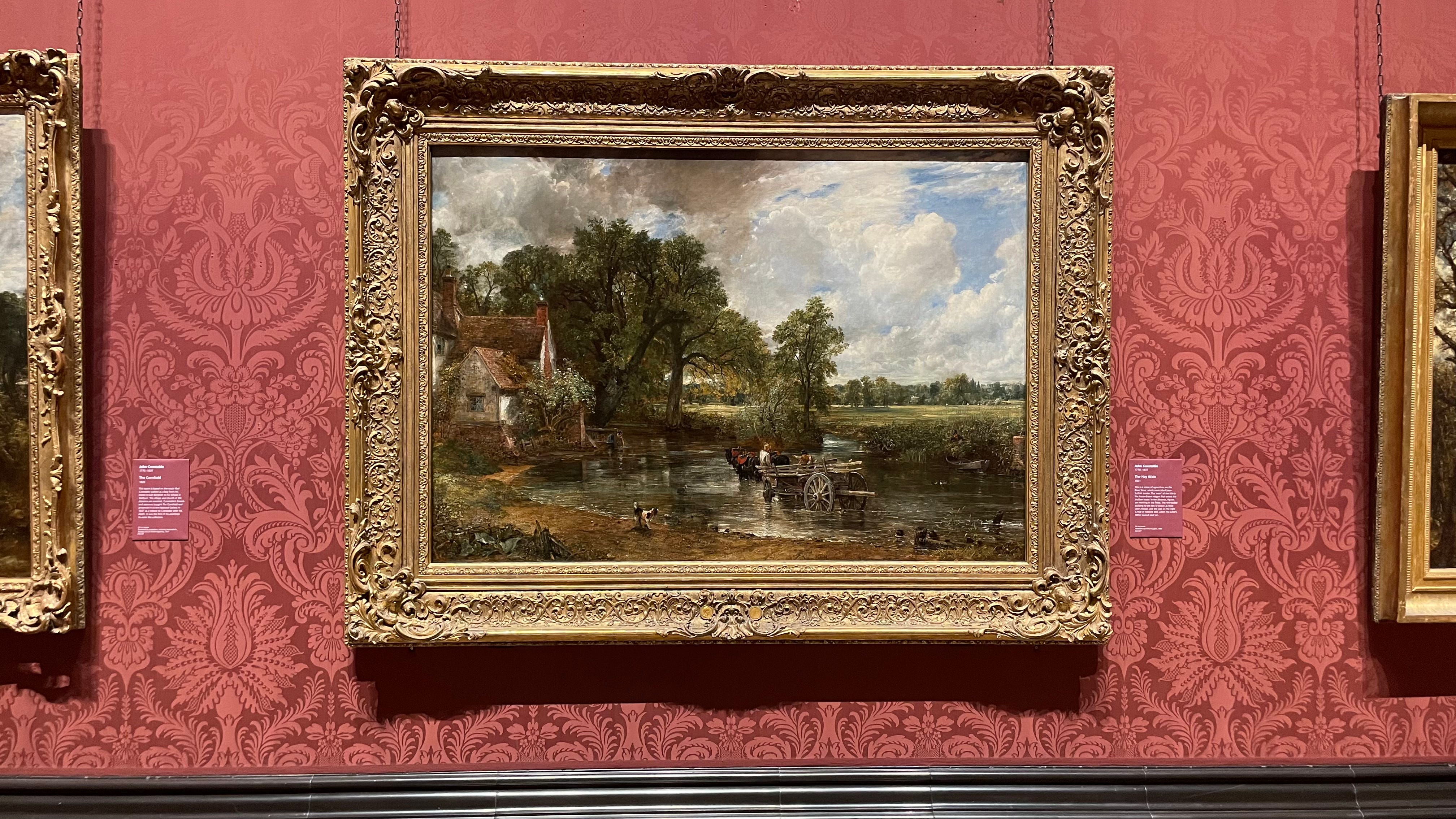
“On 1 April [1821] Constable wrote to Fisher to announce that his wife had been safely delivered on 29 March of her third child, Charles Golding, and that ‘my picture goes to the Academy on the tenth. The staircase window had to be taken out at Keppel Street for its removal…”
— Graham Reynolds, The Later Paintings and Drawings of John Constable, 1984, p.68
You can see what a leap Constable makes with the third in the series — somehow the whole scene comes together in a way that seems entirely natural and uncontrived (although of course it is).
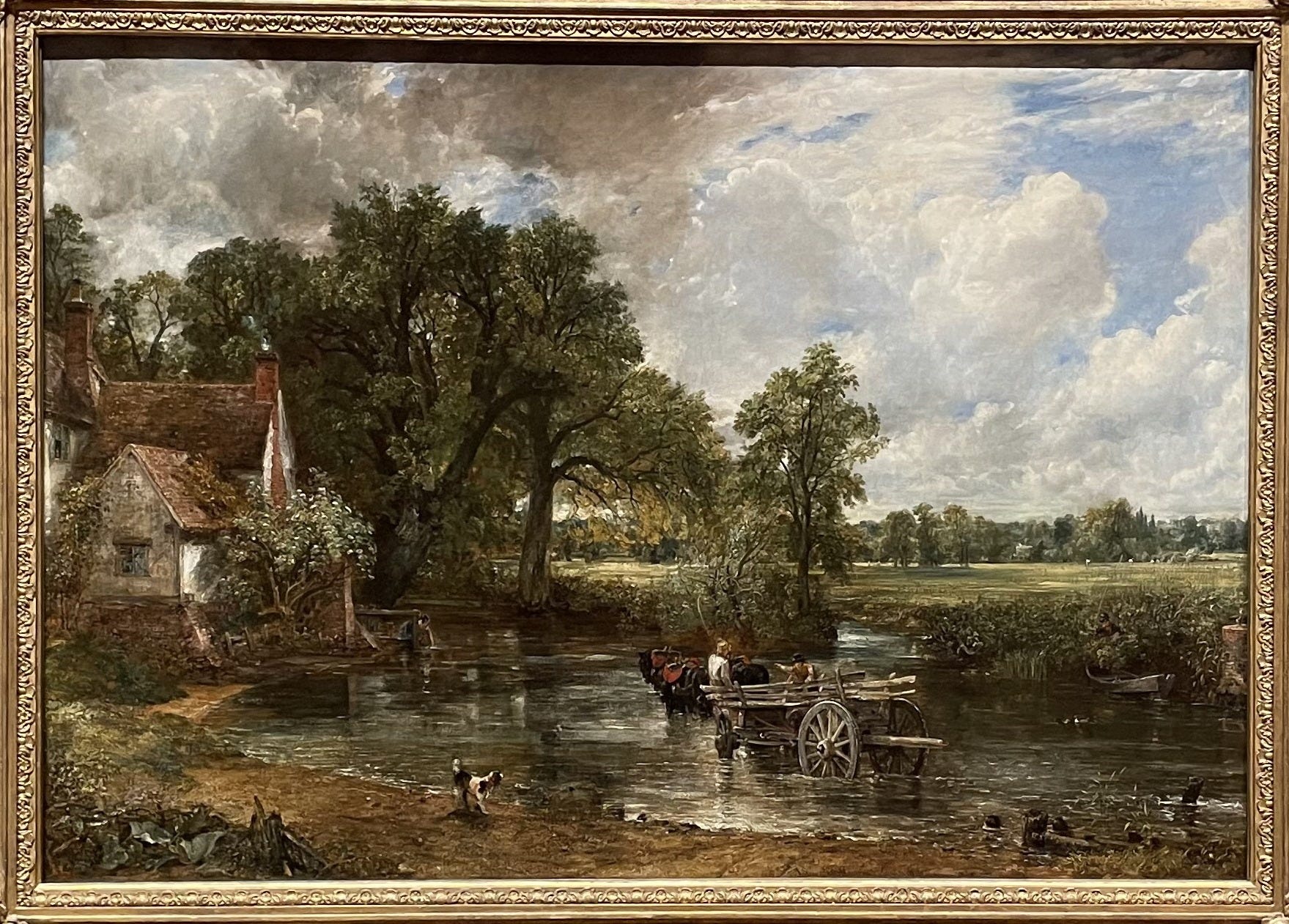
Of all paintings in the world this is the one that most dies in reproduction. Everything that counts about it — the sheer size and heft of it, the density of its constellations of paint, the great welling whole of flickers and touches, each hard as a diamond, everything that counts about it is lost to the camera's lens.
You really have to encounter it in reality, on the walls of the National Gallery, where it currently hangs. It crackles with energy and feels urgent and alive — it is the world at first-hand, rather than a mere ‘work of art’.
It is also a painting more than any other that needs to be stalked, viewed from afar, from the next gallery, glimpsed at from the side, rather than confronted straight on.
4. VIEW ON THE STOUR NEAR DEDHAM, 1822
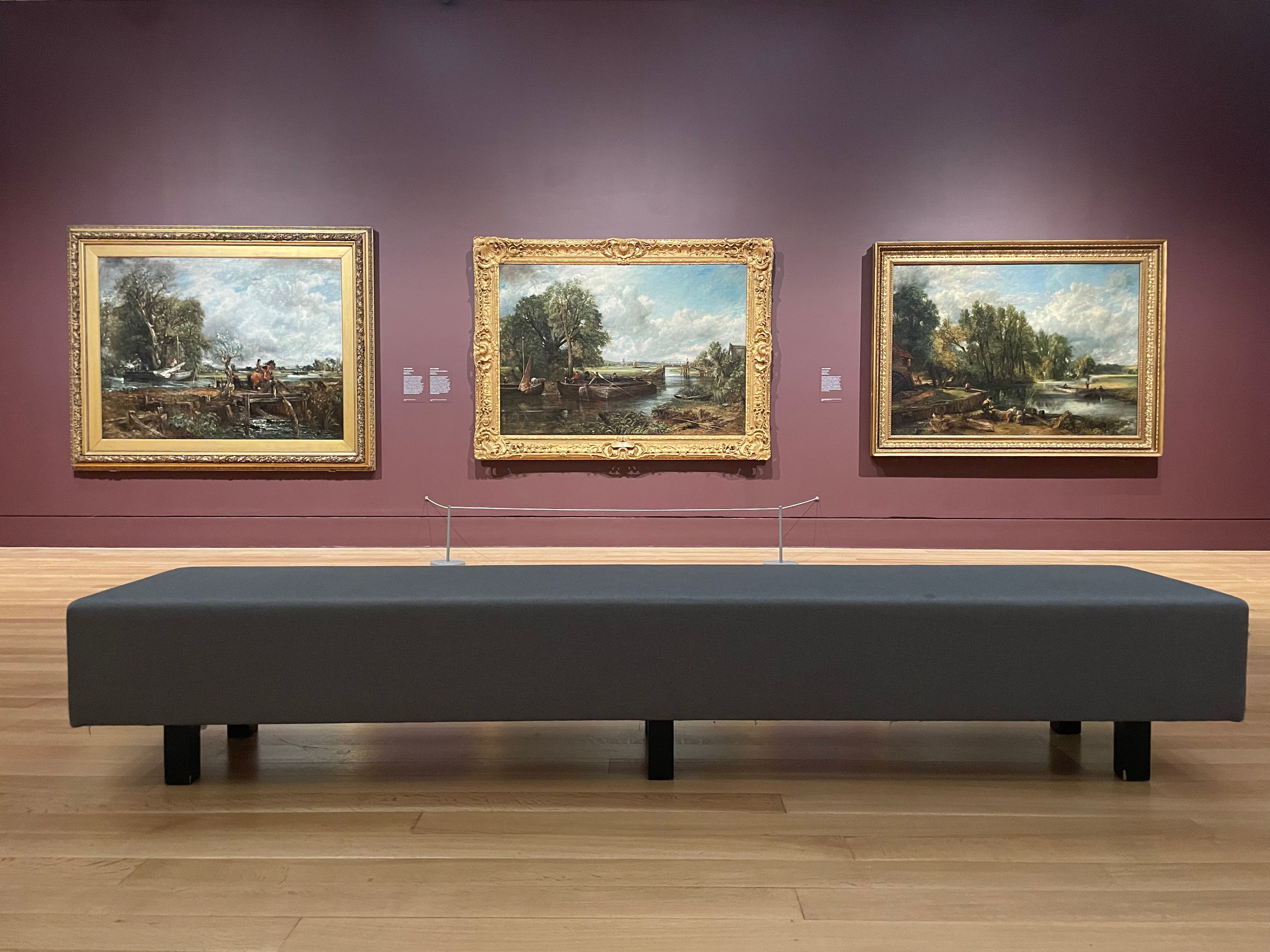
The one in the middle here, hanging in Turner & Constable at Tate Britain. It otherwise lives in the Huntington Library in San Marino, California, where it must feel like a fish out of water.
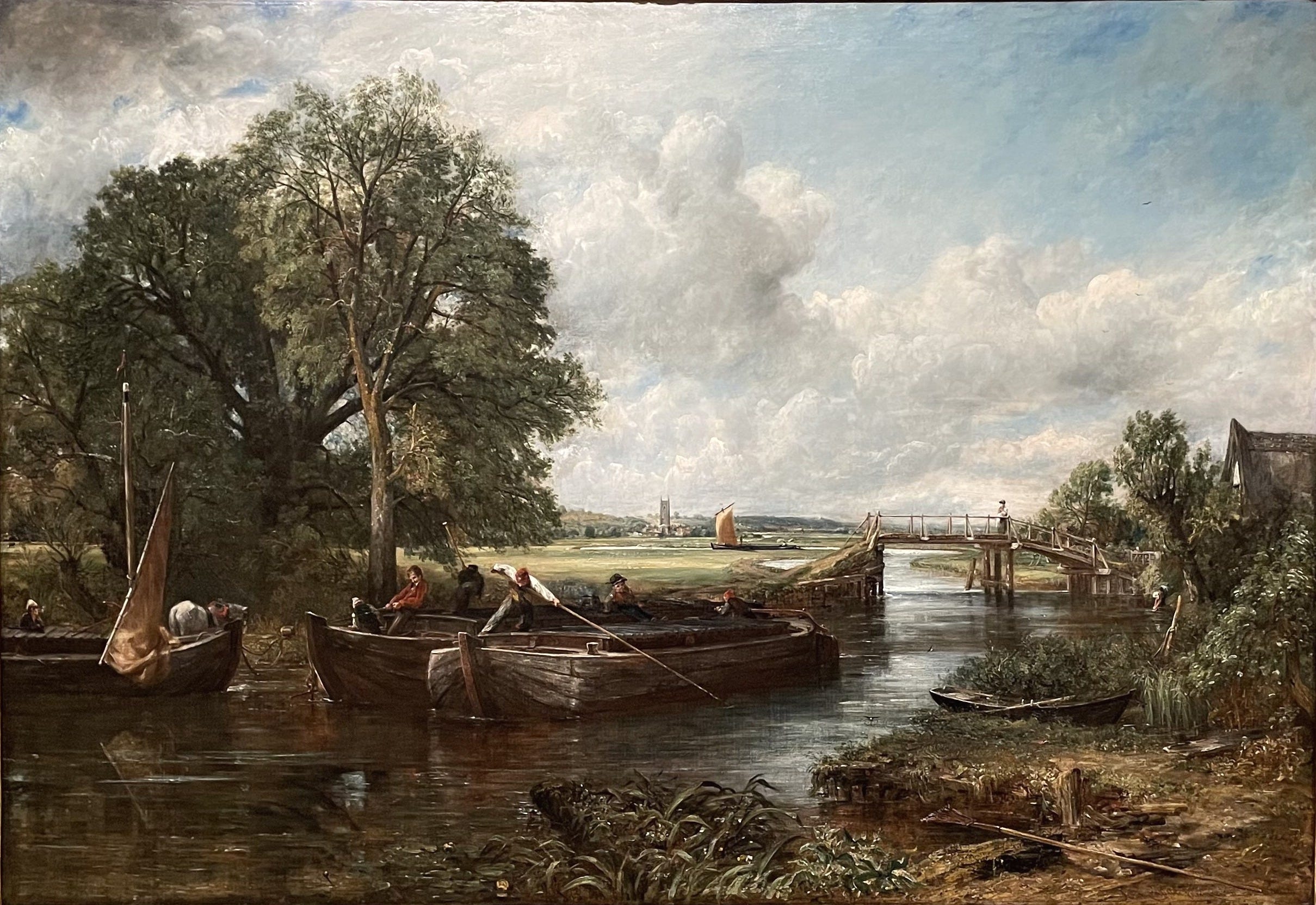
Constable has walked back up the Stour, towards Dedham (the tower of Dedham church is in the distance), and shown a scene of barges being manoeuvred to enter Flatford lock. I’ve just realised while typing that the title is misleading - it is in fact much nearer Flatford than Dedham, which is just out of view on the left.
Another barge, with its sail up, has just come out of the lock. The river snakes off, and in the distance is a barge with full sail, the colour of which is an astonishing melba-orange, impossible to capture in photographs, but which reminds me of that famous little patch of yellow on the wall of Vermeer’s View of Delft.
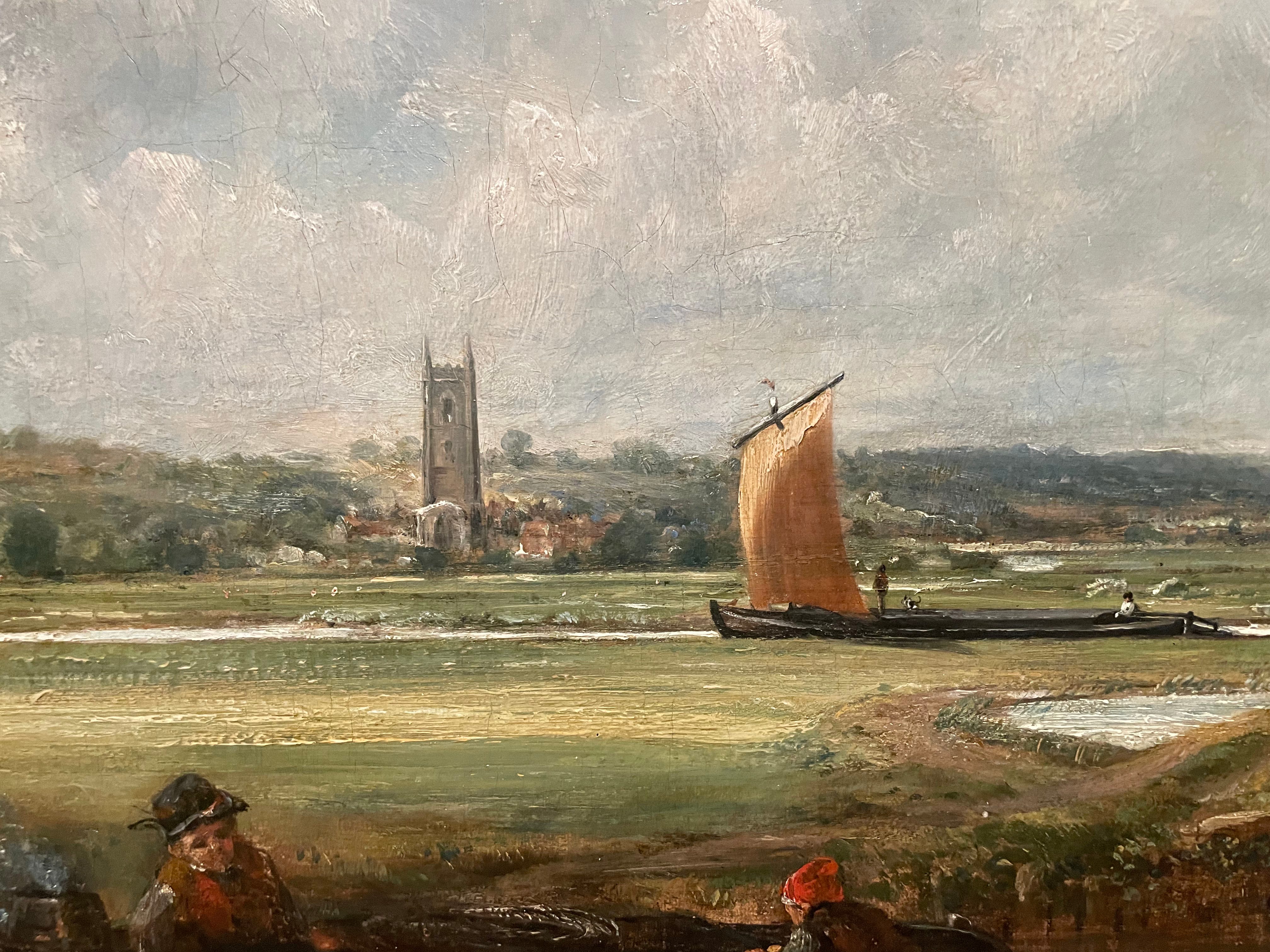
View on the Stour near Dedham is less monumental than The Haywain, but has that sense of a painting full both of philosophical symbols but also of living sounds — the world happening before our eyes.
It also somehow goes better with the first two paintings, The White Horse, and Stratford Mill, as a river scene with the focus on a distant view rather than a strong foreground subject.
5. THE LOCK, 1824
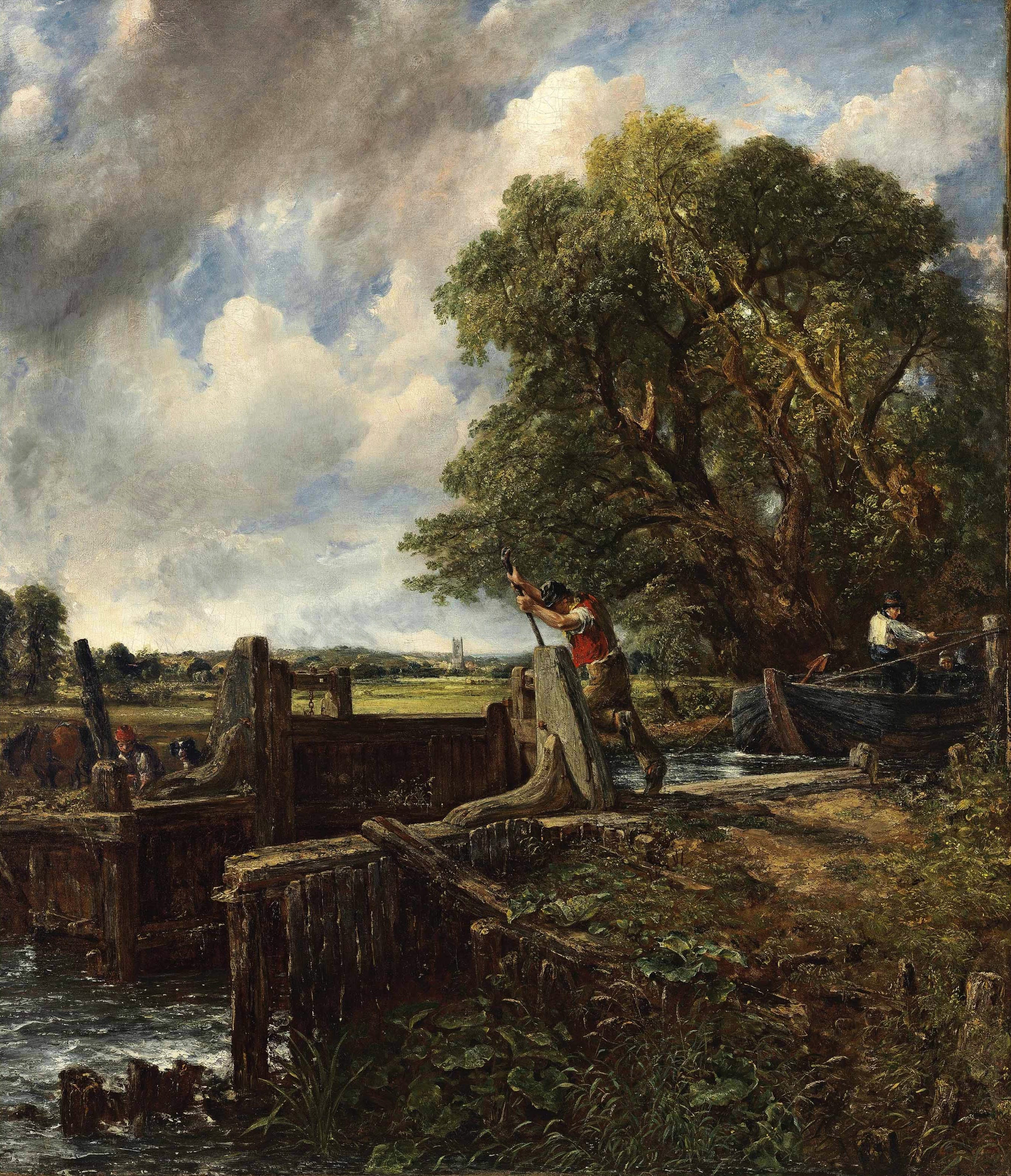
The Lock is the odd one out. For a start it is vertical, rather than horizontal. It shows a lock keeper opening the wooden shutters on Flatford lock, so that the boat in the lock can continue its journey towards the sea.
When a few years later Constable painted another version of this scene (this time horizontal), he put the boat on the other side, preparing to enter the lock and be raised to the upper level of the Stour. It was, appropriately enough, his diploma piece for admission as a fully-fledged Royal Academician — an image of going up in the world.
The heroic image of a rural worker is quite unique for the time, and augurs a great many paintings of the nineteenth century, from Courbet and Millet to Menzel, that show the landscape as a working environment.
You might never have seen The Lock. It is not hanging in Turner & Constable, and I wonder if it will appear in any of the Constable shows this year. It used to hang in Madrid, in the Thyssen-Bornemisza Collection, but was sold at auction in 2012 by the widow of Baron Thyssen, his fifth wife, Carmen. It went into a private collection (ie, bank vault), and we may never see it again. Thanks, art market!
6. THE LEAPING HORSE, 1825
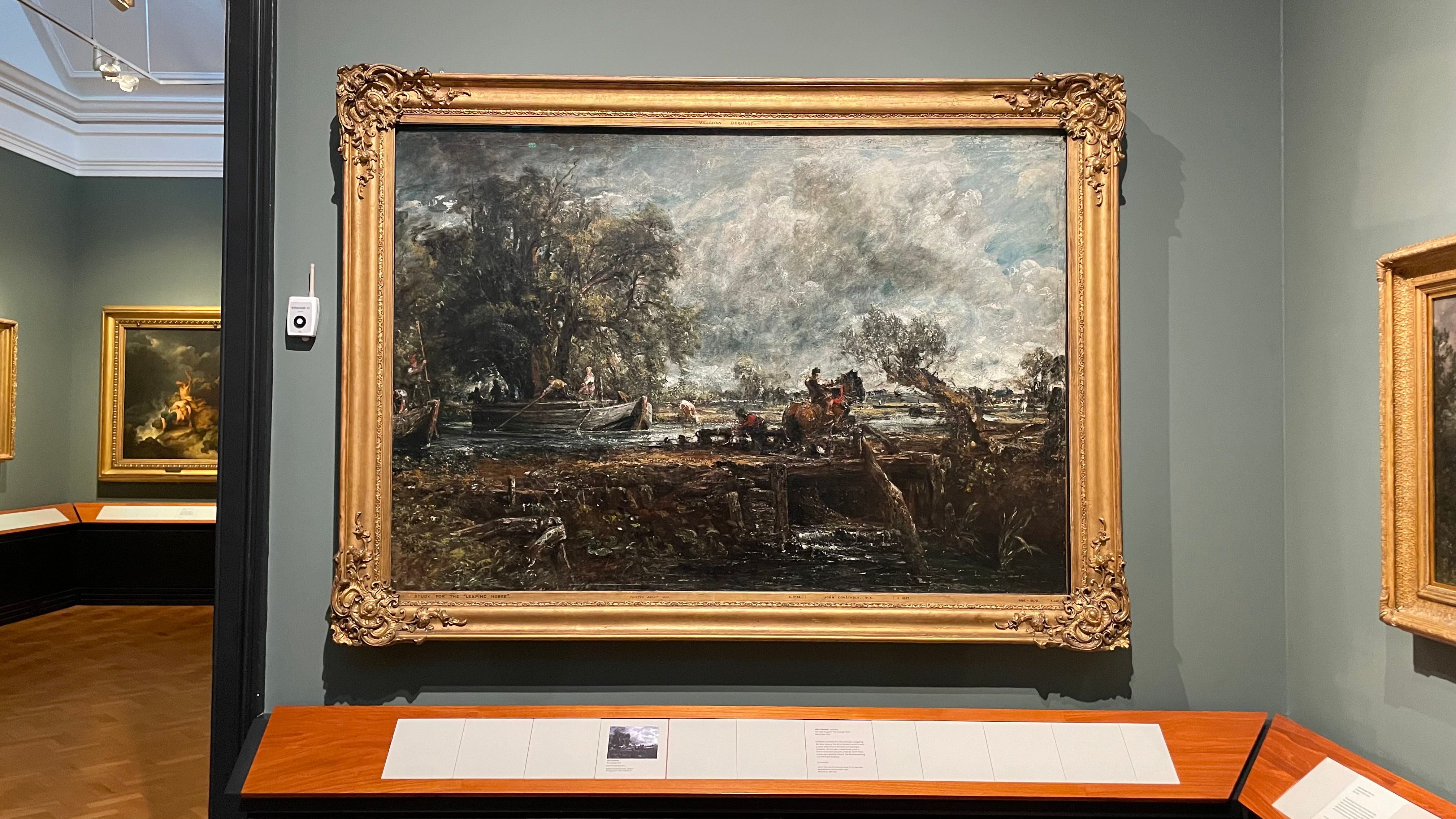
At the risk of complicating matters, I should say at this point that there are not six six-footers, but twelve. For each painting, Constable created a full-scale ‘sketch’, that is, a painting in which he freely worked out the composition in terms of lights and darks, objects and spaces, summoning the mood of the painting without having to worry about how it appeared on the walls of the Royal Academy (which, remember, was still at Somerset House in those days, in the ‘great room’ where you can now see paintings such as Cézanne’s Montagne Sainte-Victoire with Large Pine [see last week’s post]).
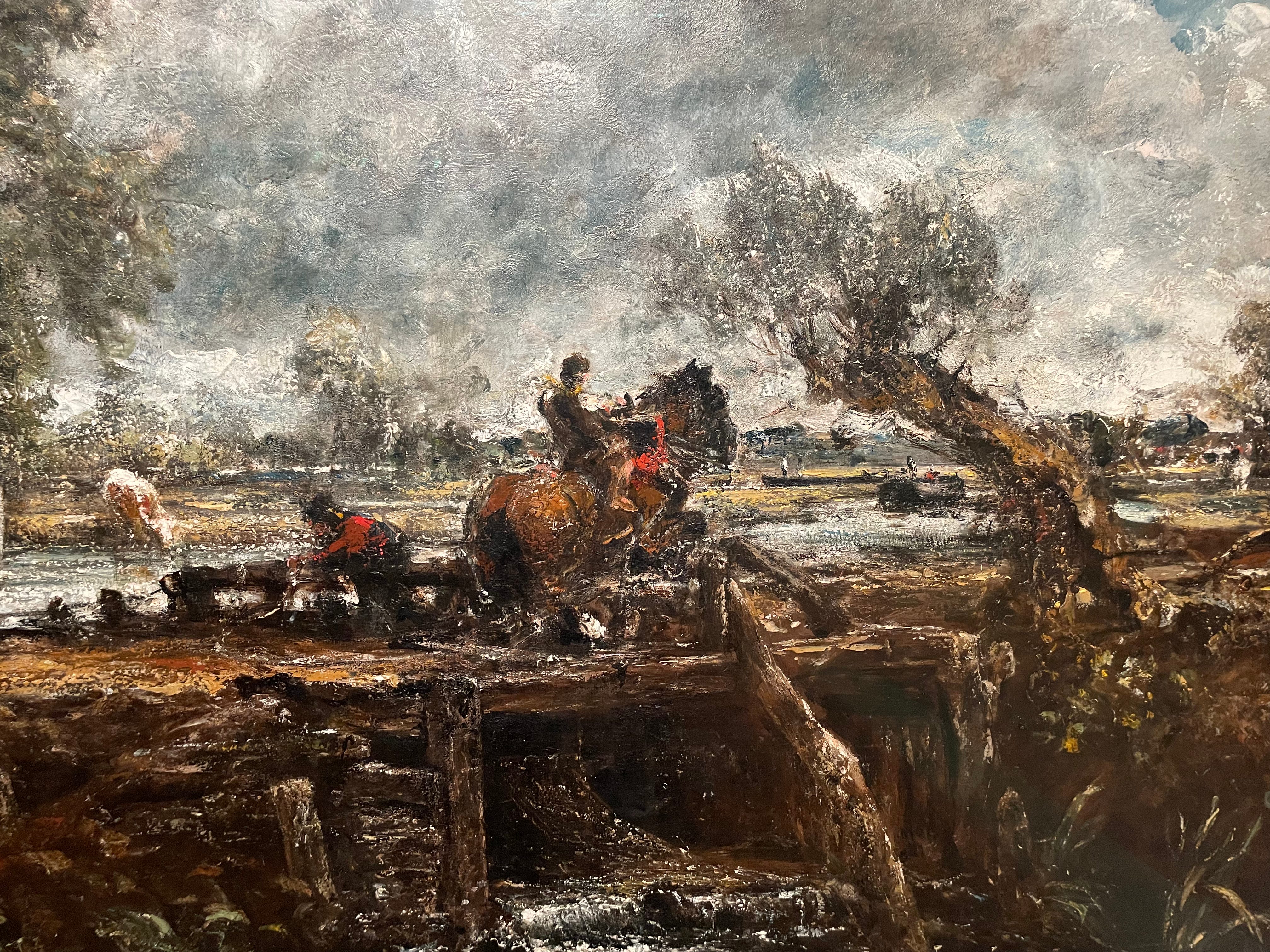
The final six-footer, The Leaping Horse, is the moment when the sketch and the finished painting converge. They were so alike that Constable was unsure which to send to Somerset House in April of 1825. The version pictured here, hanging at the V&A, is the full-scale sketch, and the better of the two. Lucian Freud (who by the way allegedly convinced Baron Thyssen to buy The Lock, while painting his portrait) called it the ‘greatest painting in the world’. Freud wasn’t always right, but here he had a point.
It is the sheer weight of atmosphere, and the feeling of a painting that seems so close to an experience of the world — but is also entirely made up (to put it rather crudely).
There is no sense in which it is done from observation, and yet it brings us closer to the Stour than to any other work in the series. It is as if, for Constable, the subject had finally returned, and his journey up the Stour to the source of art was complete.
THE ASTONISHING DISCOVERY Of No Consequence Whatsoever is simply this,
