

Constable at 250

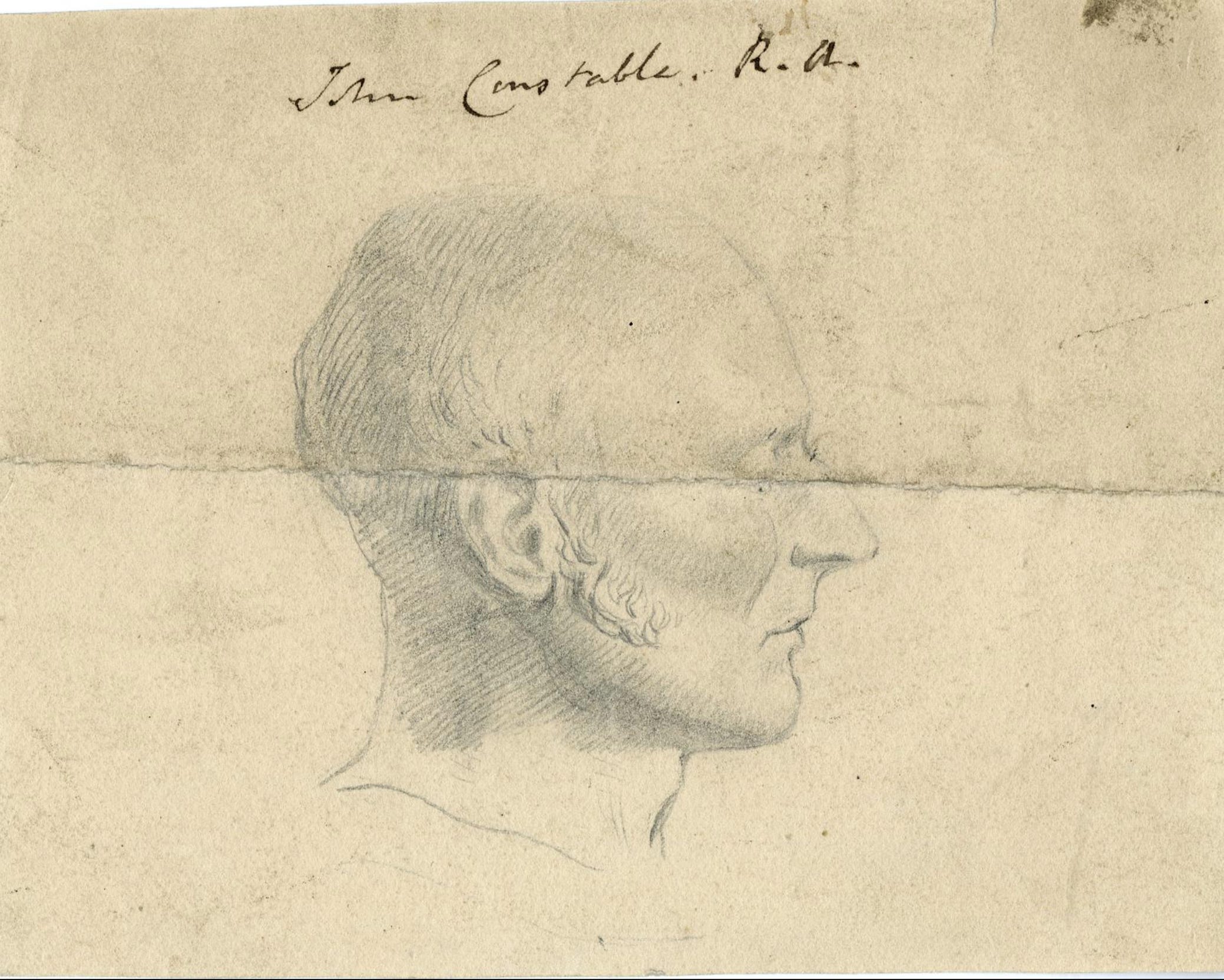
THIS YEAR IS CONSTABLE 250: the quarter of a millennium since the birth of John Constable (1776-1837).
You might be forgiven for missing it. There are no exhibitions at the National Gallery or Royal Academy in London, the two places with the strongest links to the artist.
Instead, there are a series of smaller shows and events, notably at Christchurch Mansion in Ipswich and Gainsborough House in Sudbury. Two of the great Suffolk paintings, The Hay Wain and The Leaping Horse are travelling to the county for the first time. Celebration enough.
And then there is the two-hander at Tate Britain, Turner & Constable. Rivals and Originals. It is certainly an eye-opener. Beyond the skin-deep story of rivalry, what is abundantly clear from the display (at least for me) is, surprisingly, how very little Turner has to say to us nowadays, how frankly repetitive and one-dimensional his paintings appear compared to the sheer depth and astonishment of Constable.
Constable was the greatest English painter, the figure who stands between Titian and Cézanne in the European tradition. He was a great philosophical painter, whose every brushstroke is loaded with thought and feeling, and whose paintings are endlessly fascinating for their sense of inner life, of contradiction, of a constant questioning of what it is to paint, what it is to look. There is no escapism in his painting, no vague romanticism, no reliance on ‘effects’ or technique. Every moment is a meant moment.
Constable was also a great European artist. Not surprising that his achievement was first recognised by artists from abroad, by Theodore Géricault and Eugène Delacroix, and it’s moving to think of these young bohemians from Paris seeing the deep worth of Constable’s painting, returning home to spread the news, so that a few years later Constable was awarded a gold medal at the Paris Salon.
Constable never travelled to Paris (he never left Britain), but then neither Géricault nor Delacroix ever visited Dedham Vale, and probably cared little about British landscape scenery. But at the Royal Academy in 1821 (Géricault), and the Paris Salon in 1824 (Delacroix), they knew they had seen the future.
It was not the subject matter that they saw, but rather Constable’s ethos of painting, his way of putting brush and palette knife to canvas, his close and feeling analysis of the visible world. They saw paintings that were themselves worlds, images to be measured in square miles rather than surface footage. They saw the texture of reality from an artist who spoke directly of his time, rather than of poetic fantasy anchored in the past. Perhaps they felt something deep down, which only nowadays we can really understand, which is that the path to ‘abstraction’ that Turner laid out was only ever a detour.
The purpose of great art is to speak directly of reality, the actual, rather than imagined experience of living — an experience that is fraught with contradictions and restlessness, and might bring with it a glimpse of redemption, or not. This is the voice of Constable.
He was the last great artist of an older world, a world on the threshold of the photographic (which he never saw), on the very eve of train travel (which he never experienced), on the brink of the discoveries of Darwin, and of Faraday and Edison, and before the rise of democracy in the West, none of which he knew.
And yet in the directness and originality of his painting he laid down a prophecy of these worlds, and all that was to come, the darkness and the light.
More than ever, we need works of art that tell us the truth about things, works of art that actually speak: works of art that are not entertainment, but news.
And this is how the paintings of John Constable appear now, on the two hundred and fiftieth anniversary of his birth.
I’ve been looking forward to seeing the exhibition at Tate Britain (until April 12th). I’ve never seen Turner as an ‘escape’ artist, but it’s also interesting to read different and highly informed points of view. Will delve deeper into Constable’s work now.
Lovely piece of writing.