

Fireworks
A Journey to Japan

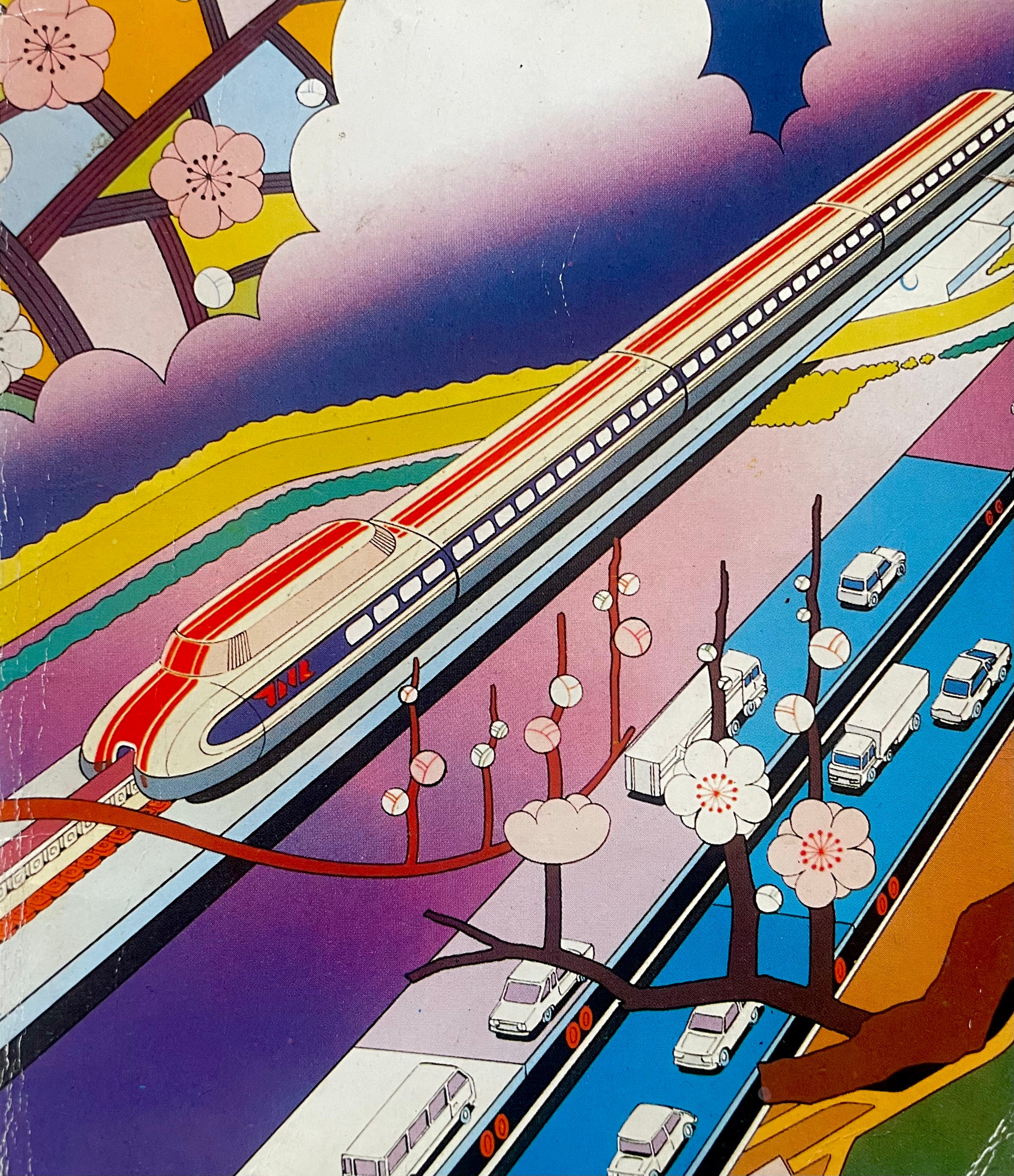
GROWING UP there were always Japanese students in the house, and endless presents of kimonos, ceramics, lacquer-ware, reproduction hanging paintings, origami paper and books about paper-folding that read backwards. Hours were spent folding intricate animals, cranes and squirrels, from squares of beautiful chiyogami, hand-printed paper, and then inventing shapes, surprising birds, masks, fantastical figures. Japan was a place of imagination and delight. I read Angela Carter’s Fireworks, a Virago paperback with a remarkable cover illustration by Hiroshi Manabe. It was a revelation of the floating world, of endless vistas of parallel lines with the seductive depthlessness of a painted screen. Twenty-five years were to pass between reading Fireworks and first visiting Japan. What follows is an account, written some years later, of that journey.
1
THE RENTED APARTMENT IS NEXT TO UGUISUDANI STATION, just north of the National Museum. Downtown digs beside a busy flyover, looking over the warren-like streets of the Love Hotel quarter. The graphic density of Tokyo, a cabinet-like neatness and containment, a puzzle-like use of space. The subway is quiet and emotionless. I’m self-conscious of my shabby trainers and western appearance. Everyone is trim and well-dressed.
Around the back streets of Roppongi, tiny bars and restaurants are packed together in dim alleyways threaded overhead by the grimly ubiquitous utilities wires. Miniature houses ingeniously configured, everything quiet and simple; and then suddenly out again onto Fuji Square, Midtown Tower, and everything American once more, everything looking money.
In the subway I try speaking Japanese, listening to the announcements of station names and repeating them to station guards who stare back in speechless wonder. Frantic jumping sticks of Katakana and Hiragana crowd every available space, at least to my unused eyes. Everyone heads down, staring at their phones. This hasn’t arrived in Europe yet, but surely will. Most playing games, on social media, or sites I don’t recognise. Another part of childhood, Japanese electronics. The revelation that Hitachi is actually a place. Sony, Sanyo, Toshiba, Casio, Panasonic. Stereos and watches and scientific calculators. Yamaha electric keyboards. Suzuki motorbikes, Yamaha keyboards. Fujifilm. Hyundai, Toyota, Nissan. My father’s Olympus camera. The Seiko watch on my wrist.
2
THE HONKAN, OR MAIN BUILDING of the Tokyo National Museum is a magnificent structure, the gracefully spreading roof doubled by the reflecting pond stretching away from the entrance.
Buddhist sculptures stand waiting in the first galleries, like indifferent taxi drivers at the airport. I should be impressed by Unkei, the great sculptor of the Kamakura school, but my mind is still in the west, and these figures seem impenetrable, at least for the time being. I’m aware from reading that this is the real thing, the true origin of Japanese art, but for the time being they are a gauntlet to be run.
Everything else is a revelation. Tanizaki’s In Praise of Shadows, which is jammed in my pocket, talks about the darkness of lacquerware, the importance of seeing it by candlelight. A dim-lit room holds a few perfect examples, including an Edo-period (c.1800) lacquer cabinet for volumes of The Tale of Genji - a box-set, of sorts. There is a growing realisation that what is meant by art, and how it is shown and viewed is something entirely different here - thrillingly different.
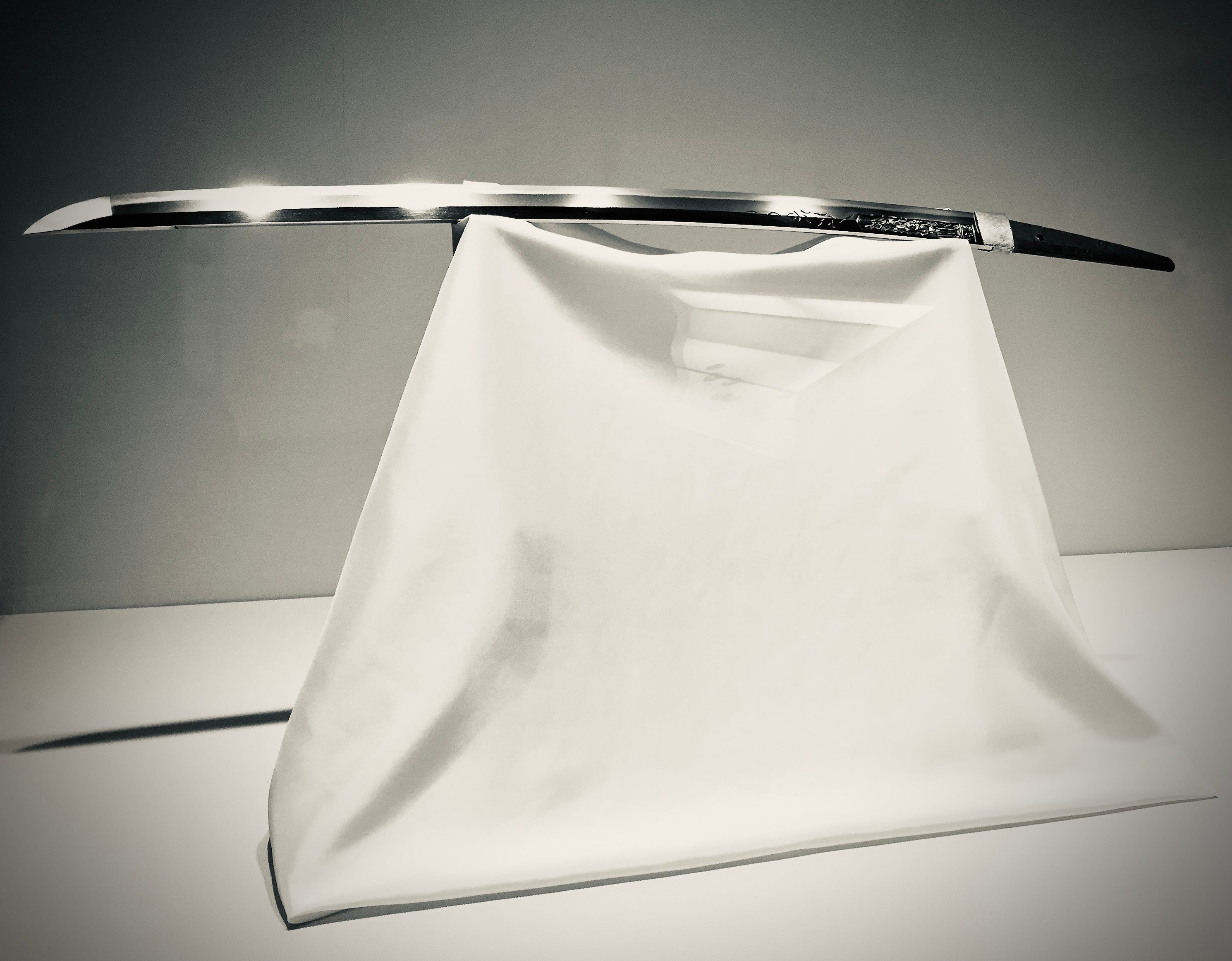
Samurai sword blades, gleaming icy perfection, hover on rhomboids of silk, as if the steel curves were somehow levitating. An elderly Japanese gentleman studies them intently with a mini-telescope, admiring the wavy hamon line along the blade edge. The earliest blades are Heian Period, which means 10th to 12th centuries — the appearance of such a technology in backwater Europe at that time would have seemed like something from another planet.
In a sense I came for the floating world I’d seen on the cover of Fireworks, and it is here, but kept in a corner. Upstairs in the museum a gallery room full of ukiyo-e prints shows mostly images of actors. But it is the calligraphy that feels more engaging, perhaps from reading Tanizaki:
‘Western paper turns away the light, while our papers seem to take it in, to envelop it gently, like the soft surface of a first snowfall’.
Decorated sutras and poetry anthologies of the Heian period on paper, dyed, painted with mica powder and gold and silver leaf. Kumogami: cloud paper. I cannot find my way easily into calligraphy, and wonder if it is better or not to understand the words. What makes a masterpiece of calligraphy? Perhaps that is entirely the wrong question to be asking.
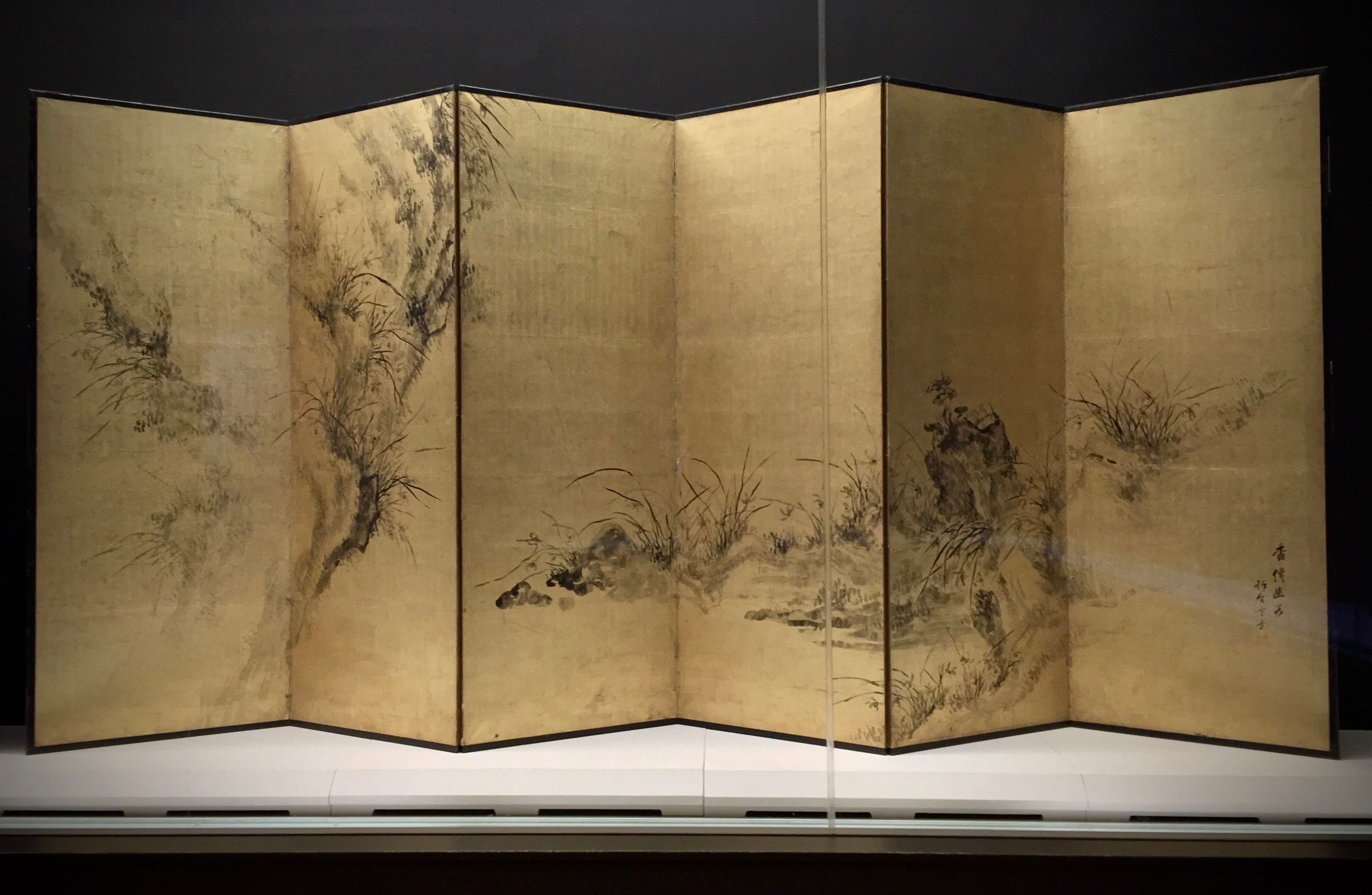
Japanese people studying the works, quietly, respectfully, emphasising the lack of understanding of the few Western visitors. Then an extraordinary screen, ‘Orchids and Bamboo’, by the nineteenth-century painter Tsukaki Chinzan, ink and gold leaf on paper, lent by the Osaka Museum. The ink thinned to give a sense of distance and atmosphere, the image hardly there, really.
Greater things still await. A low-lit gallery with dark red walls is reserved for changing displays of National Treasures. In Britain ‘national treasures’ are banal celebrities, the funny eccentrics we pathetically elevate to god-like status. In Japan, ‘treasure’ means treasure.
In a glass case, set back, dimly lit, a six-fold screen with a landscape painting, painted in the eleventh century by Senzui Byobu, lent by the Jingo-Ji temple in Kyoto.
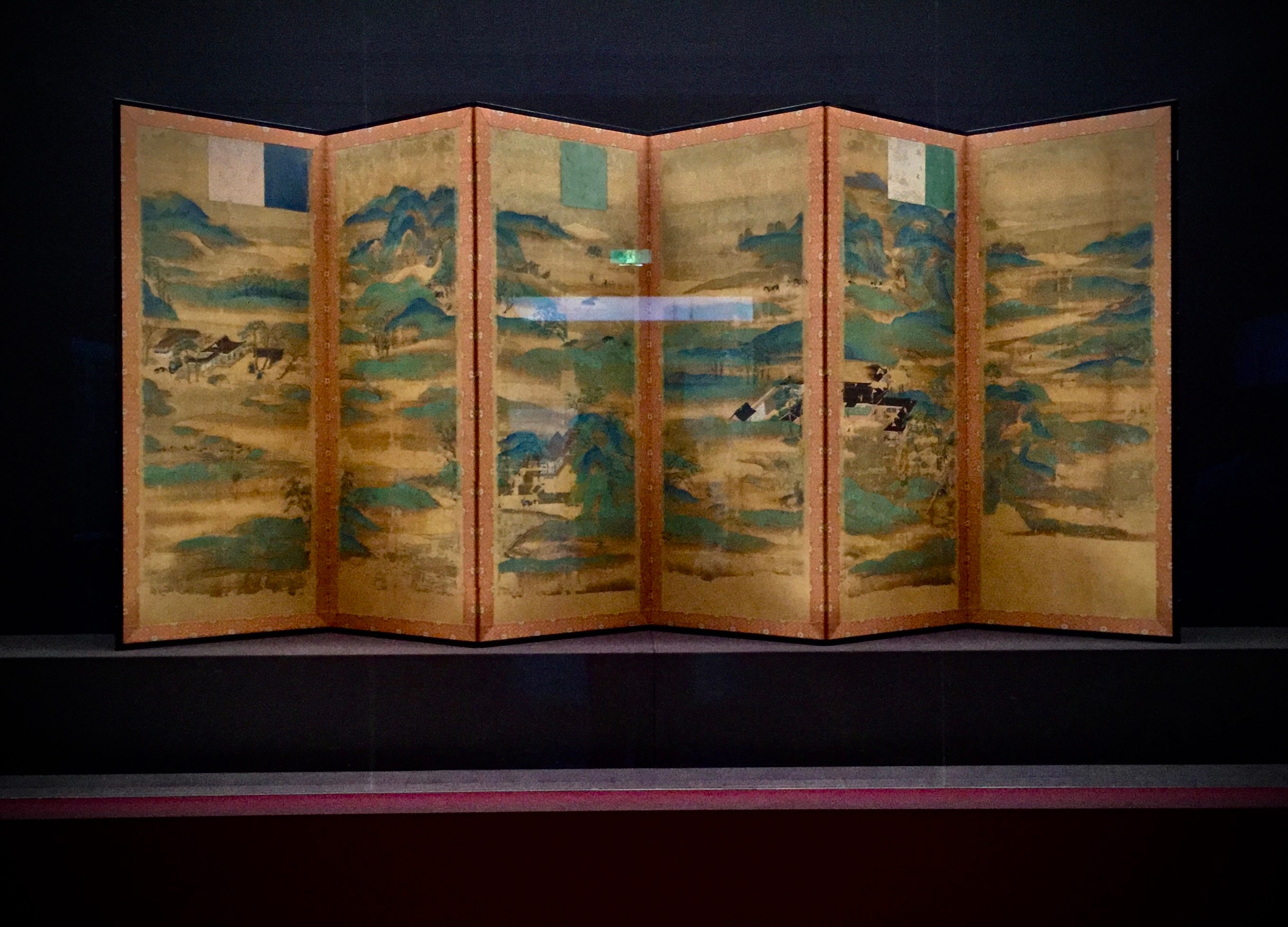
None of these works leave Japan, but you imagine them circulating endlessly around the country. The earliest extent Yamato-e folding screen, used in an esoteric Buddhist ritual called kanja. A woman, about sixty, perfectly dressed in grays and blues, is studying it intently with a monoscope, panel by panel. At first it is hard to make out. I go close in but do not have my glasses, my head hurts with jet lag, and my left foot hurts in a tight shoe, but I wait a while and soon begin to see into it more. The figures are miniscule, so that the modest-sized screen feels quite monumental. The green a lovely grass-green, sparingly applied onto a gold background to indicate hills and the shape of the landscape. Three buildings, perhaps hunting lodges, and figures ranged around in a way to give no hint of a narrative, but rather of life just happening. Step back a few feet and the screen begins to make more sense - you have to see it as a whole, and accept the invisibility and incoherence of the detail.
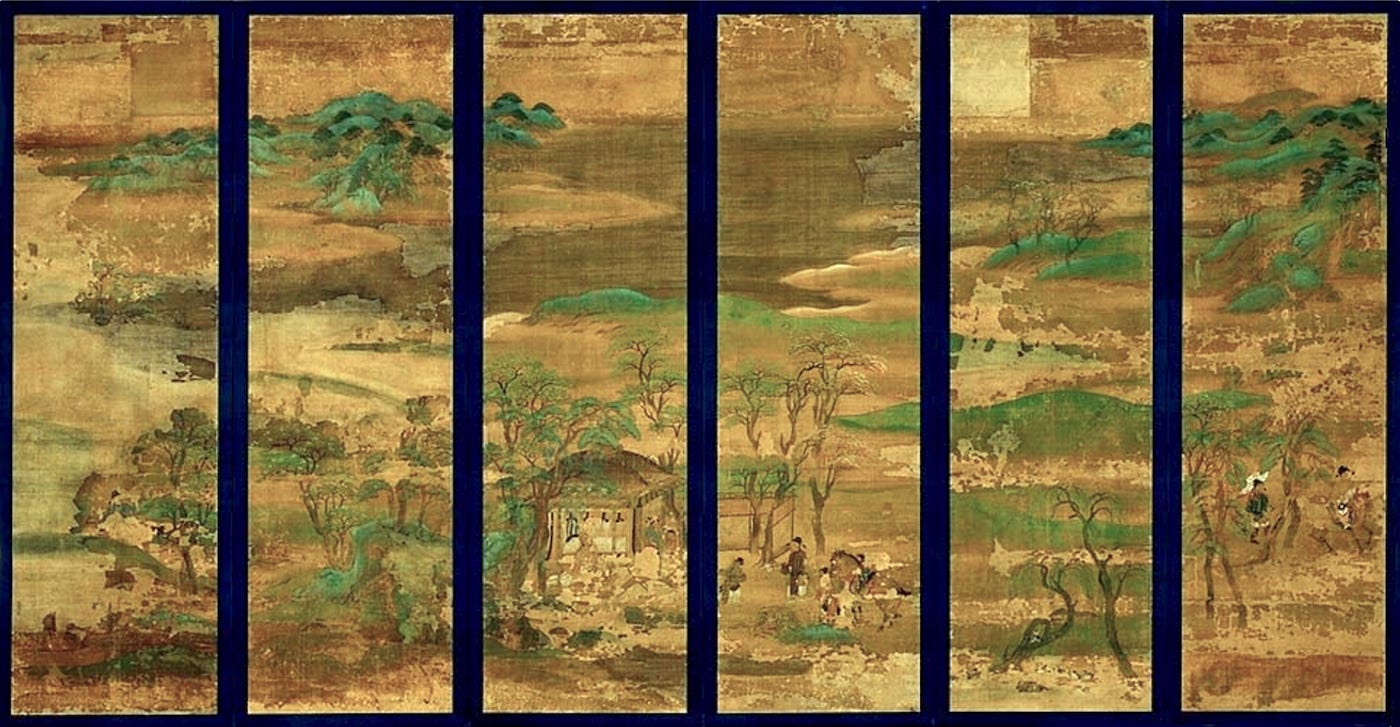
Yamato-e means, simply, ‘Japanese painting’, which might seem self-evident, until you appreciate the overwhelming presence of Chinese art in Japan after the arrival of Buddhism. Art itself seems an entirely imported idea after the year (roughly speaking) 800, and many of the artists and craftsmen who worked at court and temple were Chinese or Korean. So that when a native spirit arose, and Japanese artists got their union act together, it was ‘Japanese Art for Japanese People’! The language of the tribe will always remain hermetic, and the Japanese tribe, the Yamato, having experienced the power of Chinese art, opened their eyes to their own natural surroundings. At origin, Yamato-e was in essence landscape painting, made on screens, which then became the inspiration for poetry. These poems were collected in anthologies, such as the Konkinshū, which preserve the memory and description of the lost early landscapes - very little remains from the earliest period of Yamato-e, from around 800 to 1100 (say).
The Yamato idea of nature is quite different from the Chinese, less heroic, more homely. The point is made by a story told by the art historian Alexander Soper, in an article written during the Second World War, on the rise of Yamato-e. Soper writes about the court painter Kōse no Kanaoka, who painted horses in such realistic detail that they were said to stray off at night and eat flowers painted on a cedar door, or maraud in neighbouring rice fields. Kanaoka was also a landscape gardener (thus the concern, perhaps, with animals destroying vegetation), who tended the Imperial Garden at Shinsenin. He was asked by a scholar, in a letter that has survived, to paint the garden in a way that would preserve its appearance at its most beautiful, something all gardeners must think of doing at some point. Soper describes this story as epitomising the Japanese view of nature: ‘not overpower in majesty and infinite distance like the Chinese, but humanised in garden form’.1
This feeling for nature defines Yamato-e painting, and the is made clear by Soper’s brilliant description of the contrast between Chinese and Japanese landscape ‘feeling’:
‘Man’s environment in China is superhuman, surpassing all control in its immense distances, its multiplicity, its potential violence. Its hostility to human life is apparent everywhere, in the bleak, barren plateux of the North and the wild, precipitous mountain ranges of the South, in harsh rock faces and swollen rivers […]’
Whereas:
‘In the small valleys of ancient Japan, man has always been at home, without fear and without intellectual rebellion. The generosity of Nature, its modest scale, the leafy softness of its forms, have made it a well-loved friend. Its streams and hillsides are intimately related to man’s daily existence, and are made even more familiar by their signs of human activity. Man lives in this humanized world with perfect naturalness, in houses which seem no more artificial than the gardens into which they open.’
After half an hour the elderly lady is still there, examining through her little device; she becomes a part of the screen, her attention to it as important as the screen itself. Landscape, nature, looking, contemplation, esotericism, invisibility and delight. As Alexander Soper puts it, at this moment in the eleventh century, in the era before civil war and military dictatorship, the moon was still full, and ‘life and art seemed bound in an enchanted timelessness beyond the possibility of change, beyond even any questioning’.
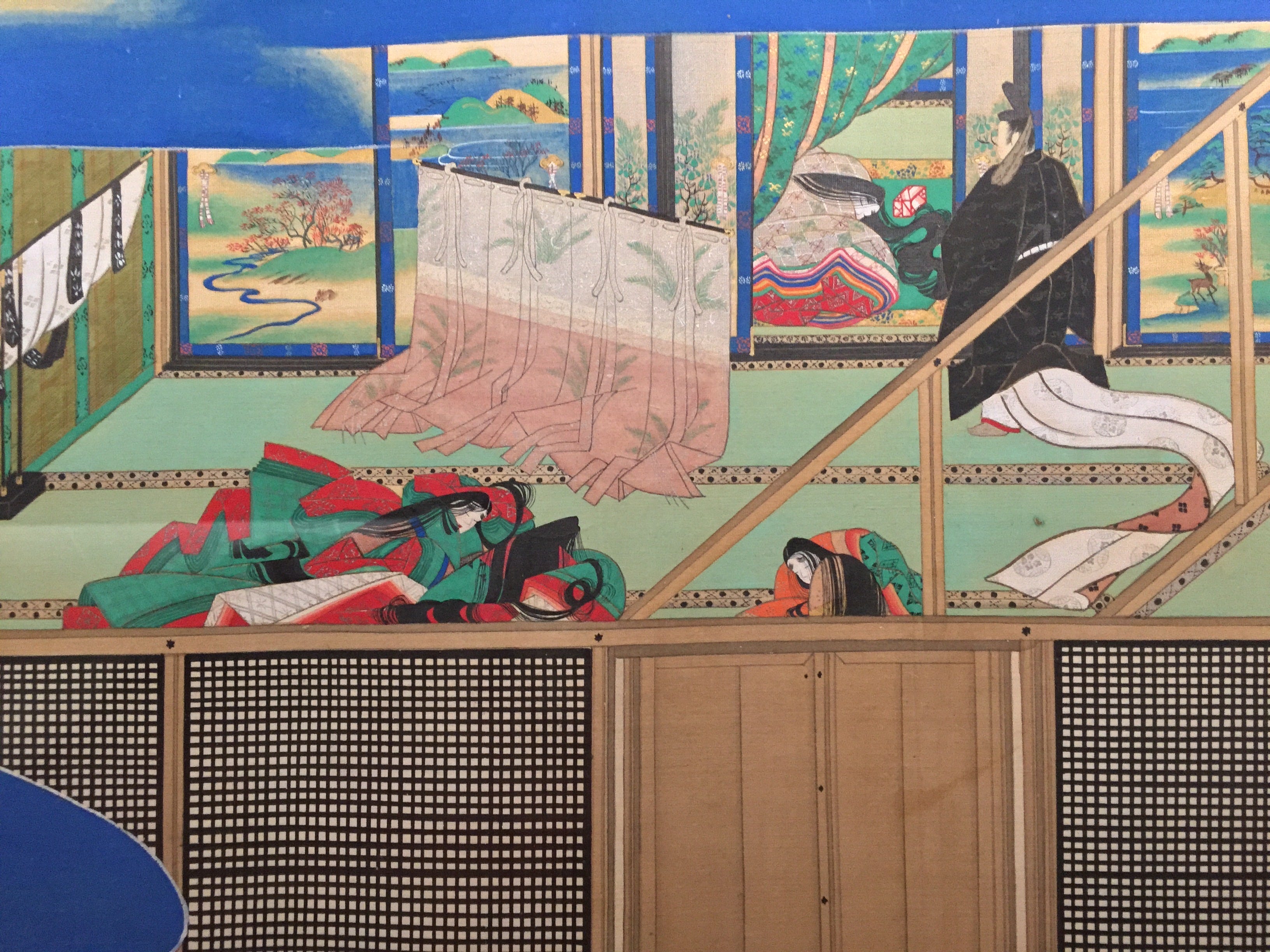
Words and names are copied down in a notebook. Writing the script becomes part of the sense of access to this world. A remarkable handscroll of The Tale of Genji with a striking use of Prussian blue. I’m so taken with the colour I forget to note down the details of the scroll apart from the title. One gallery holds copies of the Scrolls of the Kasuga Shrine, by Takashina no Takakane, originally Kamakura, copied in the eighteenth century by ukiyo-e artists, ‘who revived the classical yamato-e style of Japanese painting’: Iwase Hirotaka, Ukita Ikkei and Keizei Tamachika. It is a tangle of names and eras, through which the simplicity of the drawing easily shines. Gods are shown, but only their bodies, the faces hidden.
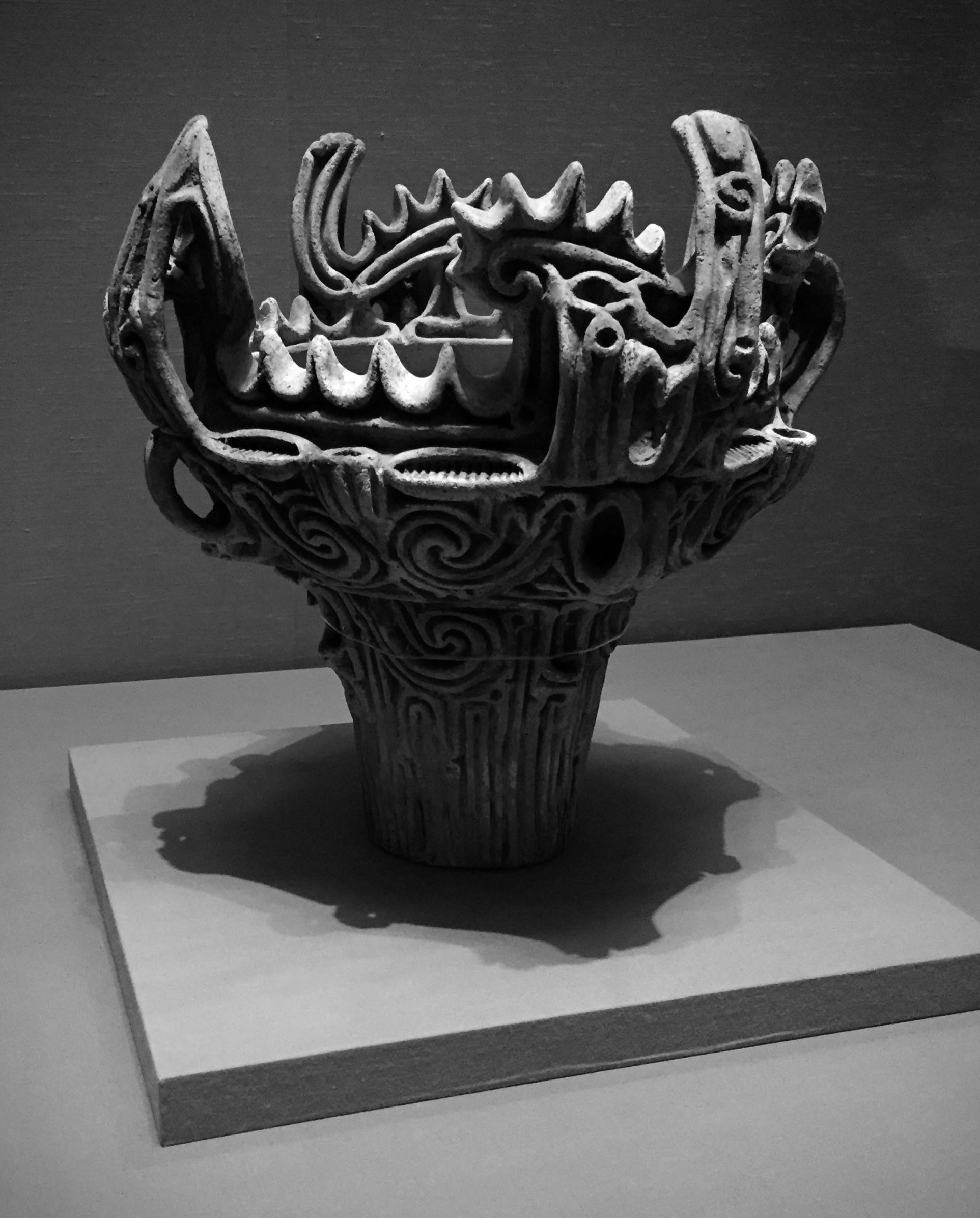
Finally, a room of Jōmon figures and pots, only then realising I have done the parcours backwards. The Jōmon works, one of the earliest recorded cultures in Japan, a sort of pre-historic fishing community, are amazing - particularly a corded pot, the design inexplicably bizarre. Was it made in fact to throw shadows? Nets hanging on wooden poles, clinking in the darkening evening air…. The sheer fascination of these objects.
The revelation of that morning was a completely different idea of Japanese art. Before, like all westerners, I had an image of the floating world, of woodblock prints, seductive colours and intricate orthogonal compositions. But the truth is entirely otherwise, a story told by National Treasures that never leave Japan. Buddhist sculpture and painting on scrolls, screen and hangings, like signs from another world of feeling. They feel distant and hard to comprehend, as if on the way to the Japanese language itself, of which I know nothing.
Perhaps Japanese people feel the same when they come to Europe, expecting to see Monet everywhere, and discovering instead Dürer and Guercino. But somehow I doubt it.
3
ONE MORNING had been enough to change my entire vision of Japanese art. I went to the Ota Memorial Museum in Harajuka later that day to get a fix of ukiyo-e. Perhaps Japanese people see European art as all Monet, and are similarly surprised to discover Dürer and Guercino.
The Ota Memorial Museum is a small wooden building that you navigate shoeless. Wonderful Utamaro Courtesan Katsuragi of the Matsuba-ya House, the delicacy of paper and drawing, and the harshness of the sharp-lined bodies. Charming label: ‘This is the bust portrait of beautiful woman. She wipes off sweat with summer kimono while having bright smile. This picture depicts the appearance of a woman after a bath. Her straggling hair drifts voluptuous grace’.
Keisai Eisen, a new discovery, the master-of-decadent-women with their snow-white faces. I think of the quote from Tanizaki:
‘Our ancestors cut off the brightness on the land from above and created a world of shadows. and far in the depths of it they placed woman, marking her the whitest of beings’.
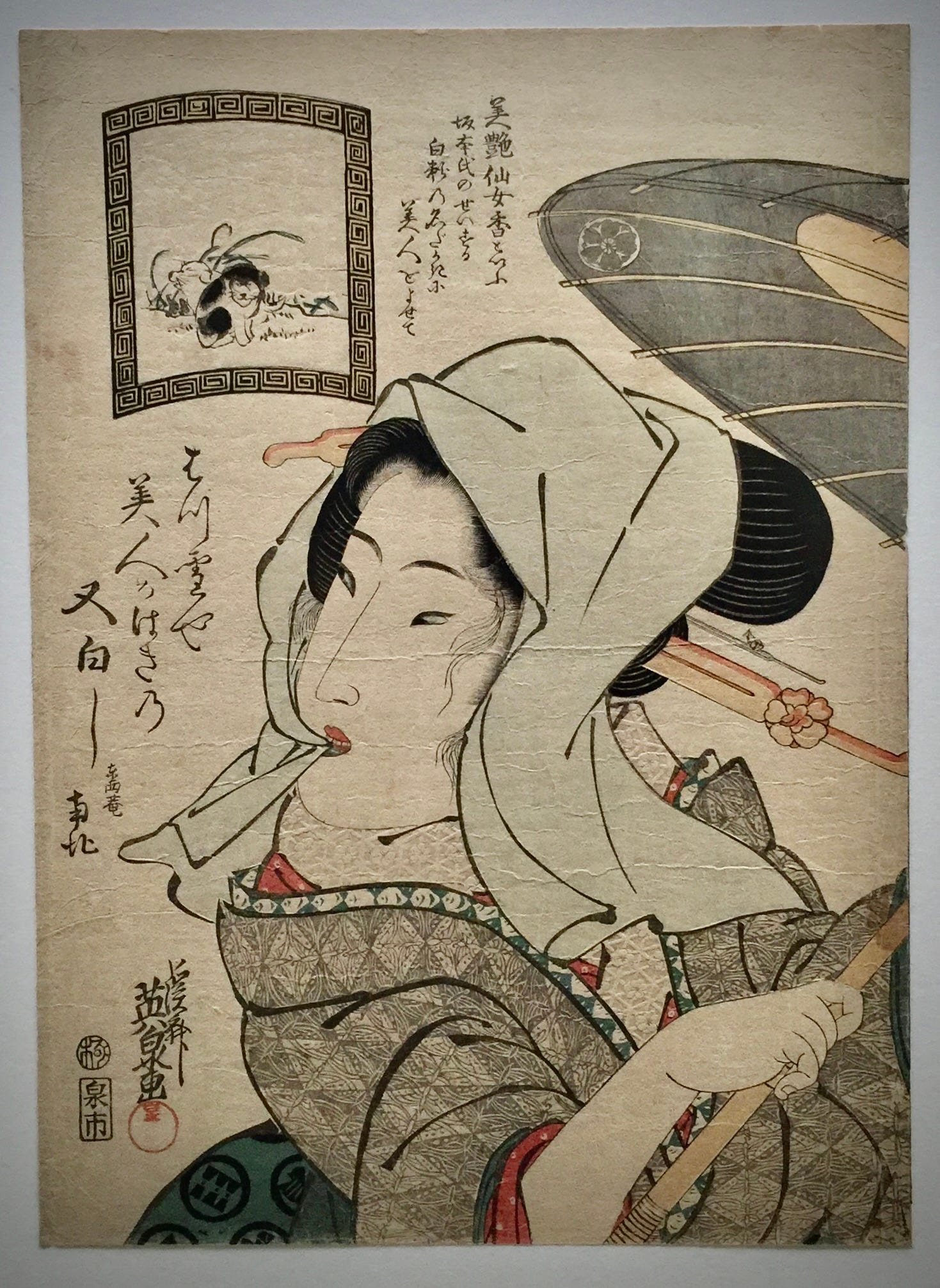
More striking things: Hiroshige’s use of ‘Berlin Blue’ (label translation again). Early black and white prints by Hishiwaka Moronobu and Furuyama Moroshizo (do all Japanese names have four syllables?), which seem to get to the heart, or perhaps the origin of the floating world. You really have to go back, far beyond Hokusai and Hiroshige, to the seventeenth and eighteenth centuries, to the simple graphic world of Moronobu, and to the gentle colours of Suzuki Harunobu, with his wonderful images of wistful women with poems inscribed within scalloped cloud lines above.
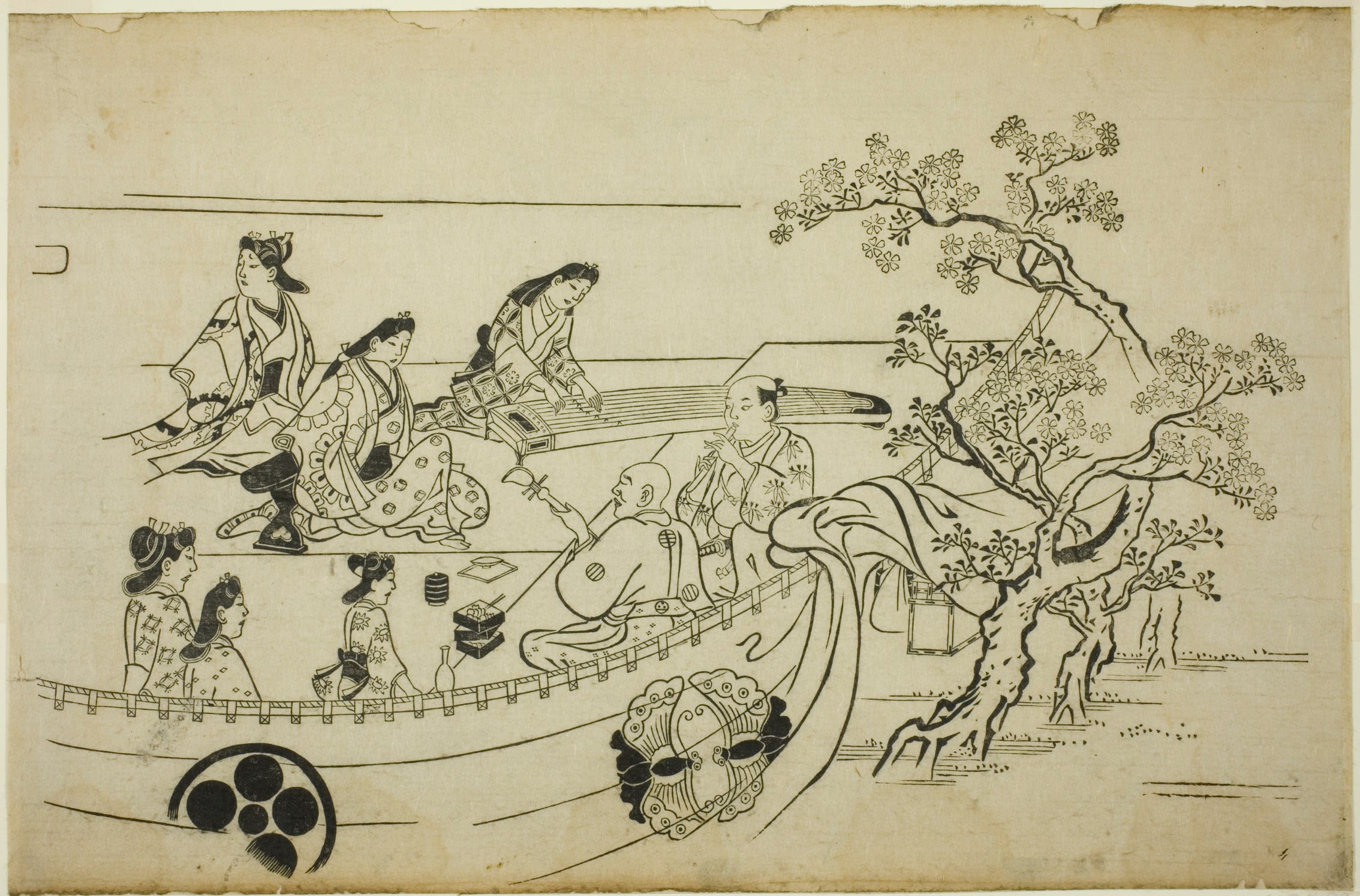
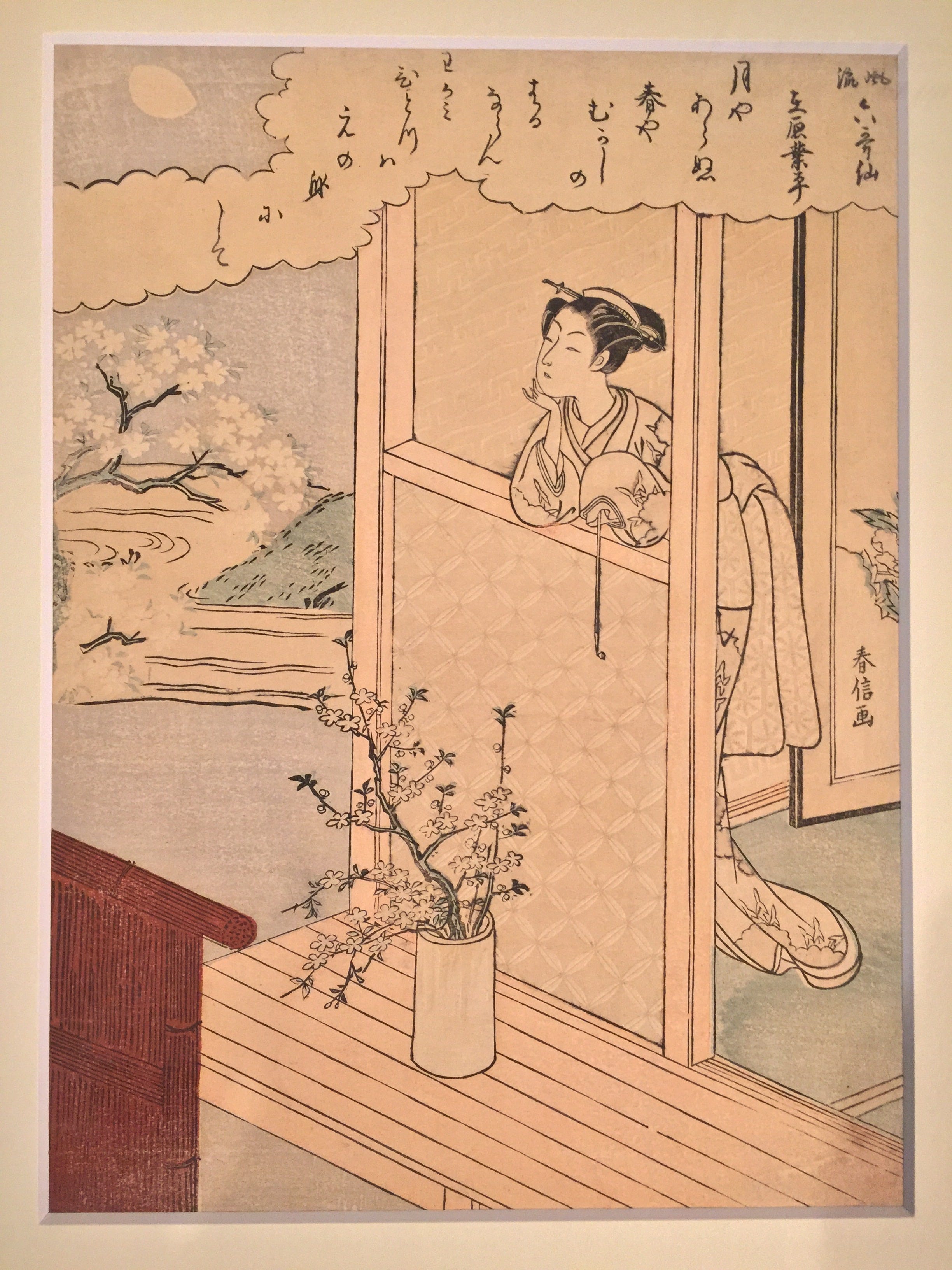
Harunobu’s woodblock prints make me think of William Blake, another artist who was in truth a poet of images.
The museum is an education in the history of ukiyo-e. First came benizuri-e prints using two to four colours, including pink ‘beni’. The ‘e’ part of the title simply means ‘picture’, which is itself a wonderful abbreviation, even more concise than the deceptively short word ‘art’.
And then, to keep things simple, came multi-coloured woodblock prints known as nishiki-e, the ‘nishiki’ part meaning ‘brocade’, as these multi-coloured prints reminded those looking at them of the elaborate textiles that were imported from China. The nishiki-e were made popular by Suzuki Harunobu.
Then mica painting, the creation of a silvery gleam on the surface of the paper by applying a boiled mix of glue, mica and pigment, using a special ‘Japanese’ brush (although surely everything is Japanese in this recipe). The best example of mica seems to be Kitagawa Utamaro portrait of Ohisa, the beautiful daughter of the owner of the Takashima rice-cale shop near the Ryogoku Bridge in Edo (old Tokyo, of course). ‘Charms and tea are brimming over And neither gets cold!’, runs the poem inscribed on the left. The surface is faded but you can still see the shimmer of the mica.
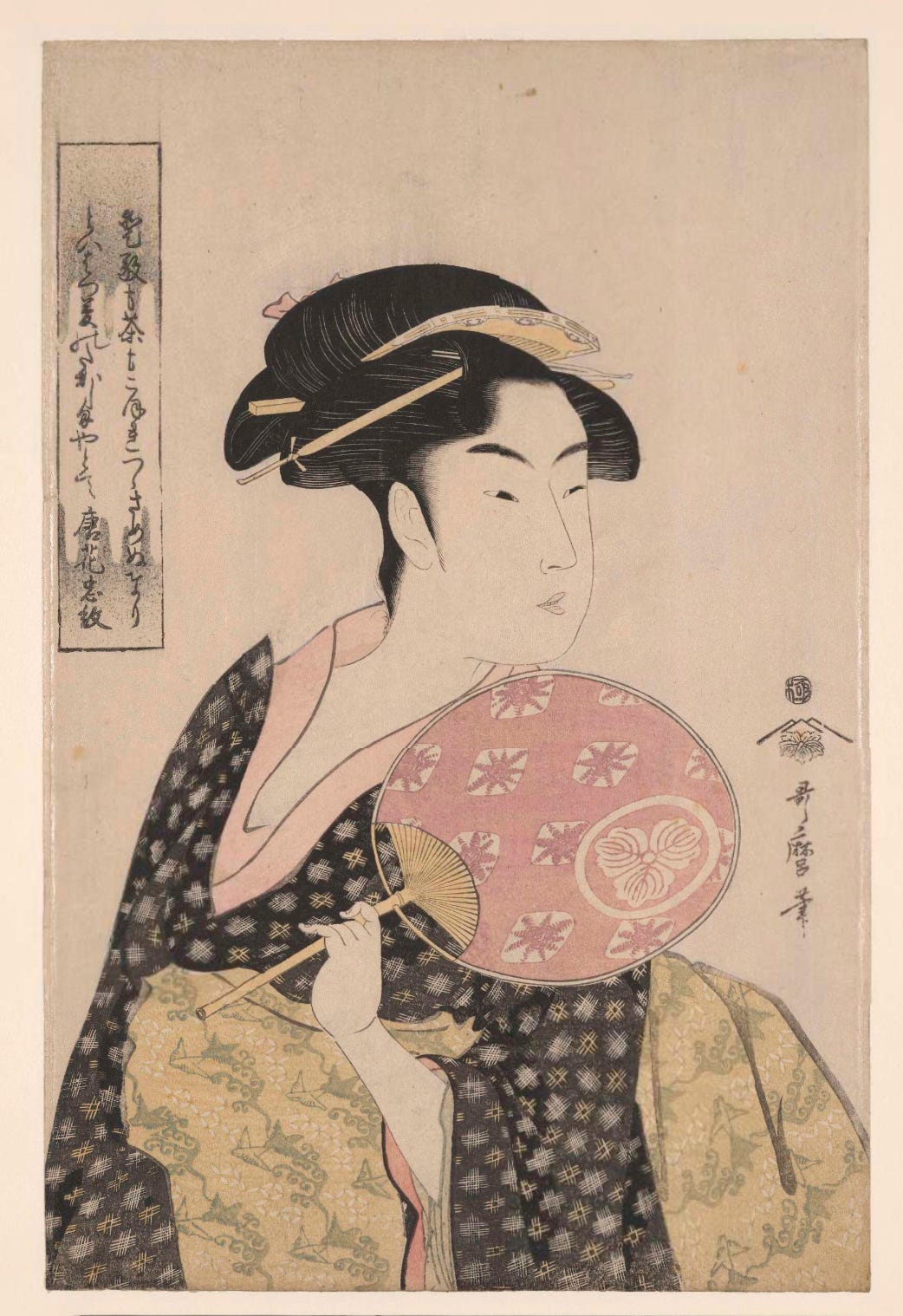
The more you look at these early prints, the more the later ukiyo-e, floating pictures of Hokusai and friends look like tourist postcards. All of Hiroshige’s hundred views of Edo displayed on the second floor of the Ota Memorial Museum rather monotonously prove the point, a little like post-industrial ukiyo-e.
These realisations, which come in front of the prints themselves, feel of such great value, true moments of understanding.But just as the lotus of knowledge is opening, in an atmosphere of remarkable silence and contemplation, a gong strikes and it is time to leave.
Walking back along Church Avenue to Omotesandō, the main drag, the thought comes how in the West we have become so used to art as a symbol of democracy, something that we feel obliged to discuss and debate, rather than simply, and directly to contemplate. In Japan it seems pointless to discuss the beauty of the objects - either you see it or you don’t. This is the ‘ah-ness’ factor, the common translation of the Japanese phrase mono no aware, which is often translated as ‘pathos’, although this seems wrong. It looks more to me like being aware of things on your own (‘mono’), which is another way of saying ‘ah-ness’, or that nothing worth knowing can be taught, only realised. In Japan, it seems, all this is taken for granted. You learn early on how to look at things, and that is that. You have learnt, now it is time to admire. Debate breaks the spell — some clever English voices in the Ota Museum had just that effect.
This wonderment at everyday things is so wonderfully and obliquely expressed by Tanizaki:
‘... indeed for even the sternest ascetic the fact remains that a snowy day is cold, and there is no denying the impulse to accept the services of a heater as it happens to be there in front of one, no matter how cruelly its inelegance may shatter the spell of the day’.
The spell that can be shattered - how much this reveals about Japanese society. All around me I can see this spell being upheld, in the Lolita clothes, in the overwhelming surge of images and words in advertising, in the food that looks quite different to how it tastes; and then the crude incursions of reality, the hideously ugly utility cables hanging and swinging on dark posts all around the city, like the electric heater that ruins Tanizaki’s day. But how easy it is to fall back into the dreaming world, to be carried along by it, to forget oneself, to give up anxiety, worry, individuality, just to obey the unreal world around one. The Japanese hardly seem to smile, as if such an act would itself shatter the spell of life.
4
DOWN TO SHIBUYA, to the famous crossing. I am after all little more than a tourist in this country. As you near the ambient lights get ever brighter, the wasteful electrification that ruined Japan for Tanizaki, banishing shadows, dispelling the endless charm of candlelit darkness, of lacquerware in the gloom. The Shibuya lights illuminate the dark in that curious way that I’ve only otherwise seen on Times Square, making of the street a sort of interior. But here even more so: the road surface is like the silvery surface of a mica-painted ukiyo-e print. As they approach crossings, the Tokyoites do not crowd to the curb, but stand back, leaving space around them. It seems so highly civilised, so tactful, such awareness of one’s immediate surrounding.
Five different crossings all released at once by the lights, and again the loose, controlled crowd, easily filtering through each other, and a quietness and calm to the whole thing. I watch from a high window, the upper stairway of some department store or other, like watching Piccadilly Circus from the top floor of Lillywhites, but on a far grander scale.
5
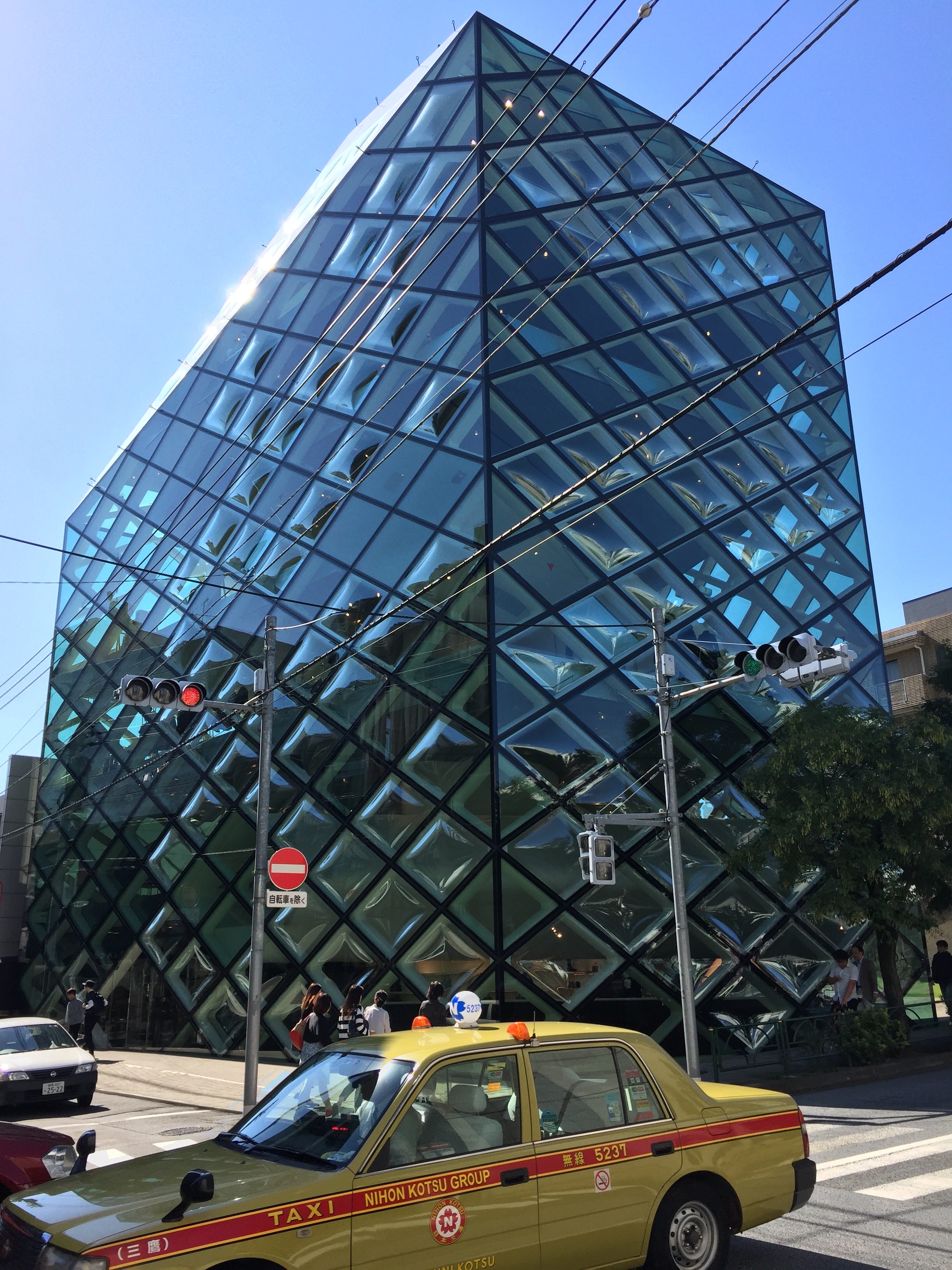
AN APPOINTMENT at the Nezu Museum. Walked down from Harajuku, a long straight street the shops on which become more and more expensive and exclusive, culminating in a Prada Store that looks like it has just been inflated from mother-of-pearl, and ready to eat. The light is clear and translucent, a sort of deep colourful light, making it feel like New York, but somehow more magic, more unreal.
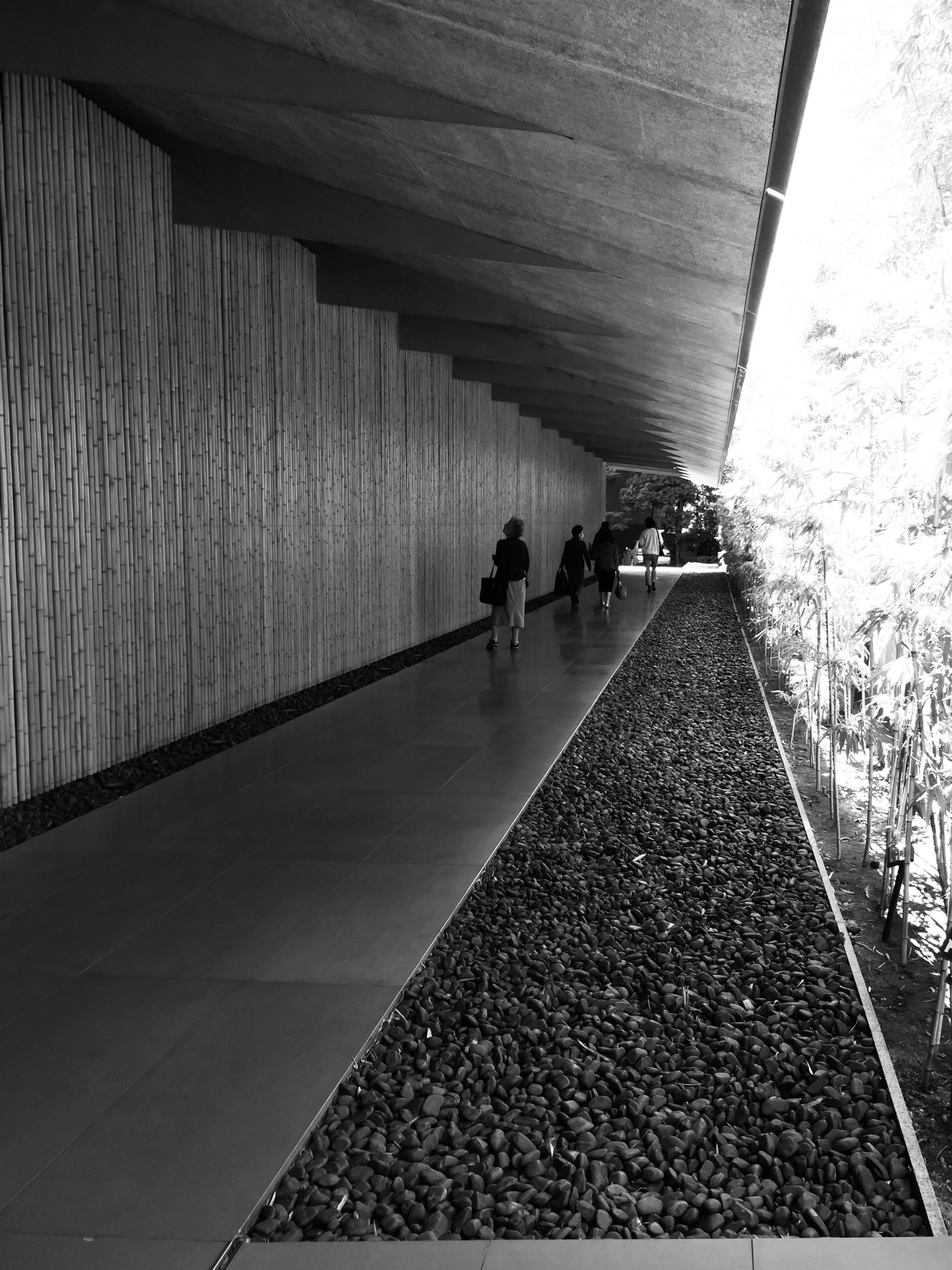
The Nezu Museum is a masterpiece of Japanese minimalism, all straight lines, bamboo, and stones. And yet on entering there is a sudden sense of the imaginative limitations of this perfection - when the focus is so much on the aesthetic presentation, the work of art becomes merely part of a continuum of perfection.
Hanging scrolls seem to epitomise this equivalence — the image is somehow sandwiched into precious papers. The painting by the famous Southern Song artist Ma Lin, Mountain Landscape at Sunset, shows mountains fading into the silk background, but the atmosphere seems ruined by the large inscription that turns it into a sort of poster. This is how it seems to me - my ignorance and prejudices are playing out. And yet still it is hard to see how it is ‘Important Cultural Property’, which seems to be an official designation, perhaps a purgatorial state before becoming a ‘National Treasure’.
I’m still clearly looking with western eyes. The Nachi Waterfall is a famous painting - an actual National Treasure. ‘It is a masterpiece considered to represent the pinnacle of sacred imagery created in Japan’. It is a long thin hanging scroll, the waterfall a streak of cream against a background the colour of wet cardboard, on which can just be made out the forms of rocks and trees, with a large full moon peeping over the waterfall at the top.
It is difficult to see the mastery, not just for the poor condition, but also for the glass case in which it hangs at the back.
The founder, Nezu Kaichirō, was a tea ceremony devotee, and brought together, I learn, antiquities that evoke a Chinese classical age. This falls flat on the western mind. ‘In 1912 Kaichirō presented works from his collection for the first time at the Daishikai tea gathering, an event initiated by Masuda Don’ō, and began to garner attention as a collector’. The power of tea.
And yet marvellous that individual tea bowls can become celebrated works of art — National Treasures, even, and given names: Yamanahoa is the name of a flat looking tea bowl with a light-coloured glaze, as though tea-stained, the surface and decoration irregular, rippling, as though it were a natural object. Perhaps this is entirely the point, to emphasise the uniqueness of something ordinarily mass produced. What would it be like to drink from such a vessel, probably valued at hundreds of thousands? Who was the last person to drink from it? Nezu? And will tea ever be poured into it again? Perhaps as the world collapses. The last sip.
As arranged, I meet one of the curators in the lobby of the Nezu Museum. We are here to talk about Japanese museums, and art, at my request. Highly awkward half bowing and not-hand shaking. She expresses polite surprise that it is really me, which I don’t understand, only adding to the confusion. We go to the cafe and sit drinking Nezu tea. I try to explain what I am doing, not sure that she understands. She talks a little about Nezu, and the idea of National Treasures. Each year one or two more objects are added to the list of things that will never leave Japan, that will never be truly understood anywhere else. It made me think of the Preußicher Kulturbesitz - the survival in the sphere of culture of a form of isolationism, but here in a more extreme manner. I ask questions - where do foreigners start with Japanese art? A long silence - is she thinking of an answer? A minute passes, then another. We sit as if in mutual meditation on an impossible question, like a Zen koan.
Some other people arrive - the director of the Sejti Museum (or something like that), and she falls into conversation with them. The director wants to know if I know the name of the curator of archaeology at the British Museum, who organised the Jomōn exhibition a few years ago. I don’t. We all think for a long while, nobody can remember. Why does he want to know? Because the curator gave a talk about the archaeological site he was working on, and didn’t consult him, or tell him about the talk!
The feeling is the incomprehension that anybody could really understand Japanese art, and that to ask such a question could only be met by embarrassed silence. It was a depressing moment, a sense of reaching a real barrier, a zone of total disconnect. The meeting knocked the energy out of me, so that leaving the museum, through the long and perfect passageway, lined by a perfect plantation of bamboo, and with a stretch of perfectly regular pebbles, that might have been individually polished, my legs seem to give way a little, as if a void was opening up beneath.
6
THE RENTED FLAT is good for writing. It looks over a flyover, then messy hotels, and the city beyond. Out the back the messy warren of Love Hotels, views in all directions. The traffic and whoosh of the city during the day; the city is my sea, I say to someone who likes writing by the coast. The bathroom small, but still divided in two compartments, smaller than a Parisien chambre de bonne. Took time to work out that the second small chamber was a shower room, with a squat bath in - a wet room. The proportions of the room are perfect, like an urban washing cabinet designed by Alberti. Reading and writing at the table in the main room, the sky clear and bright outside.
I am trying to understand Japanese art — which is to say that I am trying to grasp an entirely different definition of that deceptively short word. How does ‘art’ become ‘e’? Reading Yukio Yashiro on the Nachi Waterfall, which I had seen in the Nezu Museum, as a religious painting:
‘[It is] more than a straightforward landscape painting. It is also a sacred image made in the light of the worship of nature — an essential ingredient of Shintō beliefs. […] To see it plunging almost from the peak of the mountain is to be moved far more deeply than one would expect of simple natural beauty. This overwhelming spectacle makes it easy to understand the power of nature worship and how the great waterfall could be identified with a god or interpreted as an expression of divine power’.2
Perhaps this is what I am missing - the aura of tradition, of nature worship, the work of art as a sign of belief. I have come to Japan to see Japanese art, the National Treasures that will never leave the country, but perhaps it is the country that I should have seen first, an orientation in nature.
7
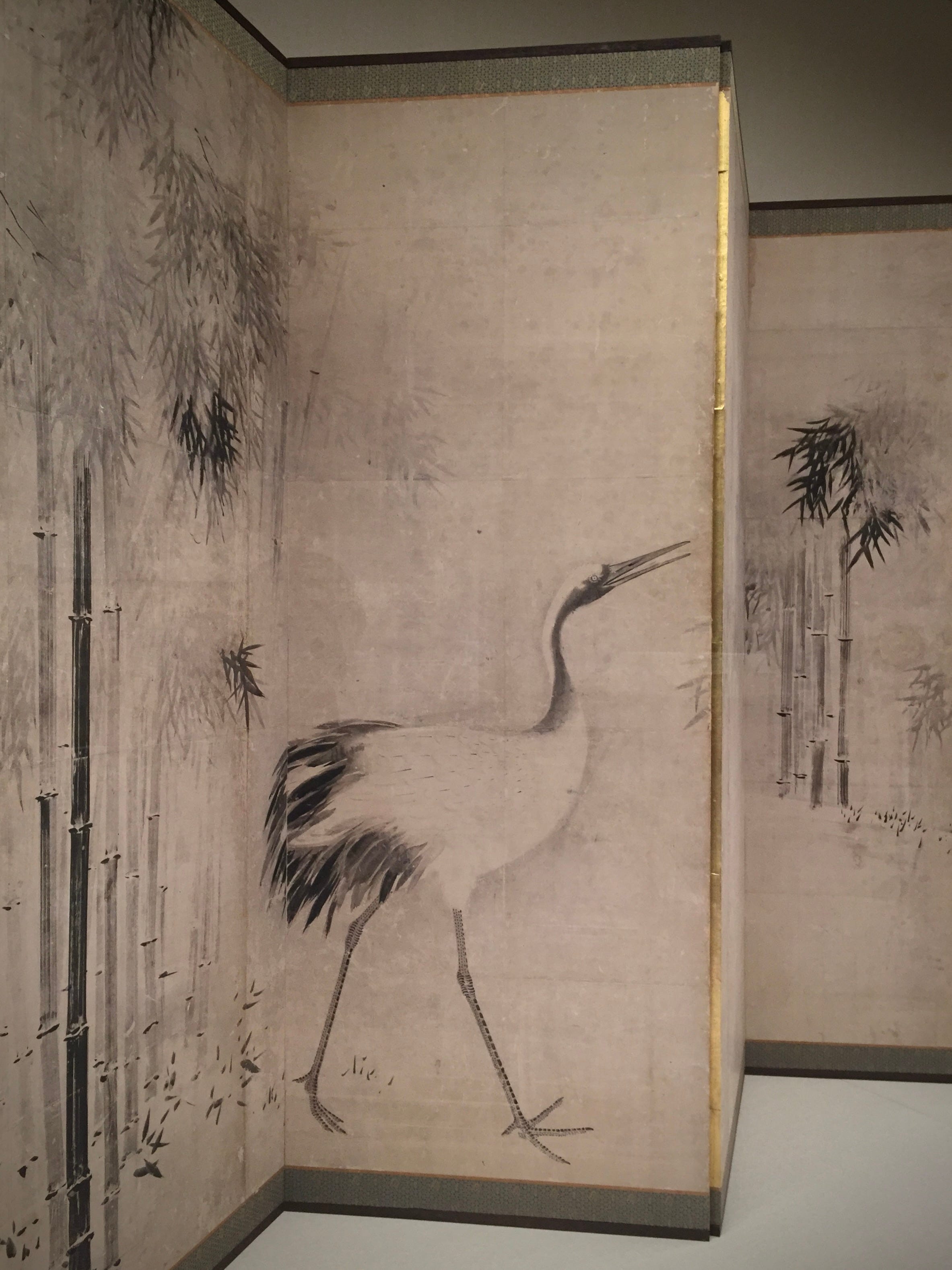
I CROSS TOWN ONCE AGAIN to the Idemitsu Museum, on the ninth floor of a modern building in the city centre. Another revelation — the sixteenth-century painter Hasegawa Tōhaku. ‘He was the painter who convinced the Japanese that their own landscape could be expressed most beautifully in blacks and whites’, Yashiro puts it. ‘It was he who awakened the native landscape sensibilities’. The revelation here is not a landscape but a pair of byōbu (another new term), or folding screens, with an ink painting, Tigers and Bamboo. They are utterly beguiling, the way the forms of the tiger, so characterfully painted, fit around the folds in the screen, and the variety of effects that Tōhaku gets with ink, suggesting different tones, colours, textures. My dull western mind half protests that this is not painting, but drawing – but you only need spend a few minutes with Tōhaku’s tigers to know that whatever you might call this, it is a richly impressive image, on a par with sixteenth-century painting in Europe.
Tōhaku was a ‘Momoyama’ period painter, and ‘Momoyama’ means ‘Peach Hill’, where the warlord Hideyoshi built a castle, so you might say that Tōhaku was a Peach Hill period painter, which has a certain ring. Like all Japanese artists Tōhaku was profoundly conservative, in the sense of revering tradition, which for him meant the spare appearance of Zen Buddhist painting, where most of the image was left blank — water, mist, or simply thin air.
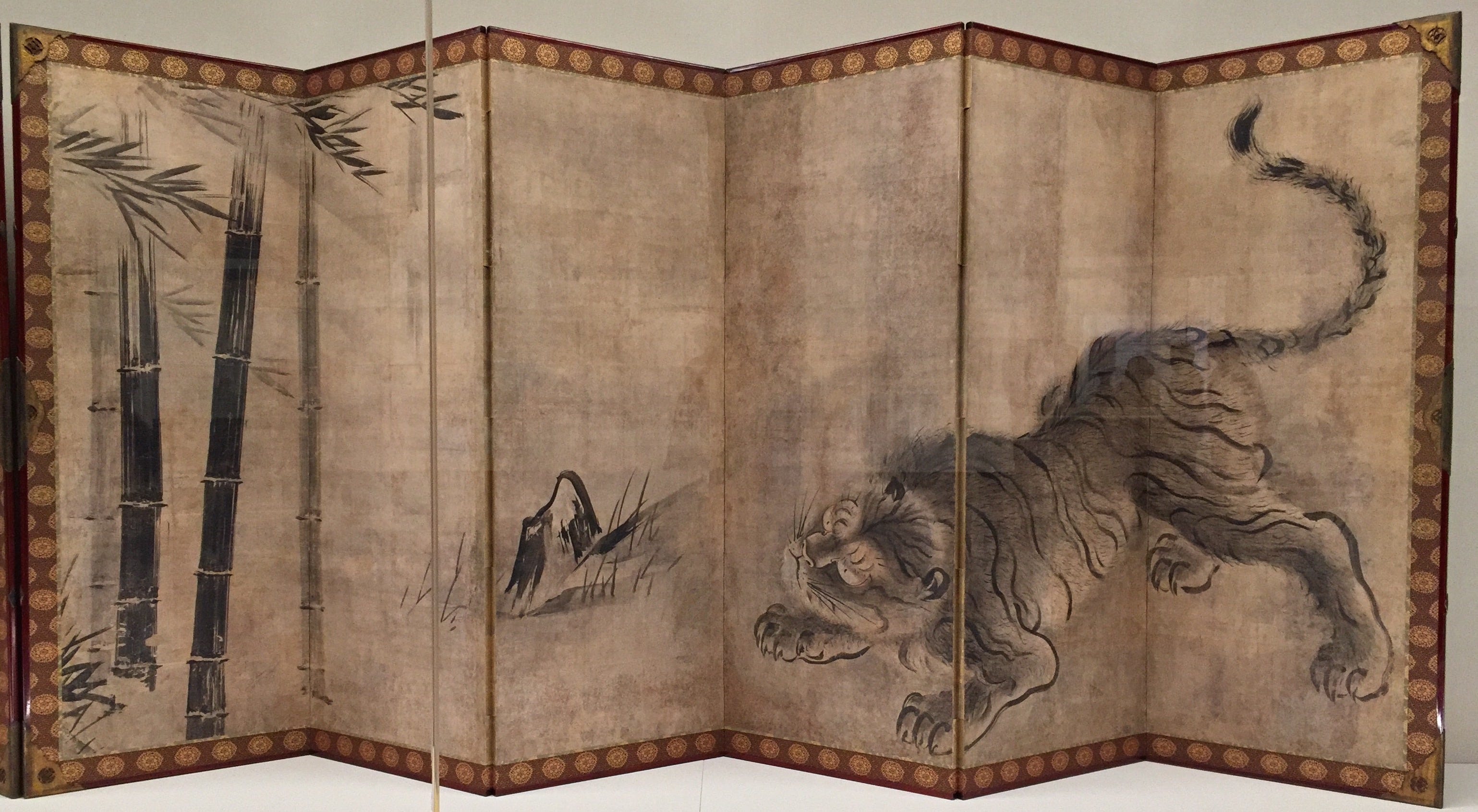
Women in kimonos shuffle in front and study the screen, heads on one side.
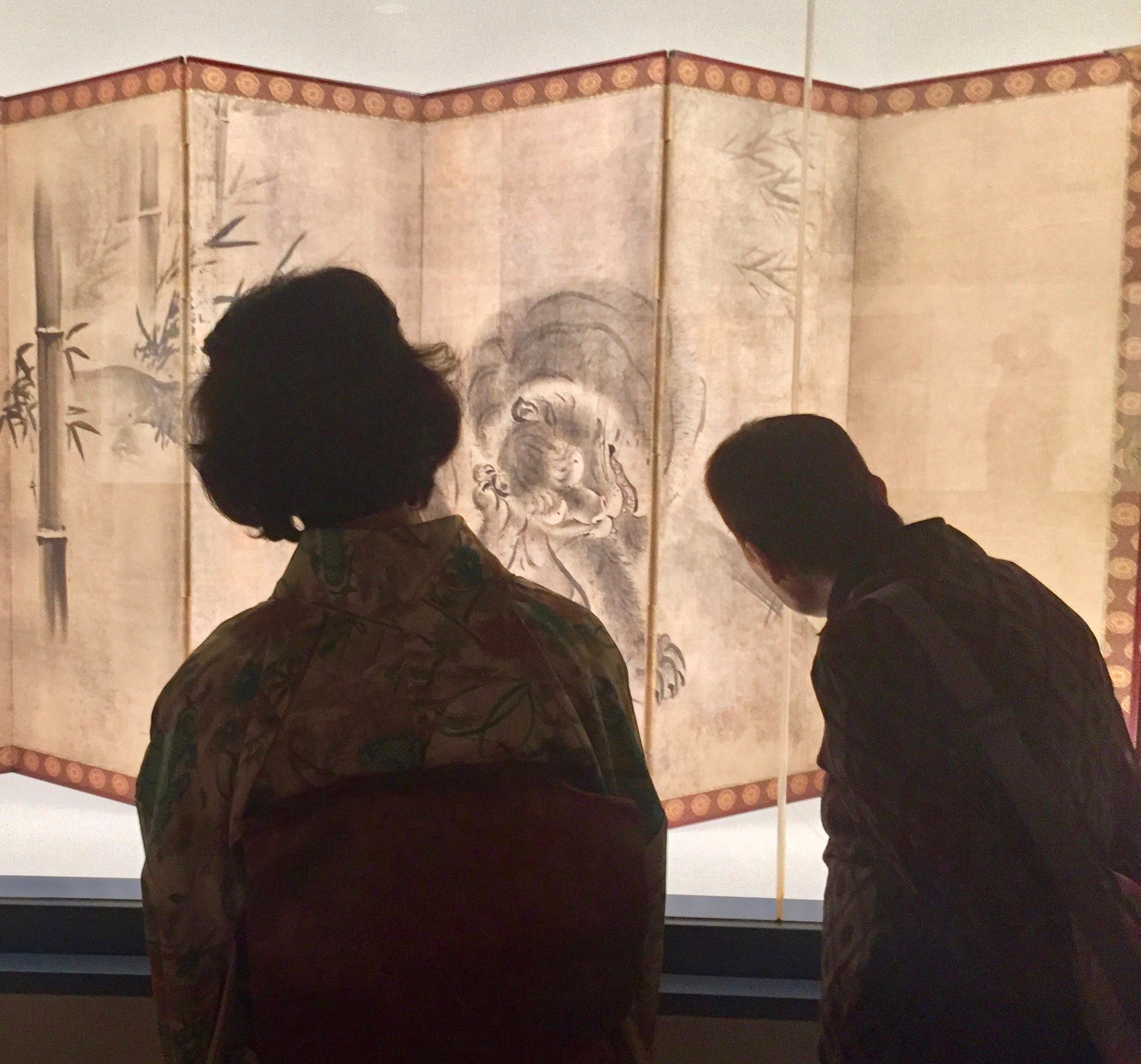
The Japanese looking at art: only a brief glance at the label, and absolutely no photographs. Where in the west seeing art is always a moment of theatre, as if the painting or whatever were up on a stage, here it seems much more like an encounter of equals. ‘The beholder’s share’, as Gombrich put it — the creative act of looking — is much more in evidence, so that the work of art seems always, somehow, like an animal, looking back (at us).
There seems less of an ideal of perfection at the Idemitsu museum, less of a tea ceremony thing. Ceramic tea bowls and vases are ranged in a case under the banner ‘Distortion, crack and wear’, crumpled pots with thick rustic glazes, each tea bowl and vase an individual thing, contrasting with like the opposite of Chinese celadon ware. I wonder if there is a key to the idea of literati painting here — the aristocratic amateur painters who refused to sell their works, and lived bohemian lives of shabby splendour, the original down-at-heels aristos. The gleam of perfection, the lustre of mica, the acreage of gold on large screens must have been so much bling, on which they looked down from their spare lofty heights. This all might be very wrong, but still be a point of identification. The essentially bohemian nature of the artist, and the true antipathy between art and money.
Tōhaku was somehow part of the Kanō school in Kyoto, but then somehow broke with it — the facts seem vague and change depending on which account you read. Perhaps nobody really knows, and the story is mostly hearsay. The Kanō school were a family firm who could provide you a screen or panel at any size for your castle chamber, complete with gold ground and Zen obscurity, perfect to embellish your warlord self-image. They were official painters to shoguns and warlords, but could just as easily complete a commission for a Buddhist monastery or a richly-endowed Shinto shrine, and dominated the market for almost four hundred years. No screen too small.
What really strikes me about these Kanō screens, including the large paintings showing the Gion Festival in Kyoto, and another showing Famous Views in and around Kyoto, is the habit of placing golden clouds over the image, obscuring the bird’s eye view of city life, like patches of imagination, as if saying, over to you, beholder, and your mind’s eye.
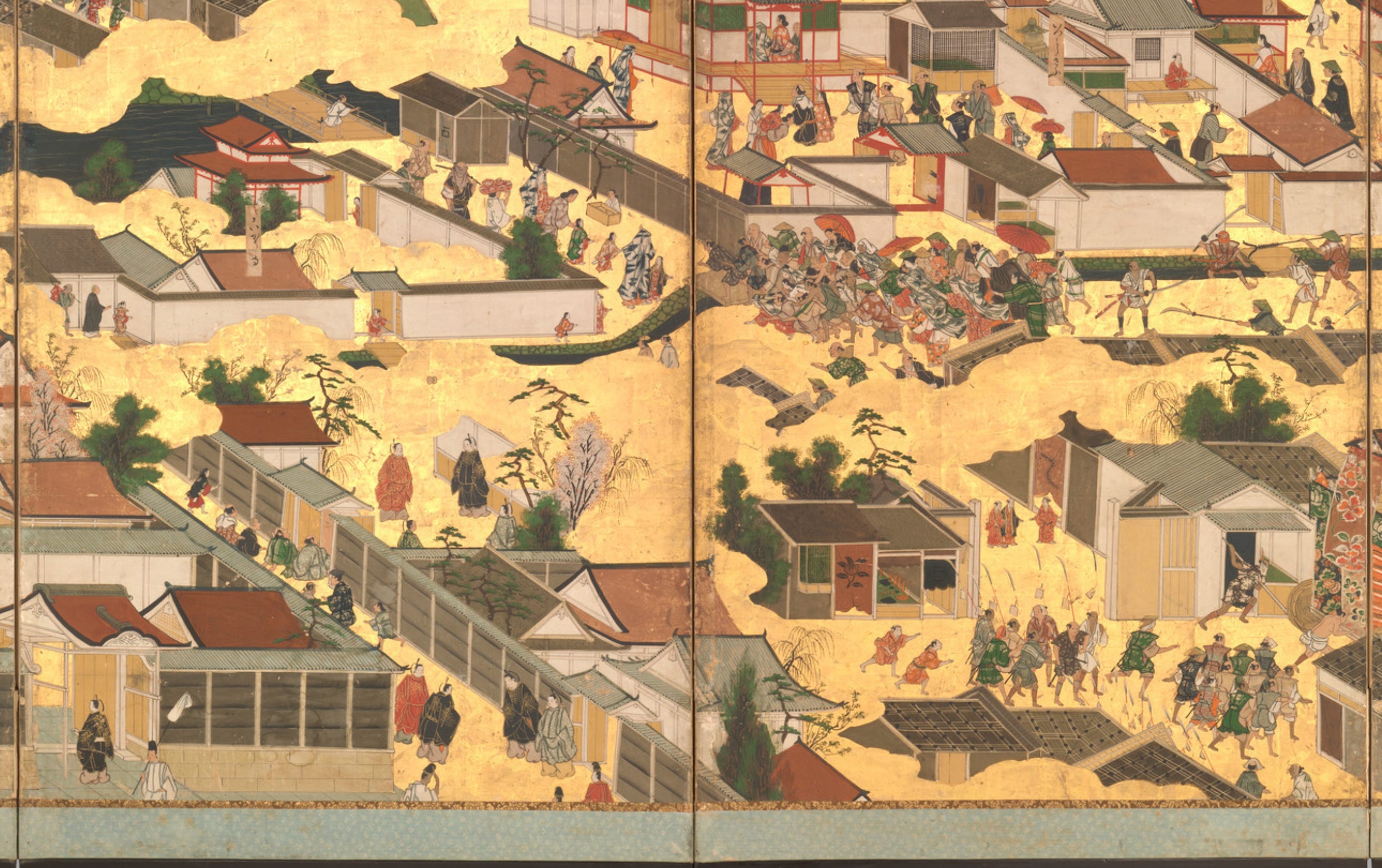
Wave upon wave of sensation, impression, revelation.
8
A SHORT WHILE LATER I’m drinking tea with Sachiko Idemitsu, the granddaughter of the founder of the Idemitsu museum. She is early forties, small and trim, unassuming, and works as a curator, but also a university lecturer. Our tea bowls are adorned with a Zen design made by her father, the current director of the museum. The conversation inevitably turns to National Treasures, and the problems of using objects as cultural diplomacy. The Freer Gallery in Washington boasts of holding Japanese National Treasures, but this is a contradiction, as such objects cannot leave Japan. Sachiko talks about her grandfather, who began his collection with a Zen painting by Sengai - he had one hanging over his bed. We look at a catalogue of Sengai’s ink paintings which strike me first as being like cartoons. ‘Aren’t they cute’, Sachiko says, as if in confirmation.
She talks about literati painting in Japan, and how it differs from Chinese literati painting. Where the Chinese were politicians, scholars, amateur artists, the Japanese were professional painters. What makes Japanese painting? A kind of decorative quality, a flatness - Rinpa, the style that arose in Kyoto in the 1600s, in the work of Tawaraya Sōtatsu. Finally, some sense of clarity, and an understanding as ukiyo-e as the tip of an iceberg; but also of painting as quite different to the Buddhist tradition of sculpture.
Later back in the apartment, overlooking the Love Hotels, I’m impressed by Yukio Yashiro’s wonderfully high-handed dismissal of ukiyo-e in his great history of Japanese art, in a final short paragraph:
‘... the interested reader will find an extensive literature on them in European languages’.
Looking down at the Love Hotels, you can imagine golden clouds drifting over and obscuring the discreet arrival and departure of the young couples, escaping the paper thin walls of their family homes.
9
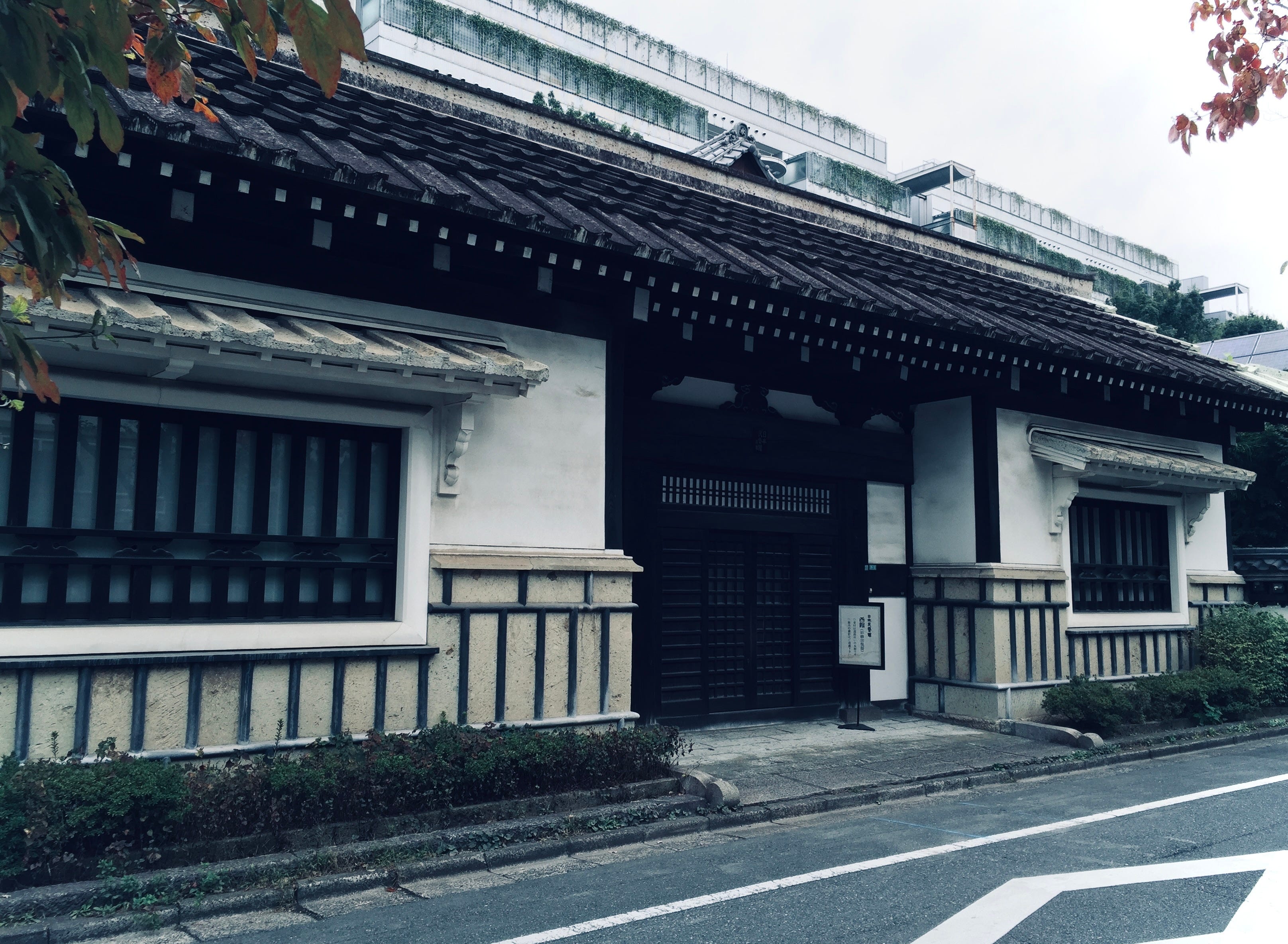
SOME DAYS LATER I go to what I thought was the house of the philosopher and art critic Sōetsu Yanagi, but which turns out to be the Japan Folk Crafts Museum, founded by Yanagi in the 1930s. There is a profound satisfaction of being in the space, feeling the planes of the rooms around you — how such interiors must have been so important in ordering ideas, in creating a new movement of art — which Yanagi christened mingei, or folk craft. Tatami mats define the room dimensions, so that the focus is horizontal, rather than based on wall display, as it is in Europe. Throughout the rooms of the museum drifts a recording of Sōetsu’s wife singing Schubert. There is the feeling of something important and original going on, beyond the prim aesthetics of the tea ceremony, and the heady transport of the ukiyo-e.
The important thing is what seems otherwise suppressed in histories of Japanese art, with their epochs named after warriors and rulers — the creativity of ordinary people. Yanagi once stood for a long time in silence before Chartres Cathedral, before saying, simply ‘This is what you have lost’.3 The collaboration and craftsmanship that could produce such a monument give more meaning to life than most other human activities, as Yanagi wrote in the book The Unknown Craftsman:
‘There was little freedom in old Japanese society, the hand of the samurai was very oppressive, but out of the life of the mass of the people these fresh flowers bloomed. The life of the people themselves is unfortunately not given much attention by historians: one reads about the aristocracy and the great. I hope that this museum will be a slight corrective’.4
There is a spare feeling to this culture, a dryness that seems the peak of some idea of civilisation. Perhaps civilisation is too western a word.
Contrasts count, so in the afternoon I take the subway to Electronic City, around Akhibara Station. With blue rain and a few drones it would be perfect Bladerunner, complete with the amplified Japanese voices, exhorting, seducing, extorting. In one long street of low-down commerce the gothic Lolitas and Harijuku girls are handing out leaflets telling where to buy what they are wearing. A theatre and cafe seemed to be the epicentre of this, the AKB48 cafe, devoted to the Japanese pop idol group, full of strangely discomforting images of the singers. What of a society that tolerates this?
Like some Victorian worthy I pretend that I had gone astray on the journey to my true goal, the International Origami Centre. I am not sure if I have dreamt of this place over the years since the origami books first arrived at home in Reading, but it seems like a shrine of sorts. I watch some paper folding, paper dying, and bought some of the chiyogami papers remembered from over thirty years ago. A narrow building on three floors, the top, marked in Japanese script ‘Private’, reached by a long flight of steps, up which I climb, a profession of western ignorance ready, eyebrows raised, if challenged.
At the top another short corridor, then an open doorway. I peer in. The director’s office, clearly, for the space and emptiness, a couple of bookshelves and award posters. Stranded in the middle a small desk, at which a grey-haired man sits, deeply absorbed in paper-folding. I watch him for a while, expecting him to look up. He doesn’t. I leave.
What are the three things you need in Japan? Clean shoes, a business card, and some Zen emptiness.
10
AFTER DAYS of Japanese and Chinese art, it was striking to see European paintings in the National Museum of Western Art.
Seen at such a remove, everything looks quite different. Renoir’s Parisienne women posed in an oriental harem look like nineteenth-century cosplay. A room of Monet, some extraordinary late paintings, now seem like exercises in calligraphy. There is an extraordinary self-portrait by Marie-Gabrielle Capet (whose name I have never before read) at the age of twenty-two. She hangs in a room of old master paintings, all bought over the past fifty years, and still learning to hang with each other.
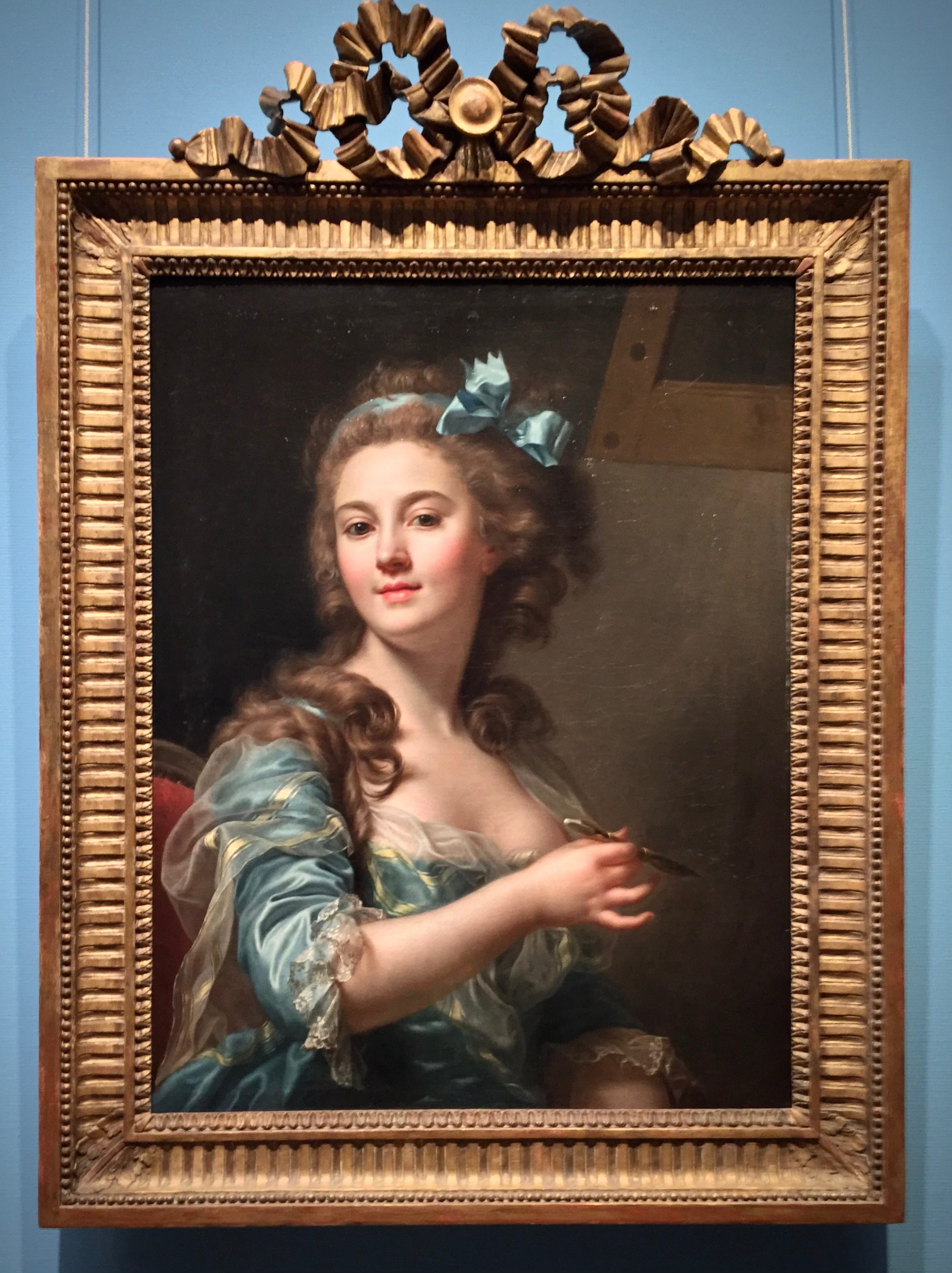
Kojiro Matsukata, a wealthy industrialist, collected on the advice of the painter Frank Brangwyn. He also left the design of the museum, which he was going to call the ‘Sheer Pleasure Fine Arts Pavillion’ to Brangwyn, although it never happened due to economic crisis of 1927. The paintings were dispersed by auction, others destroyed in a fire at the Pantechnicon storage facility in Knightsbridge, London, in 1939. The remainder were kept in Paris at the Musée Luxembourg and sequestered in 1945 (presumably as war loot), but then returned to Japan in 1959. The Kawasaki Dockyward co., Matsukata’s company, is now Kawasaki Heavy Industries. Such a heavy history for a collection of paintings, which themselves seem so strangely out of place here, as if they were being tolerated, or shown as examples of a totally different, and less desirable world view. Against the simplicity and lightness of Japanese art, the heavy industry of European oil painting.
In the Edo-Tokyo Museum, a small wooden model recreating Hokusai’s studio, where the master and his daughter, Katsushika Oi, worked together.
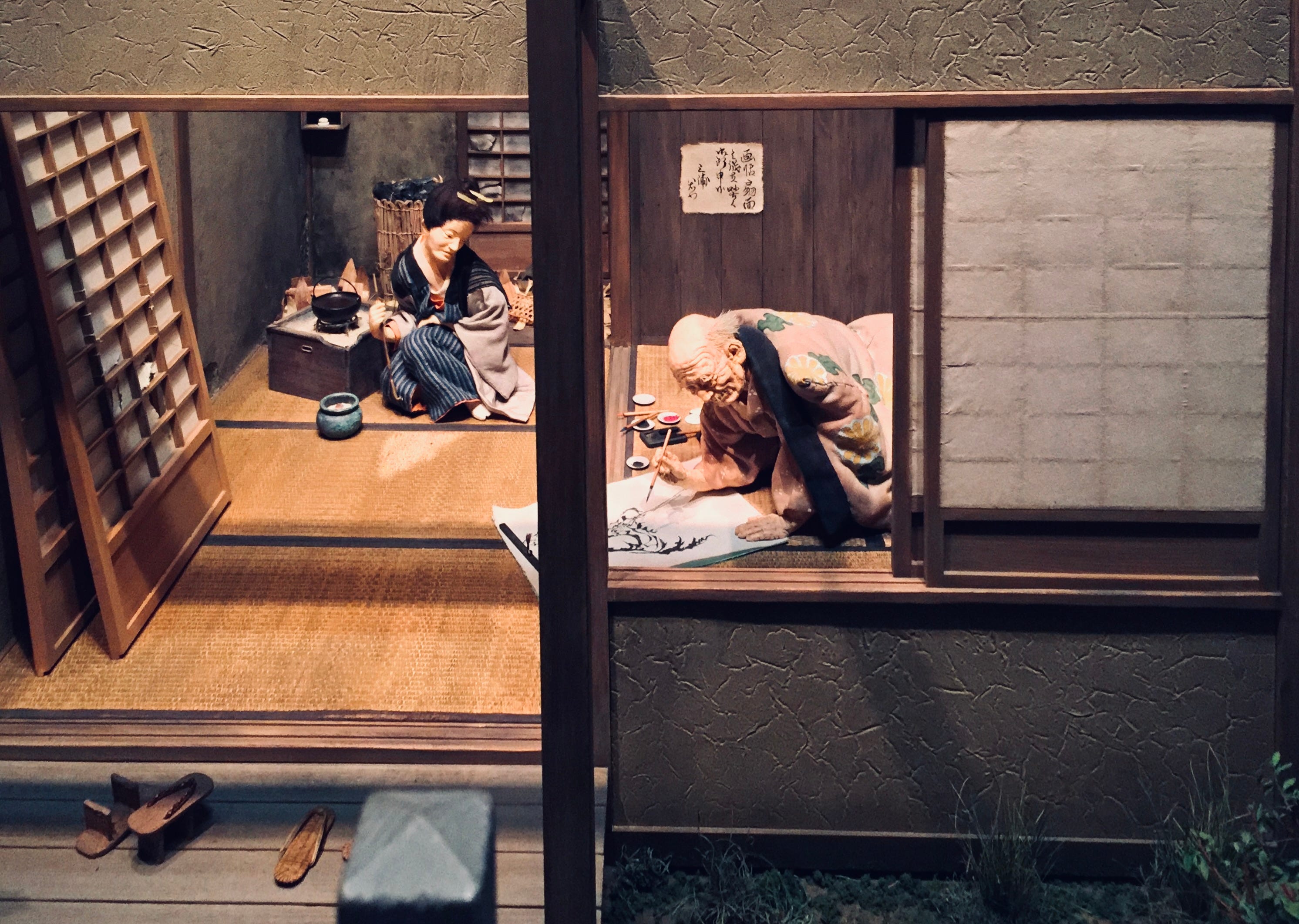
The museum label:
“Here one can see Hokusai’s studio in one of his temporary rented abodes at Hannoki Baba (present-day 4-chōme Ryōgoku area in Sumida-ku). At this location the 83-year-old Hokusai lived with his daughter, O-ei. Hokusai’s masterpieces were produced in small, wretched houses like this one”.
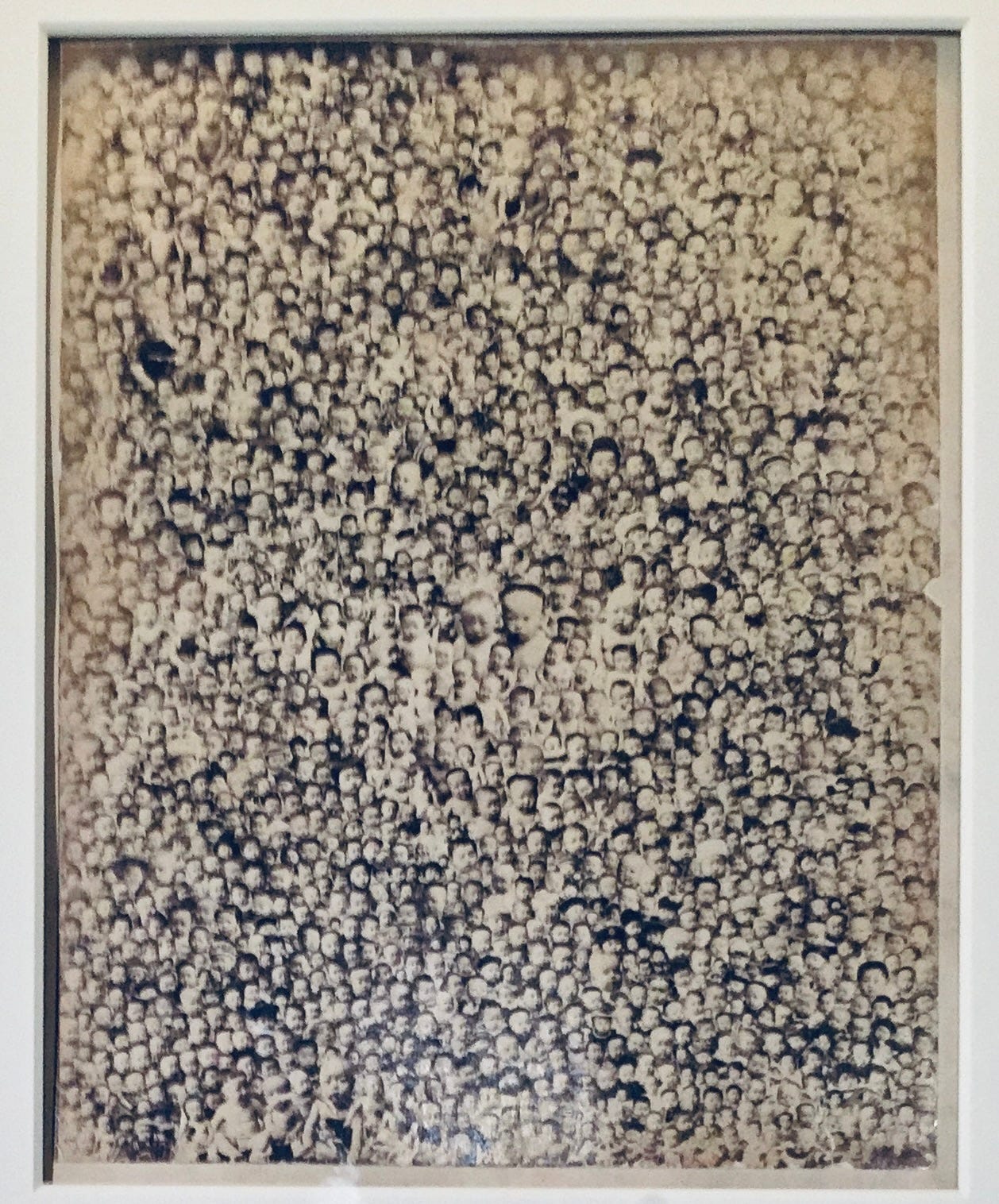
In the basement the astonishing 1893 collage by the Tokyo photographer Esaki Reiji, 1700 Babies: One Thousand and Seven Hundred Children Took Three Years Came to My Shop. The combination of a sort of violent intensity and a humorous, Pop art feeling — very difficult to place (for my Western mind).
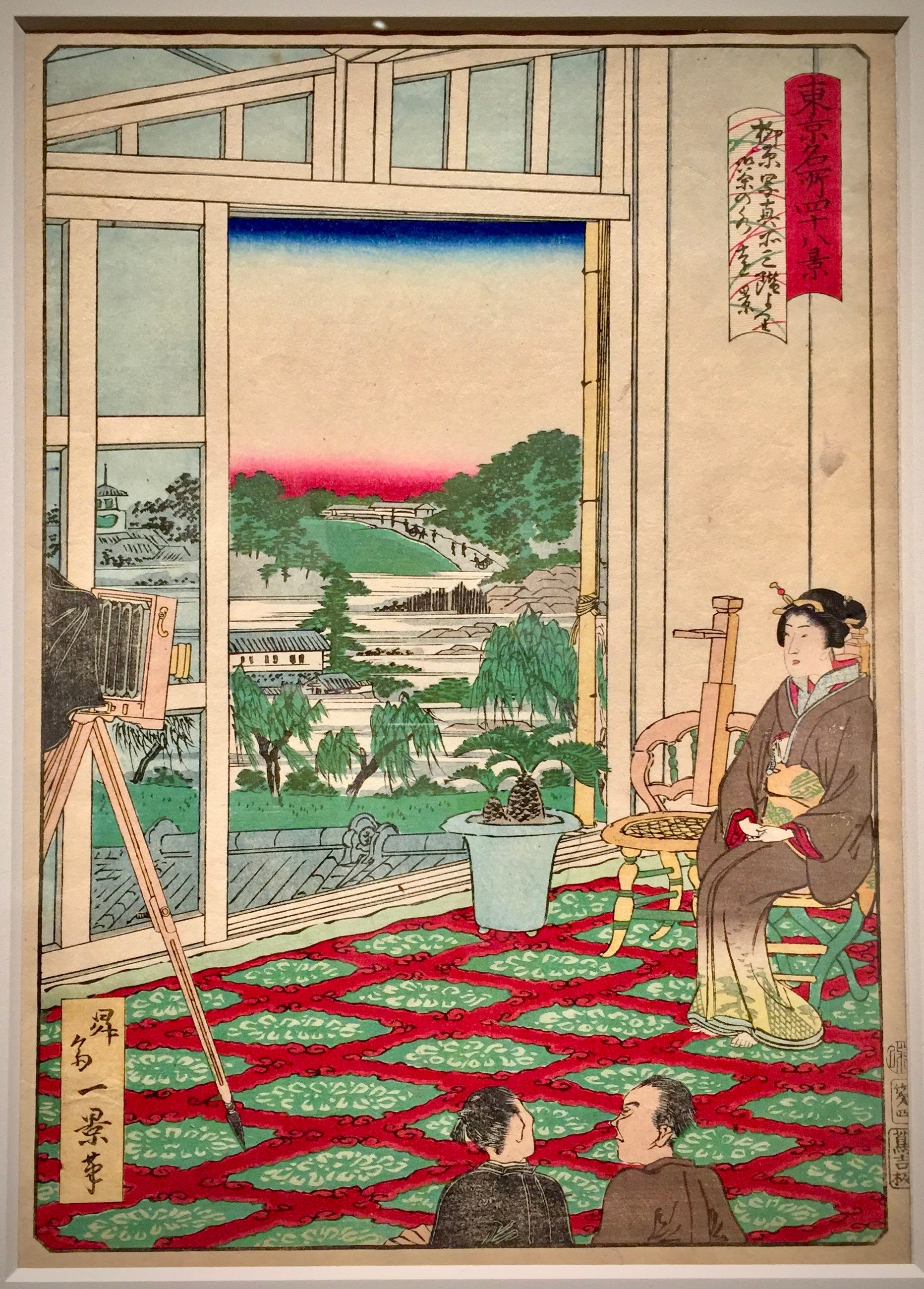
And then some prints by Toyohara Kunichika, a late ukiyo-e artist, of women being photographed and looking at photographs. More Pop art avant-le-lettre. Or perhaps Pop art was a late offshoot of the Japanese floating world.
In the Museum of Western Art, everyone was taking photographs, especially of Monet. Sometimes taking a photograph appears like a psychological act — we photograph what we cannot understand, as if to store it up for future contemplation, or create a little distance. You never see a camera in a gallery of Japanese art. In the Museum of Contemporary Art, a room full of large paintings by Lee Ufan, the atmosphere was oppressively silent. The great firmament of contemporary art — salon contemporary, as I call it, buoyed by an all-encompassing market. The silence seemed to signify a failure both for the art and the audience.
Traveling on the subway, a screen announces that the incoming Yamagata train is delayed after collision with an antelope. On a screen alongside a man is serving thin grey noodles to admiring women.
11
DARKNESS comes quickly in Tokyo. Daylight suddenly shivers and thickens, details become indistinct. Life gathers around the streetlights, place in dark foliage to give a sense of intimacy, or around the white lanterns hanging outside shops and bars with their vivid calligraphic utterances. Few cars trawl the side streets, lined with low houses. A young lady with a soft almond face, wearing a soft grey dress and a white cardigan walks in the dusk. Only her soft footfall creates a stir in the street’s quietness. A sweet waft of sandlewood incense drifts over the street, passed closing bookshops, booths selling food on skewers, and the bars that modestly mask their entrances with long red banners, so that you have to stoop to see inside. Suddenly a cascade of white bellflowers appears down a concrete wall, in amongst wires and cables, lit by a dim lantern hanging still. A young girl crouches to stroke an enormous ginger cat, slumped strangely inert on a street corner. The air is heavy and close, disrupted intermittently by a breeze. Couples hurry by, hardly talking. A girl peddles her bicycle with high tapering heels, pulling down the back of her white top attempting to cover the thin strip of her shorts. Taxis drift past, gleaming black, or dirty yellow with a red stripe. Everywhere a quiet animation.
This is the Japan I had always imagined, the floating world, like walking into a woodcut by Hiroshige.
12
THE 10.33 HIKARI Shin-Osaka Superexpress bound for Kyoto. The pike-nosed bullet train. And here it is, the first sight of Mount Fuji, that most perfect Japanese object, and the most famous mountain in art, alongside Mont Sainte-Victoire in Aix. Each side rises up, perfectly synchronised, gradually accelerating to meet the snowy lip, like the effortless glaze of a Zen ceramicist. It makes you believe in the Shinto nature gods. It makes you believe in Hiroshige, Hokusai.
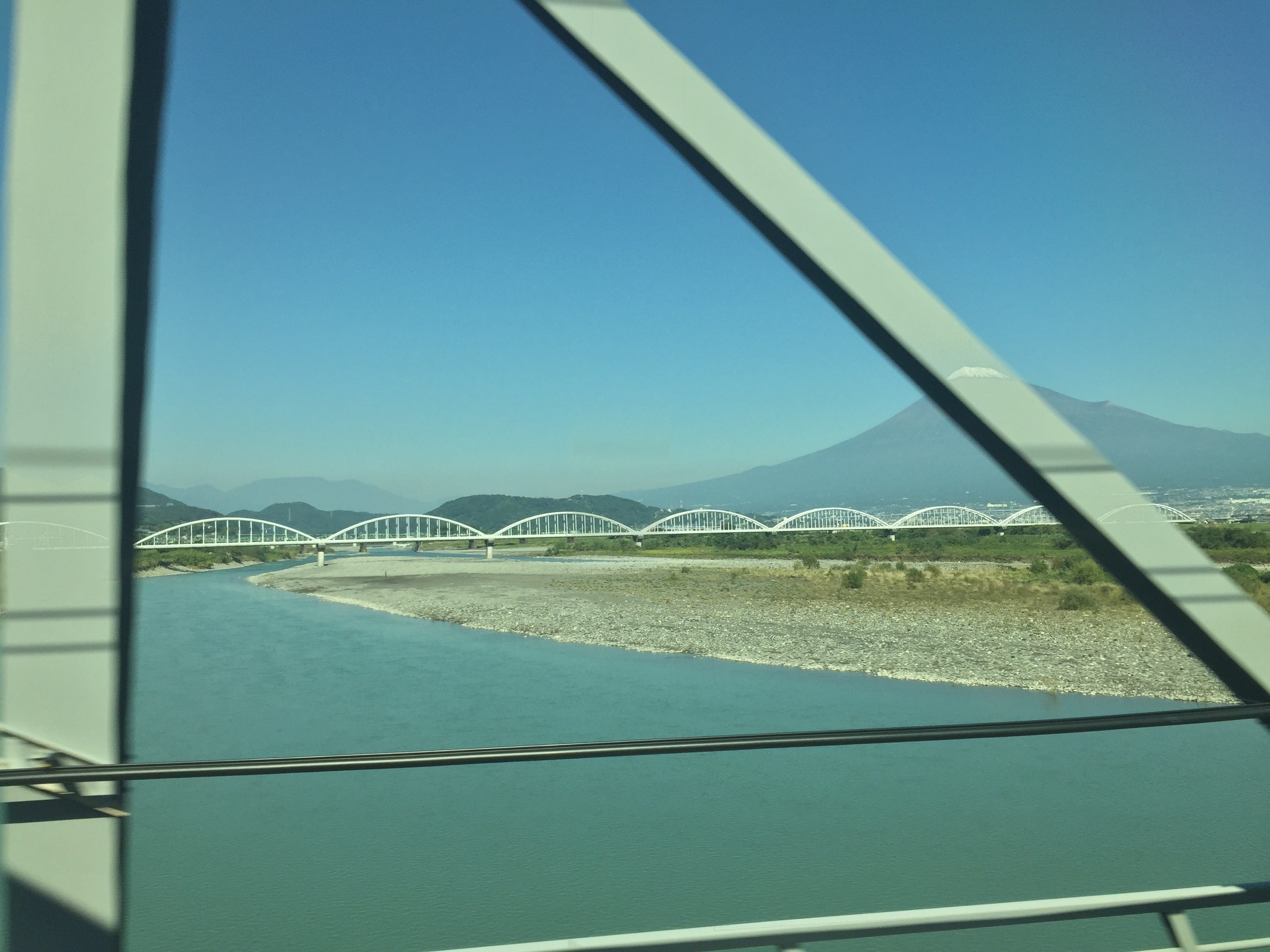
The landscape, it should be said, is otherwise ugly, flat, industrialised: poured concrete and porridge-toned buildings, regulated farmland bordered by irrigation channels and utility cables. It is a landscape strangely devoid of imagination, except in the distance the dark green steep-sided hills, with their thick sultry foliage, like those you see in yamato-e painting.
A lamppost sign near Kyoto station: ‘In the Beautification Enforcement Areas you will be fined up to 70,000 Yen for dropping litter regardless of nationality or status’.
I am staying at the Capsule Ryokan on Schichijo Street, on the north side of Kyoto station. It is rather like renting a cupboard in a youth hostel, and unusually poorly designed and conceived for Japan. The dorm has nine capsules, each ‘Ryokan’ style, ie, with tatami coverings, which makes the television in each pointless, as it would disturb everyone else. The capsules are not sealed, so not really capsules. A sign inside the door of the shared bathroom: ‘Please remember to unlock door before leaving’.

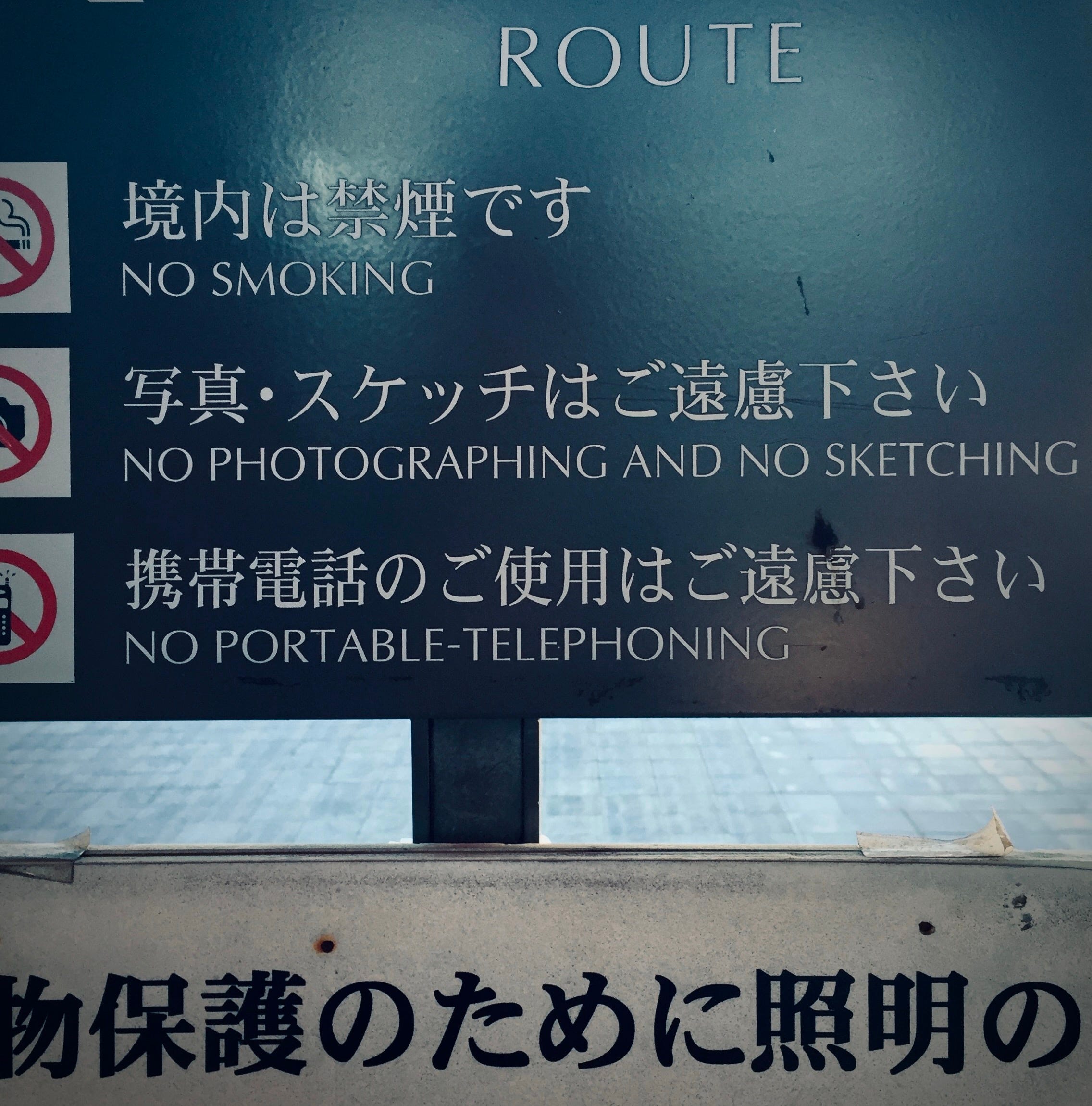
A walk down grey facade-less streets, all concrete and wires, as if the city was inside out and every street an unappealing back street, to the sanctuary of the Tō-ji temple. I want to be impressed by the large statue of the Yakushi Buddha in the Kondo Hall, the main temple building, other than the great Pagoda. But it is impossible to see through the wooden slats in the darkened interior, and feels dusty, oversized, the whole thing designed to crush the spirit. Despite what Tanizaki says about the profundity of shadows, peering through chicken wire to a gloomy room is not the best way to see art - you don’t see it. Photography is not allowed, but sketching is also banned, which on the one hand recognises the power of art, but also feels uncommonly wrong.
Either side of the Yakushi Buddha in the Kondo temple are large cast metal flowers, like sculptures by Jeff Koons. The Pagoda is lofty and dark, the tallest wooden building in Japan, but somehow top-heavy and inelegant, the six layers being all exactly the same. The silhouette is impressive, but there is something frustrating about a building not designed to be entered or inhabited.
Then a bus up to the Nishi Hongan-ji, the largest temple site in this city of temples. The two large temple-halls here, the Hall of Amida Buddha and the Founder’s Hall, with tatami matting, and the golden idols hidden behind a screen, are the least spiritual religious buildings I have visited. Self-important young monks walk swiftly around, opening and closing doors. A Japanese family walks in, the young boy of seven laughs out loud at the golden Buddha, peals of screaming laughter. It feels like the correct response. Around the precinct are more gaudy little rooms. A young monk stands in front of the temple and recites names loudly and quickly, a mixture of deep stillness and deep agitation that seem like a form of madness.
None of this does the subject any justice, but I wonder what can be said about Buddhist art, at least for the purpose of my book. The truth is that I don’t necessarily like it, which means I cannot find a way in — it is an art devoted to closing your eyes to the world, an art of radical self-absorption, that leaves you cold. But then I can’t just repeat the western view that it is all about the Greek influence on the art of Gandhara, and that this is where figurative Buddhist sculpture came from, after the early period of aniconism. This might be true but it deflates it further - far better to find an origin for these figures within India, and trace their migration east, before they arrived in Japan, here in Golden Halls of Kyoto, as if it were a form of destiny. It is all about the journey, rather than the arrival.
13
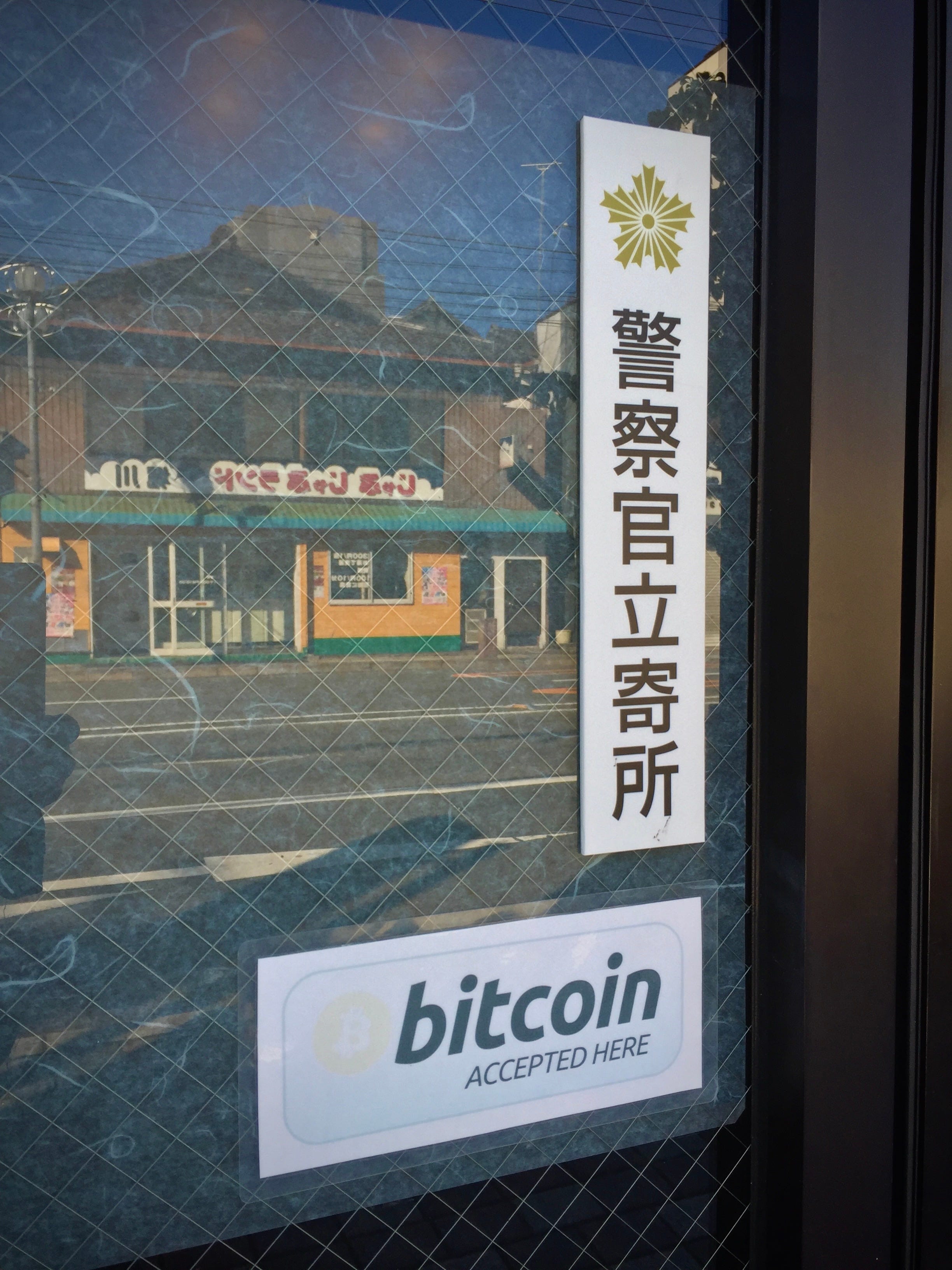
THE CAPSULE RYOKAN has a sign outside saying it takes bitcoin. Four people in the past two years have paid in this way, the man on the front desk tells me. At breakfast, tea is served in black cups, made of hardened plastic, but which have a slightly irregular form, like tea bowls. I ask if I can buy one. The young man says, just take one.
A failed attempt to visit the Kyoto National Museum — yesterday was a holiday, which somehow means that today is also, and the museum is closed. So instead in the direction of the Imperial Palace, before realising that the Katsura Summer Pavilion is somewhere else, and now I am lost on the S9 bus, trying to find a rock garden, and an elderly traffic warden is bowing to me and saying konnichiwa. I arrive at the Kinkaju-ji, the golden temple, and it is even more pointless — an ugly building, seemingly designed entirely for tourism (and what are the pilgrimage religions but not the original tourism?), and hard to break through to some living core of experience. So much like this nowadays, as if the ease and cheapness of arrival has hollowed out the ancient monuments that were once such great stores of the human spirit.
14
EN ROUTE TO NARA I read a review of Beyond Words. How Animals Think and Feel by Carl Safina. It is a book about humans and animals, and how we might understand other animals, ‘beyond language’. It is a little like understanding works of art from another country, where all you have to go in is pure looking and feeling, rather than words. It is why works of art from other language traditions are always more interesting, or interesting in a different way — they are the animal gaze, rather than the educated explanation.
And then at Nara the sika deer are everywhere, a strange incursion of wildness, although I cannot but help see them through the lens of Japanese painting, rendered in ink with a few deft strokes by Tōhaku, or printed in three woodblock tone by Hiroshige. Later I read that they have all been designated national treasures, and wonder what this could mean.
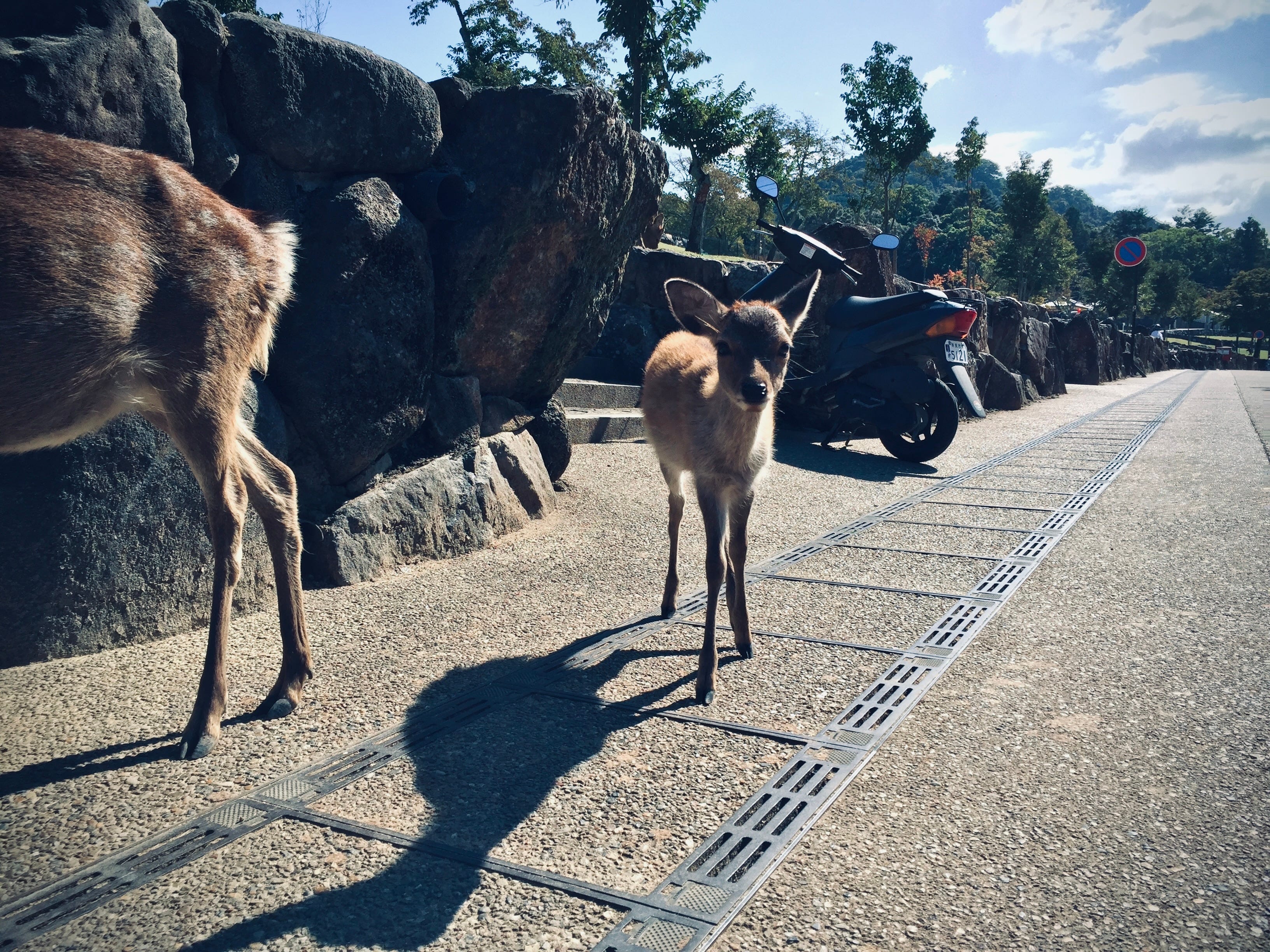
The deer wander around rather pathetically, scavenging from the tourists, becoming pure kawaii, disney-cuteness, so that you secretly hope that one adult deer might rear up and become a wild animal once again.
The Shōsōin, the National Treasure museum of the Tōdai-ji temple at Nara, is closed. It opens again in a few days, so that I wonder if I might make it back — Nara is after all only a short bus ride from Kyoto.
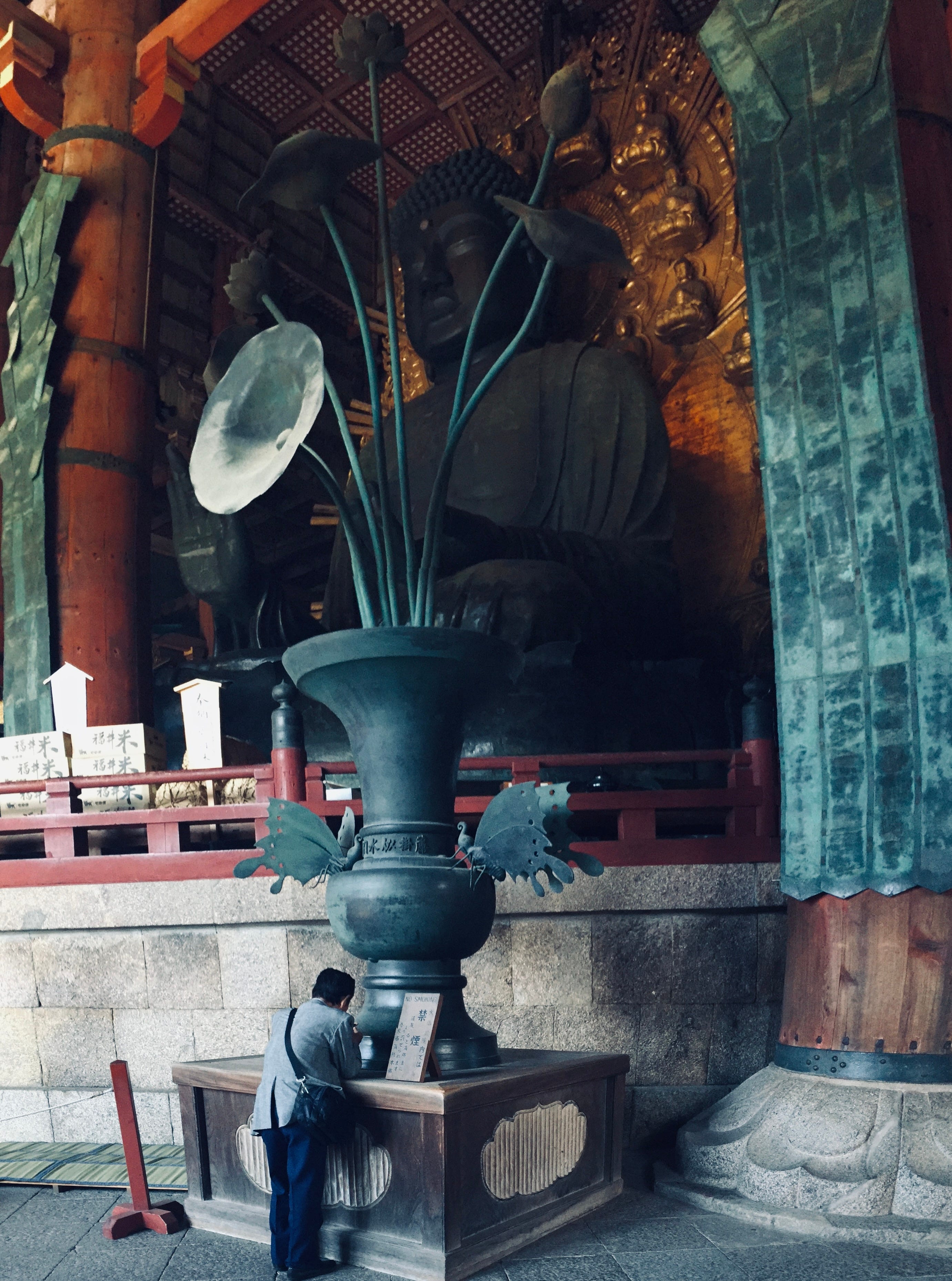
Instead up to the main temple building, to see the great eighth-century Daibutsu Buddha, the largest bronze sculpture, it is said, ever made, sitting eternally out-of-proportion, like a Buddhist Alice in its reconstructed doll’s house. The Daibutsu was made by thousands of people working together like the communes of cathedral builders in Europe – how empowering it must have felt to create something so vast, so other-worldly, at a time when most of the world was still so small and homespun and quiet. It was brought to life at the opening ceremony by an Indian monk who was hauled up fifty feet to paint in the eyes of the figure.
But also how disappointing that this communal effort should be entirely devoted to what is essentially an image of worldly power. The Kongō Rikishi, warrior guardian figures at the gates of the temple, carved in wood by the great twelfth-century sculptor Unkei are far more impressive, their dancing poses like the contrapposto of a Hellenistic dancing faun.
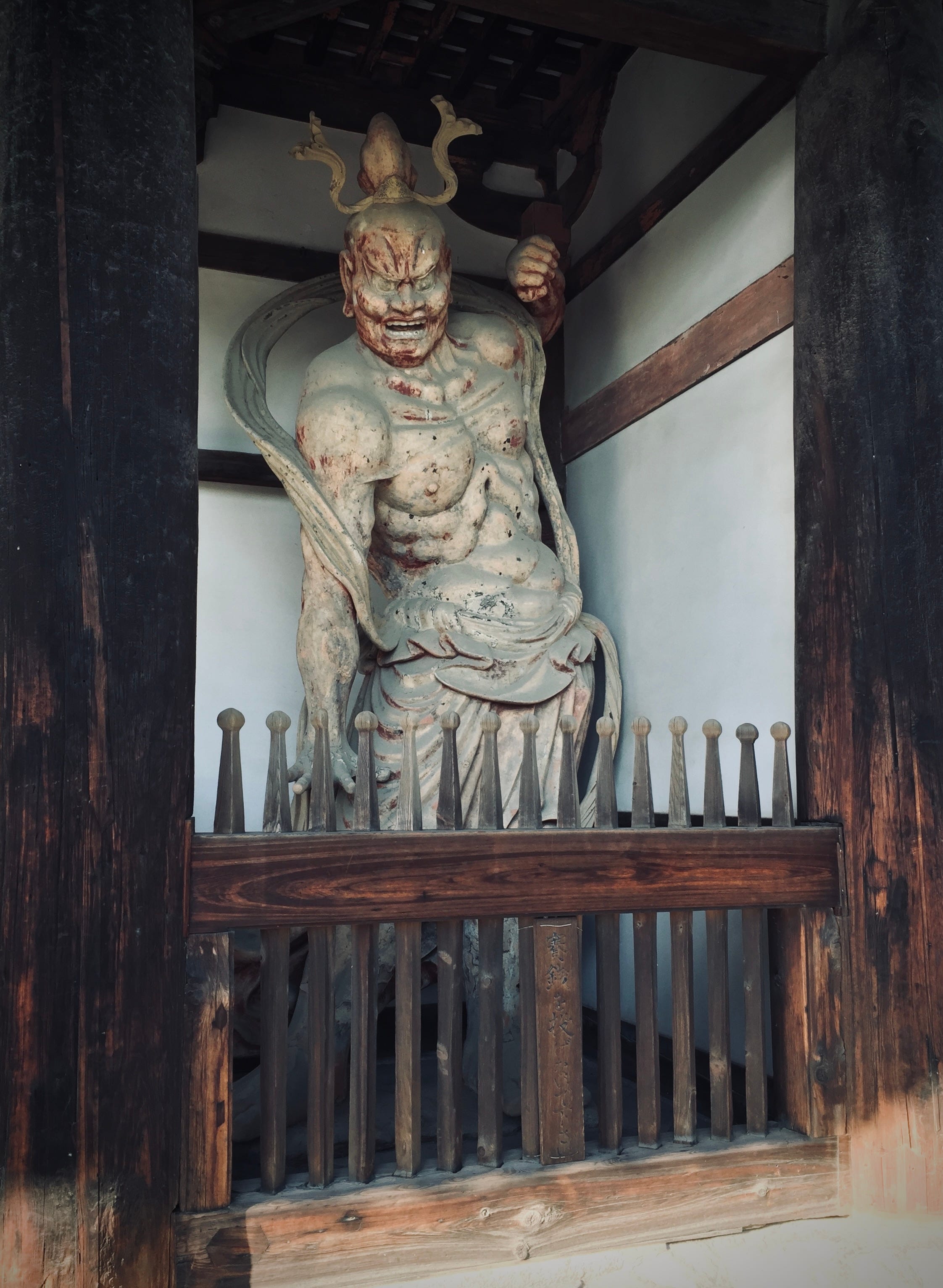
I sit for a while reading about Unkei, whose name seems to mentioned in the same breath as his contemporary, Kakei, probably because of the difficult of distinguishing their works from one another, from the photographed pages of Yukio Yashiro’s Two thousand years of Japanese Art, on my phone:
‘The reaction against the decadent beauty of Heian times and the study of old works produced great sculptors like Unkei and initiated a new and brilliant epoch in the history of Japanese sculpture’.
This sounds a little like art history by tradition, a glossing-over passed from book-to-book, and I wonder where Yashiro got his story from. But it will do. The Kongō Rikishi in front of me are the largest wooden sculptures in the world, Yashiro writes — although that record has surely been surpassed by some contemporary sculptor nowadays.
The period in question is Kamakura - think Samurai warriors and martial vigour. It is the thirteenth century, roughly speaking, but somehow reminds me of the vigour of Venetian art three centuries later — the dancing warrior guardians remind me of Titian’s dancing Bacchus in the great Bacchus and Ariadne in the National Gallery in London. If the origin of Buddhist sculpture, as has often been suggested, was in the Hellenistic world, Indian sculptors in Gandhara seeing the works of the Greek diaspora, then both Unkei and Titian might be traced back to ancient Athens — although all of this is like drawing lines in a stamp album, and doesn’t seem to help much in understanding these powerful wooden figures, guarding an Alice-in-Wonderland bronze Buddha.
The Kamakura period of sculpture was short-lived but brilliant, Yashiro writes — it was quashed by the rise of Zen Buddhism, which was all about emptiness, rather than great dancing warrior figures.
I’m glad to have read this, walking passed more hopeful deer to the Treasure Museum of Kōfuku-ji, another of the temples ranged in the large gravel expanse of the Nara Park.
It is one of the handful of great revelations of art that I can remember, the standing and sitting wooden figures of Buddhist saints and heroes. Another Kongō Rikishi, this one by Jōkei, as a document found inside the sculpture attested - gilt-edged provenance (although, as Yashiro points out, there were three Kamakura sculptors of that name). The label describes it as ‘Mouth Opened’, to contrast with the other warrior guardian figure, subtitled ‘Mouth Closed’. Mannerist, exaggerated muscles, tense violent poses, more overdone contrapposto, like frozen disco moments, all of the elegant violence of traditional Japanese figures sculpture. This is the inner contrast, the clamour and the silence of Japan, something you see and feel everywhere you go, as if a sort of deafening quietness, or calm in the eye of a storm, the noisy pachinko slot machines next to the library-like tea room.
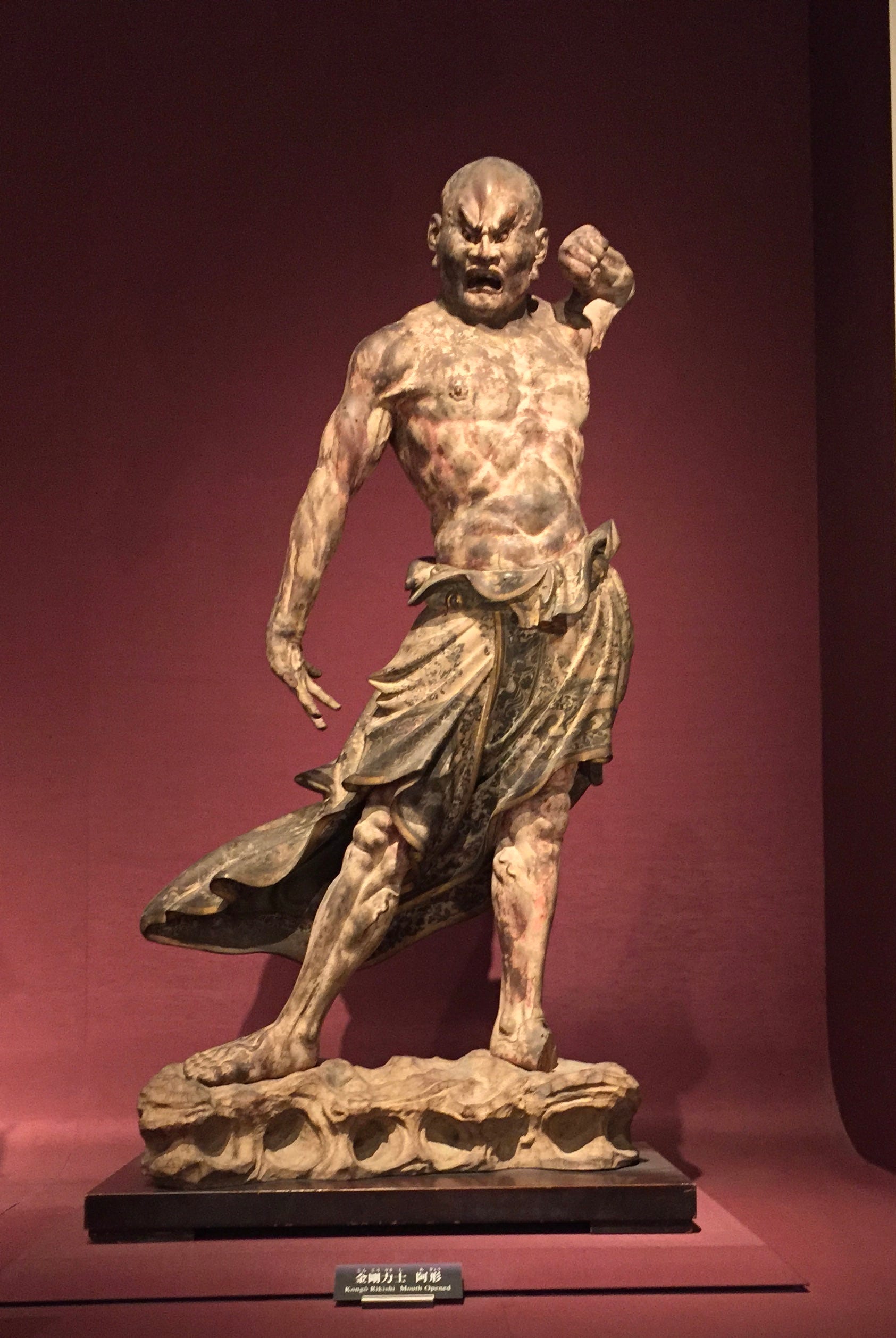
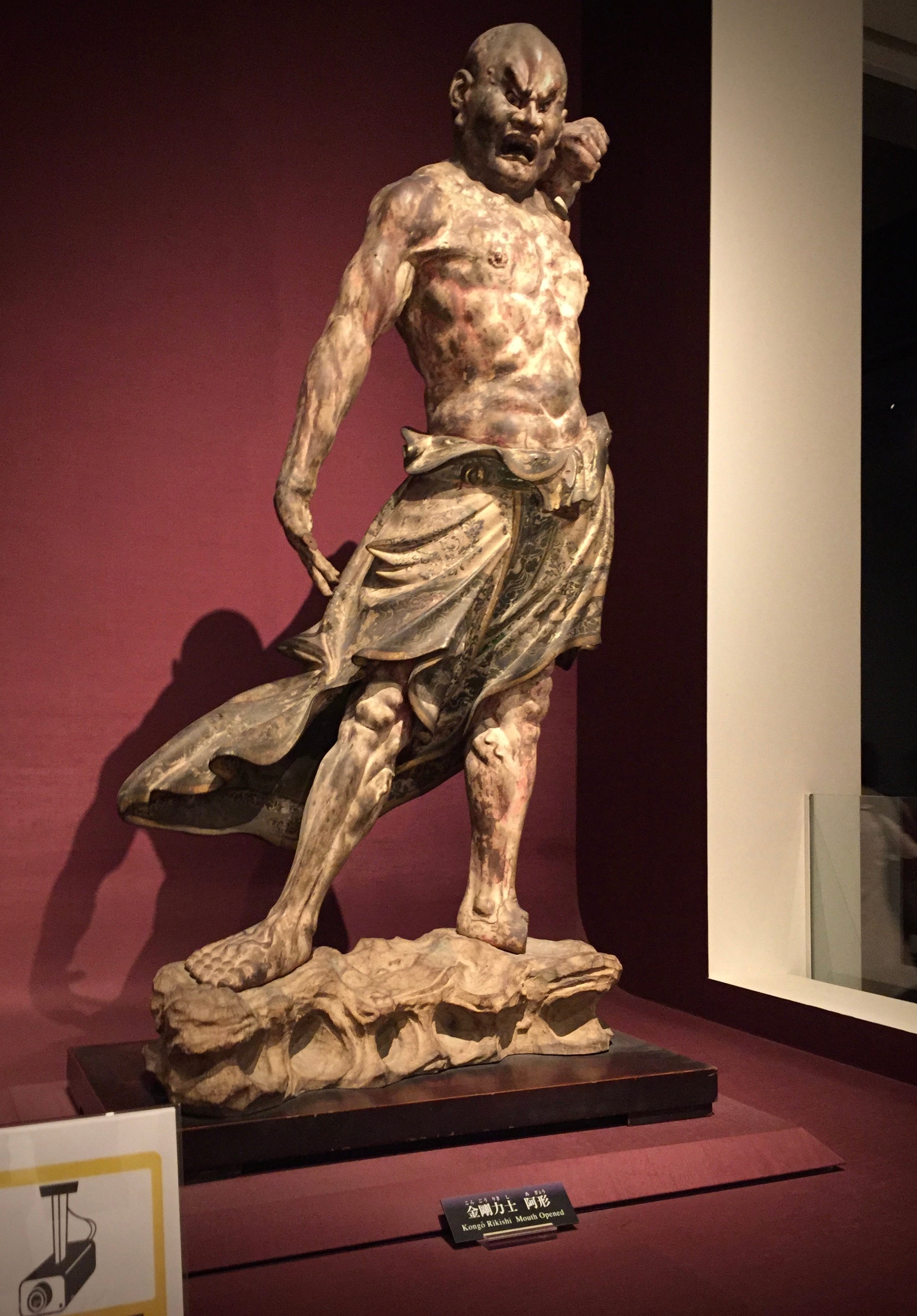
They are remarkable carvings, baroque in their taut energy and anatomical exaggerations — making you think of Bernini, an artist who came five hundred years later. Even the most advanced and realistic of sculpture in Europe, the portal figures at Chartres, look, well, wooden by comparison.
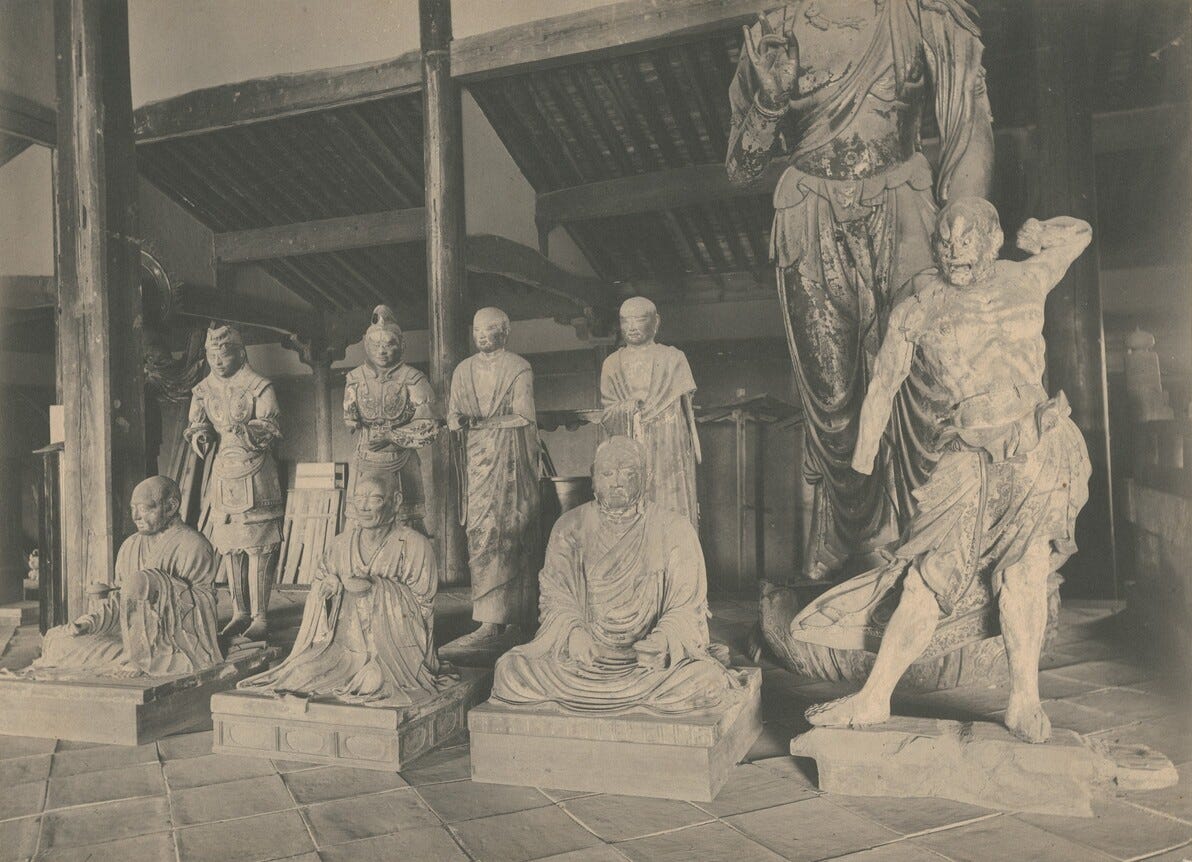
The wooden sculptures at Kōfuku-ji used to be housed in a building known as the Hokuendō, the ‘Northern Octagonal Hall’, and are thought to be by Unkei and his followers. They must have been moved around, as the photograph here was taken in the 1880s of the sculptures ranged in the Kondō, or ‘Golden’ Hall, the central building of the monastery.
Even more impressive than the open-and-closed mouth warriors are the six seated monks of the Hossō sect of Buddhism, made, Yashiro writes, around the year 1208, again by Unkei. Four of the six are here: Zenshu, Gemboh, Gembin and Tōtoh. Their faces are carved with a marvel combination of religious fervour and monastic humour. Realism with just a touch of caricature.
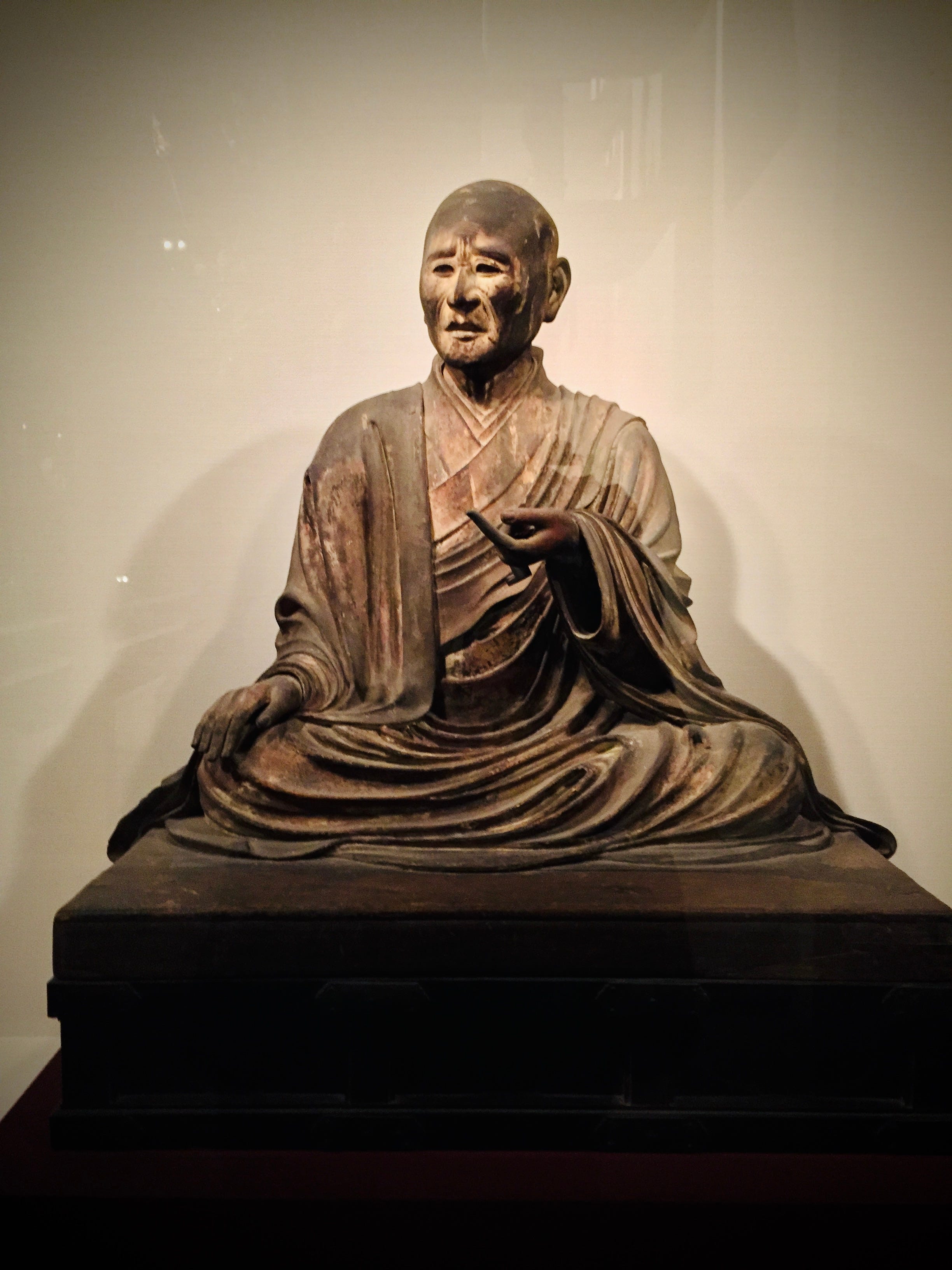
These figures by Unkei are the greatest naturalistic sculptures anywhere in the world between the decline of ancient Rome, and the rise of a new spirit of exactitude in sculpture in Europe a couple of hundred years later. But earlier still, by another four hundred or so years, are ten sculptures of Buddhist monks dated to 734, and strangely not mentioned by Yashiro. They have the pathos of early Italian sculpture, Pisano, but something else, a sort of lightness of being, which you do not find in Western art. And in any case they are two hundred years earlier than Pisano, and filled with a human drama and psychology that you would find nowhere in European sculpture or painting of the time. It was as if the spirit of antiquity had migrated far to the east, before returning as a catalyst for the second great moment of art in the west.
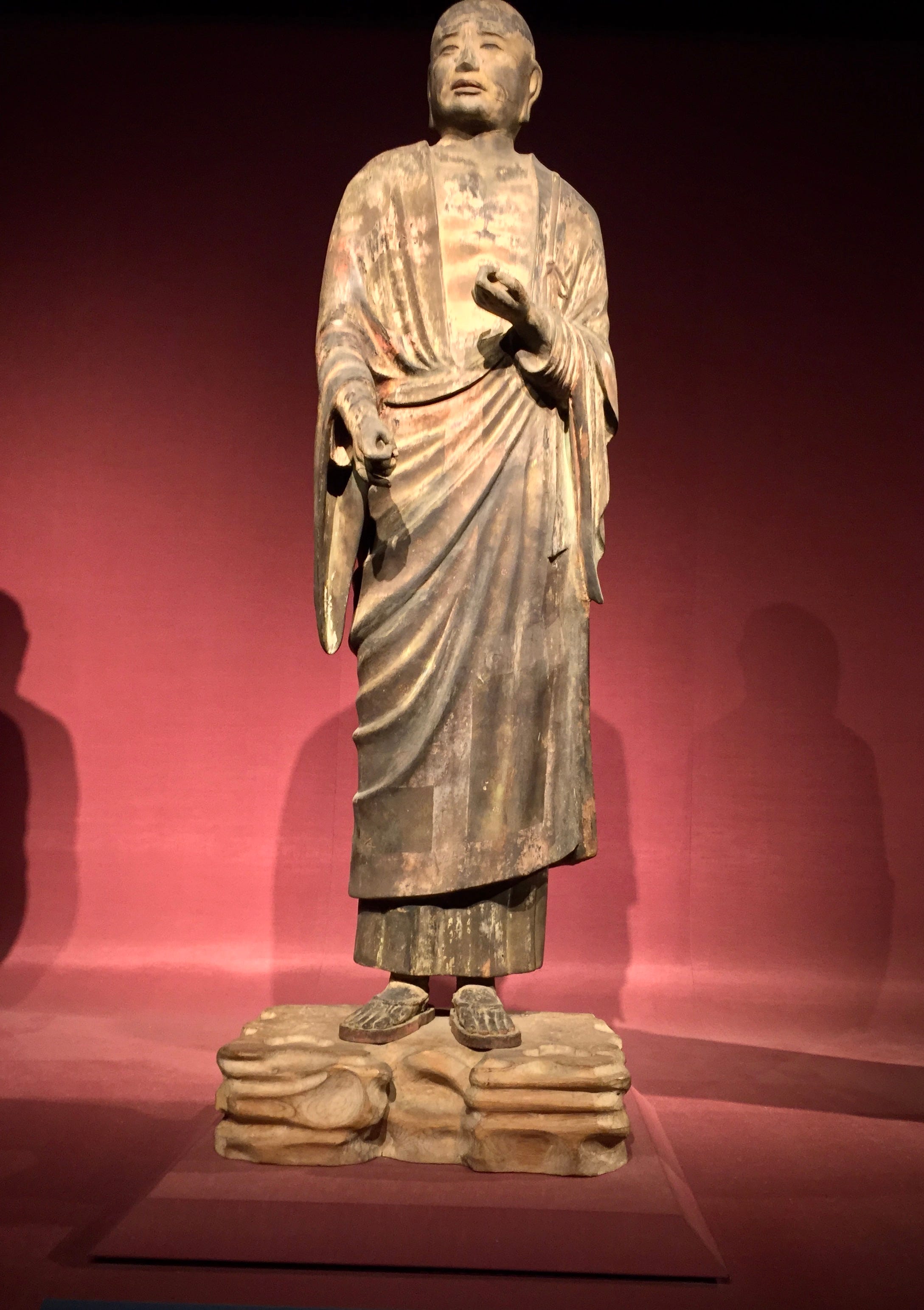
I take a photograph of one of these sculptures, of the Buddhist monk Furuna, known as a persuasive preacher, and who seems to be mid-oration, his robes clinging to his emaciated ascetic’s body. He is gazing into the distance, as if trying to give voice to a difficult thought.
A treasure-house guard comes around and makes me delete the photographs I have taken on my phone of the sculptures, which are difficult to find in books. He is officious and jabs a figure at my phone, trying to press the little bin himself. He seems to be satisfied when I show him that they have all been deleted, which of course just means moving them to the ‘delete’ folder, to be recovered later on. I have, after all, come all this way, and to a purpose.
15
JUST AS EACH LEVEL of a pagoda is the same as the one beneath, and might go on endlessly, so time seems to turn on itself in Japan, and endless succession of ephemeral sensations and moments. This is the legacy of Buddhism, but also of Shintō nature awareness, and seems only to disappear in the late Edo period. Tanizaki laments the incursion of the modern world into the Japanese realm, and it is hard not to agree with him, but neither to feel that this realm still does exist, and can be entered by the sight or even touch of a magical object. ‘A moment of mystery, it might be called, a moment of trance’ — Yashiro.
I think of the Nara sculptures, of Furuna and the Open-Mouthed warrior, on the long train and bus journey to Hōryū-ji, south of Nara, but still within the great urban sprawl around Kyoto and Osaka. It was a true revelation, which forces me to rethink my vague map of the history of art, of what was possible at certain places and at certain times. My European bias has taken an excellent battering, such that the more I think about it, the more that this art, this world — by which must be meant also the art of China and Korea, which I know even less about — is the origin of aesthetic thought and feeling, and that Europe is a crude echo, or at least weighed down by lumpen materialism. You might come for Hokusai, but you do not remain for him.
And yet… this whole tradition of Buddhist sculpture and yamato-e painting remains out of reach, beyond the European ken, unless you are prepared to undergo a complete reprogramming, so that being in Japan looking at art means being stranded in a sort of art purgatory.
Hōryū-ji might be a good place to consider all of this — it is degree zero for Japanese art. It is the first time Japanese art emulated China and Korea, after the arrival of Buddhism in the fateful year of 552 AD. This is the story told by Yukio Yashiro fifty years ago, and I wonder how true it remains today — probably largely intact. The treasures of Hōryū-ji, preserved from the seventh-century, are the most valuable antiquities anywhere in the world, Yashiro wrote, and the structures in which they are kept the most important (whatever that word means) buildings in Japan.
The Hōryū-ji pagoda is the greatest of these structures, and wonderful to contemplate as a sculpture.
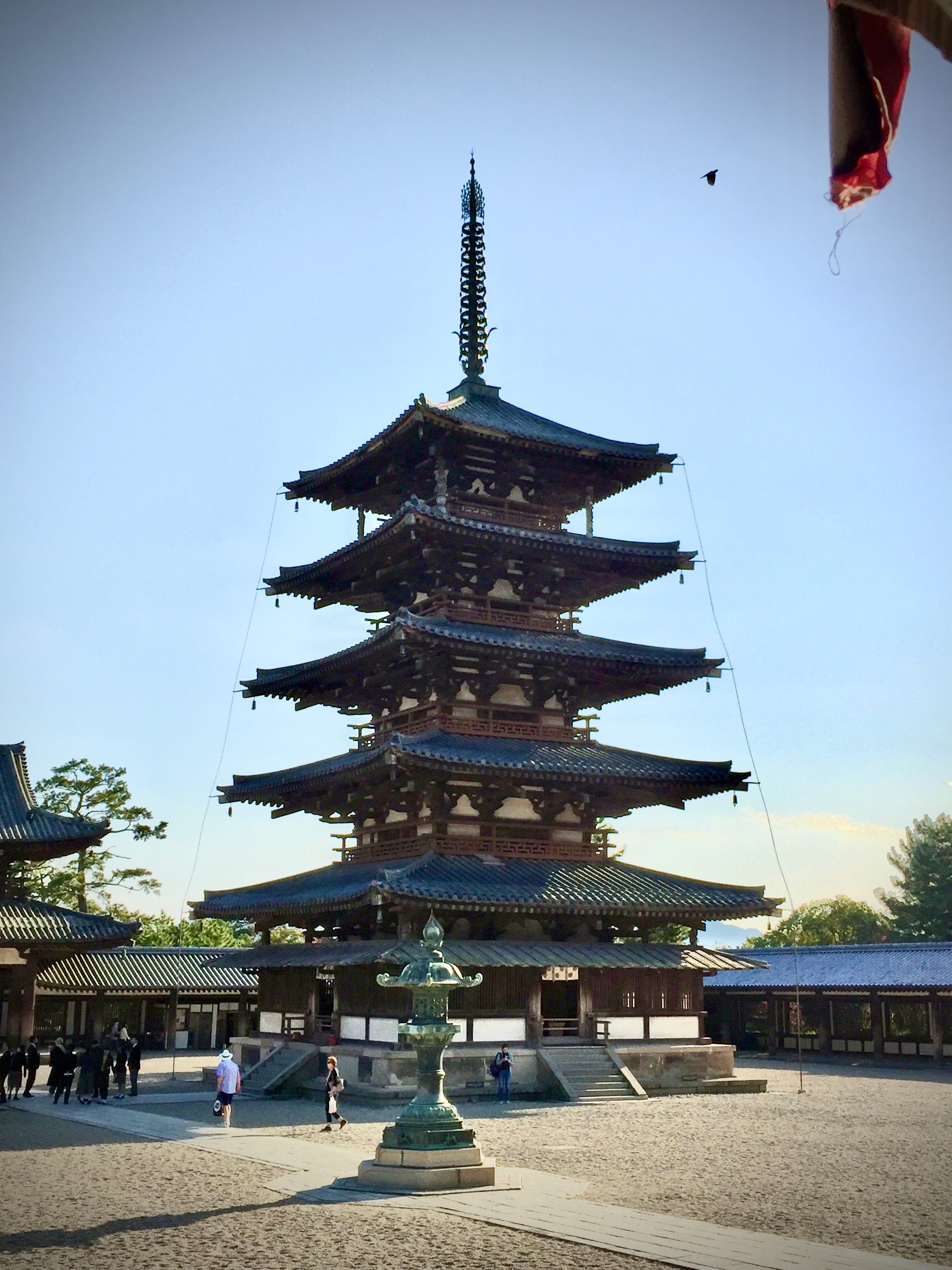
Images carved from the life of the Buddha are kept inside the bottom level of the pagoda, surrounding (it is said), one of the bones of Siddharta Gautama, above which a pillar ascends to emerge from the top of the structure, as if an antennae, broadcasting the message of non-violence and personal salvation far and wide. You realise that it is not really a building at all, but rather a giant reliquary, or a symbolic structure, like a Roman triumphal arch.
I buy a small book, in which a calligrapher makes his very deliberate marks - the idea is that you pay for a calligrapher at each temple to write in your book, an album recording visits. What does it say? The name of the temple, a symbol for ‘Peace and Friendship’ and then today’s date. It will make a good photograph album, I think, for a sightseer pilgrim.
The cathedral treasury of Hōryū-ji tells the story of Prince Shōtoku, the founder of the temple and person-of-consequence responsible for popularising Buddhism in Japan. You imagine him as an immensely wealthy aesthete, searching for redemption, looking to the west. A small dark figure of him at the age of two; black is beautiful for a baby, then.
A man goes around, seeming to pray before each object. Palms together, a swift look at the image, then head bowed, eyes closed. Wait. Wait some more. Then: a sudden upwards jerk of the head and eyes flash open, as if to catch the appearance of the object all at once. A sudden break in the time of looking, a small jolt of surprise, like the silences in Japanese speech that make sense of the language. This seems to me a good way of looking at art. A moment of vision, like the sudden illuminated flowering of a firework in the night sky.
In a large glass case, the treasure of treasures, the willowy form of the Kudara Kannon, with hanging sleeves and flaming halo, of unknown antiquity, and carved from a single camphor trunk. It is quite unlike other Buddhist sculpture, and is in any case not a Buddha but a bodhisattva, those benign half-deities, this one Avolokiteśvara, the bodhisattva of compassion. Like the pagoda, it has a striking symbolic presence, standing between earthly cares and enlightenment, between male and female, between the reality of daily life along the Yamato River and the powerful, irresistible allure of a message from elsewhere: the promise of escape from hunger, pain and desire.
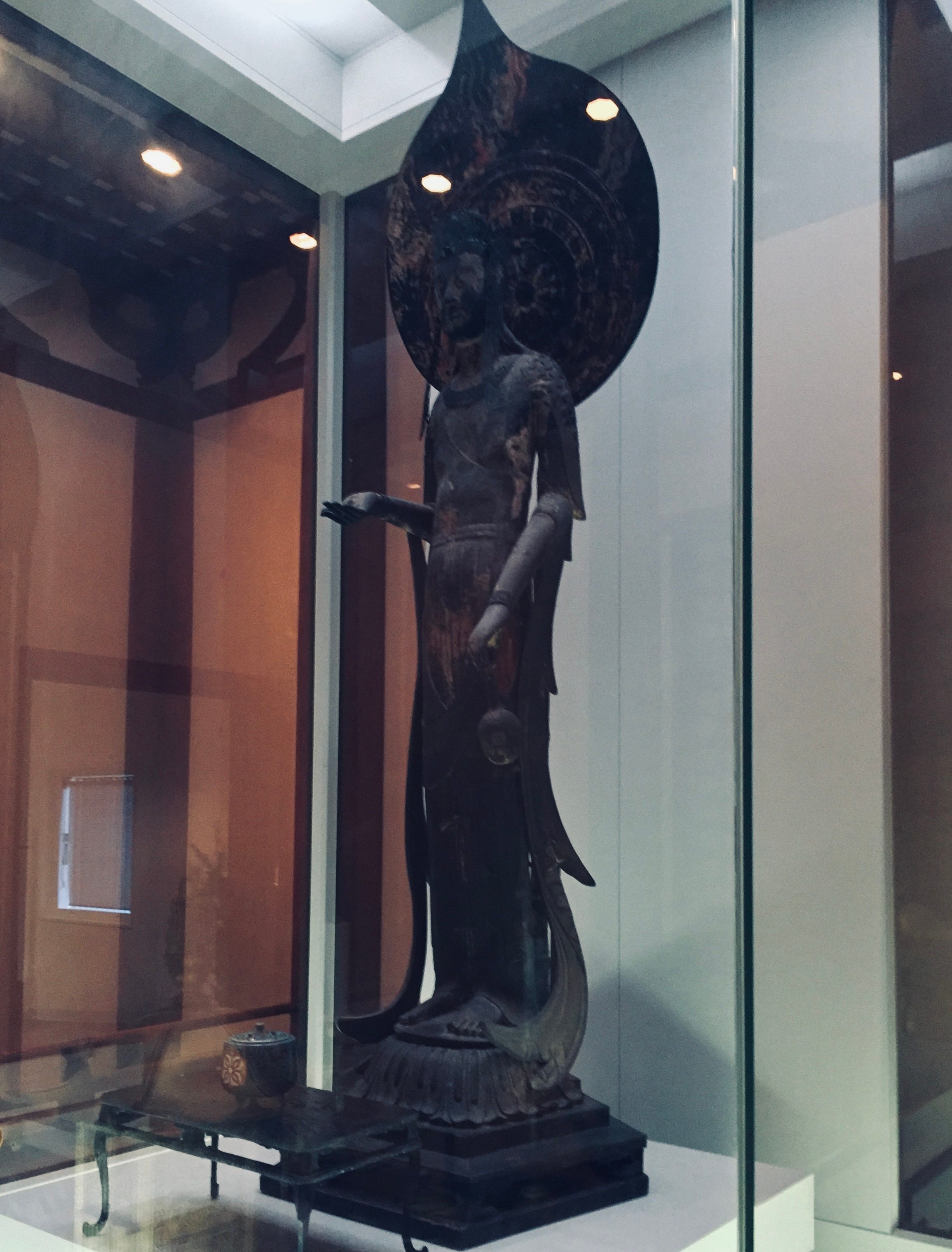
In truth, the copy made for the British Museum in the 1930s is more satisfying to see, as it is displayed free standing, not in a glass case. Here at Hōryū-ji the glass reflections make it impossible to feel the sense of the forms directly, so that even the man with his moment-of-vision method seems to pass by quickly.
Apsaras fly passed, reconstructed after the great fire of 1949, in which so much was destroyed, whirling around the temples, and leading a path to the Yumedono, a small perfectly hexagonal building in its own wide precinct. The sloping roof swoops gracefully like the lines of delicate cirrus clouds. It is known as the Hall of Dreams, for reasons historically connected to Prince Shōtoku, but which now seems more a reflection of the mystery of a permanently closed building, said to contain another famous bodhissatva, or Kannon, consigned forever to the shadows.
16
I AM STAYING FOR A FEW NIGHTS at an old Samurai house, on the outskirts of Kyoto. These, I am told, are now very rare, and this is the only one that rents out a room — a single room, as the house is not large.
The house is like a paper lantern. I hear my host coughing in the next room as though there were no wall between. The room is empty of furniture aside from the Tatami mat. There is nowhere to work, nowhere to lodge one’s body, nothing to do, nothing to be done. For Tanizaki the problems were heating and bathrooms, but there are many others beside - how to be comfortable, for example. Now I understand love hotels, that can be rented by young couples by the hour.
I lie for a while and think of daily life in Japan. Paying for the bus when you get off, and on the bus, constant announcements, beeps, and then the driver intoning in a low droning voice ‘Arigato Gozeimas’ as everyone files off. Masses of cyclists on the pavements, or the narrow strip by the road reserved for pedestrians. Pockets filled with coins - Japan still a cash culture. Bowing, as if heads were attached by a piece of string - still bowing when leaving. The businessman entering a restaurant and only giving the waitress the slightest of bows. Elaborate toilets, elaborate ticket machines, and everywhere signs with an overload of information and histrionic emotion.
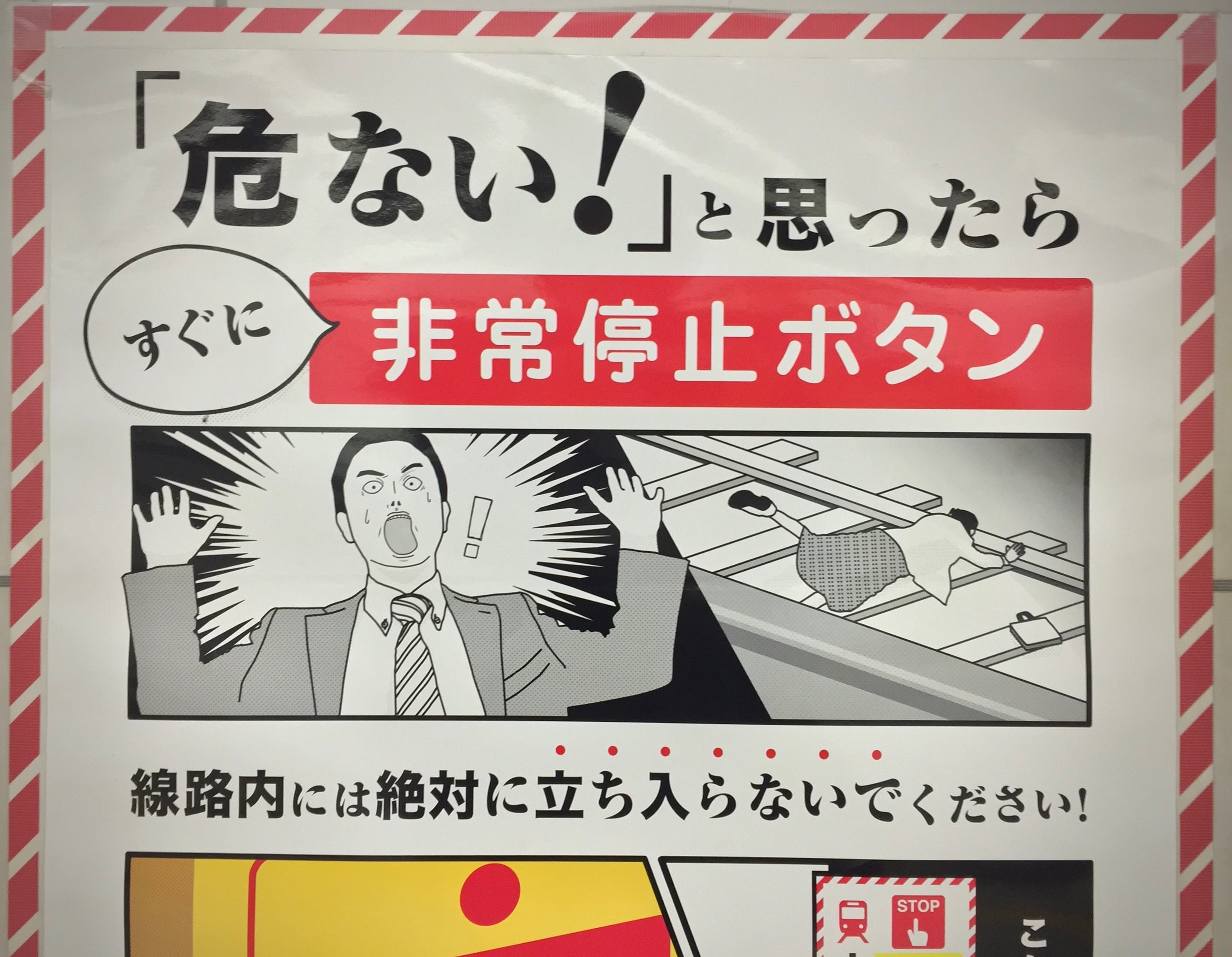
Against this great clashing of signs, designed entirely to disrupt attention, the complete opposite, signs that mean nothing but themselves, in the form of utterly self-contained objects. The bathroom in the Samurai house is at the back of a small overgrown garden, and reached by a dark damp walkway through the greenery. It is entirely wooden, with any necessary fittings in plastic, rather than ceramic, to avoid the glaring clash of wood and hard shiny surfaces. Surface is everything: the paper-thin membrane of life.
There is no comfort in this room, the matting is coarse underfoot, and I can hear my host sneezing, then snoring, next door. Love hotels, love hotels. A solitary cockroach crosses the room at the level of my vision, as I lie disconsolate on the thin mattress.
17
THE STAY IN THE SAMURAI HOUSE is not a success. The non-Japanese host insists in going over my itinerary at breakfast, asking why I am not visiting certain sites. It is all well-meant, but I am tired from the torture of a furniture-less room and find it all intrusive and unwelcome. The whole point of travelling is not to have to do anything, not to be told where to go, not to submit to anybody else’s knowledge. I am stubborn and probably wrong but I have to leave.
Thirty minutes on the bus down to the Chishaku-in Buddhist temple, on the other side of the National Museum. The temple is famous for its garden.
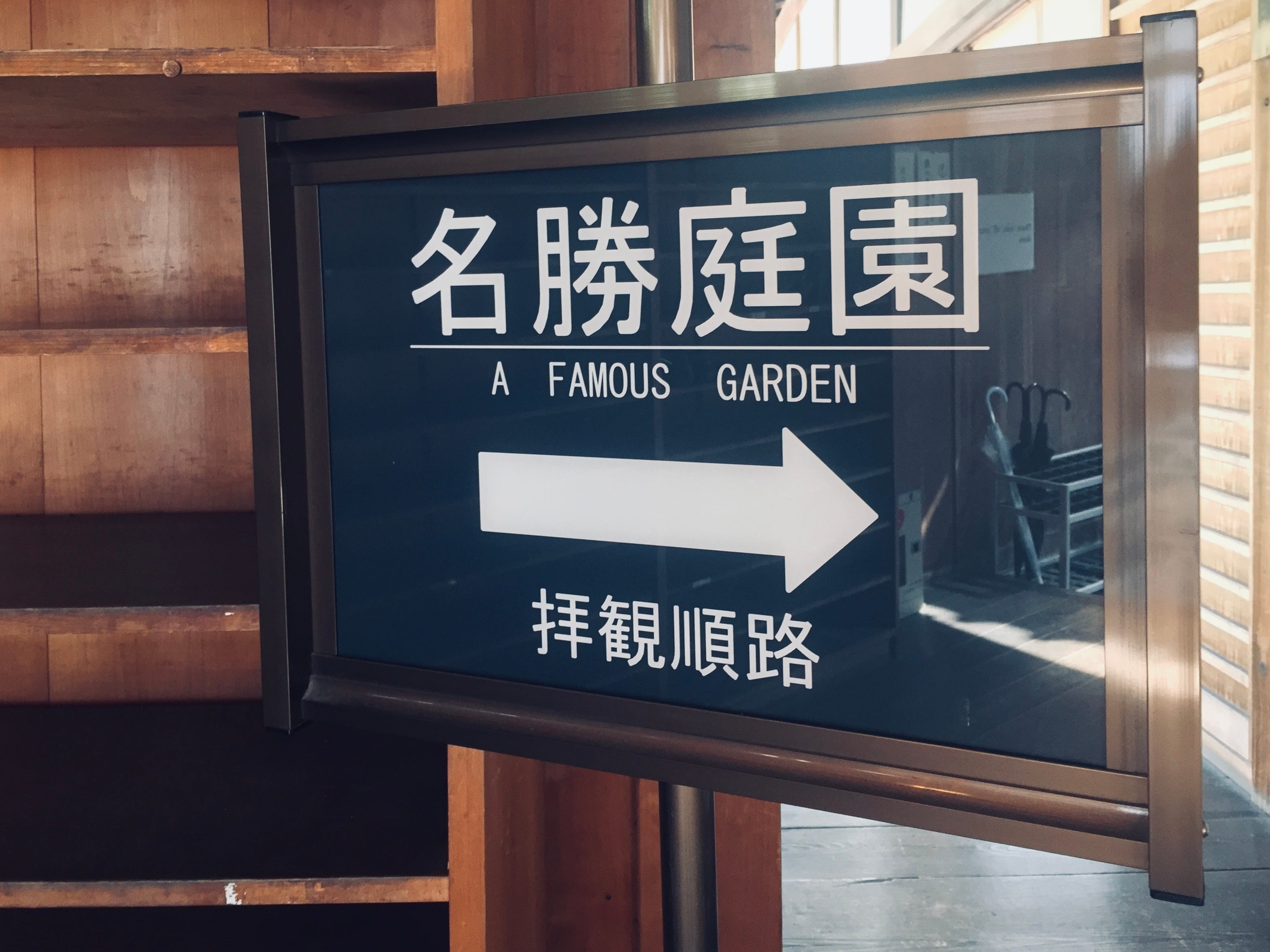
There are no signs to the temple in English, it stands on a bland main road, and as a result the temple precinct is almost completely empty. The building is low and calm, the proportions perfectly judged to give a sense of spaciousness and humanity. Two young women are sitting on a wooden terrace facing a garden and a rise of boulders and shrubs. These overlook a jade-misted pool, a waterfall infinitely trickling among living rocks and silent shrubs. A Japanese man quietly comes and sits a short way apart. We each have our own bay of the terrace. We sit and listen, increasingly spellbound. It would be impossible to break the moment. I think of Tanizaki writing about jade, ‘the crystallised air of the centuries, melting dimly’, and am aware but not aware of the natural trance, until a heron, that had been sitting on the low roof above our heads, suddenly drops off and glides over to a hidden part of the garden. The spell is doubled in the silence that follows; it was a moment of high poetry, as if life had been transformed for a moment into a six-fold screen along the bays of the terrace. And then suddenly the spell lifts, we all shake ourselves down, get up and leave.
Kenneth Clark recommends Chishakuin in his memoir, The Other Half:
‘… it perfectly illustrates the Japanese temple scheme, which is an architectural invention equal, in a lighter vein, to the frescoed rooms of the Renaissance. It consists of a sequence of large bays, joined by a gallery, of which three sides are painted with flowers or landscapes, and the fourth is open to the garden. […] I sat on the floor and prepared my mind for long contemplation. If the words ‘aesthetic experience’ have any meaning, this was an aesthetic experience.’5
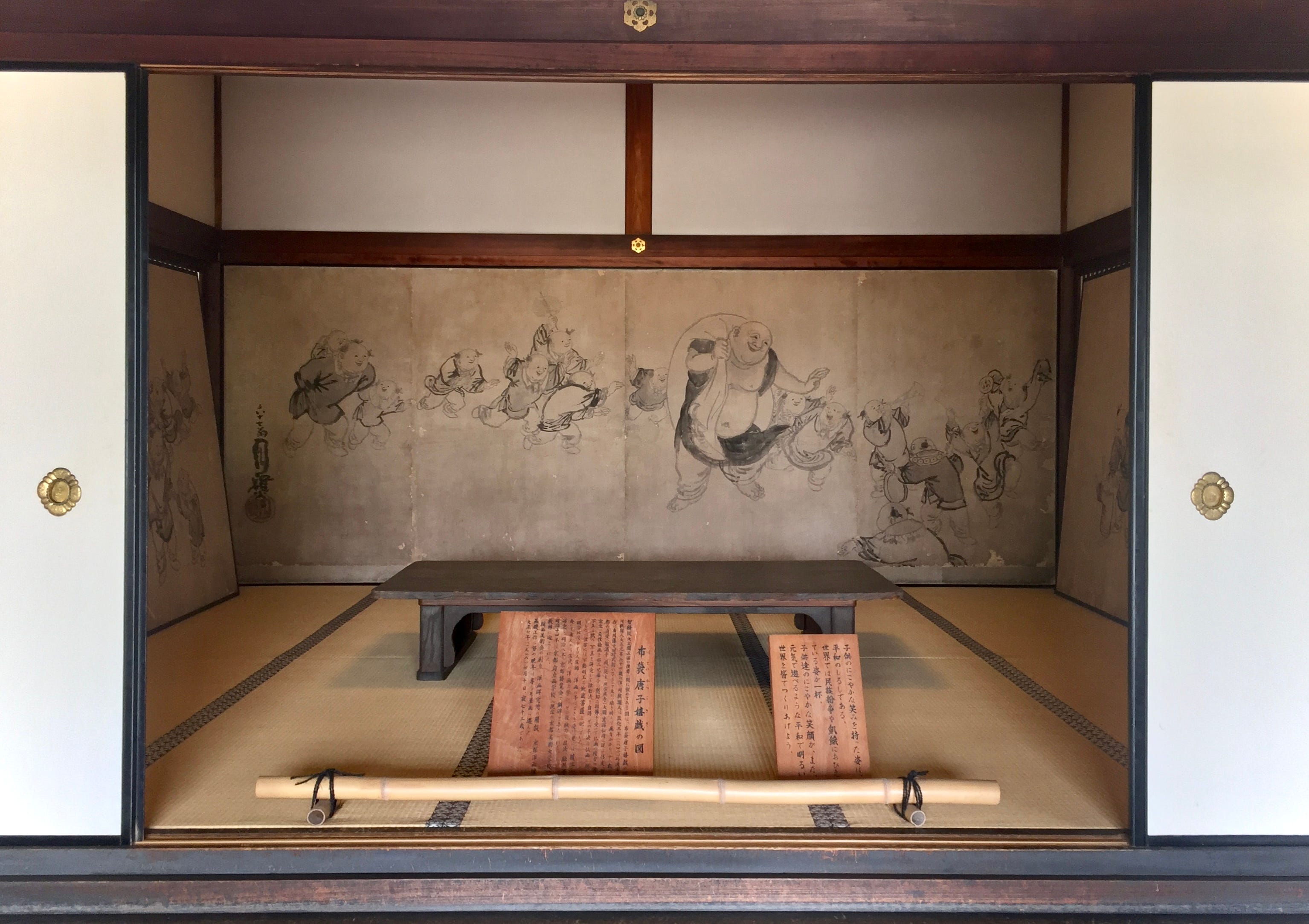
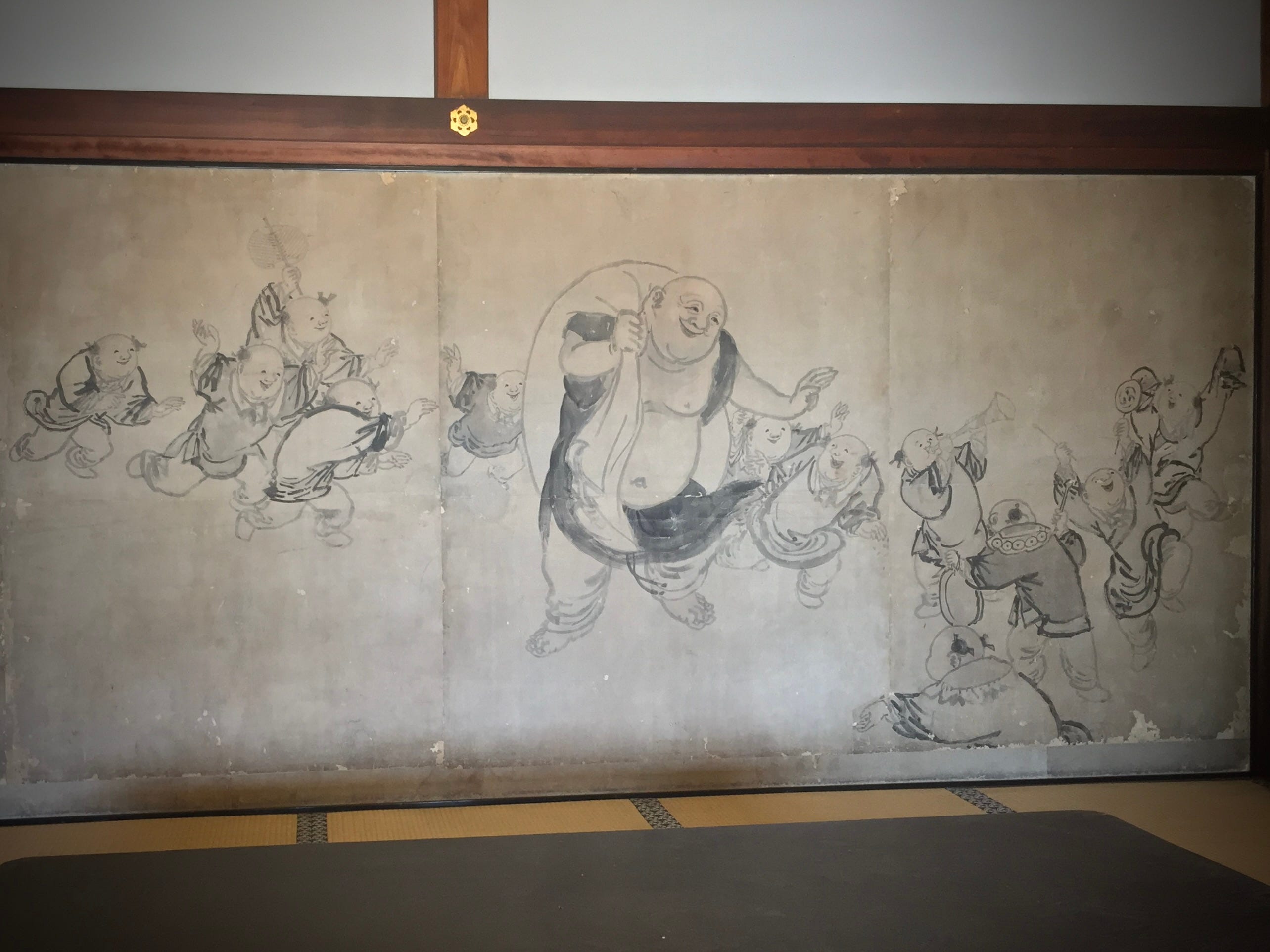
Inside are some famous fusuma (sliding door or wall panel) painted by Hasegawa Tōhaku and his son, Kyūzō Hasegawa. The interiors seem modern, perhaps recently reconstructed, and this somehow undermines the patina of age around the painted screens, which I find hard to appreciate — they look a little like reproductions. The intensity of the experience in the garden needs some sort of relief. The temple is empty apart from the three other visitors, who appear from time to time around a corner, or down a corridor, nodding, bowing and giggling. I stop at an open screen-door and see the only paintings that really detain me, manga-like wall paintings of a jolly Buddha - it must be Hotei, the Laughing Buddha, playing some game with a group of equally plump children, all essentially little Buddhas. Something wonderful about placing this painting here, such levity among such seriousness. Hotei and Children Playing was painted in 1912 by Tamura Soryu, who also went by the name of Gessho Dojin.
A ten-minute walk through unseasonal heat to the Kyoto National Museum. It is midday Thursday, but the museum is resolutely closed, with no explanation. I try to find someone to ask but it seems a hopeless quest. There are posters for an exhibition of Rinpa, the decorative Kyoto school of gold-ground screen painting that I do not find especially interesting. The early eighteenth-century painter Ogata Kōrin, one of the prime Rinpa artists, who came from a family of kimono makers in Kyoto and turned to painting in his late thirties when the family business failed, seems to me really just a decorative artist, the sort of high-level artisan whose work you would find in the V&A but not the National Gallery. Painting might be an old man’s art, but you still have to start young.
Thinking of the National Gallery reminds me again of Kenneth Clark, and his description of Japanese art — how he loved woodblock prints as a boy, and his revelation of first travelling to Japan in his seventies, almost twice my age — here at least I have stolen a march on him. What I remember more than the Chishaku-in temple, is Clark’s description of the Katsura Summer Pavilion — unequalled in architecture until the time of Mies van der Rohe.
I take a bus to the western suburb of Kyoto along the river Katsura. You have to join a tour, a Japanese group of around twenty. Not understanding a single word of the tour guide, but somehow gleaning from the pointing and attention of the group what was being singled out, made the experience of the Summer Pavilion all the more magical. To walk around the Pavilion is like being lowered into a perfect piece of chiyogami paper, everything so flawlessly composed, bringing with it the realisation that the true form of any art is composition. The perfection and economy of the spaces and intervals, as Clark writes.
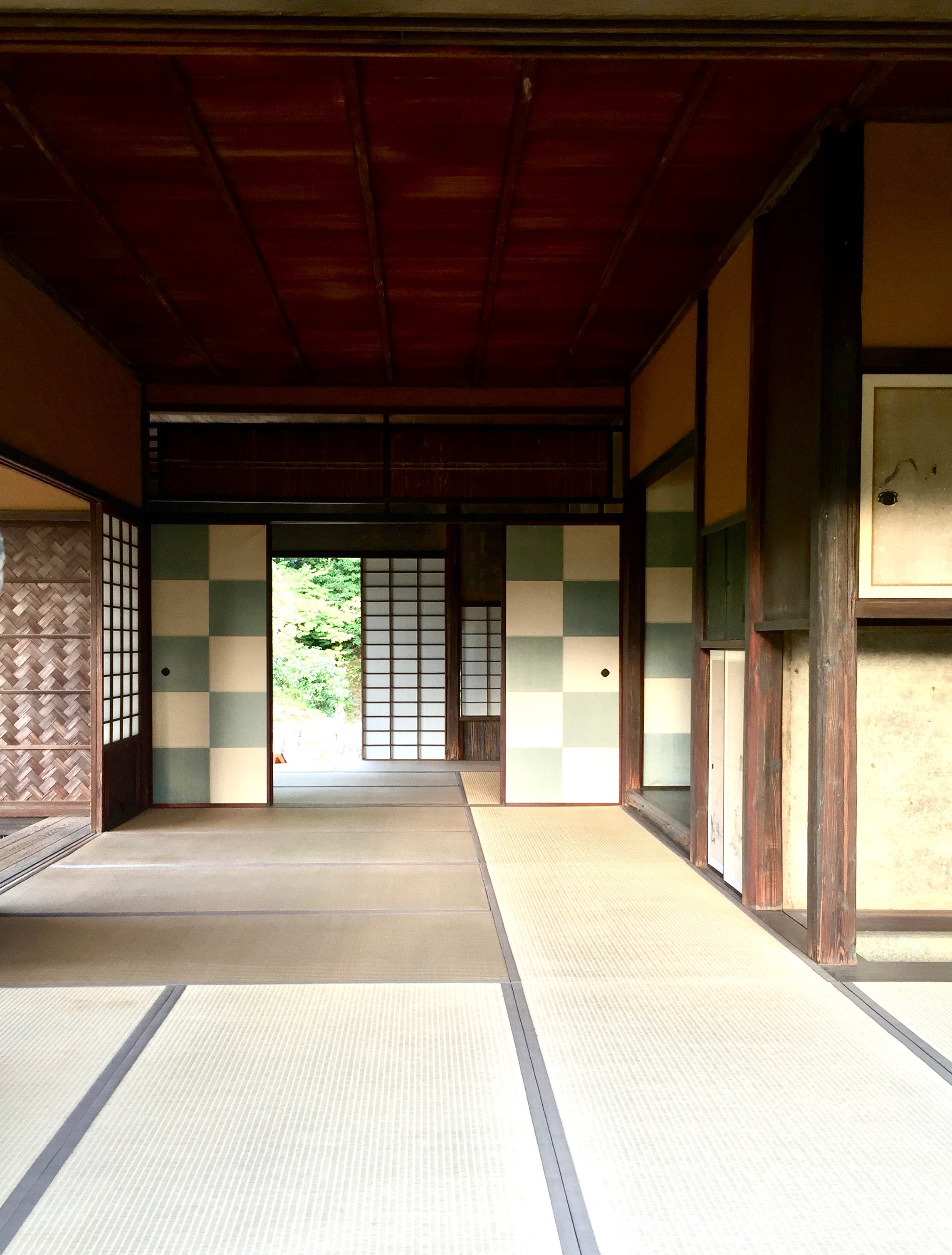
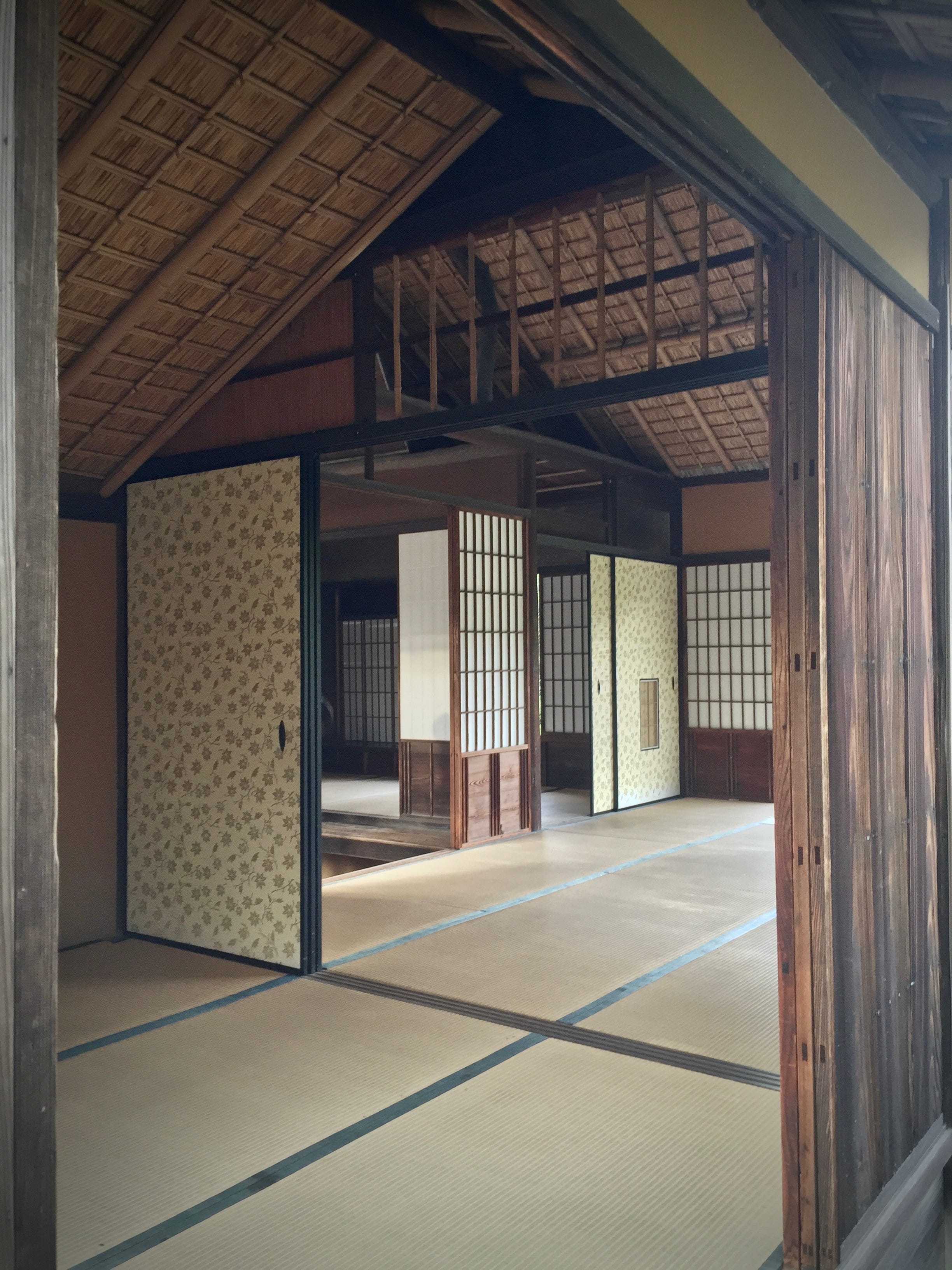
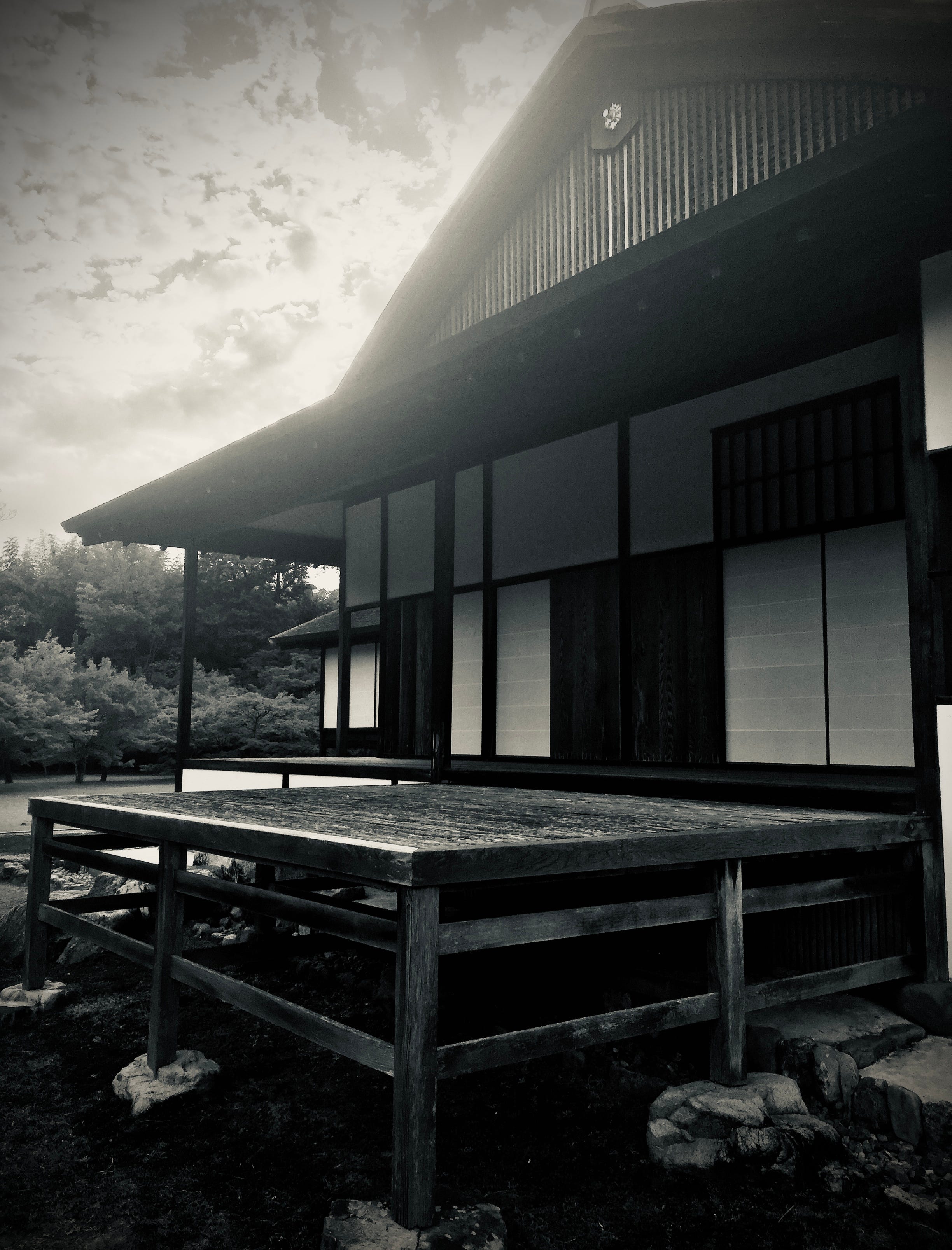
The tour lasts forty minutes and there is neither expression of emotion nor glimmer of humour from tour guide or visitors alike. Rather a sense of serious concentrated attention, and a relaxed sense of being with one another. The structures are wonderful, seen back through the filter of modernism — Mies van der Rohe — to an earlier idea of Zen purity. The most beautiful architectural thought of all is the moon-viewing platform, motioned to by the tour guide only as inaccessible, but somehow not being able to stand upon it only adds something to the experience — viewing the moon-viewing platform, the scene of countless moments of meditation and vision.
18
ON THE MOVE AGAIN. The 8am Hikari Superexpress no. 509 bound for Hiroshima is virtually empty. The platypus-nosed bullet train, all for me. More blue skies and late summer heat, although unusually cold for the time of year, I’m told. The newspaper announces that the first snow settled on Mount Fuji early on Sunday morning. It is mid-October.
Hiroshima is also a place of imagination — a name lodged so deep in the mind that it seems in truth impossible to see it written on a station sign. The Peace Dome, the ruins of the building directly above which the A-Bomb detonated on the 6th August 1945, stands next to a Shinto shrine, which seems to say: this is how nature should be. The Peace Memorial Museum nearby opens with a waxwork of children struggling through the ruins with their skin melting off. The rest of the museum makes the same point with graphic models and images, each more unbearable than the last. And then a great welter of ‘dialogue for peace’ messages at the exit, which seem in such great contrast to the horrors of the displays within. It is one of the most psychologically-charged, post-traumatic museum displays in the world, repeating the same extreme fact over and over again.
On the way to the Hiroshima Museum of Art, three men stand smoking in a street smoking booth. A sign on the booth is translated helpfully into English. ‘You are holding 700 degrees centigrade in your hand and there are people walking around by you’. A Hiroshima health-warning. The memory of heat. I make a detour to the Prefectural Museum of Art, where a vast exhibition shows every print ever made by Utagawa Kuniyoshi, a later ukiyo-e woodblock artist.
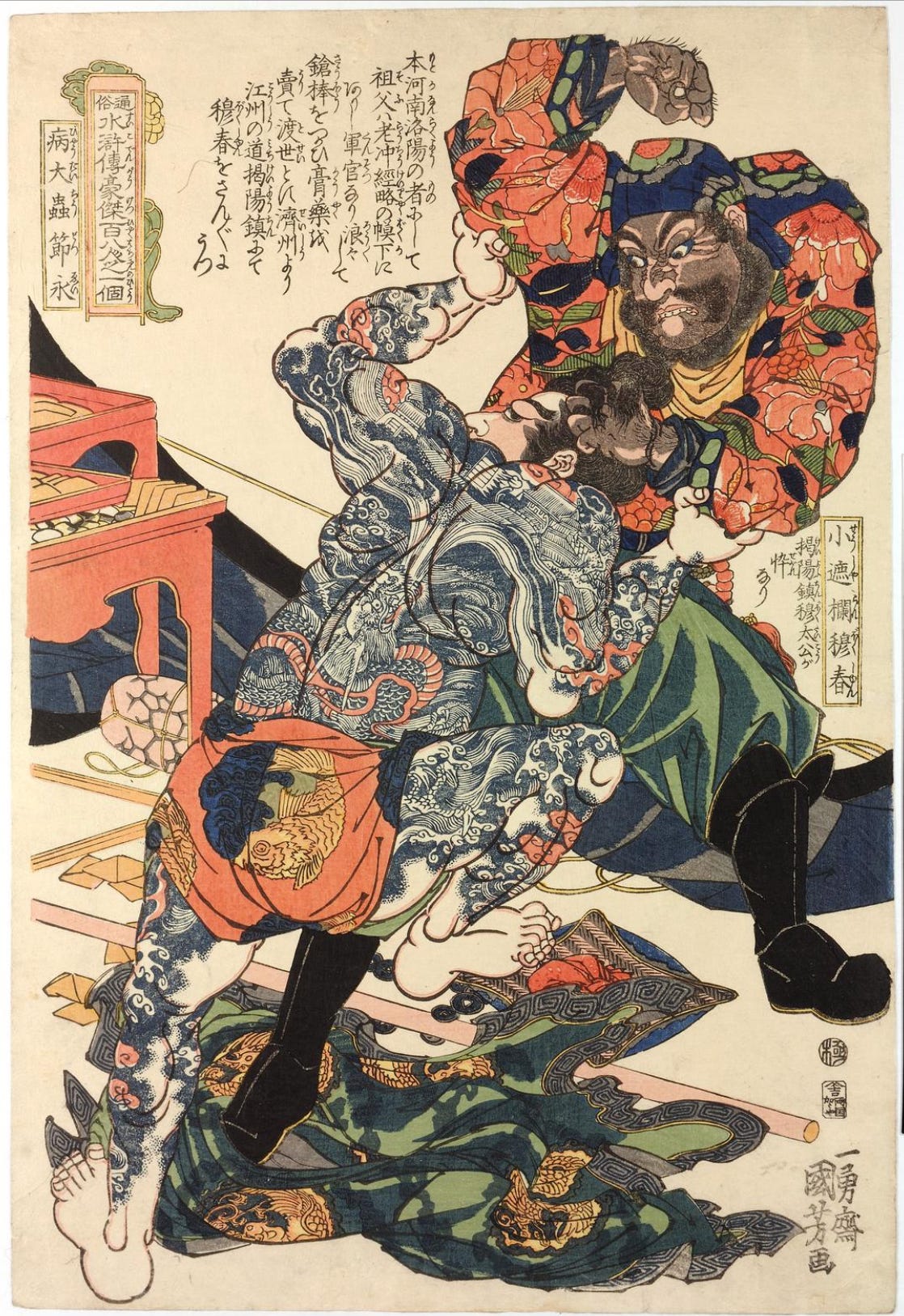
In truth it is end of the peer, comic-book stuff, tattooed wrestlers, monsters and Edo Beauty Queens. The popular hero Xue Zong, nicknamed ‘Sick’ for his fighting skills, wrestles with the heavily tattooed Mu Chun, a scene from the classic Chinese novel Water Margin. Kuniyoshi’s prints are intense and highly-wrought with colour and decoration, and you can only really take a handful in — they also have a spirit of life and, frankly fun about them, a confidence of spirit that it is strange and moving to see in such a city.
At the Contemporary Art Museum an exhibition, Teach Us to Outgrow Our Madness (a quote from Auden) on the seventieth anniversary of the bombing of Hiroshima. How this memorialisation must dominate everyday life in the city, as if an endless process of mourning, of processing. The Museum has a policy of buying works of art relating to the atomic bombing, so that the exhibition is drawn entirely from the museum’s own collection.
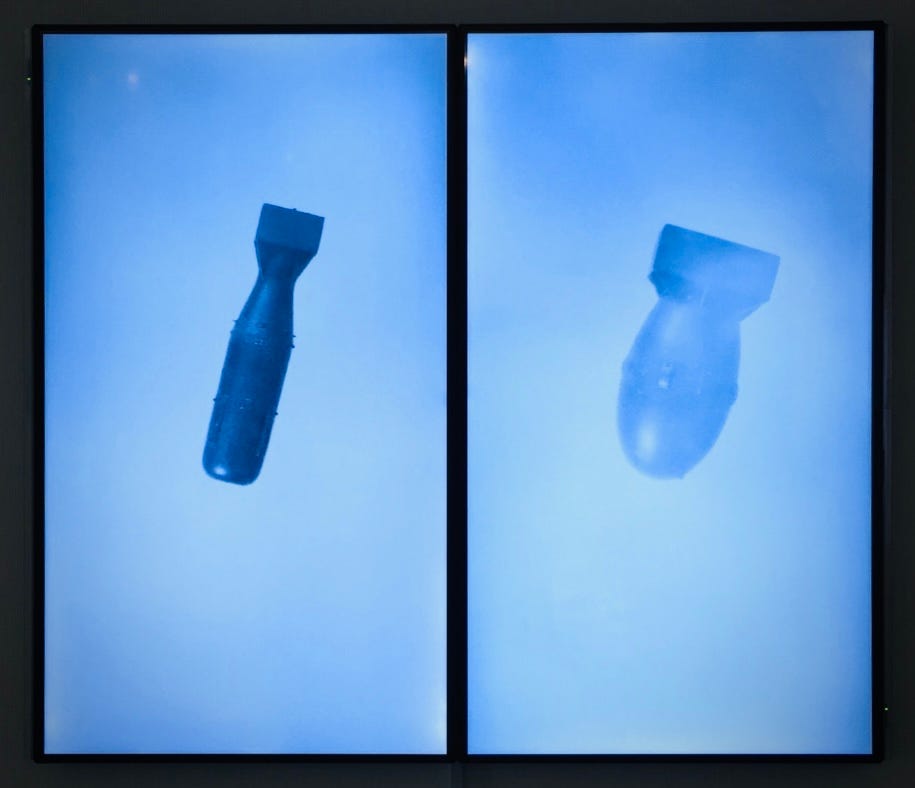
The galleries are still and quiet, I am the only visitor. In each room a guard sitting bolt upright, hands on knees, giving at most a deferential nod as you walk in the gallery. The self-effacing silence made it difficult to look at the art. A film of two falling bombs, Little Boy and Fat Man, by Matthew Day Jackson, set the tone right - not the same super-moralised peace camp feeling of the Memorial Museum.
A model of Moore’s Atom Piece, is poorly displayed and terribly lit, but I see now the attraction of a sculpture that would probably withstand nuclear attack, an obdurate bronze lump, so unlike Japanese aesthetics, although more so as you go back in time to the vast bronze Daibatsu Buddha at Nara.
Behind it a large strange figurative painting called Fashion 1971 by Osamu Tsukasa. There is a lot of this type of painting around — ‘Western-Style’ Japanese painting, as it is called. In the first gallery the painting Black Rain by Katsumi Honda hangs among paintings attempting to sum up the horror and despair of the moment — ‘Katsuro Yoshida conveys the irrepressible energy of human beings resurrecting themselves from the pit of despair’ — and on the whole failing. No work of art is adequate to such an event, only art as a whole, and the museum that houses such collective works of art.
Downstairs Charles and Ray Eames’s film Powers of Ten, 1977, ‘A film dealing with the relative sizes of things in the Universe’, beginning with a view of a lakeside picnic in Chicago, zooming out to the power of ten until the whole galaxy was involved, then zooming back in to the level of protons and neutrons in the atom.
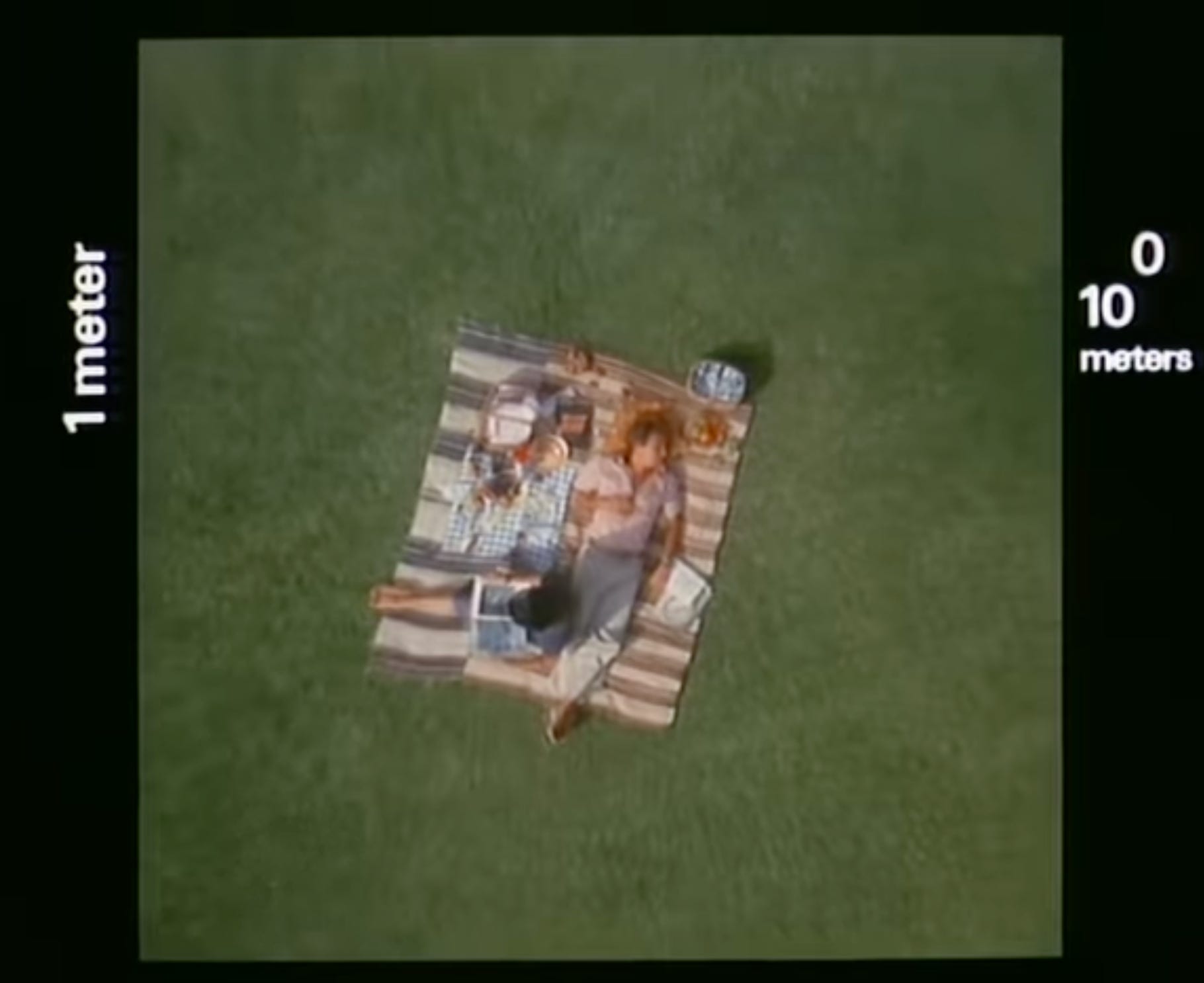
In the city atomised by the atomic bomb that fell from a great height. Eames was an inspiration for Japanese artists of the mingei, or folk craft movement. Bernard Leach tells the story of meeting Eames with Sōetsu Yanagi in Los Angeles in 1954, where they were impressed with Eames’s acceptance of scientific and industrial design, his ‘playful refusal to be chained by fear’.
Outside, Henry Moore’s The Arch is perfectly placed on an area jutting out from the hill on which the museum stands, overlooking the grey city of Hiroshima.
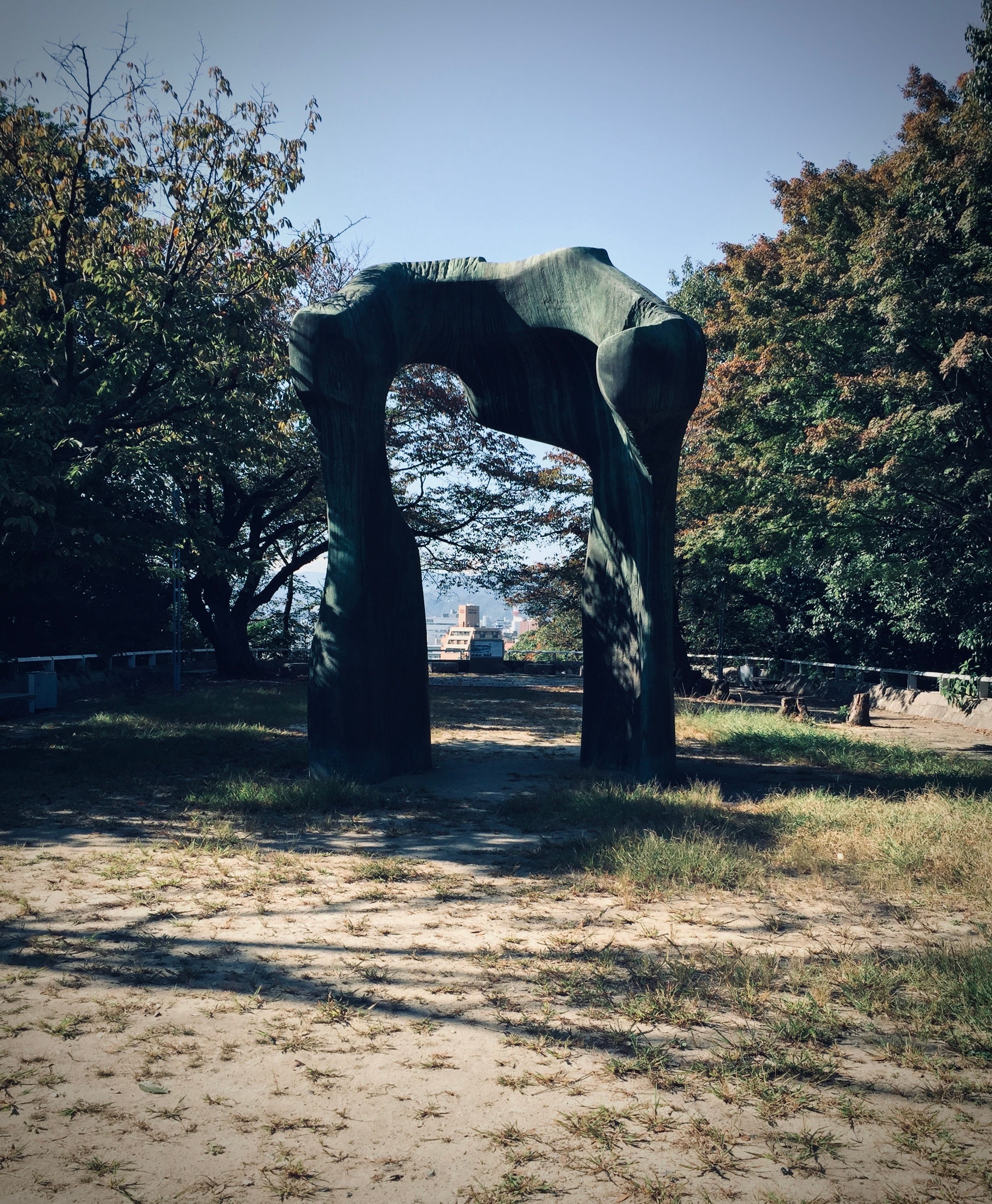
True, there is another version of The Arch standing in Kensington Gardens, and another in Columbus, another in Milwaukee, another in Norway… But here it has a bony resilience that seems more moving than any other location. Walk a little further on and you see another reminder of the bomb, as if the city had to keep repeating the fact over and over again, to face up to the trauma.
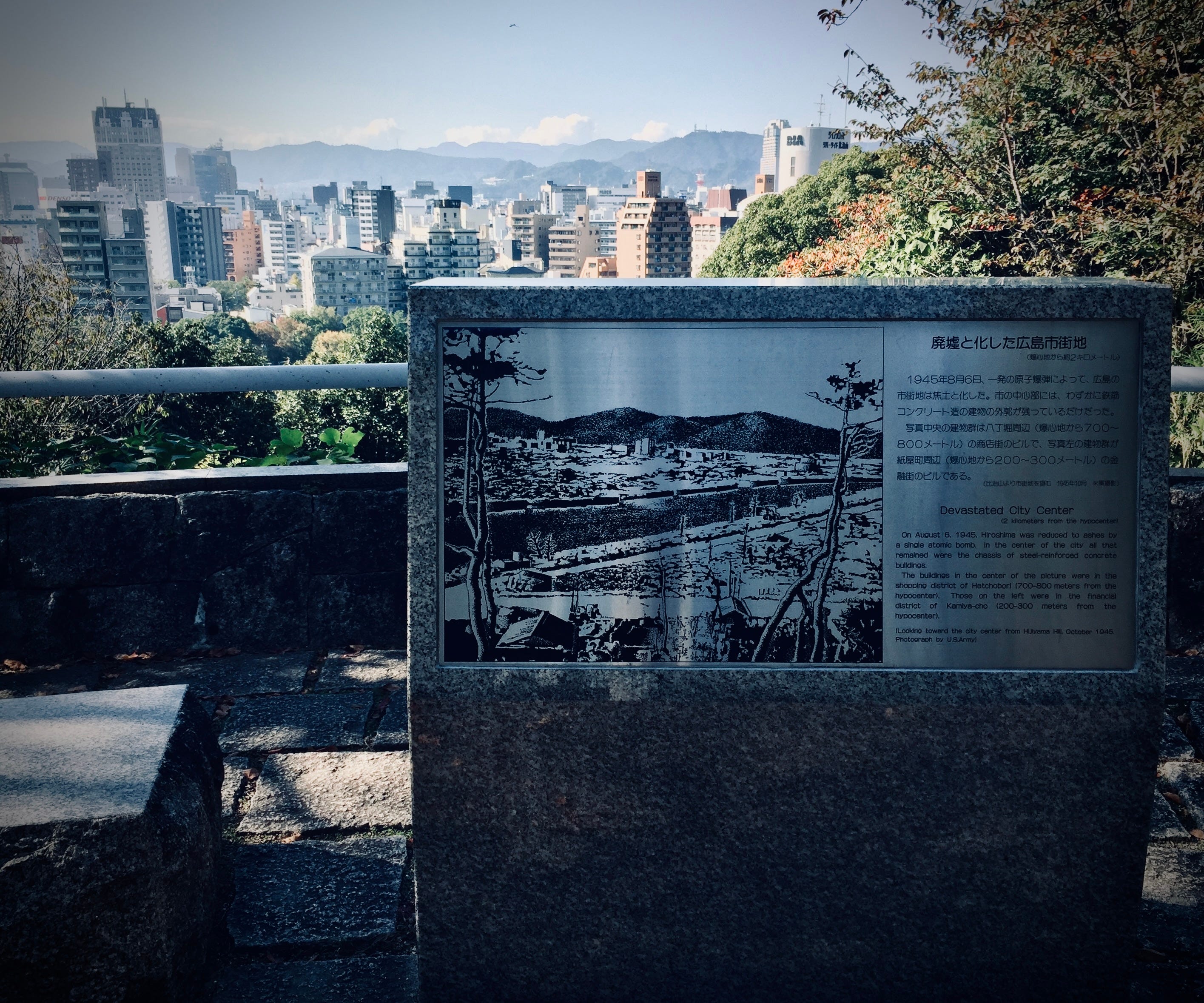
Memories of the heat linger in every crevice. Symbolic protective domes are placed everywhere, protections but also after-echoes of the heat dome of a nuclear explosion.
At the train station, on a sudden impulse, I take the bullet-nose in the opposite direction, to Fukuoka, remembering what a curator at the V&A had said about the Asian Art Museum. By some miracle I arrived before nightfall, and found a metro directly to the museum, which was still open. And yet the displays are disappointing, really a sort of folk art mixed with salon contemporary, offering a ‘gateway to Asia’, defined as twenty-three countries east of Pakistan, south of Mongolia, and west of Indonesia. It seems so diluted and vague as to mean nothing at all, beyond an economic bloc in need of cultural legitimation.
Dinner in a little bar, just the owner, no English menu. Brings out all the raw skewers, and guides me through, point to each and scratching a different part of his body then, after some searching, saying ‘Chicken’.
19
FUKUOKA IS A MODERN city with an art museum on a boating lake, and reminds me for all the world of Hamburg. People have arrived early on Saturday to rent boats and sit in the cooling lakeside breeze. It is uncommonly hot. Hundreds of schoolchildren are ranged down one bank of Ohori pond, all making large watercolour drawings of the scenery.
Dalí’s second version of The Madonna of Port Lligat, painted in 1950, is the star attraction of the Fukuoka Art Museum, displayed in a sort of corridor area, and rendered half-invisible behind glass.
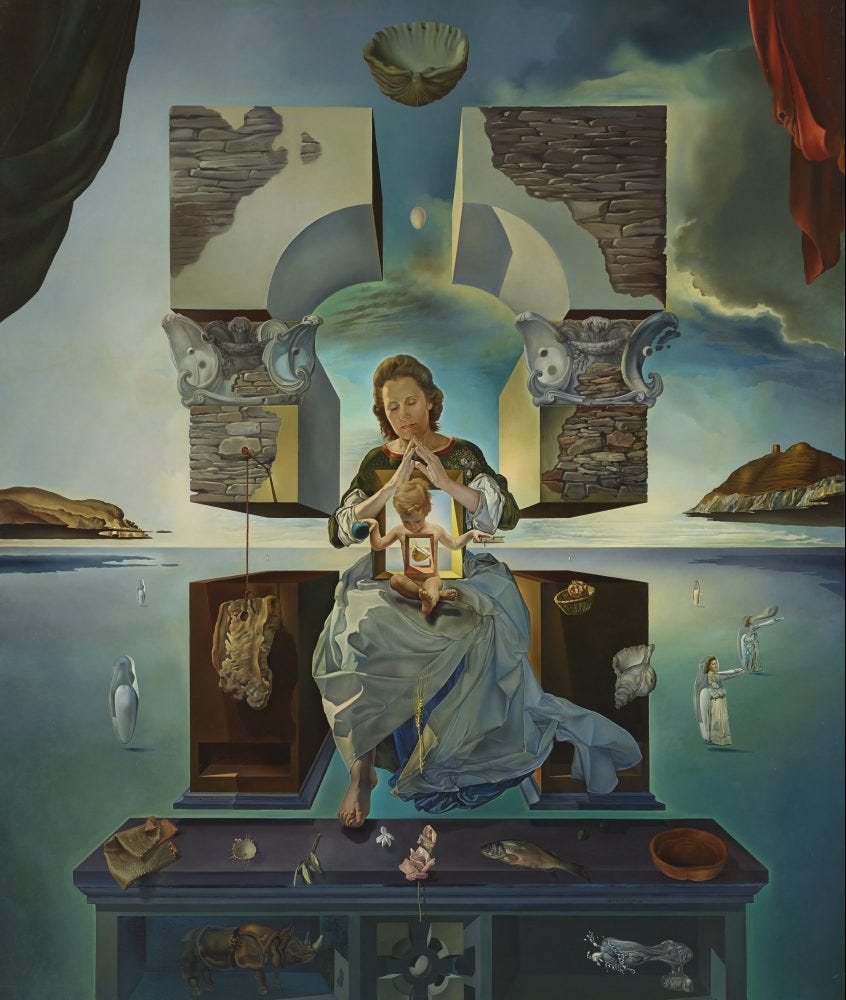
I struggle to connect the painting with the place — the boating lake, perhaps, the mind-bending quality of hot weather, the atomised vision of the world, the profoundly conservative view filtered through a crazy eccentricity; but nothing will do. Dalí’s is an art freighted, weighted, bloated with meaning, carved in heavy three-dimensionality. It comes from a world where art is valued by three things — individuality of vision, depth of meaning, and refinement of technique. None of these really translate to Japan, where art is more of a collective, surface matter, techniques those of schools of craftsmen.
There are Kamakura scrolls, Buddhist paintings, and later Zen ink paintings on loan from the Fujitsa Museum in Osaka. The mystery and pleasure of these paintings is really so much about their antiquity; the creased browned paper, the faded colours and inks. I happily fall back into a realm of enchantment. Minutes might become hours poring over the Kamakura hand scrolls that make up the Genjō Sanzō-e, the ‘Illustrated Life of the Tripitaka Master Xuanzang’ from the 1300s, on loan from the Fujitsa Museum in Osaka, only now visible after centuries being shuttered in the treasure house at Nara. They are impossible to photograph so I buy some postcards, and read an article published in English on the handscrolls, which I manage to download on my phone.
Genjō Sanzō-e is the Japanese name for Xuanzang, the Chinese monk who travelled to India to retrieve Buddhist manuscripts to translate from Sanskrit into Chinese, the foundation for Hossō Buddhism.6 The twelve handscrolls illustrate his journey across Central Asia, including his treacherous crossing of the snowy Tianshan mountains and the baking Taklaman desert.
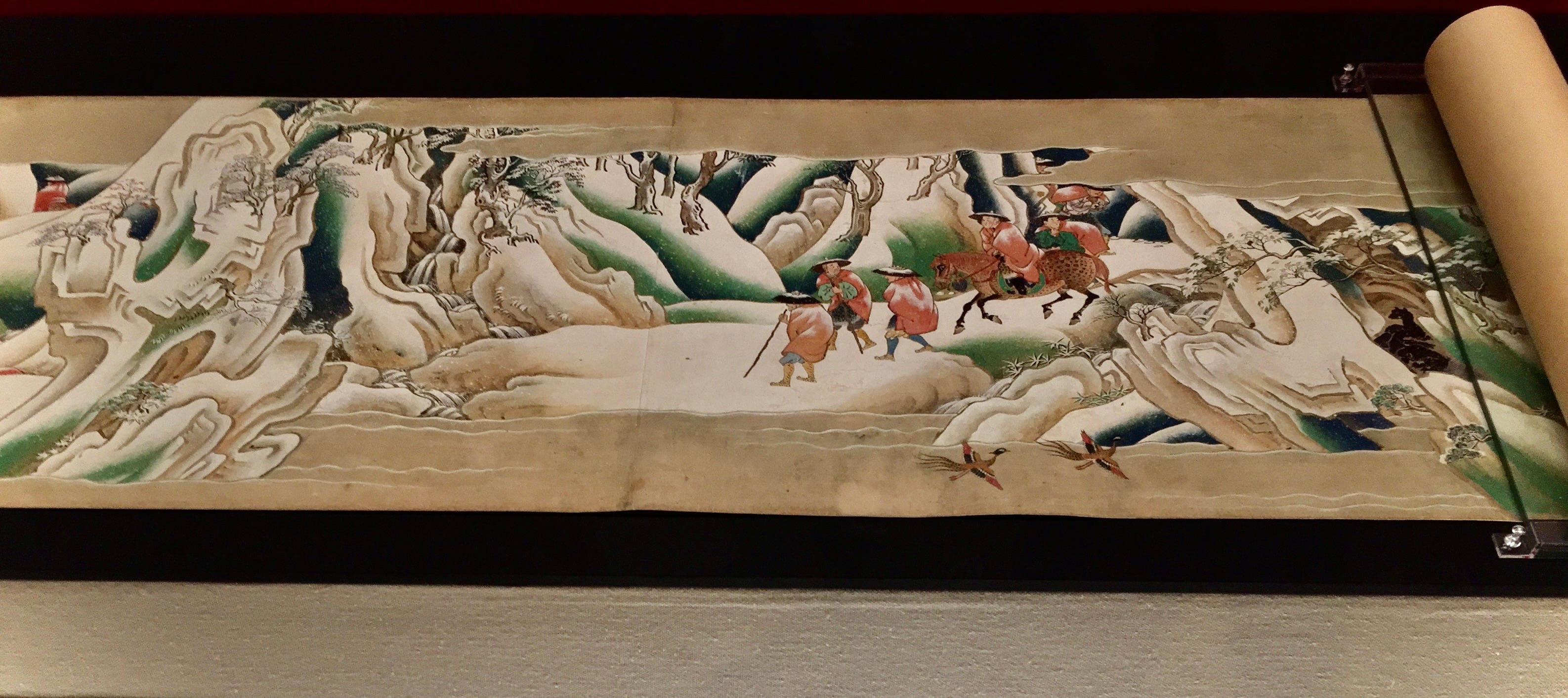
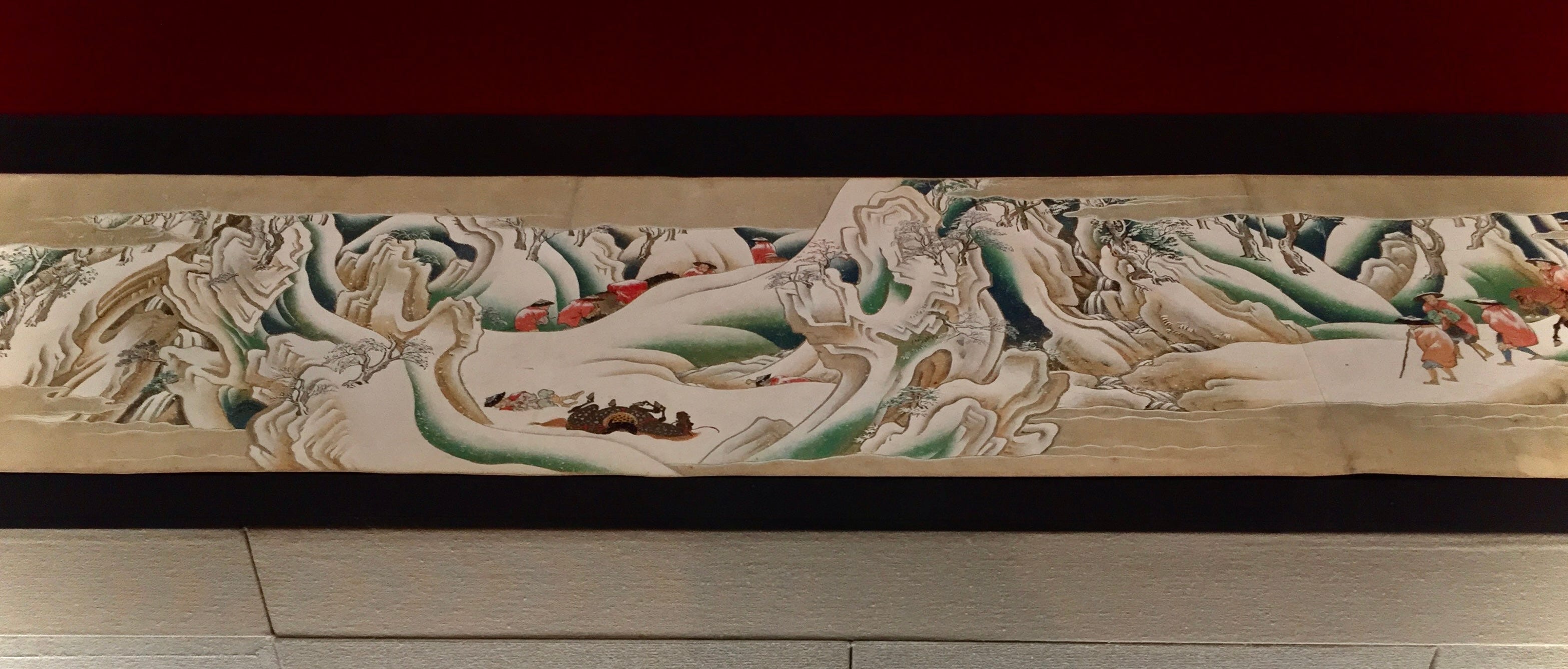
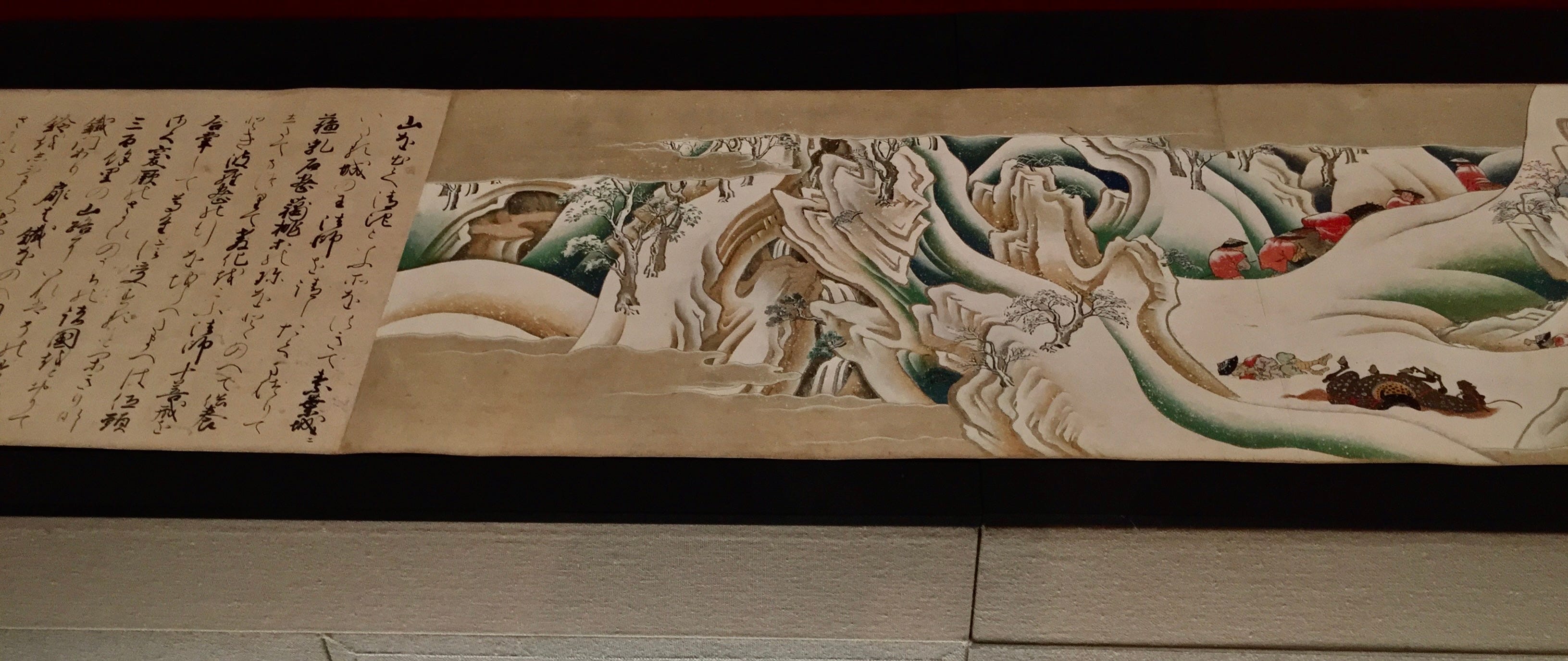
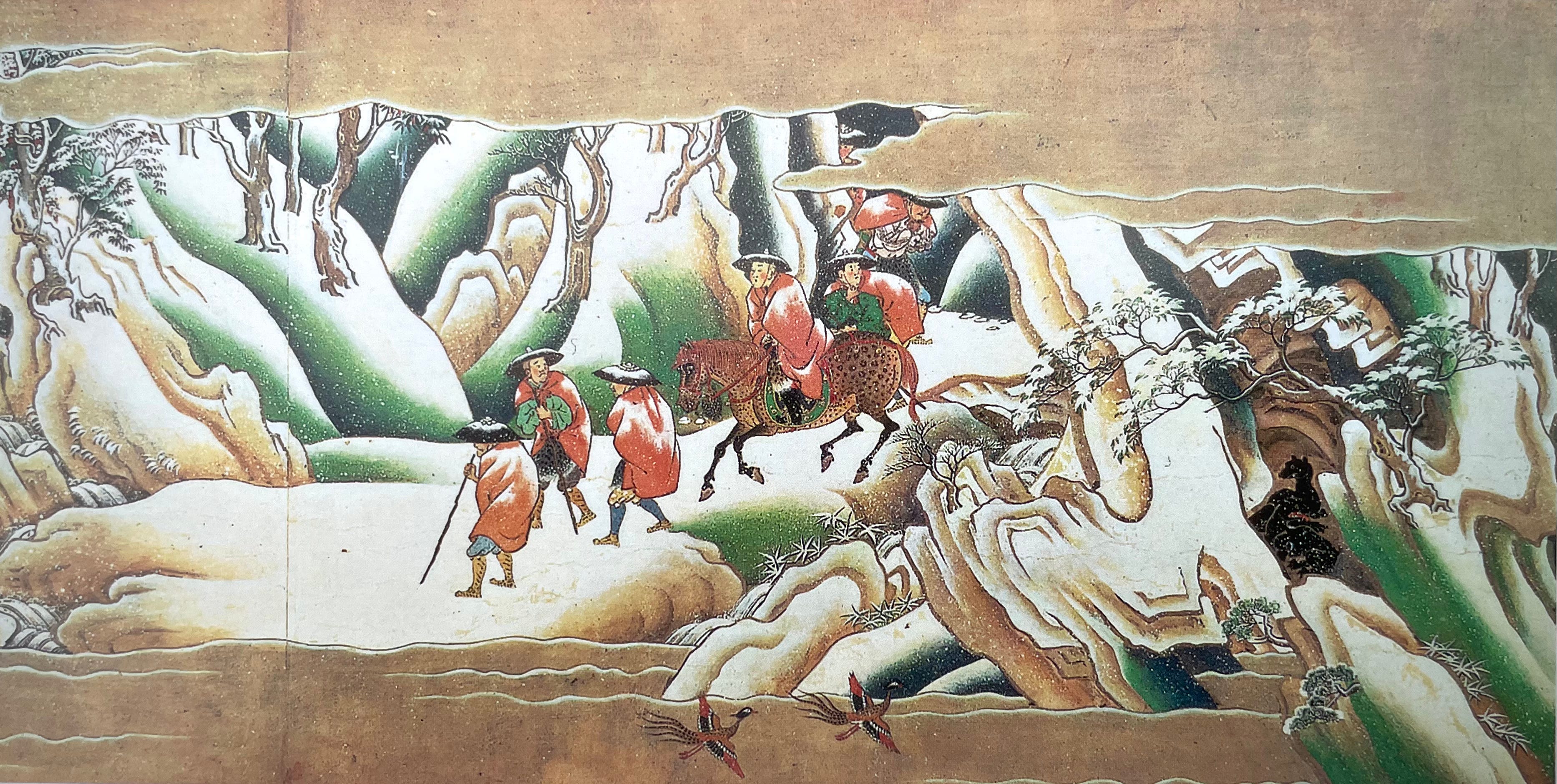
The crossing of the snow-covered mountain range is described by the article, by Rachel Saunders, I am reading in a way that really illuminates the scene:
‘Thick white pigment blankets the blue-green rocks, and flecks of the same pigment, boldly flicked onto the painting, show that the snow continues to fall. Xuanzang […] has reddened cheeks beneath his wide hat, on which snow has settled. His party looks about them anxiously and huddles in their travelling cloaks. A thin waterfall wends its way through the rocks, but is almost concealed by a vertiginous wall of snow-covered rock which be-speaks deadly cascades of snow […] Framed in the foreground by two sentinely-like outcrops of rock is a dead horse, sinking into the deepening snow, together with its rider. Xuanzang is just visible, disappearing into the heart of the mountains’.7
I need this description to guide me through the scene, like taking a guidebook through the scenery itself, which was naturally invented by the artist, giving the imagery it’s magical, but also impenetrable quality. The figures ranged up and down the mountains look so much like the figure style of Giovanni di Paolo, the ‘early’ Italian painter working one hundred years later, but the format of the scroll, telling an unfolding story, seems all the more sophisticated.
The scene that opens the Genjō Sanzō-e, Xuanzang’s vision of Mount Sumeru, the axis mundi of the Buddhist world, shows ocean wavelets disappearing into the horizon, and a mountain rising from the sea and breaking the clouds, with Xuanzang dreaming a stepping-stone path of lotus leaves to reach it.
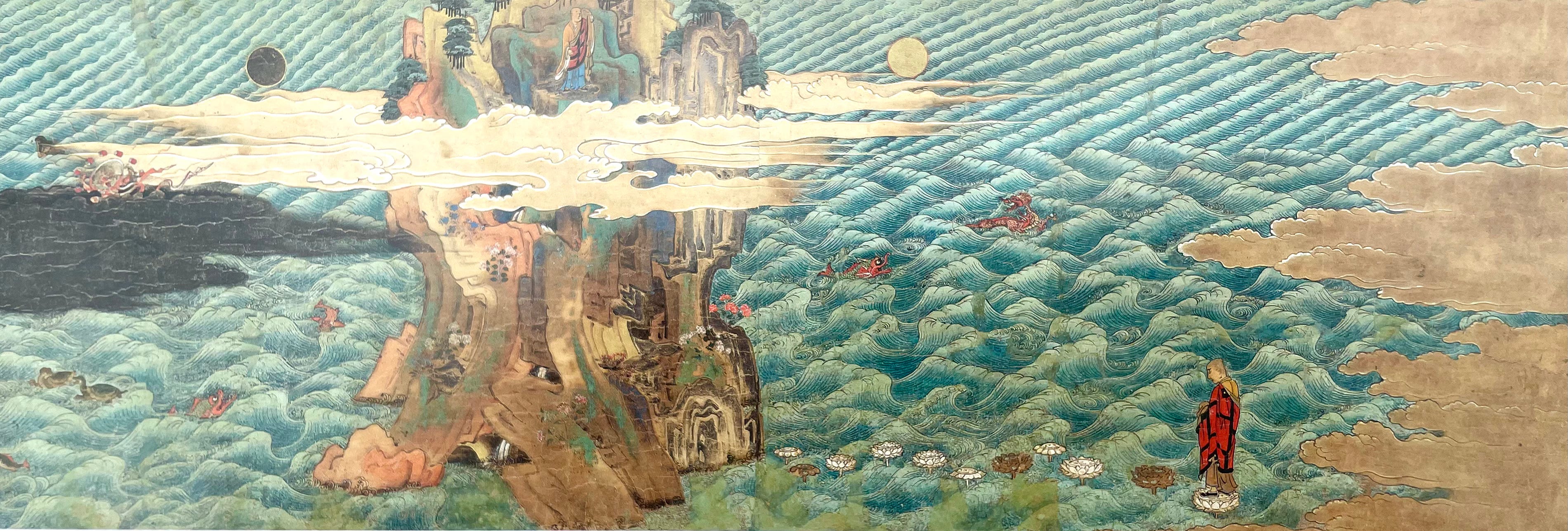
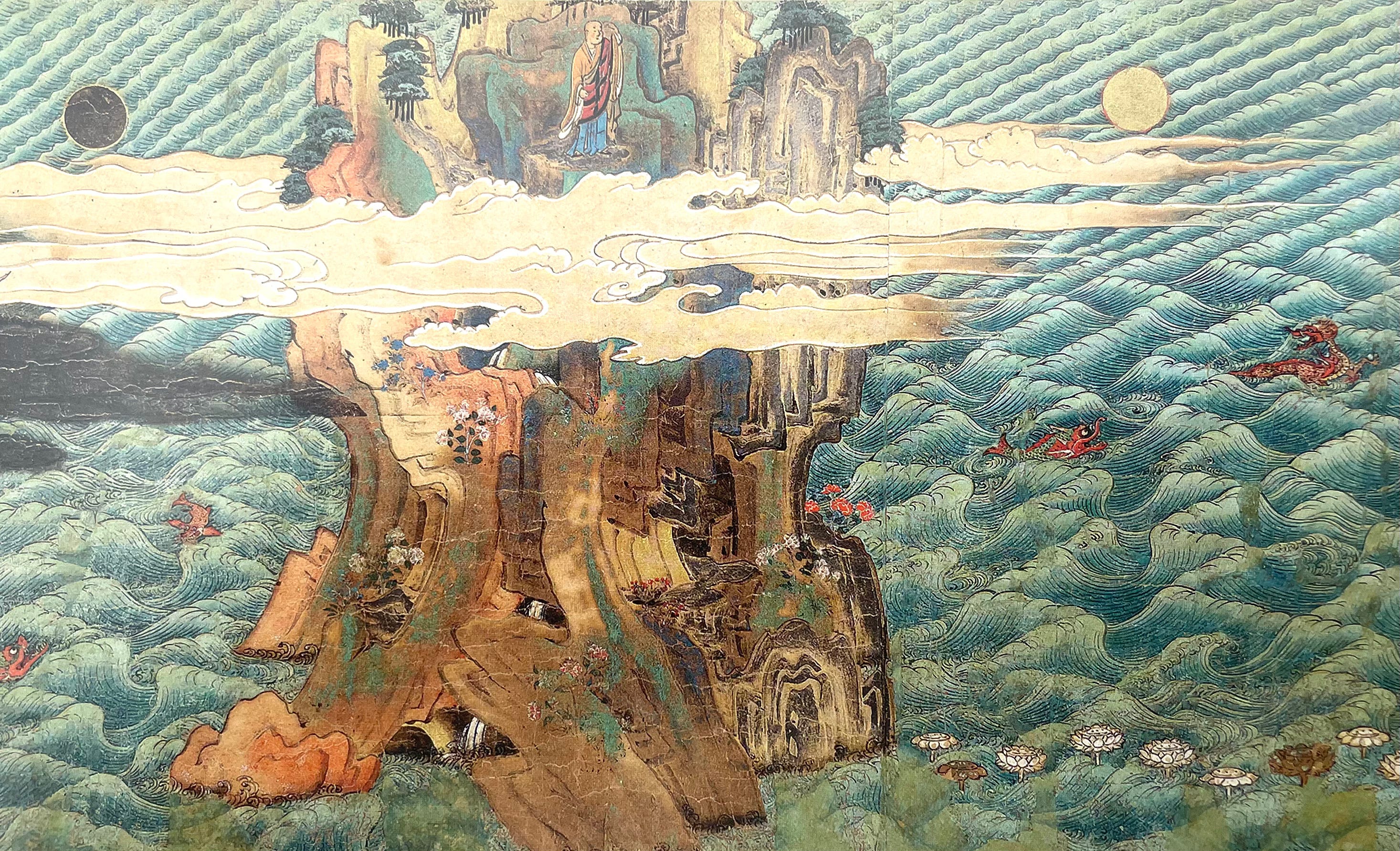
When I leave the museum at three o’clock, the schoolchildren are finishing their paintings. They are surprisingly good, much better than your average fifteen year old in England. The colours are clear, not muddied by mixing, the scenes well composed and covering the whole page, and the brush marks thoughtfully deployed to indicate the difference between trees, rippling water, drifting clouds and buildings. The children sit or crouch, holding the brush at the end like a calligrapher. But they are all very good in exactly the same way. I realise something about the Kano School, and about schools of art in general in Japan. It is a matter of training, and then following a set of rules. Everything is prescribed, thought-out.
Train back to Kyoto that evening.
20
WOKE EARLY and walked up the Yoshida hill to a Shinto shrine. Passing through the gates you enter a sacred area, but one where the only mystery is that of nature, of the mountain and trees, and so real, in a way quite unlike church sanctity. I stand by the shrine and a priest begins chanting, monotone, monosyllabic, some kind of morning prayer with a strong driving energy. After a minute or so a female voice joins (his wife, I later find out), a third above, the same prayer but somehow independent. It is wonderful to hear.
Originally there were no permanent buildings at Shinto shrines — nature itself was the shrine, in the form of a tree, a pattern of shade, the cawing of a crow. It was only after the arrival of Buddhism in Japan, in the middle of the sixth century, that permanent structures were built and decorated, and also at this time that the religion, if it can be called that, was given a name, ‘Shinto’ to distinguish it from the new faith that came from the west, from China, via Korea, along the Silk Road. ‘Shinto’ means something like spirit-way, suggesting a belief in the supernatural.
Wandering about the various shrines, tabernacles with kitsch porcelain figures of foxes looking like squirrels. Bow twice, clap twice, say what you want. Everything open to nature, unaffected. What was it like before all this post-Buddhist paraphernalia? When it really was a temporary dwelling to facilitate just being at a certain place, worshipping the spirits of nature in dumbfounded nameless, wordless silence?
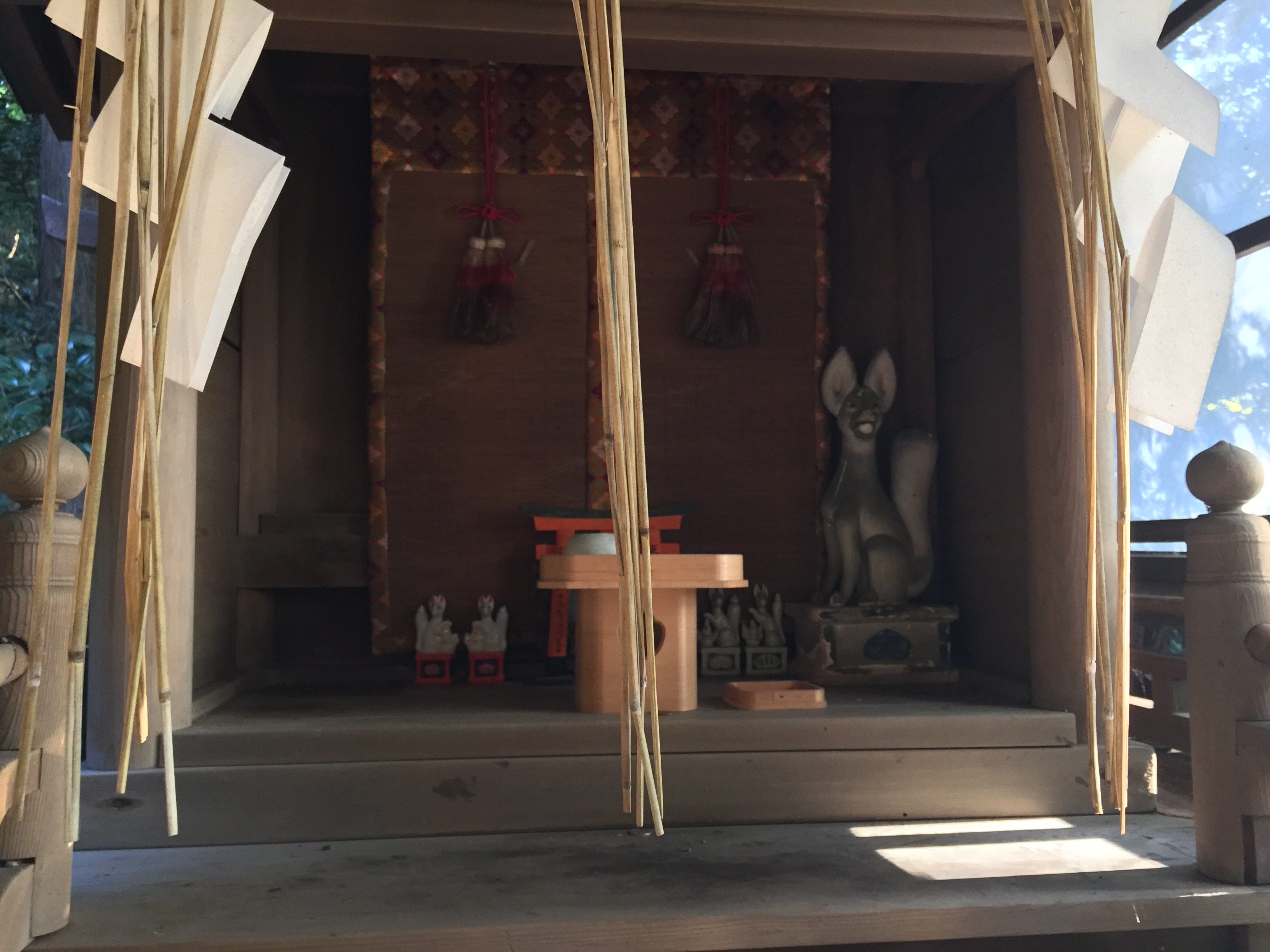
I watch a priest perform various ritual duties, preparing the temple for the day. More monotone chanting. I want to talk to him; there is a visitors booth, closed, where I linger for some time, and eventually a woman, the priest’s wife, opens the window. She speaks no Japanese so telephones her sister, who explains about the shrine. They are preparing for an Autumn festival on the 25th October. I thought that this was the Yoshida Shrine, it is in fact the Munetada Shrine of the Kurozumikyō sect, founded in the nineteenth century by Munetada Kurozomi, and with its main shrine on a hill top at Shintozan, near Okayama City. The morning chanting was nippai, a daily worship of the rising sun. Munetada founded his sect after a mystical experience, on the winter solstice, of ‘swallowing the sun’, which he interpreted as a ‘Direct Receipt of the Heavenly Mandate’ for the movement, Kurozumikyō, that he founded.
Sun worship seems the most obvious of religious attitudes, and yet solar sects are so few and far between. There is little solar symbolism in Christianity or Buddhism. And who is the sun god of the ancient world? Not one of the main ones. Sol Invictus was the solar deity of the late Roman empire, but in the end no more than a minor sect that was eclipsed, quite literally, by the rise of Christianity in the fourth century.
While I was listening to the priest’s wife’s sister, the priest’s wife prints out information in English, explaining the history and beliefs of Kurozumikyō, which makes entire sense. ‘The great power that appears in the sun, especially in the rising sun, which gives birth to and nurtures all existence on Earth is admired and called Amaterasu Omikami. She is the parent deity of all beings, and her bright, shining essence pervades heaven and earth. All living things without exception are nurtured in her light and warmth, ceaselessly’.
I could go with that. Kurozumikyō composed three hundred poems, and wrote 260 letters to his Samurai followers. The shrine on Yoshida Hill (also known as Kaguraoka), was built in 1862, and designated a shrine of national importance by the Emperor Kōmei. There are around 300 ‘branch churches’ of Kurozumikyō around Japan, where ceremonies of birth, marriage and death are carried out, as well as tenshinkō, ‘talking together’ ceremonies ‘where followers lay bare their hearts to one another’. A list of the chief patriarchs reached the fourth, Muneyasu, before the priest’s wife ran out of printer paper, but we agreed that I had enough to be getting on with.
I wonder briefly about joining. Any religion that sings to the rising sun must be worthwhile.
21
I TAKE THE BUS SOUTH from Kyoto to visit the Buddhist temple of the Byōdō-in, in the valley of the river Uji. You go largely for the marvellously-named Hōōdō, or Phoenix Hall, which is impressive, and the only part of the temple complex that is remotely original, the rest having burned down and been reconstructed at various points over the centuries. It was once the villa of a courtier, Fujiwara no Yorimichi but then transformed, in the eleventh century, into a temple devoted to the Amida Buddha, he of the blissful ‘pure land’. Walking around the temples I try to think of an example of a western villa — Roman, perhaps — being transformed into a sacred building. The architecture is completely different.
The main draw is the National Treasure known as the honzon, the gilded wood statue of Amitabha Buddha by Jōchō, which must have been added around the time the building was converted into a temple. I listen to the tour in Japanese, and afterwards asked the guide how to pronounce the name ‘Jōchō’; ‘Jeeotch-cho’, she said laughing at my attempts. It sounds for all the world like ‘Giotto’. This is the only known work by Jōchō, the greatest sculptor of the Heian period. Being on a tour makes it harder to see works of art, but even so, the hieratic, oversized figure seems more like architectural sculpture than an image with any psychological or emotional depth. Yukio Yashiro would have disagreed, describing the Jōchō’s Amida as showing ‘intimacy, direct and close, between the Buddha and his worshippers’.
‘In its combination of nobility and gentleness, it reflects the ideals of Heian aristocratic taste. The expression differs from that of older statues in that it is directed downwards towards the worshipper and, softened by an understanding of his problems, is in sympathy with him’.
I am fixing down the periods, slowly, so that I know that the Heian times (794–1185), corresponding to what might be called the late medieval period in European history, was one of refined courtly art, spiralling out from the new capital city, present-day Kyoto. I want to write that ‘the style reflects the worldly preoccupations of the Heian court’, but I wonder whether it was more the other way around, and that new types of luxury, decorative art, moved minds away from the ascetic feeling of earlier Buddhism. The new doctrine of Amida Buddhism offered entry to the Pure Land of Bliss, by the simple expedience of nembutsu, or repetition of the Buddha’s name, Amida. Amida, Amida, Amida… It was Buddhism for the aristocracy, the lazy rich: an easy path to paradise.
The Jōchō honzon statue is a National Treasure but leaves me untouched — I do not feel an object for Amida’s sympathy. Nor can much be said for the paintings of the Buddha of the Western Paradise paintings on the temple doors, vigorously indicated by the tour guide, as important paintings — almost National Treasures — as they are behind tight wooden grids so almost completely invisible. Tanizaki’s shadows, once again.
The revelation is rather of the flying Boddhisatvas, each perfectly carved on their own tapering flying cloud, on display in the Hoshokan Museum nearby (there are also some in the Phoenix Hall, but again hardly visible). These are like the Apsaras, flying spirits in Hindu and Buddhist art, that in the western world find form as the Nereids in Roman sculpture, but which fly through the ages and across oceans, shape-shifting as they go.
Hot outside. I sit by the temple bell, reading The Tale of Genji. After some time of recovery, I cross the river to the Tales of Genji museum, found here as the great novel, which I wonder if I will ever finish, has its concluding chapters take place in Uji. But it is shut.
22
I AM STAYING BACK at the Capsule Ryokan on Shichi-jo Street near Kyoto station, this time in a room, rather than the capsule dorm. A short walk to the Ryokoku Museum expecting to learn about the history of Buddhism in Japan. Instead an exhibition of sculptures from Angkor Wat. How often during this visit I’m taken short by this view of Asia from within Asia — a reflection of my pig-headed western prejudice, of course. The large exhibition of Egyptian art advertised in Tokyo, for example, or the exhibition in the Mori Art Museum of the Vietnamese artist Dinh Q Le, including a film about a Japanese man obsessed with the Vietnam War.
Then the Kinketsu line to Gakuenmae station, a short walk through warm quiet suburbs to the Yamato Bunkakan Museum. Only on arriving do I realise that it is the museum founded by Yukio Yashiro, whose book Two Thousand Years of Japanese Art I have been reading for the last couple of weeks.
Yashiro describes the inspiration for his book on a visit to Europe in 1956, and the realisation that Japanese art was still largely unknown in the west. The problem was not just the centuries of isolation before 1868, but also, ironically, the Law on National Treasures, passed after the opening-up of Japan, which meant that many of the greatest works of Japanese art could never leave the country. ‘Japanese art is preserved almost intact in its place of origin, a situation which does not occur with any other civilisation’, Yashiro writes. On top of this, the western world’s obsession with lacquerware, netsuke and ukiyo-e makes the view of Japanese art as unsubtle as the Japan of Madame Butterfly.
It is relief to read that you don’t need to be a tea-ceremony aficionado to appreciate Japanese art, and that there is much esotericism and specialist discussion that should also be cleared out of the way. Yashiro’s approach reminds me of the man at Hōryū-ji, suddenly lifting his head and opening his eyes, as if to catch the image unaware: ‘Long years of study have taught me how precious are the moments of first impression and how vital it is to try to keep them alive in the absorbing intellectual interests which research into the background of works of art provides’. Works of art were not made for art historians, they were made ‘for the enjoyment, and sometimes salvation, or ordinary people’. Yes.
Yashiro loses us, or at least me, when he writes that the only criteria to judge art is beauty, and that this beauty is human and universal. And yet it is part of his argument, part of a book written in the mid-1950s — a book that most art historians would not read nowadays, because they would consider it ‘out of date’, and not up with the latest theory, or political obsession. These are the reasons I have brought it with me. Most art history books written before 1970 are much better than those written afterwards — before the age of academic specialisation and theoretical splintering, and before the rise of American English as the dominant language of academia (when ‘ri-search’ became ‘ree-search’), and before the time when it was no longer possible to have a personal, emotional, sometimes doubtful view of a work of art, or to write on the basis of personal encounter. Before the age, as Yashiro might have said, when art historians wrote only for other art historians, and were part of a general enlightenment of public life.
For all this, the period names of Japanese art — Asuka, Heian, Kamakura, Momoyana, are tiresome and misleading. As if all the art made within a hundred years or so could be explained by a single impulse, and was a result of aristocratic commissioning. What about the folk crafts, the indigenous genius? What about nature? I want to do away with them, but then what do you put in their place? The passing of centuries? Re-writing the history of Japanese art seems both necessary and impossible.
Architecturally the Yamato Bunkakan is perfect - the slow walk through the gardens, up a gentle incline, and then the long glamorous facade of the museum.
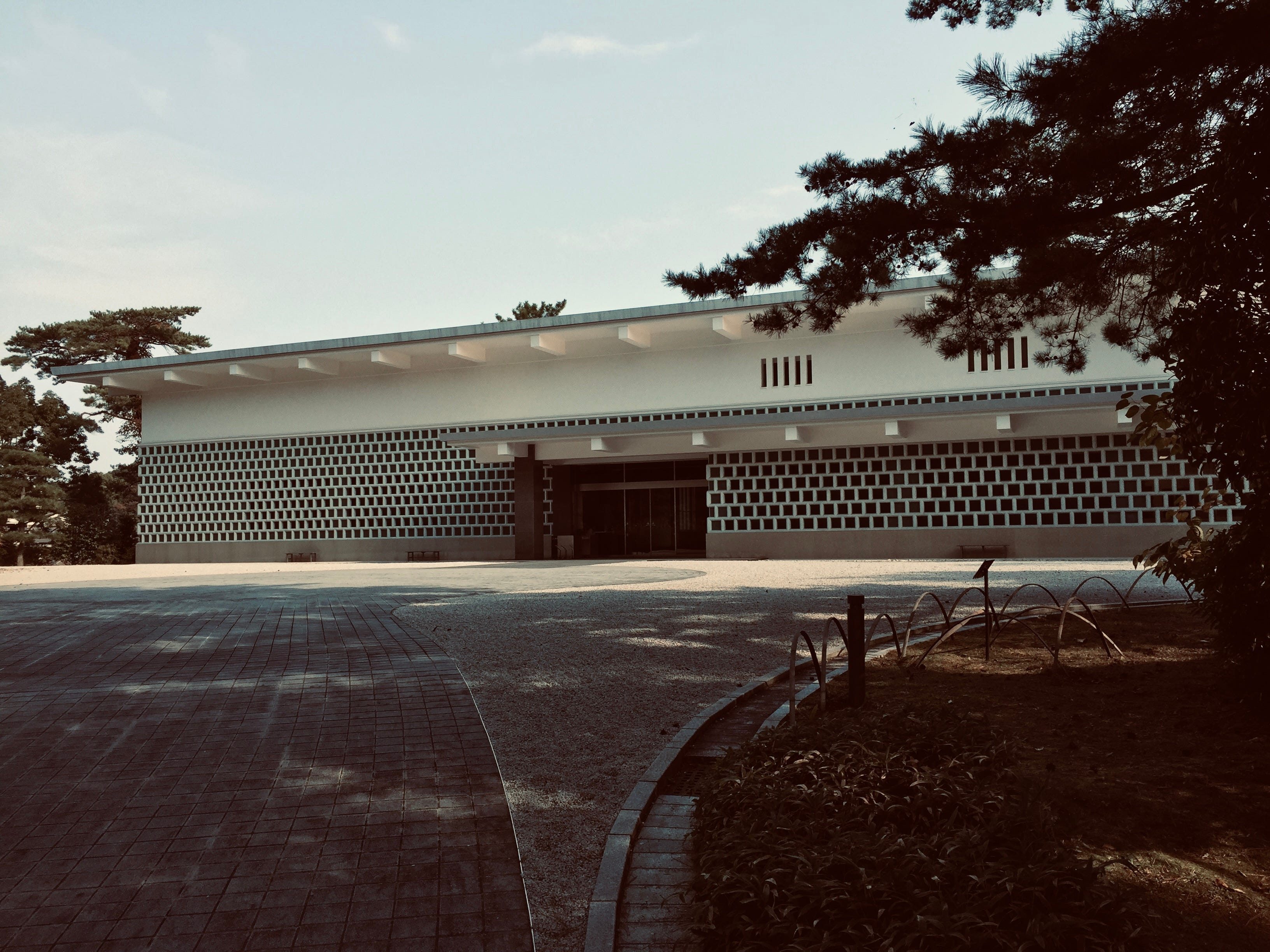
In Europe, so the saying goes, the perfect is the enemy of good. In Japan, by contrast, perfection keeps company with perfection.
You reach the single large gallery, built around a glass-walled bamboo garden. There is an exhibition of Chinese painting, subtle ink on gloomy silk, evoking nature, the seasons, mountain retreats. Some of the technique seems laborious, amateurish - but then these are (I think) literati paintings, distinguished from professional painting by their feeling and imagination. The literati (I’m told the term is a western invention) were the aristocratic amateurs who refused to descend to the depths of actually having to work for a living and sell paintings, largely, it seems, because they didn’t have to. Did this annoy professional painters? Were they like celebrity artists, taking advantage of their status and lowering standards for everyone?
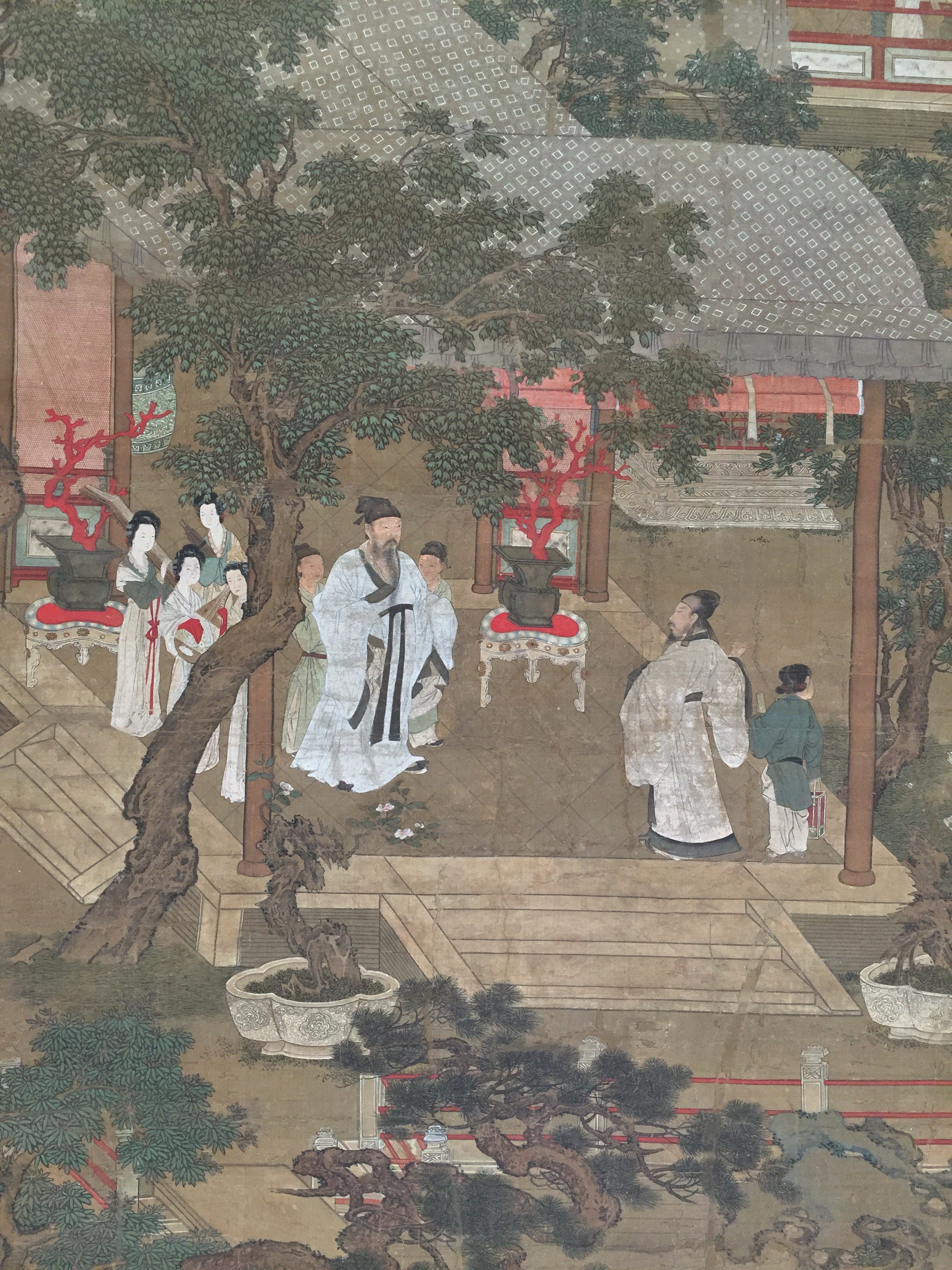
But then, in a glass case, the famous Nezame scroll, very, very old, around the eleventh century, probably made around the same time as the Bayeux Tapestry in England, but the contrast could not be more telling. The story told is Yoru no Nezame, or ‘Wakefulness at Midnight’, (which brings back memories of the Samurai House with its paper thin walls).
Some vocab:
Emakimono, or, Emaki — picture story hand scroll
Monogatori-e — illustrated novels
Onna-e — ‘women’s pictures’
Yamato-e – ‘Japanese painting’ (as opposed to Chinese painting)
The scroll I am looking at is the only part of this very early Yamato-e, an Emakimono illustrating the Yoru no Nezame story to have survived. It is a little rubbed and battered, and difficult to read (as well as impossible to photograph and difficult to find anywhere in reproduction), so that although it is right there in front of you, it still feels hidden behind some thick cultural veil.
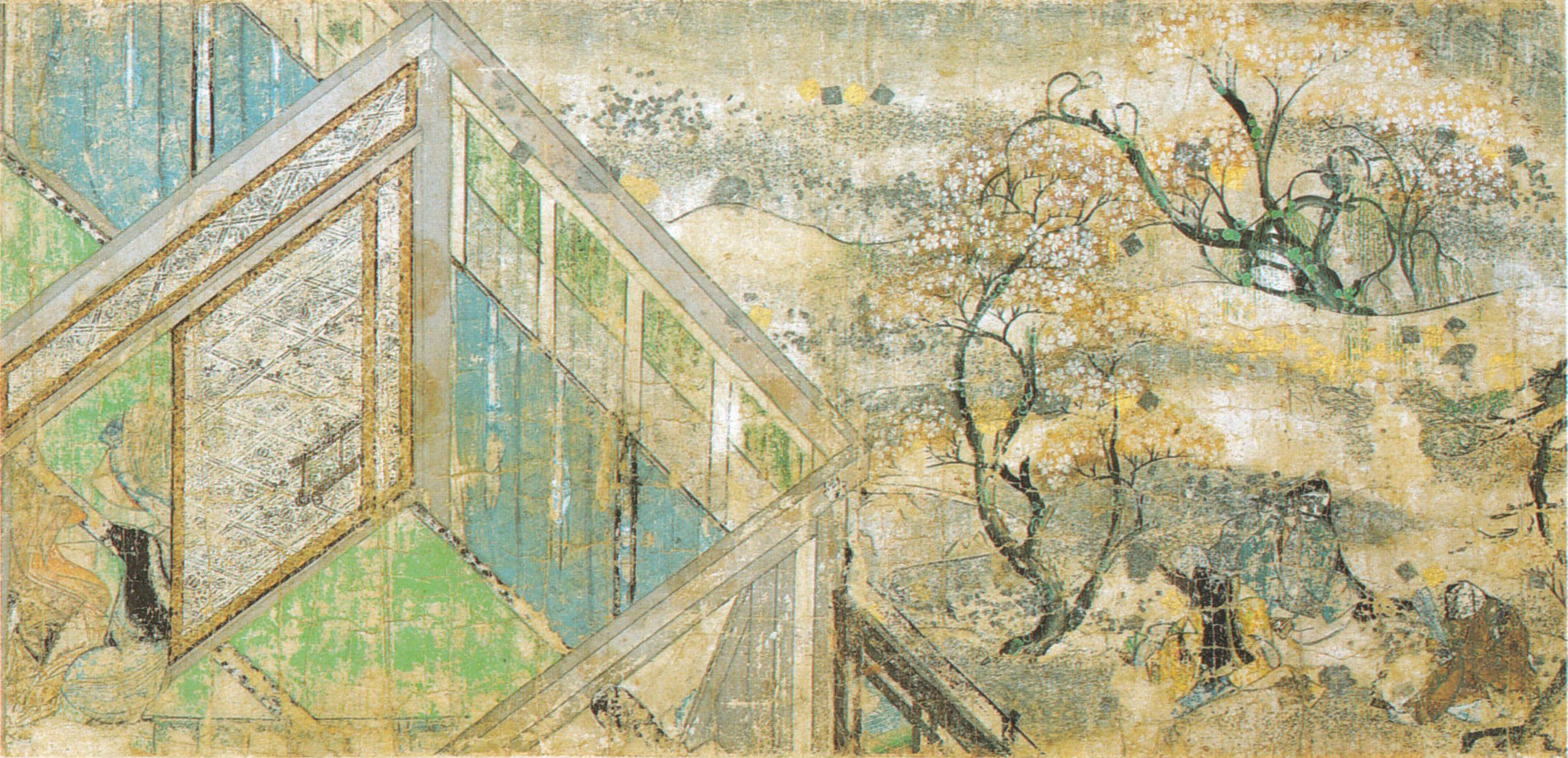
Fukinuki Yatai is the interesting term for removing the roofs from buildings to show interiors from above — literally ‘blown-off roof technique’. It is one of those features of painting that defined the Yamato-e style, along with drifting obscuring clouds, a homely humour, and the drawing of faces with lines and hooks, a little like typewriter art of a later age.
The other, more famous scroll from this time, surviving sections of the Genji Monogatari Emaki, illustrating the famous Tale of Genji by Murasaki Shikibu, is held in the Tokugawa Art Museum in Nagoya, which happens to be en route back to Tokyo.
I take the evening train to Nagoya and check into the Meiryu Ryokan. An authentic tatami room, wood and matting and translucent planes, held in a modern building. Aesthetic, calming, and predictably uncomfortable for unyielding European limbs.
23
TO THE TOKUGAWA ART Museum. Hundreds of tea caddies, but no Tales of Genjii handscroll. Disaster: the scrolls are off view in preparation for an exhibition opening at the museum in a few weeks.
Having read The Tales of Genjii — or at least a good portion of it — before travelling, in preparation for seeing the surviving sections in Nagoya, this is not a little disappointing. Can anything be done? After some enquiries and much incomprehension, Ichihashi Yasuyoshi, the vice director of the museum comes to talk. We talk about the scrolls for a while, he explains that the surviving chapters are spread around a few museums in Japan, the majority here in Nagoya, or at the Gotoh Museum, on the outskirts of Tokyo. There are some more fragments in private collections. The exhibition, opening in a few days, will bring them all together for the first time in many years, and will be worth staying for.
And yet I cannot so return to Tokyo disconsolate, feeling as if I have stepped into the mournful world of lines and hooks and melancholy, forever condemned never to set eyes on Genjii, or fully to enter or understand the world of Japanese art.
23
IN SEARCH OF A BAG for carrying back gifts, I drift around the shops south of Ueno station. The perfect lightweight holdall with scenes of Hokusai’s ‘Thirty-six view of Mt Fuji’, appears to be waiting for me in a department store. It folds into a neat pouch and seems too good to use. A walk through Ginza, drowning in white light, each tree wrapped, as if ready to be eaten or sold. Clouds build in the sky for the first time in a few weeks and the temperature drops so that there is a chill, the first cut into the heavy late summer warmth. In the Tokyo National Museum I skim past the ukiyo-e, mere fragments of the wide world. The charm of their image is everywhere in Japan. The Buddhist painting and hanging scrolls now seem more interesting, going back to the moment when Yamato-e was rising, when Japanese artists were struggling to create their own vision of the world. But back further still, and a last moment of discovery, of revelation, in among the terracotta Haniwa and Kofun tomb figures that are displayed on mass, as if arranged by a child, in the ‘prehistoric’, or rather ‘pre-Buddhist’ galleries of the museum.
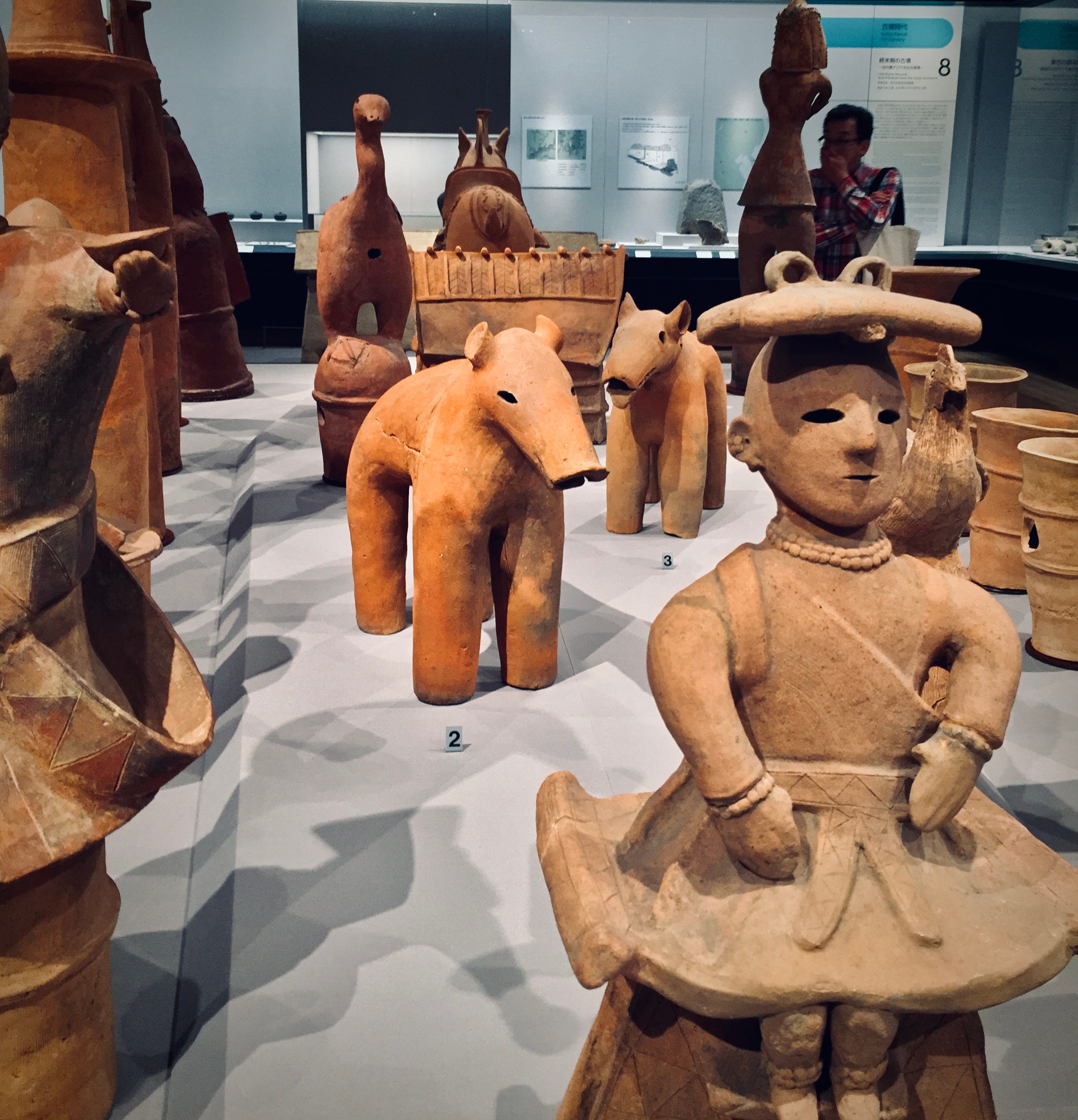
One shows a dog, perhaps - thick-legged and snouty like a bear, but with unmistakably canine patience and humility. The Kofun dog emanates a sort of native simplicity that now makes entire sense, a spirit that it seems possible to trace through the history of Japanese art, from the line-and-hook faces on Heian hand scrolls, to the spare mien of the statues of Buddhist monks, and to the Kamakura scrolls with all their poised emptiness. This is how to consider ukiyo-e, not looking back through a century of Disney and technicolour entertainment, but rather against a background in which an effortless simplicity of drawing gives the woodblock image, despite its seductive colour, an immediacy and legibility that connect all the way back to the Kofun tomb dog.
It is full of life and personality, this art, full of the things that actually matter. It is the world animated, the world given a name.
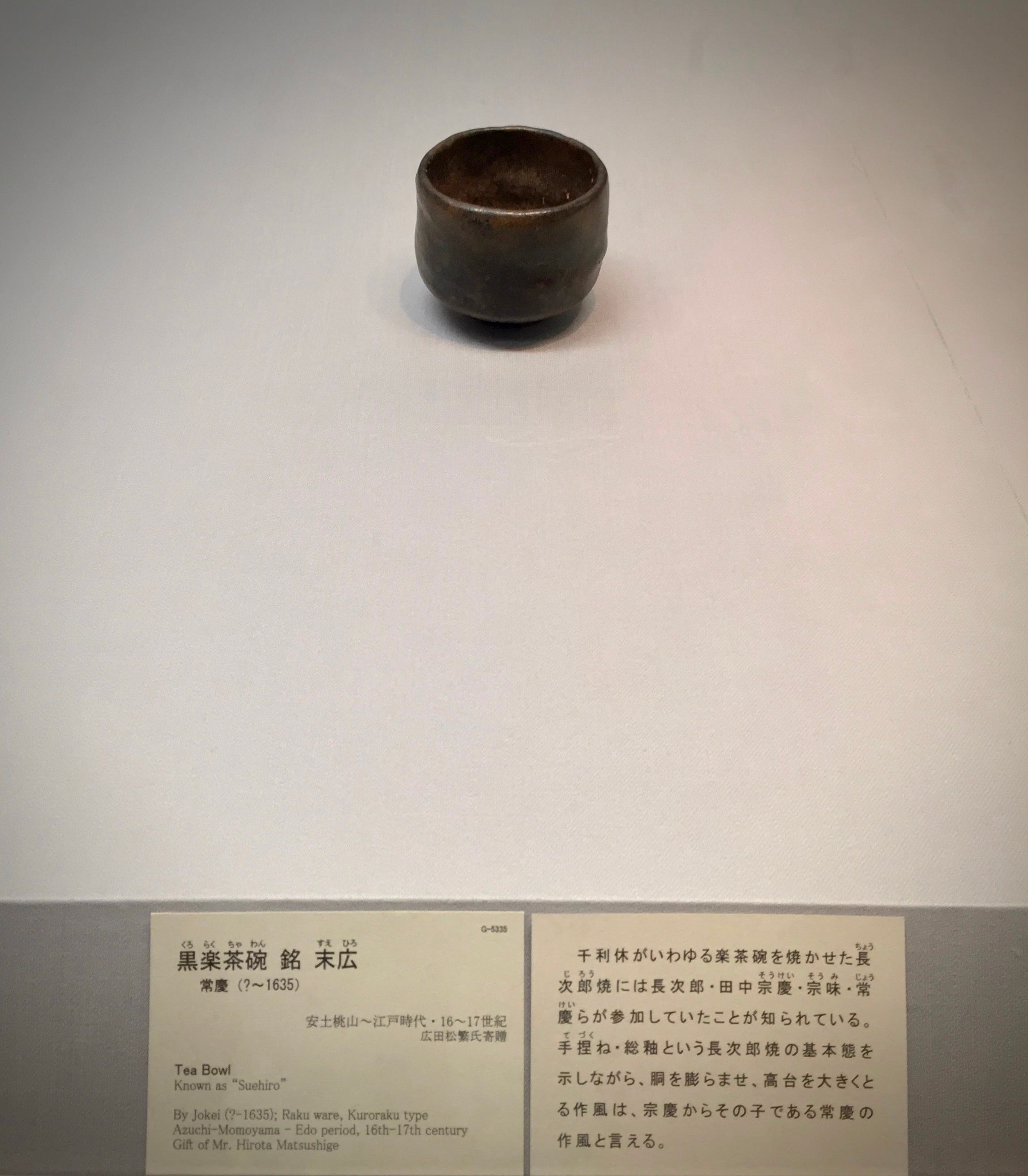
Japan is receding in the distance, long calligraphic strokes of mountain ranges rising above serene clouds, the homely gardens of Kyoto and Nagoya now lost in a far grander landscape, preserved as a memory beyond the deserts of western China, the endless plains of Siberia and Central Asia.
Leaving a place of such magic is a little like death.
Will I ever come back?
Never again for the first time.
With thanks to the Daiwa Foundation for making possible this journey to Japan in 2015, to research the chapter ‘Spellbound’, of my book Creation. Art Since the Beginning (Bloomsbury, 2021).
Alexander C. Soper, The Rise of Yamato-e, The Art Bulletin, no.4 (1942), pp. 351-79, here p. 363.
Yukio Yashiro, Two Thousand Years of Japanese Art, London 1958, p. 160.
Sōetsu Yanagi, The Unknown Craftsman, p. 88
Ibid., p. 103
Kenneth Clark, The Other Half, London, 1977, p. 174.
Rachel Saunders, ‘Talking Pictures: The Life of Xuanzang in a Fourteenth Century Japanese Handscroll’, Literature & Aesthetics 22 (2) December 2012.
Ibid., p. 182.