

Hating the Bauhaus
On the Alternative for Germany attack on modernity.

THE RECENT ATTACK ON THE BAUHAUS and its legacy by Alternative for Germany, or AfD (Alternative für Deutschland), the extremist far-right political party leading the polls in advance of elections in eastern Germany, has been rightly compared to the attack on the Bauhaus by the Nazis in the 1930s.
The Bauhaus is, on the face of it, an obvious target for the AfD, a symbol of the modernity that is seen as a threat to traditional life, of the internationalism of the last century that led to ‘globalisation’ and the erosion of national identity and self-determination.
Although the Bauhaus was closed by the Nazis in 1933, only fourteen years after it was founded by Walter Gropius in Weimar, it was reopened in the 1970s and in the 1990s became the Bauhaus-Dessau-Foundation, a research institute housed in the former Bauhaus building in Dessau-Roßlau.
It is (I think) a very beautiful building, and one of the great cultural institutions of Germany, a bridge from the Weimar period to the post-Unification era, across the great abyss of Hitler’s Germany.
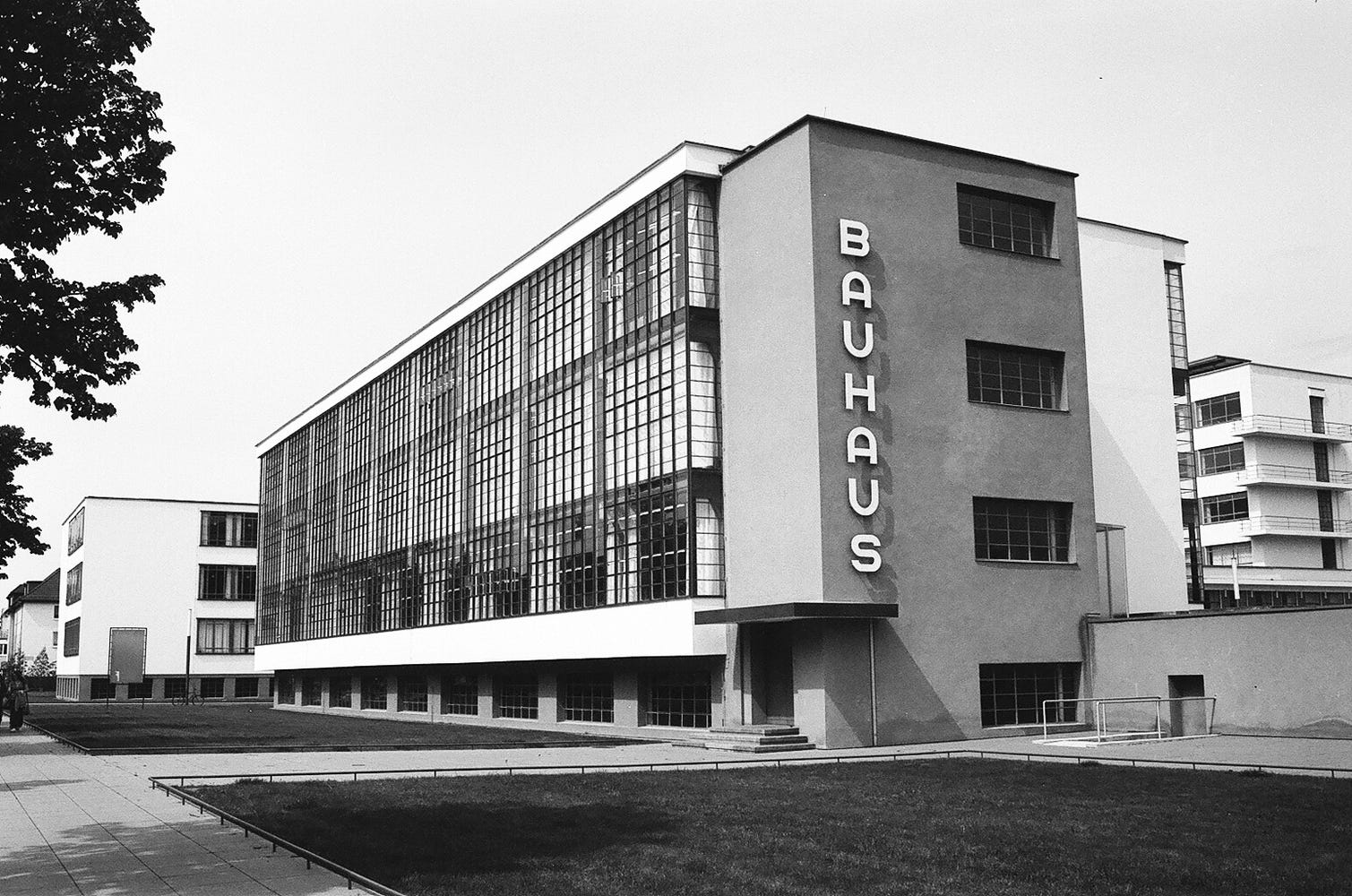
There is little depth or nuance to the recent AfD attack on the Bauhaus, just as there was little coherence in the Nazi attack on modern art. Nazi cultural politics were philistine, knee-jerk and above all populist, tapping into the generalised fearfulness of anything new among the general population, deeming all modern art as ‘degenerate’, and therefore immoral and unpatriotic.
As I write in my new book (sorry to mention it again), The Worst Exhibition in the World. Degenerate Art 1937 it was never entirely clear what ‘degenerate art’ looked like, nor how an artist could be ‘degenerate’ without being Jewish or a bolshevist (many were not).
To be a member of the Bauhaus, however, made you an obvious target — you lived and worked under the flat roofs that Hitler found immoral. You were a card-carrying bauhaüsler — bam, degenerate. The white-walled, minimalist modern world of the Bauhaus seemed unambiguously the opposite of blood and soil Nazism. The Bauhaus solved, in part, a problem for the Nazis, in providing a fixed and unambiguous target for their anti-modern policies. It meant they didn’t have to think too deeply, or think at all, which suited the Nazi mind perfectly.
As Barbara Steiner of the Bauhaus Foundation has pointed out (reported here by Anne-Sylvaine Chassany in the FT), the AfD attack on the Bauhaus as ‘unpatriotic’ first appeared in a 2024 motion submitted to the state parliament of Sachsen-Anhalt by Hans-Thomas Tillschneider, the AfD cultural spokesman.
Tillschneider’s motion was titled ‘Irrweg der Moderne’, (‘The wrong path of Modernism’). He starkly characterised the Bauhaus as a fundamentalist architecture school that broke entirely with tradition, declared war on ornamentation, and created houses expressly as ‘machines for living’ (the quote of course was not from the Bauhaus, but from the French architect Le Corbusier).
This break with tradition — and this is the crucial bit — became a philosophy of life that was a ‘rejection of the human connectedness to the land and the soil, and a sense of rootedness in tradition’ (‘…so leugnete es auch die Bindung des Menschen an Grund und Boden und seine Verwurzelung in der Tradition’). The Bauhaus, then, was the source of the rootlessness of contemporary life - the rootlessness and perils-of-globalisation that all far-right movements seem to fixate upon, with their nostalgia for national borders and ethnic homogeneity.
It was a bizarre and ill-informed attack — ‘the Bauhaus met bleakness with bleakness’, Tillschneider continued, declaring that everything that came out of the architecture school was cold and ugly, that it was responsible for all the dreary communal building projects of the GDR and the Stalinist years. His statement met with repeated and increasingly exasperated rejections in the state parliament. Say what you really mean and use the words ‘degenerate art’, came one response.
As Barbara Steiner points out, the very language of the AfD statement evokes Nazi syntax. ‘Irrweg der Moderne’ sounds like the title of an essay by the Nazi sympathising art historian Hans Sedlmayr, or by the Nazi art critic Robert Scholz. As Victor Klemperer wrote in his 1947 book Lingua Tertii Imperii: Notizbuch eines Philologen, it was the choice of particular words and language that spread Nazism as a cultural force throughout Germany.
The irony is that the Bauhaus itself was politically highly ambivalent, and had a conservative, traditionalist current that was in general stronger than any radical left-wing faction. It was certainly a break with tradition, but also ran workshops that promoted traditional forms of craft, and was in many ways that place where the machine age met the craftsmanship of earlier times. It was the antidote to the anonymity of the industrial world.
And it was above all a business enterprise. Part of the reason Gropius founded his school was to deal with the ‘kunstproletariat’, the large amount of unemployed artists who had graduated from the art academies and were seen as contributing little to the economy. It was a business-oriented school of architecture and design, but also highly practical in its workshop system.
Further, there is not necessarily a contradiction between Bauhaus aesthetics and fascist aesthetics, as I argue here, in a piece on Oskar Schlemmer’s great painting Bauhaustreppe (1936). The clean, light-filled spaces of the architecture of Mies van der Rohe with their strong classical inheritance are hardly the opposite of fascist aesthetics, of the architecture of Albert Speer.
The idea that it was a centre of left-wing activism is in part of a myth that was spun after the Second World War by those wanting to recuperate a spirit of resistance in Weimar culture in its greatest symbol, a legendary school of art and design. And the more we learn of the different strains of thought and ideology, of the great breadth and democratic openness of the historic Bauhaus, the more it becomes such a symbol - not of left-wing radicalism, but one above all of tolerance.
In his statement ‘Irrweg der Moderne’ at the Sachsen-Anhalt Landtag, Tillschneider rejected any comparison with the Nazi attack on modern art, arguing that this was suppressing critical engagement with the past, in the service of a ‘Bauhaus cult’.
Research on the Bauhaus in recent years has brought out many of its contradictions, so that while it remains, rightly revered and treasured, it is hardly seen in terms of moral or ideological purity. It is this contradiction, this ambiguity, that makes it all the more valuable in our own riven times.
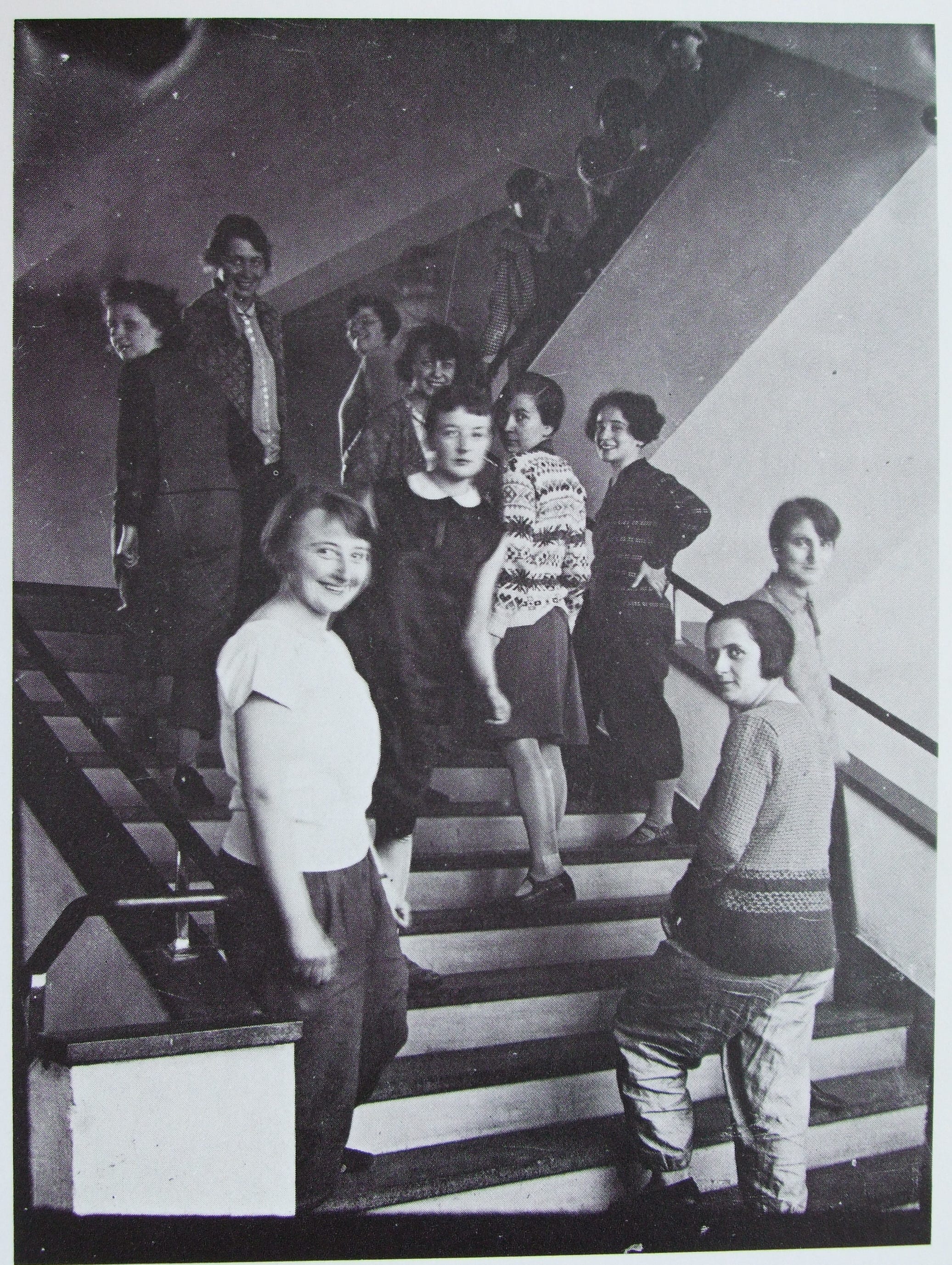
I’ve often thought that what the Nazis really hated about the Bauhaus was not to do with a style of art or architecture at all - it was rather that the Bauhaus was simply at the centre of things — it was the buzz. They had the best parties, the most fun. And this spirit of life made them unafraid of innovation, always open to the new. Above all, they were devoted to living creative lives.
And this is what we should remember, looking at the rise of the far-right around the western world. The AfD attack on the Bauhaus crystallises the attack on individual creative lives and independent thinking that these movements rely on for support. And this in turn shows one of the best ways to respond, to resist — be a bauhäusler, live creatively.
For more on The Worst Exhibition in the World. Degenerate Art 1937 (Old Street Publishing, 2026), tune in to this podcast episode of SHOWS THAT GO ON, hosted by Malika Browne, in which I talk about my book:
I'm glad you've written about this. In November 2024 I mentioned the AfD attacks and its attempt to strike money from the Bauhaus budget for its centennial celebrations in a piece in 3QD that was more about the US election and the possibility of fascism stateside. But it seemed important to point out that the history of fascism's desire to obliterate a design movement dedicated to social democratic principals (as envisioned for the Siedlungen in Dessau, for example) was not yet over. You mention the Nazi art critics Sedlmayr and Scholz. Stefan Trinks of the Frankfurter Allgemeine thinks that the AfD’s language also echoes that of Paul Schultze-Naumburg, a Nazi journalist who attacked the Bauhaus relentlessly from its inception in 1919 to its demise in 1933. I've spent time in Dessau and find it incomprehensible that those buildings could be viewed today as: 'of an abysmal ugliness' or 'unbearable to look at.' The Master Houses are exquisite and the Bauhaus building is modernism at its elegant best. (I deliberately chose the most beautiful photo of it I could find for the article--the Bauhaus at night)
As unpleasant as these AfD pronouncements are, awareness is very important. Thank you for this coherent and very well structured piece! Es lebt das Bauhaus!