


I’M TOLD THAT THE RECTOR of St Peter and St Paul’s Church in Aldeburgh, Suffolk, gave a sermon last Sunday morning which took as its theme the production of Benjamin Britten’s opera Peter Grimes, which closed at the Royal Opera House last Thursday.
The sermon followed a civic parade, and local councillors were lined up in the front row pews in a scene that might have been an outtake from Peter Grimes. The rector encouraged the councillors to overcome their differences, and not give in to the sort of communities of outrage that are the subject of Britten’s most famous opera.
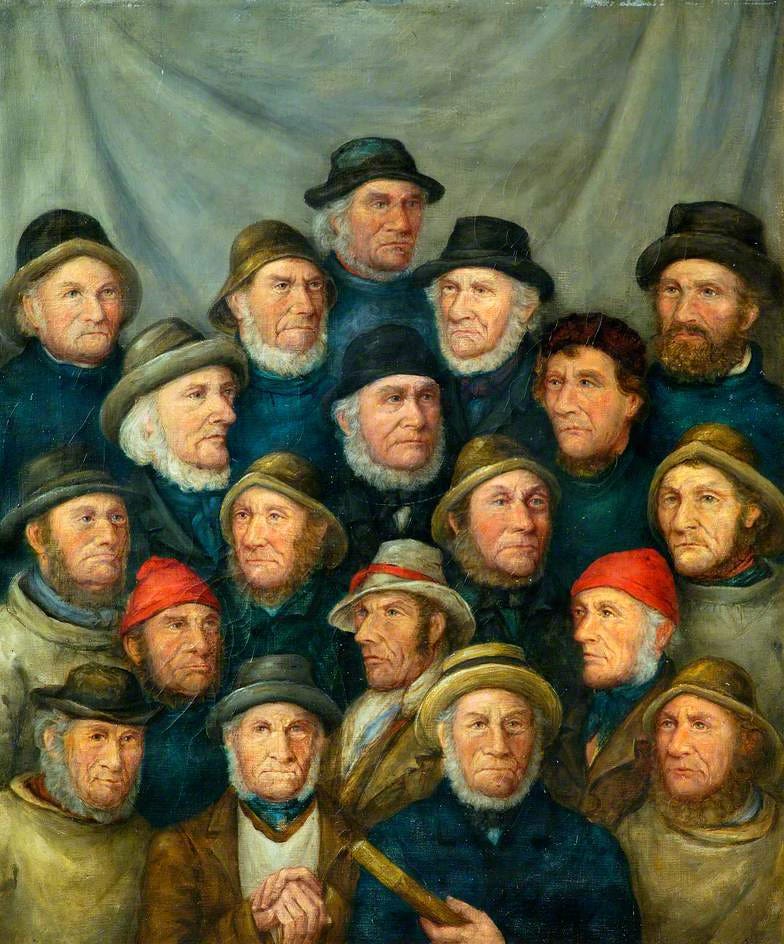
In Peter Grimes, the anti-hero, suspected of killing his young apprentices, recruited from the workhouse, is condemned and driven to his end by the townsfolk of the ‘Borough’, the fictional town modelled on Aldeburgh. The Borough was the title of the long poem published by the local poet George Crabbe, on which Peter Grimes is based.
The thought of such a sermon is especially stirring when you think that George Crabbe himself preached from the pulpit of St Peters and Paul’s. And there he stands, immortalised in a marble bust by the Saxmundham-born sculptor Thomas Thurlow, waiting for eternity in an unassuming corner of the church.
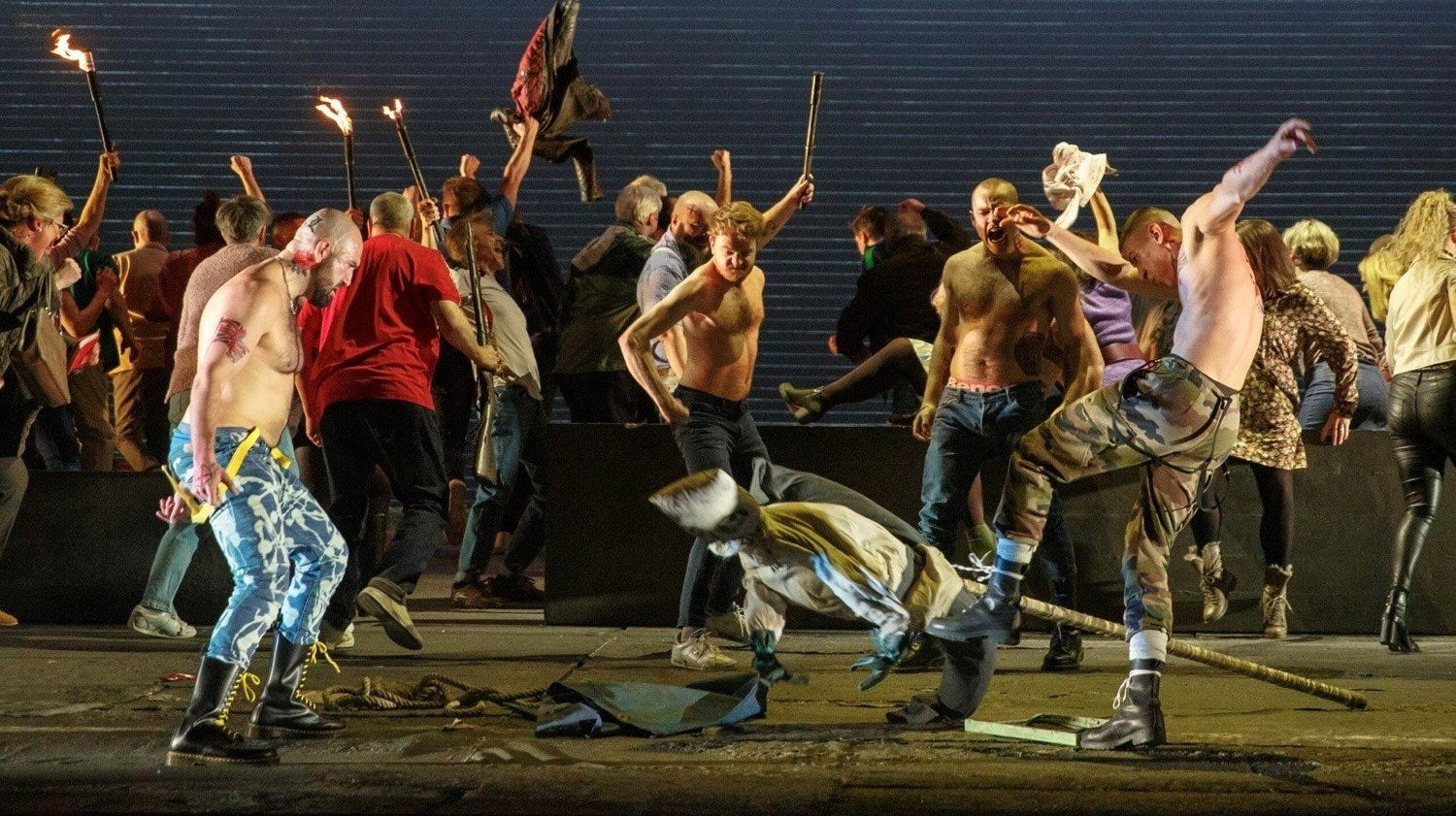
In Britten’s version, the townsfolk are whipped into frenzy by Grimes’s strange behaviour and appearance as an outsider, and condemn him with no fair trial, a mob sentence based on self-affirming righteousness.
Britten’s version, based on a highly original libretto by the writer Montagu Slater, is quite different to the tale of Peter Grimes told in one of the twenty four sections of Crabbe’s poem.
In Crabbe’s version, Grimes is certainly guilty of the murder of three apprentices, and is taken in by the generally good townsfolk when he goes mad with visions of his victims, alone in his boat, an outcast on the mud flats of Slaughden Quay. The cause of his death is his own madness, misery and guilt.
It is remarkable how Britten’s opera reverses this tale, in what is nothing less than a wilfully ironic misreading. As E.M. Forster wrote in a lecture given at the first Aldeburgh festival in 1948 (which I wrote about here), Grimes is no longer the lugubrious murderer, but the victim of townsfolk gossip and malice. Social criticism was far from Crabbe’s original purpose — his was a time when people, especially the lower classes, were made to pay for their wrong-doings.
Making Grimes the victim does not take away from the psychological complexity of the tale, but rather places that complexity on the community, rather than the individual. And in so doing a great message is put across. We cannot give in to communities of outrage. We must talk back with ever-renewed strength against those who wish to profit from our fear. We must hold up as the greatest virtue the care of the weakest and most vulnerable, and the rights of the individual. And in doing all this we must act with good humour and genuine humility.
It seems astonishing that Britten communicates these thoughts and feelings through music. Is there any precedent in music for the four Sea Interludes that Britten wrote into his score? They belong to the long tradition of the intermezzo, musical bridges that serve for scene changing, but also mark moments of emotional transition, of revelation. And yet it is hard to think of any that come close to Britten in becoming not mere bridges, but great landmasses of art itself.
The sea is the prime dramatic force in Grimes. Relentless, stately, horizontal, shimmering, full of mystery and a deep power that is also a great spiritual force. How many dramas end with the fallen hero, the tragic casualty, sailing out onto open seas, to their sure demise? Nowadays Grimes would encounter the vast field of white crosses of the Greater Gabbard and Galloper offshore wind farms, themselves a reminder of the forces of nature, provoked by human-caused climate change, eroding our coasts.
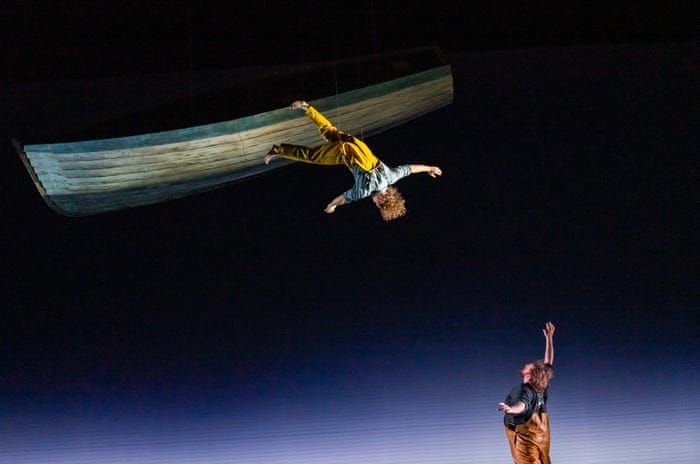
Coastal erosion is a subtly central theme in Peter Grimes, something you might miss in most stagings. During a particularly severe storm, while the townsfolk are carousing in The Boar, a section of cliff falls next to Peter Grimes’s hut. Later, Grimes returns to the hut with his young apprentice, who is driven by the raving Grimes from the hut through the cliff-side door, falling to his death. ‘Man invented morals, tides have none’, sings the apothecary, Ned Keene, earlier in the opera.
The four sea interludes elevate the drama to something of great human importance — of what it means to be an individual who has suffered, of the simple truth that right and wrong are so hard to determine, and of the great reality of the natural world which we call home, and which we have come to have an astonishing and frightening power to control. This human tinkering in the vast force of nature floats in the great chords of the third interlude, with all its Wagnerian undertones of homecoming complicated by the unpredictably atonal signals of modernity.
But it is the second interlude, ‘Sunday Morning’ that feels the closest and most urgent. It is a great call to action, to activity, to activism, a music in which the triviality of political differences dissolve in the energy of shared purpose. It is less the shared purpose of a parade or a procession, but rather one based on individuals taking responsibilities and sharing their doing-power together.
How is this communicated by the sostenuto bassoon horns and trumpets, overlaid by the telegraphic melody of flute, piccolo, oboes and clarinets, in such tripping and ungraspable syncopation?
It is impossible to say. You simply have to listen. And then — act.
Wonderful post! An adaptation I'd love to see and hear.
Wonderful. I was lucky enough to see this performance last Thursday and it has lingered with me ever since, unsettling and complex, but with moments of tenderness and lyricism.