Sofonisba's Game
On a remarkable painting by Sofonisba Anguissola

Sofonisba Anguissola was one of six sisters born into a noble family in Cremona in the middle years of the sixteenth century.
All were trained as painters by their ambitious father, Amilcare, and achieved some renown in their day. It was the eldest sister, Sofonisba, who became famous throughout Europe. In her late twenties she was appointed painter to the Spanish royal family, taking up a position in the household of Isabel de Valois, wife of Philip II, the king of Spain. There was no wealthier patron at the time, and few more enlightened. Isabel de Valois herself became by all accounts a competent painter under Sofonisba’s teaching.
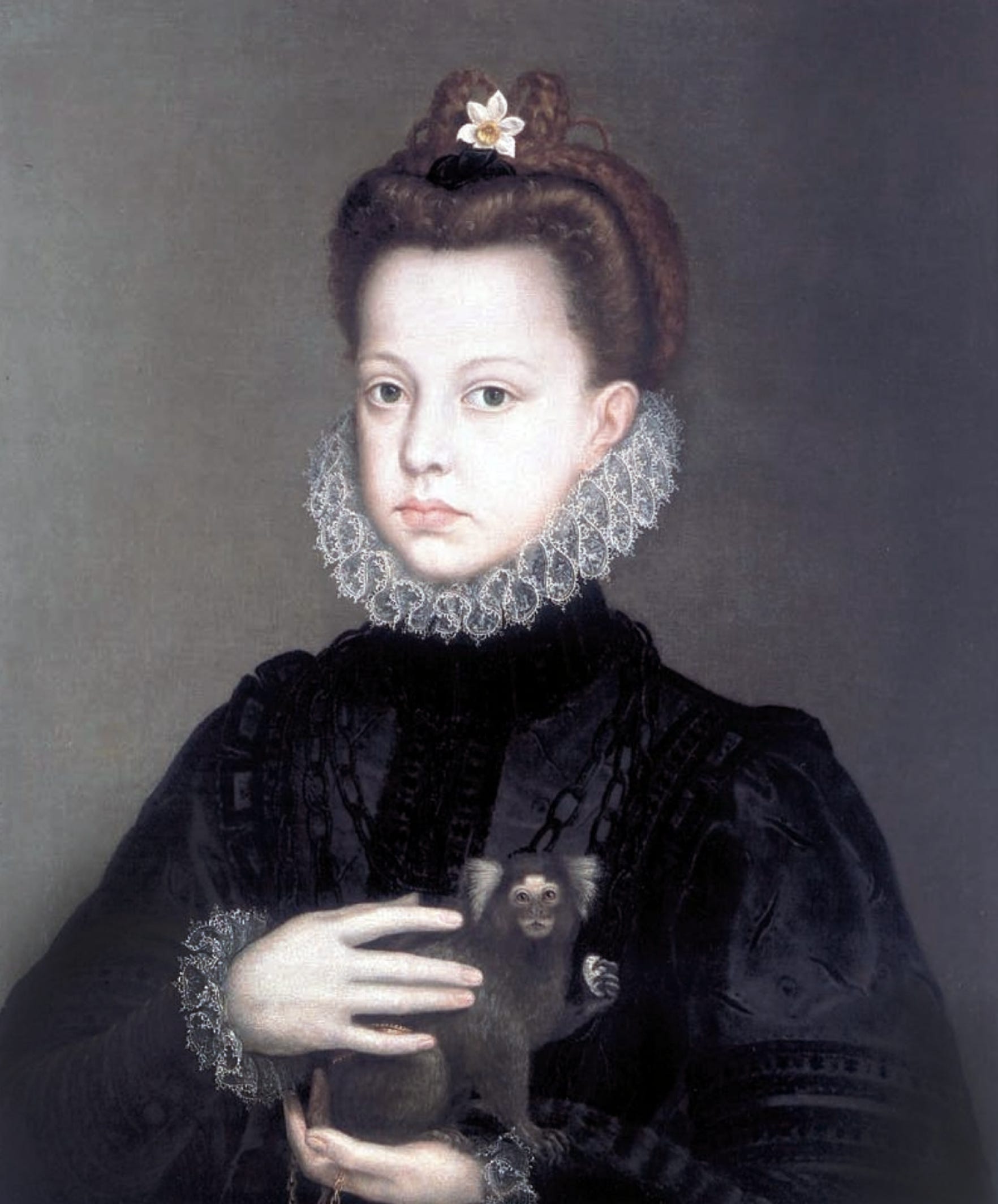
Not a huge amount is known about the paintings Sofonisba made at the Spanish court, aside from some impressive, if official-looking portraits of Isabel and Philip and their two daughters, Isabella and Catalina. One of the best portrays Catalina holding one of the most impressive Brazilian marmosets in art.
Nor is much known about the paintings Sofonisba made in the long years that remained to her after leaving Madrid, living first in Sicily with her first husband, who was killed by pirates, and then in Genoa, and finally back in Palermo with her second husband, the sea captain Orazio Lomellino.
In the last few months before her death she told the story of her life to the painter Antony Van Dyck, who was visiting Sicily. The painting he made afterwards, based on a drawing kept in the British Museum, and showing her at the age of around ninety, hangs high in the corner of the billiards room at Knole House in Sevenoaks.
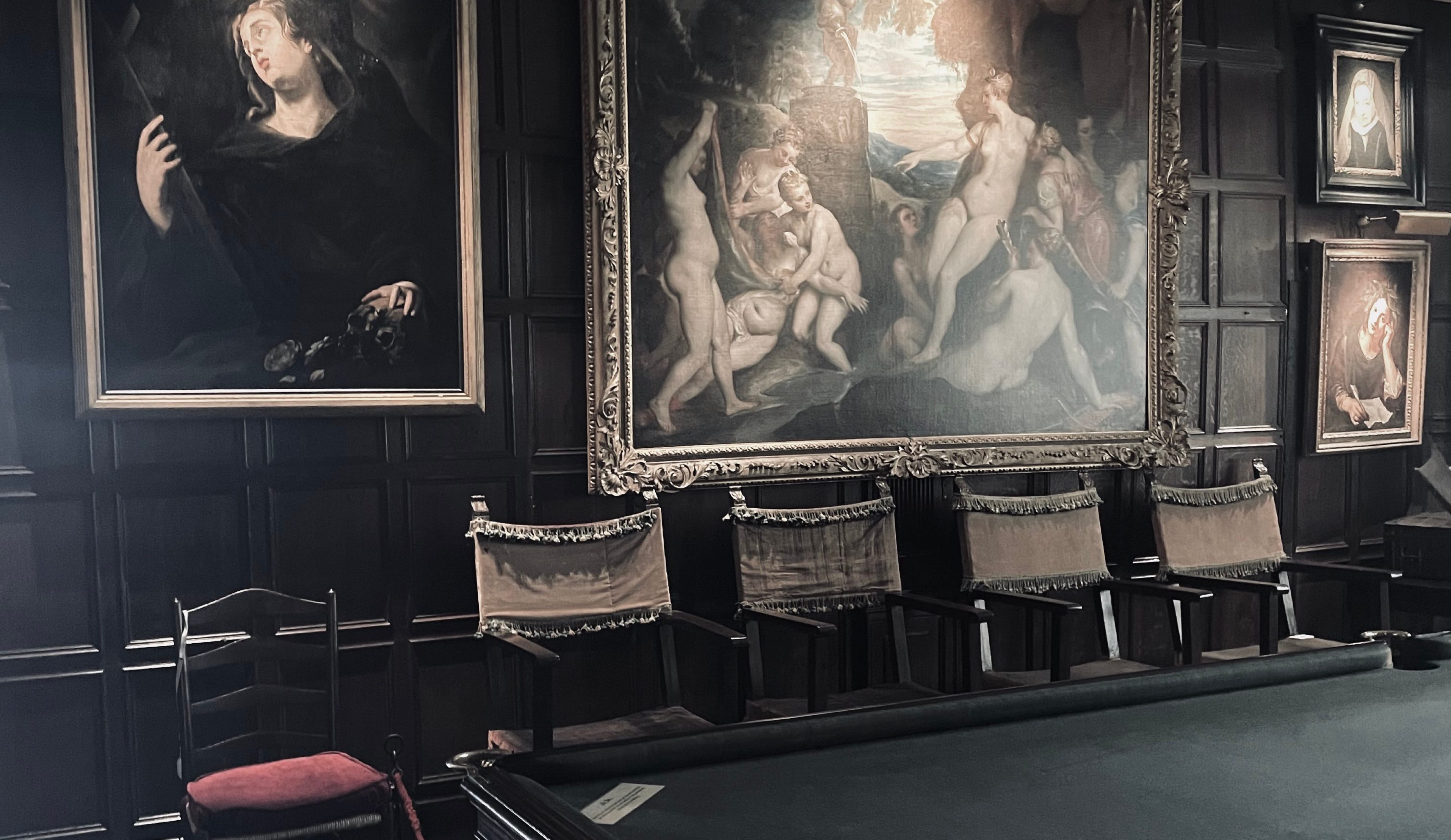
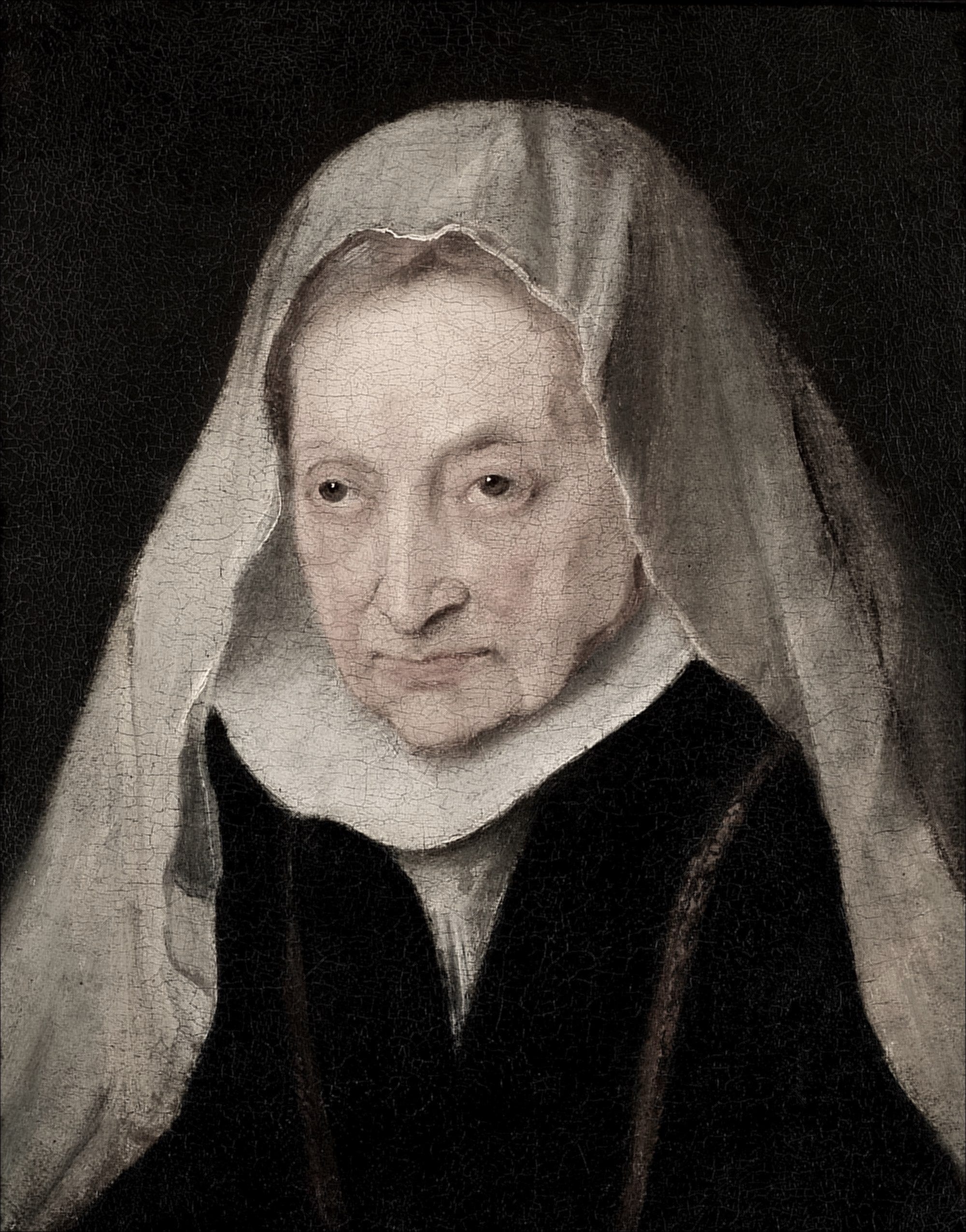
It is the sole remaining image of her from the second part of her life. It is not hard to see what so impressed Van Dyck, who later said that he had learned more from talking with her than from any other artists.
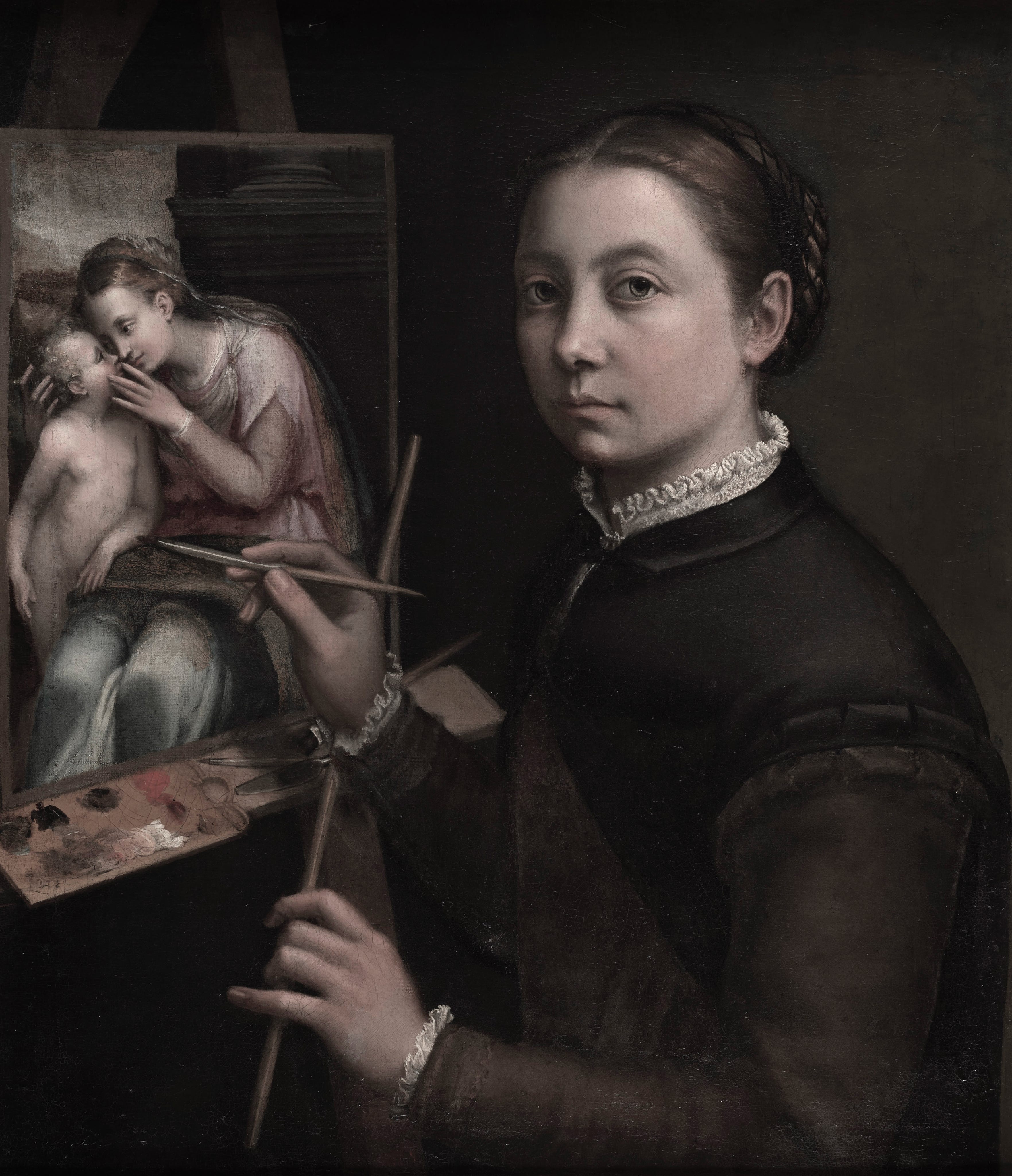
When we talk about Sofonisba, then, we are talking largely about the paintings she made in the first two decades of her career, including many self-portraits, some showing her sitting at the easel, paintbrush in hand. In a painting now in Poland, she is putting the finishing touches to a very moving image of the Virgin and Child, ‘a quattr’occhi’, as the Italians say — intimately eye to eye. It is a painting of motherhood, beyond any religious significance, but also a painting about making painting, about representation itself.
It was around the age of twenty that Sofonisba made one of her greatest paintings, and one of the most wonderful inventions of sixteenth-century art. It is a remarkable family portrait by one of the most fascinating painters of the sixteenth century, and also (in my opinion) the greatest painting ever made showing the game of chess.
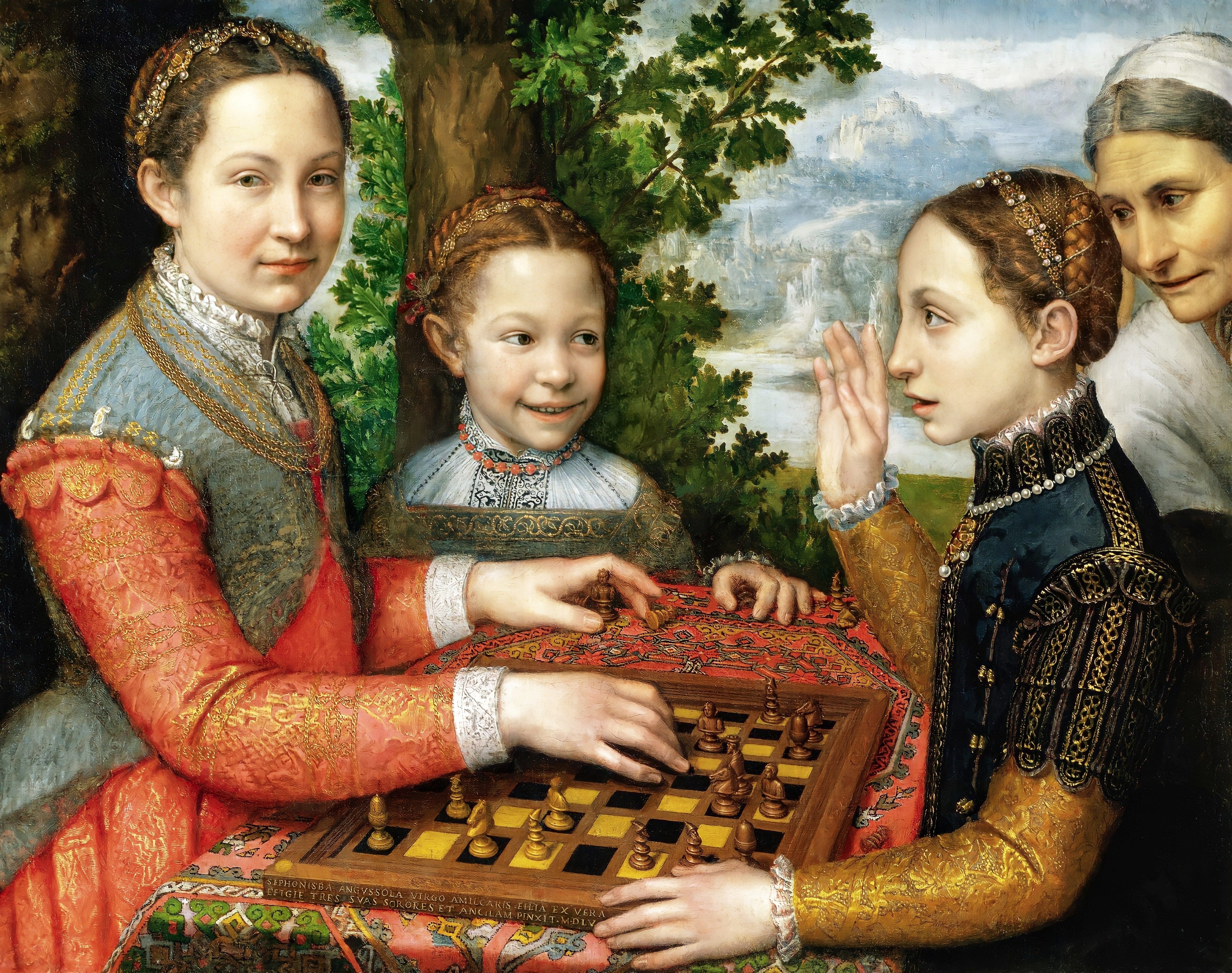
On the left, Sofonisba’s younger sister, Lucia, turns to smile as she takes the queen of her opponent, Minerva (sister number four), while the youngest, Europa, smiles gleefully, showing her teeth (very rare in painting). Minerva expresses both admiration and surprise at her older sister’s cunning. Her raised right arm feels slightly in the wrong position, but this only adds to the charm and innocence of the image.
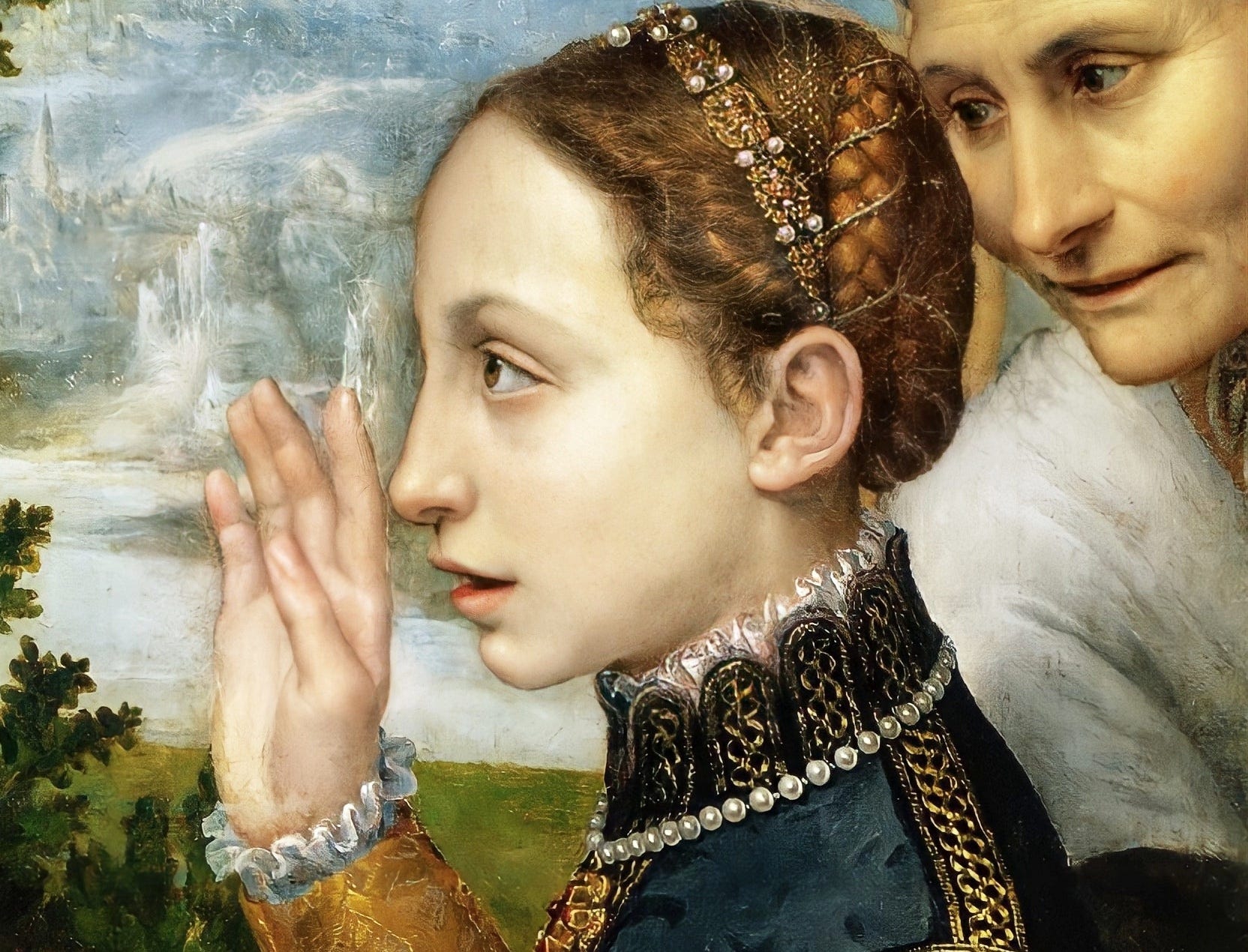
The victorious Lucia is turning to smile at her sister Sofonisba, of course, who is making the painting. Their communal glee is offset by the careworn look of the older woman at right, who might be a servant, or perhaps an older relative. Might it even be their mother, Bianca Ponzoni?
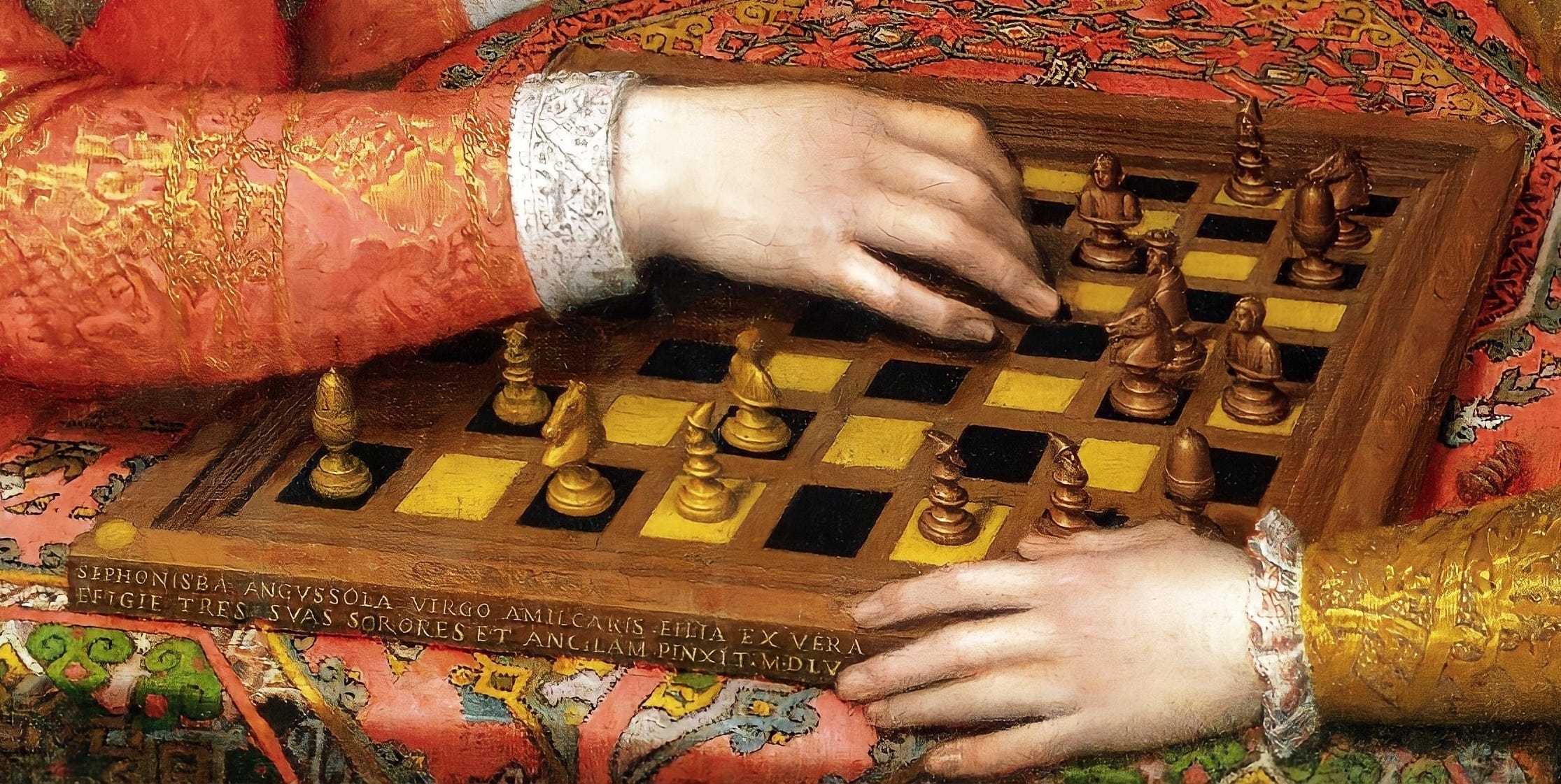
It is an image of accomplishment, but also of strategy, based on reason. Europa is holding a pawn, and looking at Minerva with an air of cunning. She is reminding her older sister of the rule of pawn promotion, by which she might regain her queen and take the game. The three rooks on the board are shaped like acorns, and it is Europa, with her foresight, who is identified with the thriving young oak tree, against which she stands.
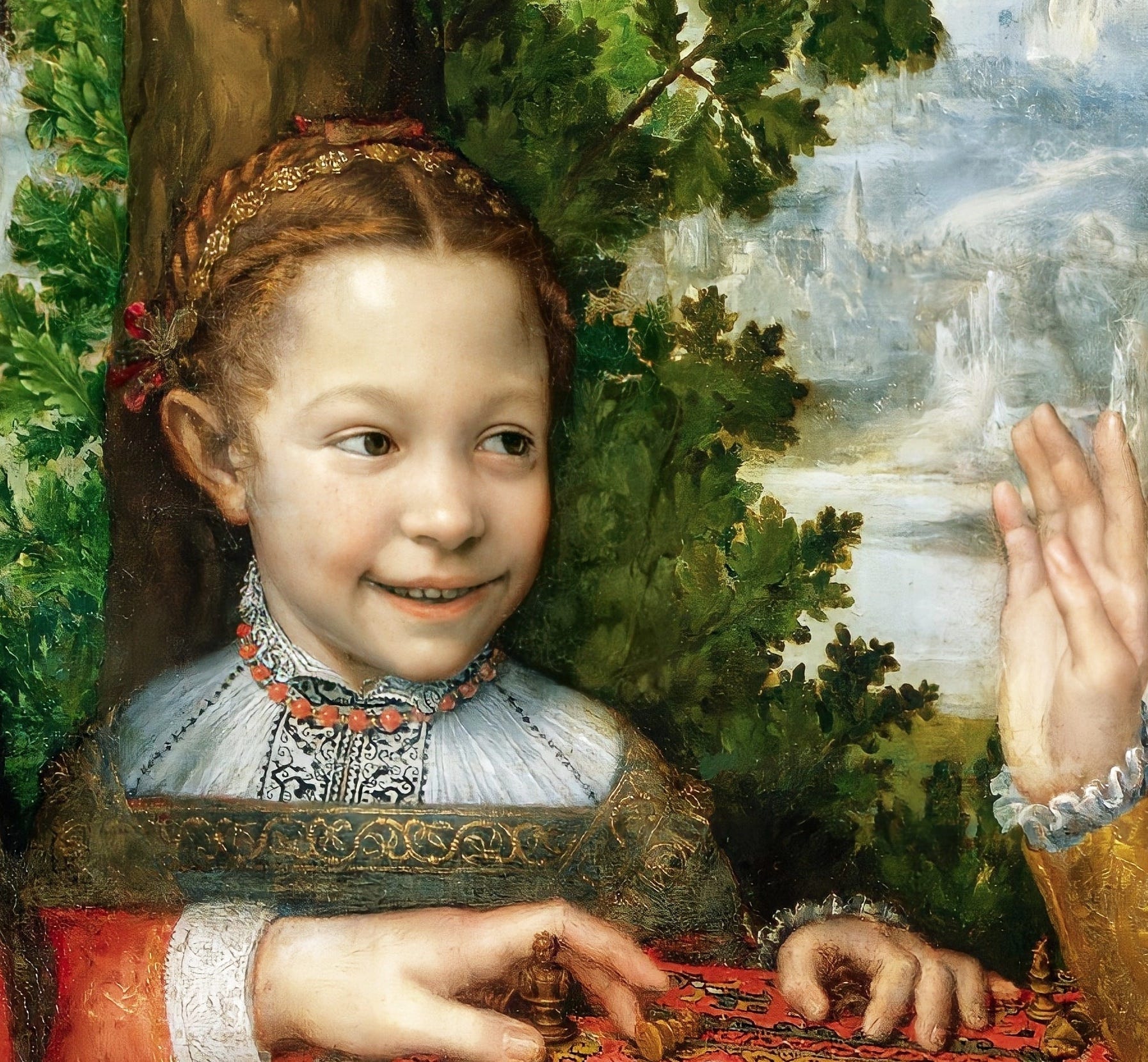
Sofonisba’s Game of Chess is an adroit metaphor. The rules of the game become a way of representing the complex relationship between four sisters (including the absent Sofonisba), but also the rules of painterly representation, of the disposition of figures in space according to the rules of perspective, mapped out by the chequered grid.
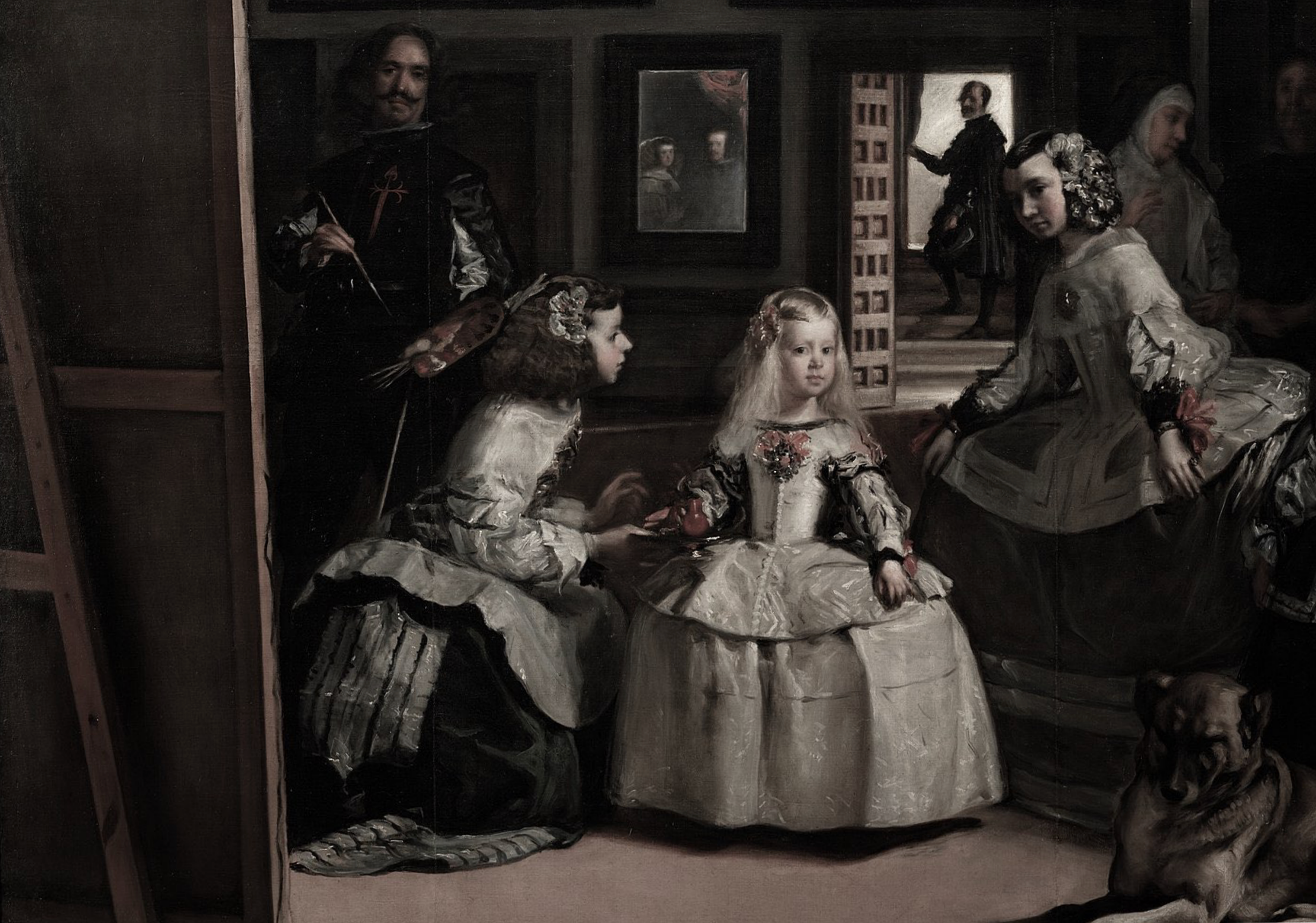
In a previous post I wrote about Las Meninas as a game of chess. Diego Velázquez was appointed painter to the Spanish court in the early 1620s, just as Van Dyck was visiting the very elderly Sofonisba in Sicily, over sixty years after she had first joined the household of Isabel de Valois.
Velázquez would have known his predecessor’s paintings well — he probably saw The Chess Game in Rome, on one of his visits to the Pope.
Her early self-portraits, with their philosophical, self-referential dimension, would also surely have impressed him. They are printed with the same sense of freedom and intellectual curiosity, and sheer joy in the possibilities of painterly representation, that led to the creation of Las Meninas.
But I like to think that he also lingered for some time in front of Sofonisba’s great painting of her sisters playing chess — three young women, like the Infanta Margarita and her two handmaidens in his painting — and never quite forgot it.