

Some Strings are False

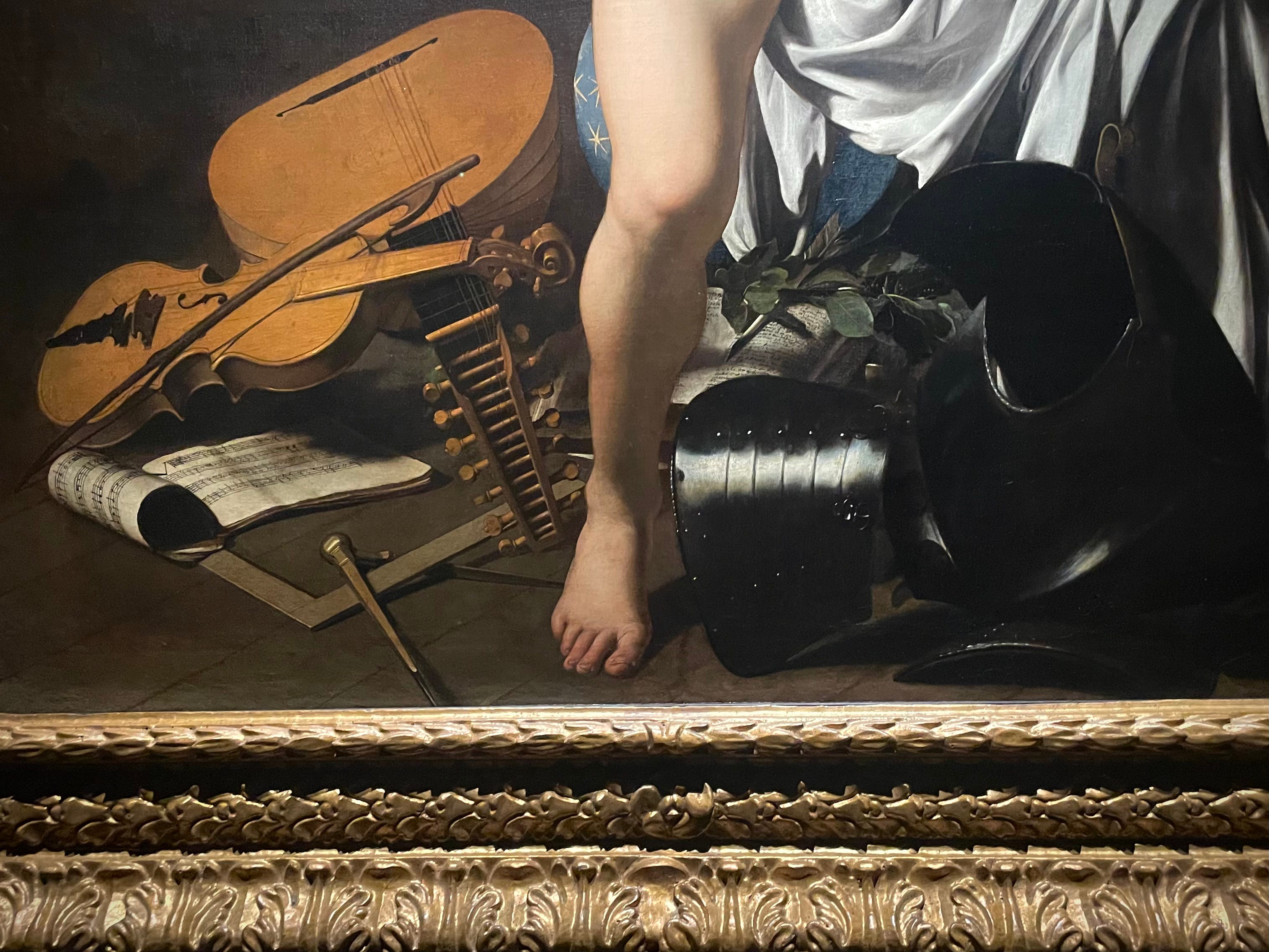
I WENT TO THE WALLACE COLLECTION to see the Caravaggio, Amor Vincit Omnia, or Victorious Cupid (1601-2). It has travelled for the first time to Britain from Berlin. I love one painting exhibitions, and this one is very well done. On a Wednesday morning you could have the painting to yourself for stretches of time.
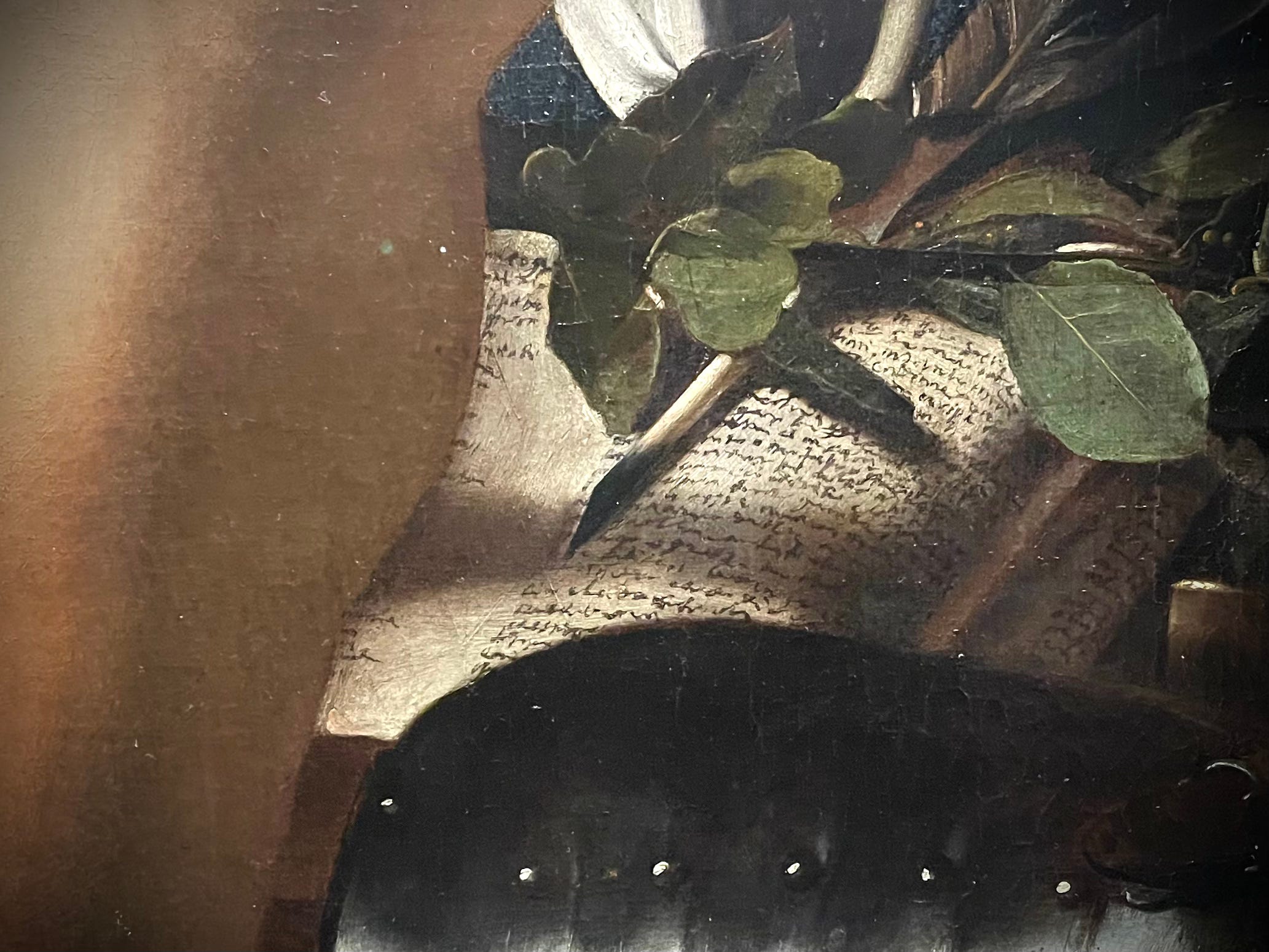
And yet, once you’ve got over that it is a Caravaggio, and admired the very informative display in the quiet basement galleries of the Wallace, another set of feelings arise, more ambiguous and worrying. A sense of violence, of being somehow hoodwinked, of being disturbed in all the wrong ways. Victorious Cupid shows a young boy, naked, in the pose of the Roman god of erotic love, Cupid, surrounded by the accoutrements of his story. These objects are all entwined, the fretboard of a violin under the strings of a theorbo (or some such instrument); a golden rod inserted, or insinuated, into a fake crown; a victory wreath tangled with dark armour. And then those menacing, oil-dark wings, somehow attached to the young boy’s back. ‘Implication’, means ‘folded in’, and here meaning is implicated, insinuated into every corner of the canvas. It is painting not about love, but rather about what might happen in the free space of an artist’s studio. It is in this way a thoroughly cynical painting. There is no sense here in which painting transforms one thing into another, a young boy into the god of love, or objects into symbols of promise, beyond their physical entanglement. It is a painting of false promise, of deception, not love. The strings are false, as Louis MacNeice once wrote. Cupid has become cupidity. There is no appeal to the imagination, but rather a sort of endless sultry winking going on which, beyond all moral censure (think Grok, or rather don’t think Grok), is profoundly aggravating. Yes, we get it, we say; ah, but do you, the painting endlessly and tediously replies. And, it should be said, this sort of crisply delineated painting technique, by numbers, as it were, this seductive technology of naturalistic representation, is nowhere near the symphonic brushwork of a Velázquez or a Rubens, and not a patch on the atmospheric effects of a Ruysdael, a Rembrandt, a Govaert Flinck even, thinking of the remarkable paintings upstairs in the Wallace. Look at the white curtain to the right, in whose dark folds the insinuations of the impure scene are implied (quite literally). It is simply not very interesting to look at as painting. There is no poetic transformation, rather a feeling of lead white forced to look like a curtain, in a way that the young boy has been forced to pose as an ersatz cupid.
There might be a bit of devil’s advocacy in the above, but still. It is too easy to gush with praise and admiration once you have checked the name. I do this too. Paintings go in and out of fashion, and speak to different times in different ways. Once Claude Lorraine was seen as the greatest artist of all time. Not anymore.
And this is heart of the matter — how urgent is this painting of Victorious Cupid? Is it telling us something important? Has it a message to impart, not in its subject, but in its very presence as an object in a room in which we are standing? Actually, I have to concede, yes, I think it does, but it is difficult to put these thoughts down without appearing a finger-wagging moralist, high on a high horse. Warning: here I turn full Victorian clergyman. Both the moral ambiguity and the technique of Caravaggio’s cupid tell, inadvertently, some grim truths. We are living through a time of profound moral crisis, and technology — techniques of representation — are at the heart of this. When I look at Victorious Cupid I think of the importance of campaigns such as Smartphone Free Childhood, which must be one of the most important political movements of our time. I think of the blindingly obvious spiritual and cultural poverty of AI, and the rapid decline of image literacy everywhere in our world. I think of the tyranny of advertising… and the way in which social justice campaigns shed light — often just a crack, soon occluded — on the violent imbalances of power in society that we otherwise consider normal. I also think, puffing out my Victorian clergyman’s outfit to its full, how irresponsible it is for museums to transport works of art by air freight around the world, and that rather than doing the moral minimum in their environmental duty, they might maximise by announcing a total ban on air transport for exhibition. Rutger Bregman, hold my hand. Perhaps Caravaggio’s Cupid arrived by train — I doubt it. Completely churlish, I know, to make this criticism, considering all the remarkably things museums do for us — especially by maintaining free entrance, as does the Wallace, one of the world’s great museums. But if you want to know the truth of the situation, it is right there, reflected in the paintings hanging on the walls. If you want the crisis of our time in a nutshell, it is tech eclipsing climate. Caravaggio’s high-definition painting technique does away with all atmospheric perspective, at least in this work. That is what is being said here. It is not a message of love.
These are the things I thought, before hypocritically admiring the way Caravaggio paints an open book in the middle of his scene, the words, tantalisingly, almost legible. Nothing is every black or white entirely, as Louis MacNeice also once wrote.
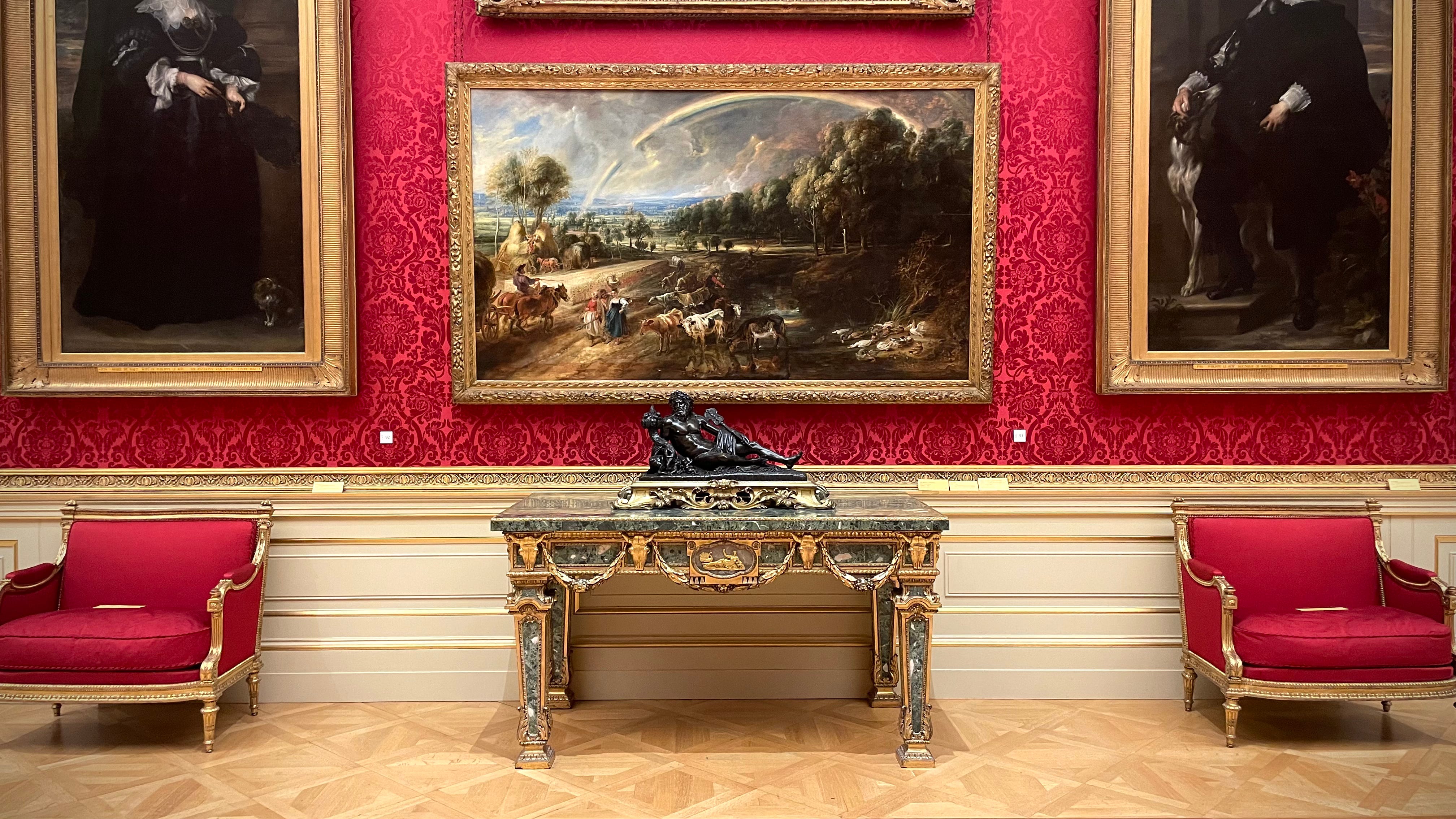
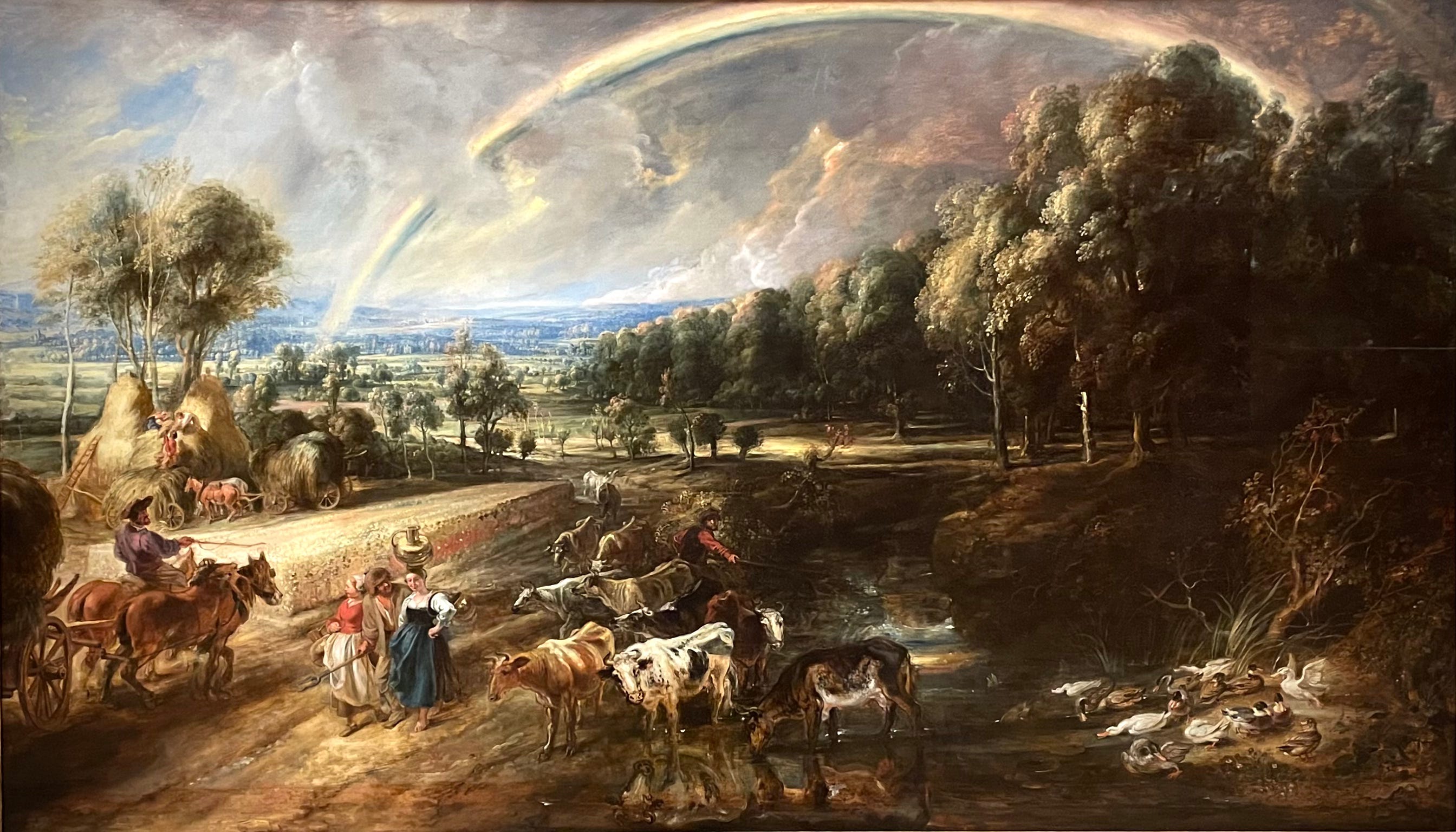
I WENT UPSTAIRS to the Great Room to see another painting — and this is what I meant to write about here. This is a painting with a sense of urgency and importance in every grain of its surface, in every touch of pigment, and not a whiff of insinuation or cynicism. A painting in which the artist has disappeared himself, rather than figuring as some controlling, abusive landlord.
It doesn’t take long to realise this intense urgency — fewer words are needed.
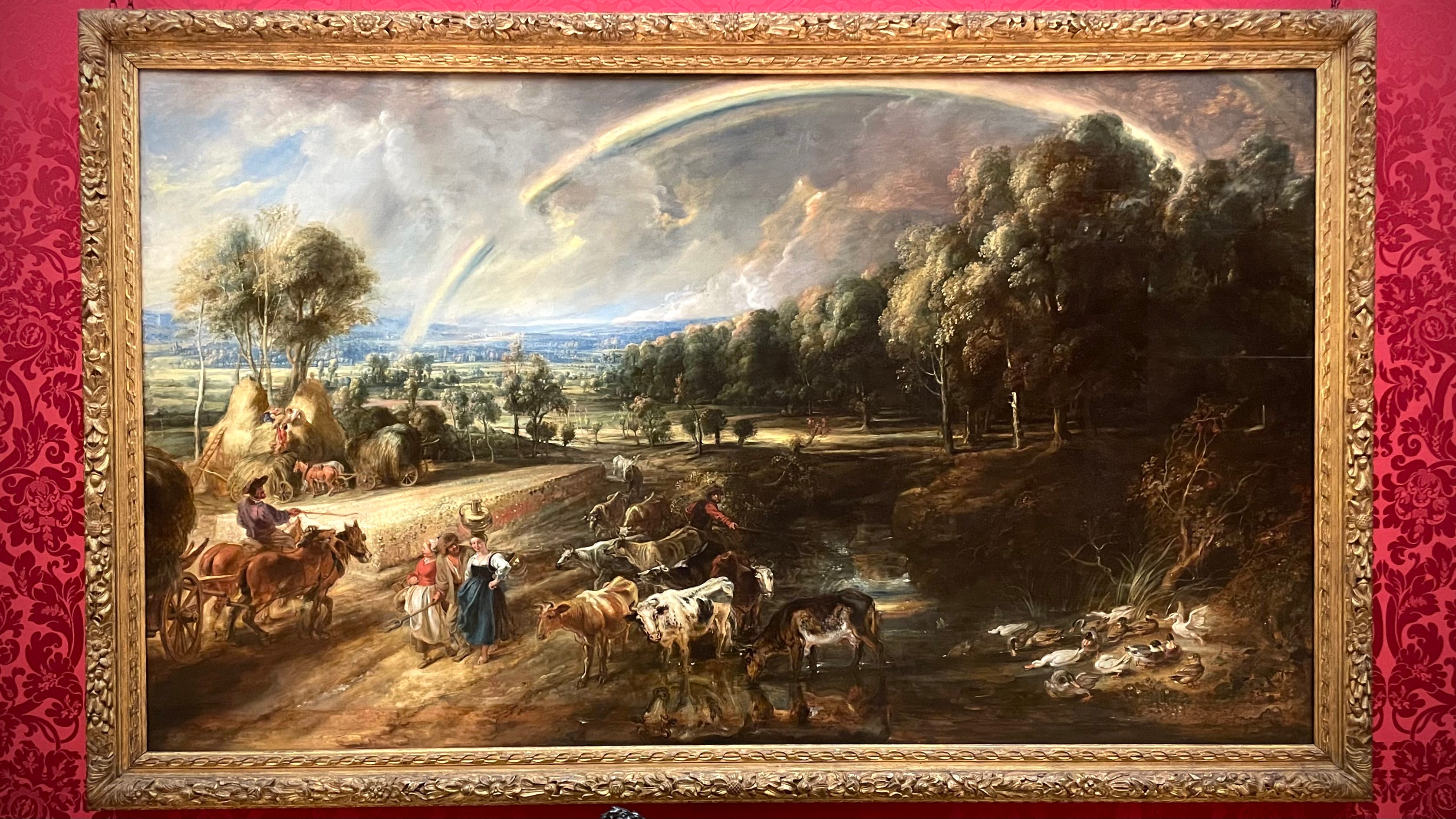
It is a harvest scene in a wide landscape, overarched by a great rainbow. This is the right type of chiaroscuro, a light-to-darkness painting that seems to encapsulate the world, and what it means to value it, preserve it, not to take it for granted. The painted rainbow in Rubens’s landscape is wonderfully loose, wonderfully unscientific, following the arc of the painter’s arm, with his heart at its centre. The whole painting is a rainbow of sorts, a miracle of transformation, of atmosphere and light. It is urgent not just as a moment in time — of the urgent harvesting of corn, being stacked in lumpy ricks to the left, and transported back into the painting by a haywain; or of a moment in the life of animals, satisfied cattle and squabbling ducks, hardworking human animals. The urgency is of a painting saying — this is what we have, this is how good it gets, not a utopia but the reality of nature, of the miracle of light, and the immeasurable gift of every day we live. ‘We are no doubt placed in a paradise here if we choose to make it such’, said the painter John Constable in a series of lectures which included Rubens’s Rainbow Landscape.
Look at the flash of white on the tree in the dark wood.
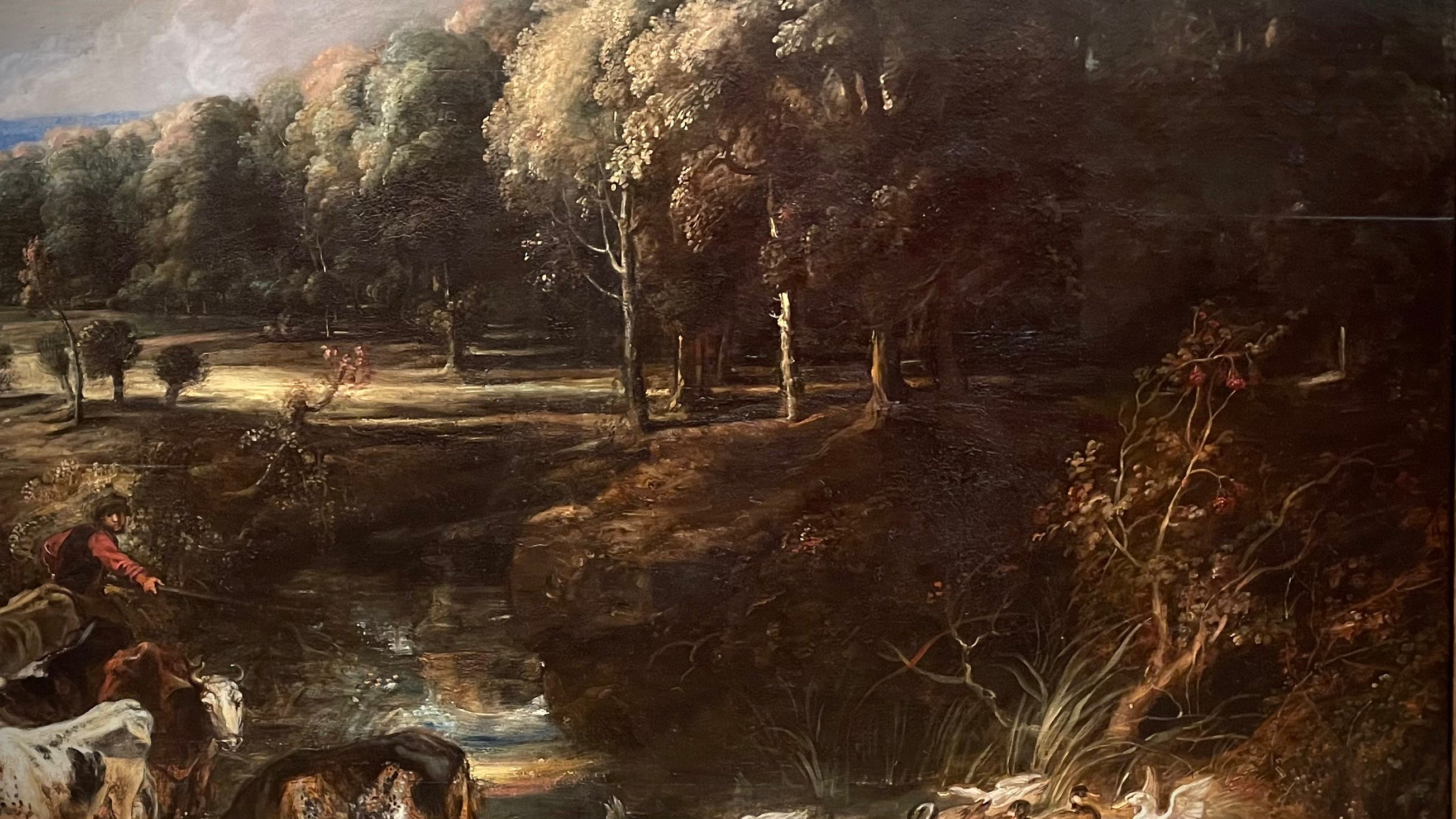
Look at the way the distant landscape is painted with such energetic care and joy.
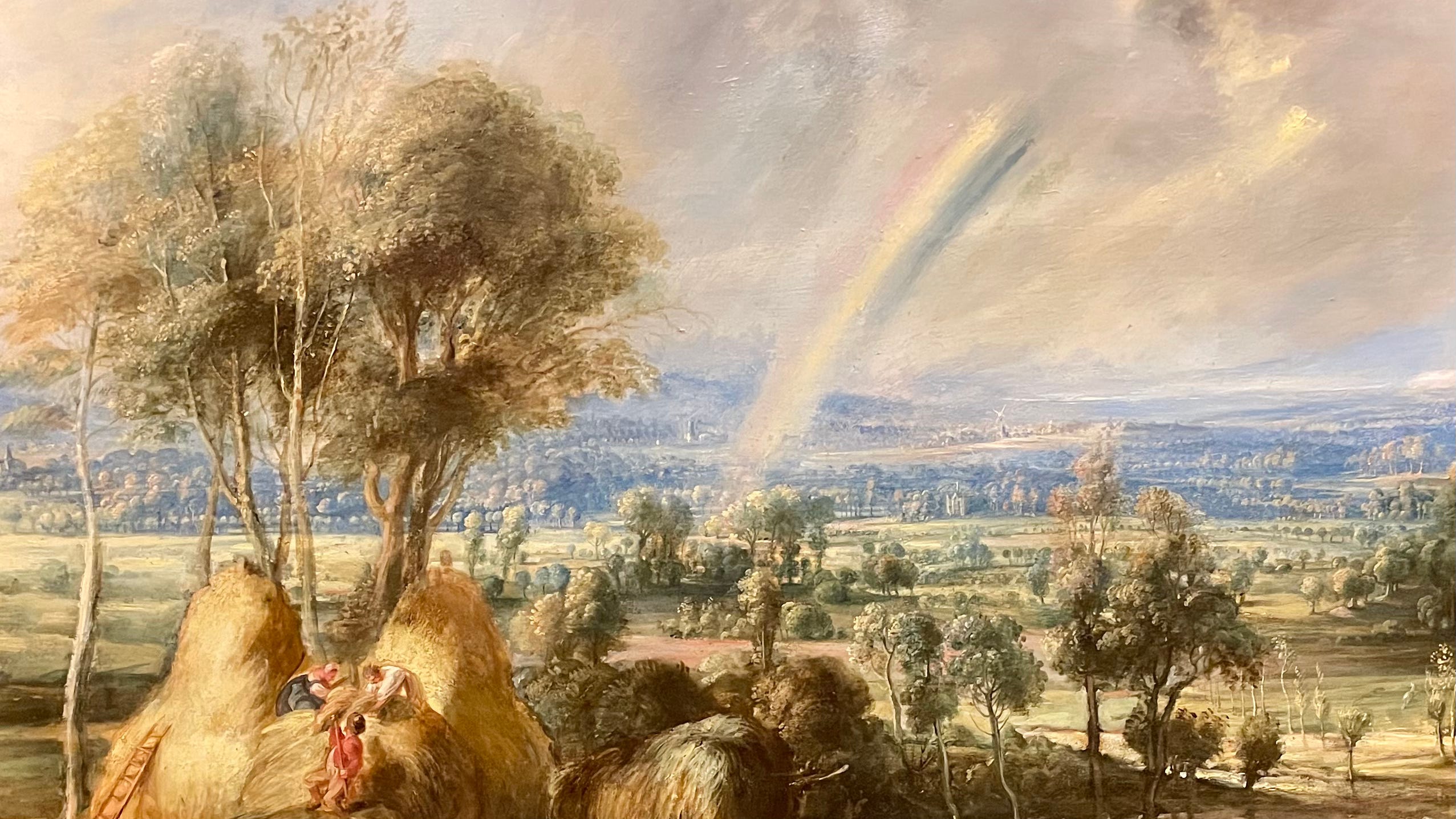
Look at the vivid expression on the faces of those squabbling ducks (do ducks have faces?).
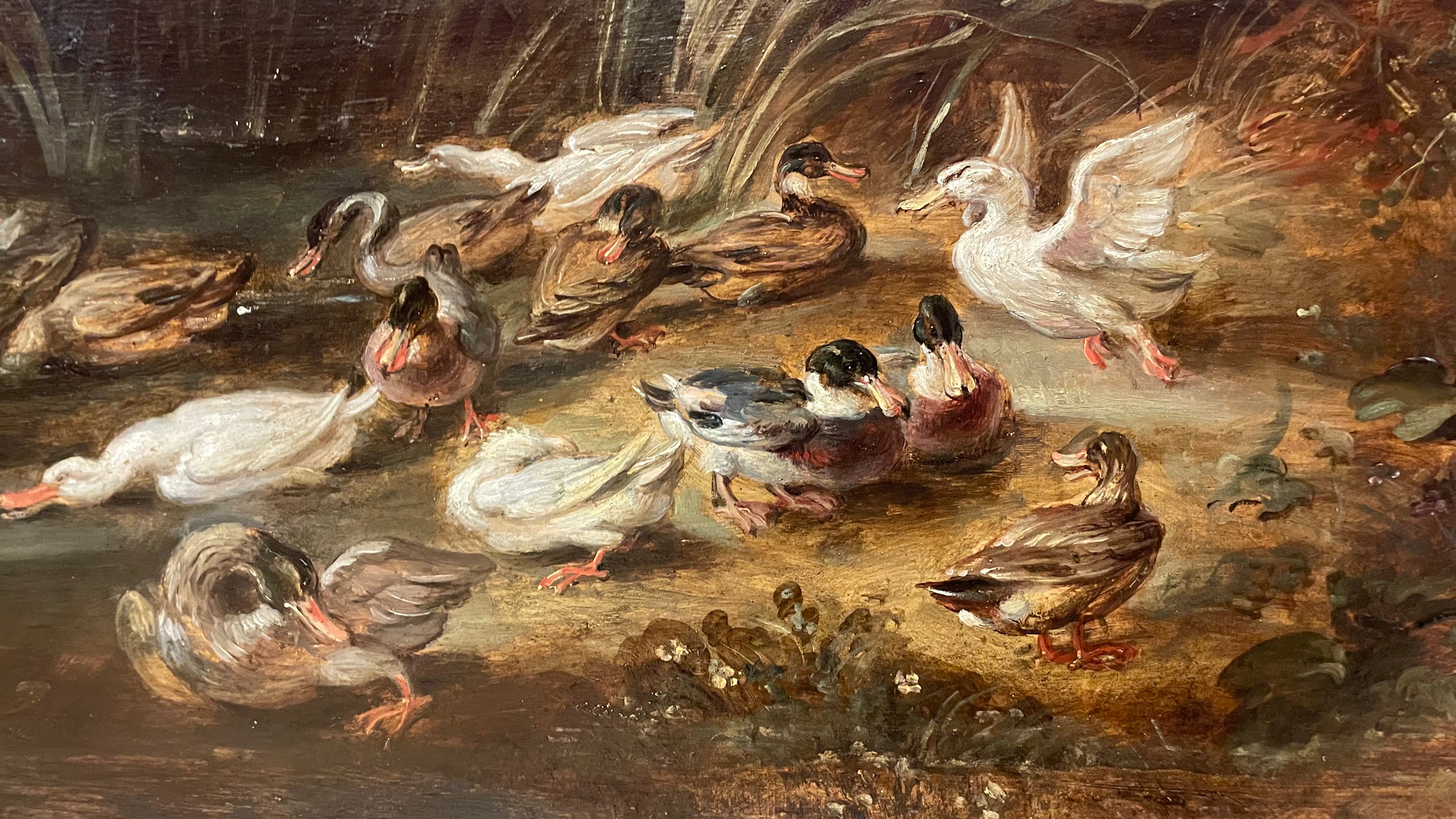
Look at the reflection of the rainbow in the shallow stream that wends its way into the painting.
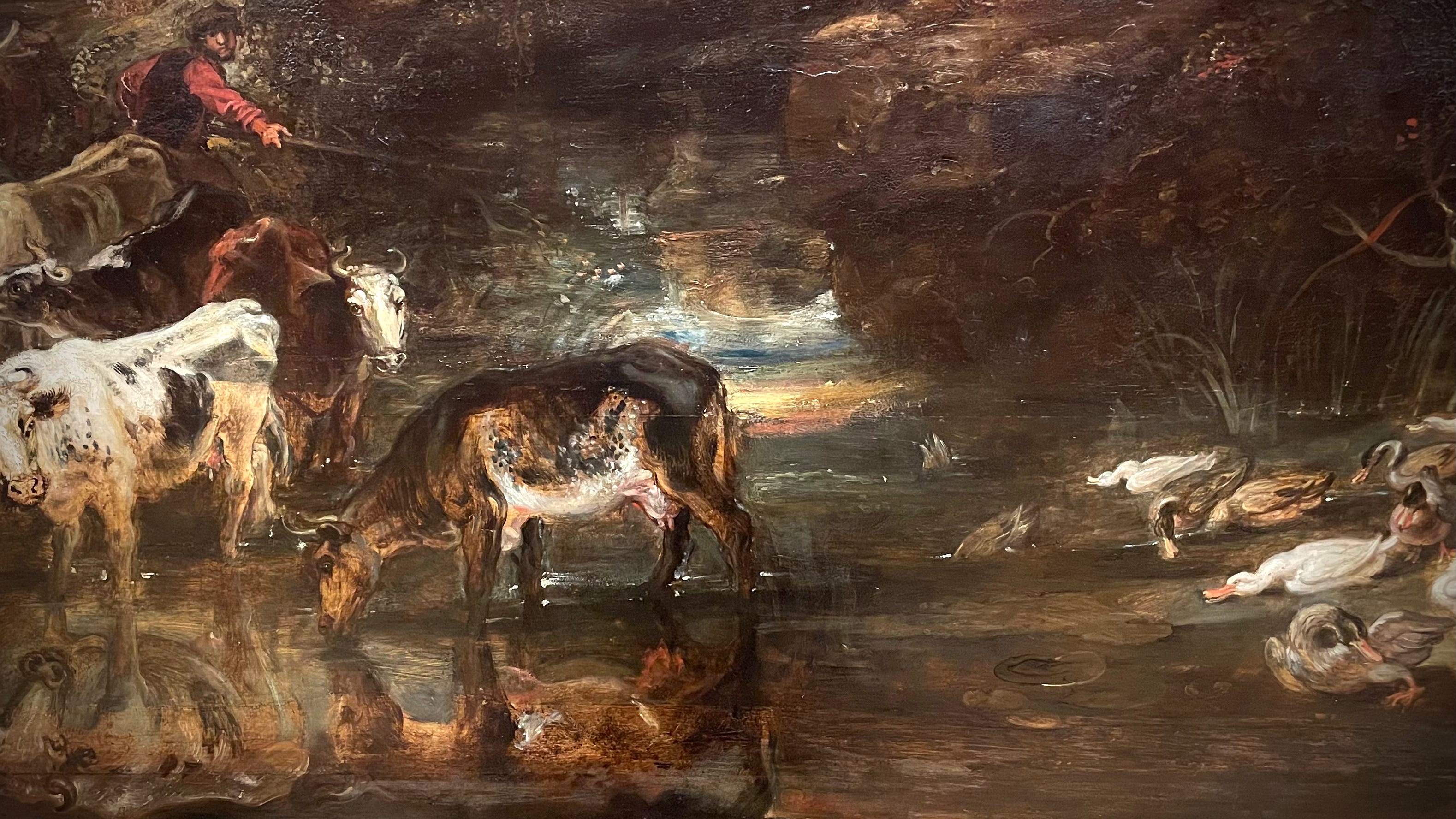
Everything is laid out as a matter of belief, explicated, rather than insinuated. Everything is expressed with utter generosity of heart and spirit, and delivers a profoundly urgent message of care, of empathy for the world in which we find ourselves. Painting here is a clearing where truth, unambiguously, happens.
Really fascinating, J-P. I went to the David exhibition at the Louvre last weekend and saw his picture of Cupid and Psyche which is a direct reference to the Cupid at the Wallace. Naughty, sexy and a bit disturbing.
Another pithy piece JP.. we must sit down and discuss in my studio and let a new portrait emerge.