

The Wrong Wain
A new idea about a famous painting.

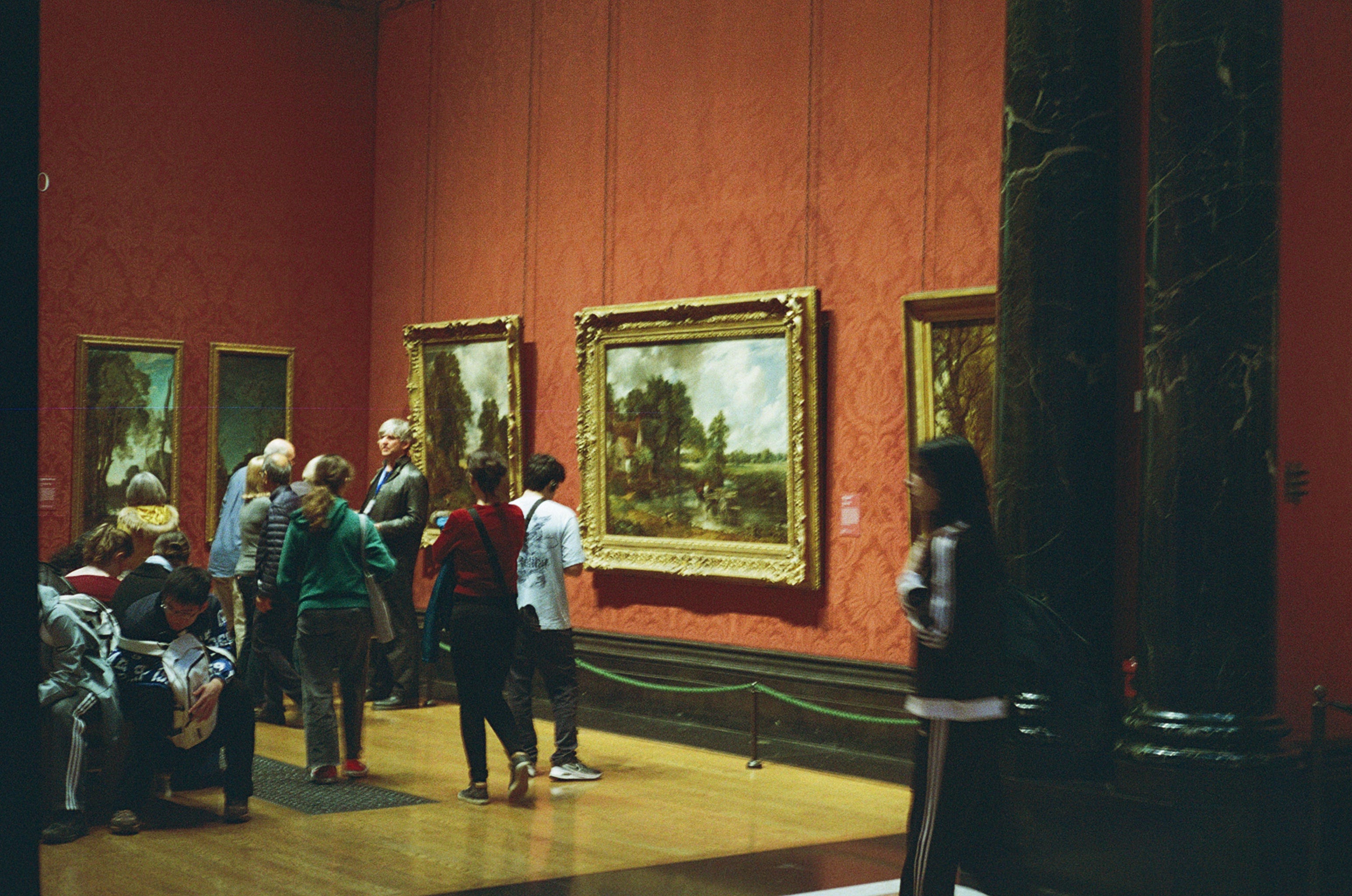
THE TWO GREAT SYMBOLS in the painting of John Constable are the river and the mill. The river is the Stour, which runs through Dedham Vale, the scene of Constable’s childhood wanderings, and the source of his imagination. The mills are those driven by water and wind, which could be found all over his native countryside.
When it comes to rivers, Constable left us the greatest cycle of works devoted to a single river anywhere in the history of art. These are the six paintings (twelve, if we include the full-size studies) that he made in the early 1820s, which together form (quite literally as I point out here) an astonishing panoramic portrait of a living river.
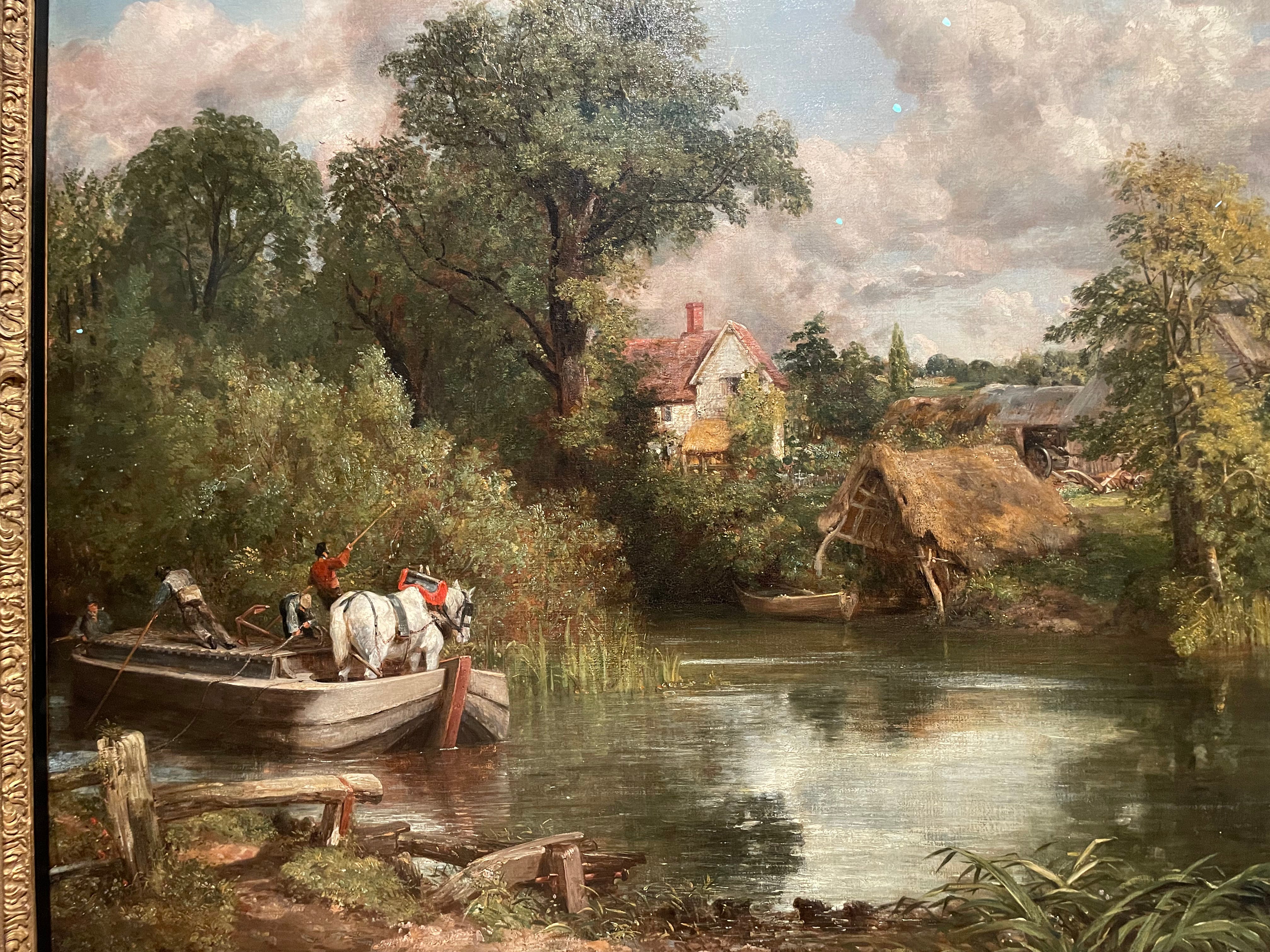
In the first, The White Horse (1819) a horse stands patiently on a barge (or ‘lighter’), waiting to be moved to the tow path on the other side of the river.
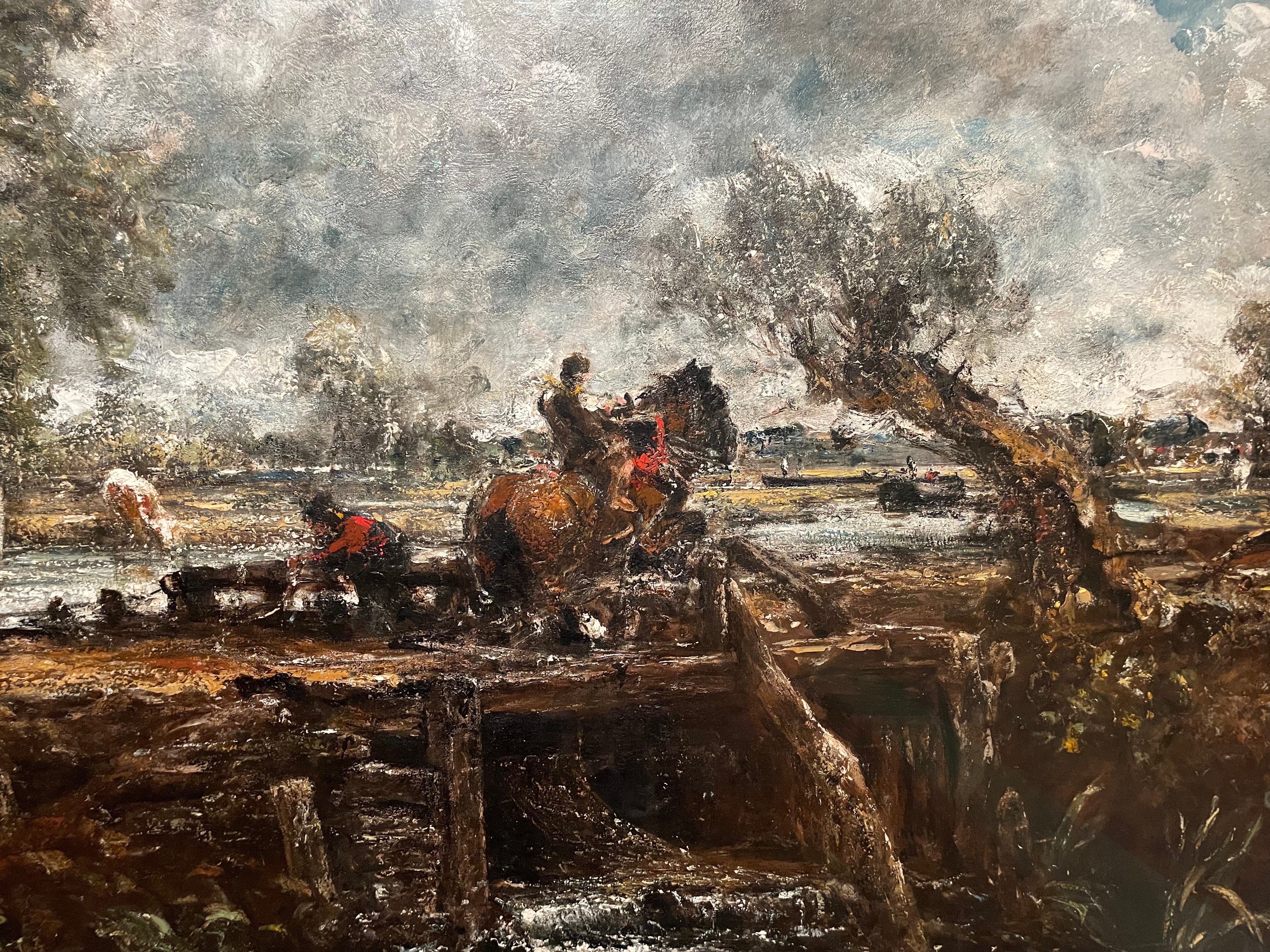
In the last, The Leaping Horse (1825), the horse has reached the other side and is gallantly vaulting a wooden gate.
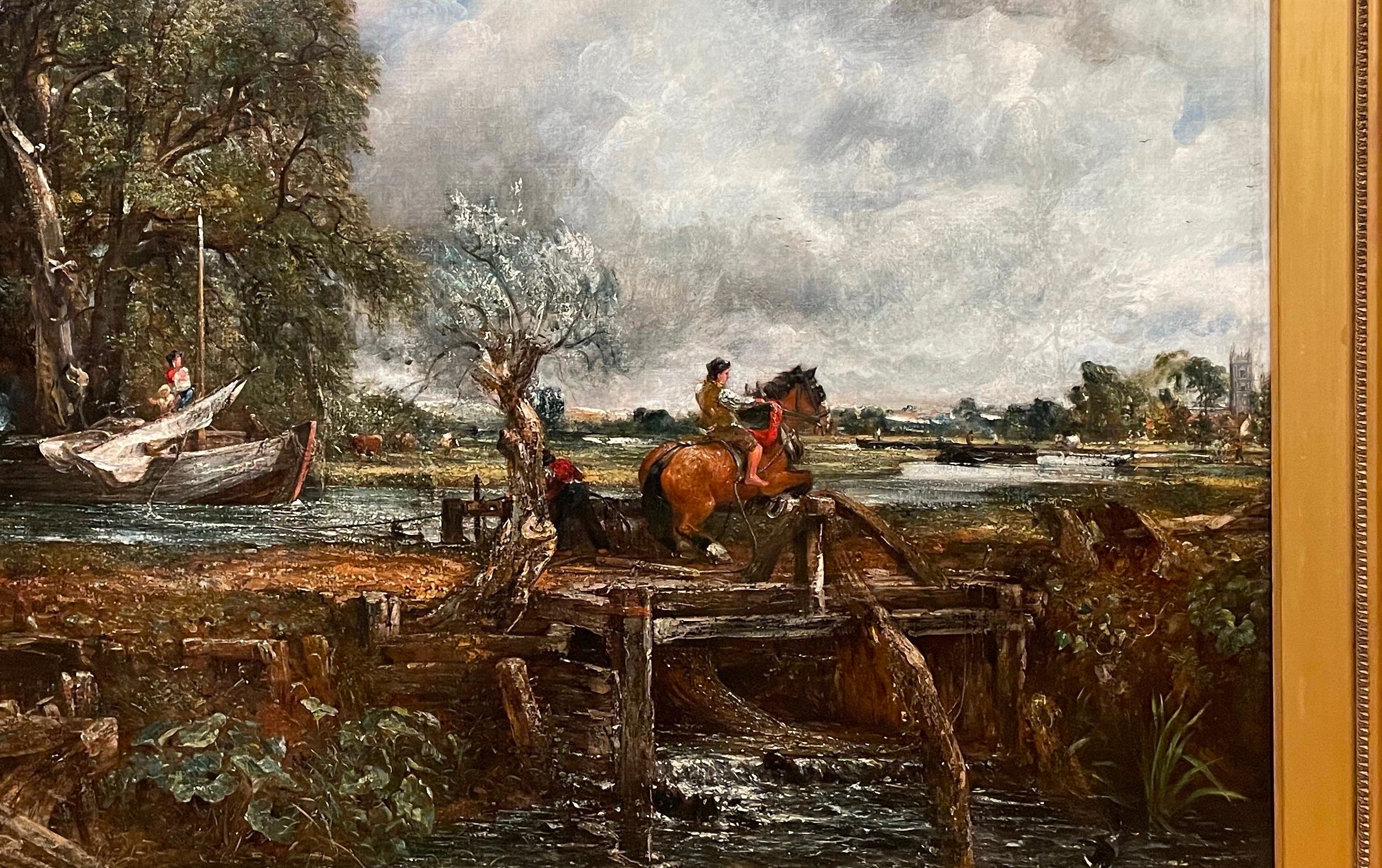
Nothing much happens… and yet, by the time the animal has completed its epic crossing, painting itself has changed. Deep in the weave of the canvas, in the mind of the artist, of all artists — for what is painting if not a communal expression of mind? — the river has carved its spirit, rills of light on the surface, dark moving waters beneath.
The mill is the more elusive symbol. Often you have to search for tiny sails in the far distance, like rabbit’s ears poking up from the horizon.
Here is the millimetrage of windmill in the great Dedham Vale, painted in 1828.
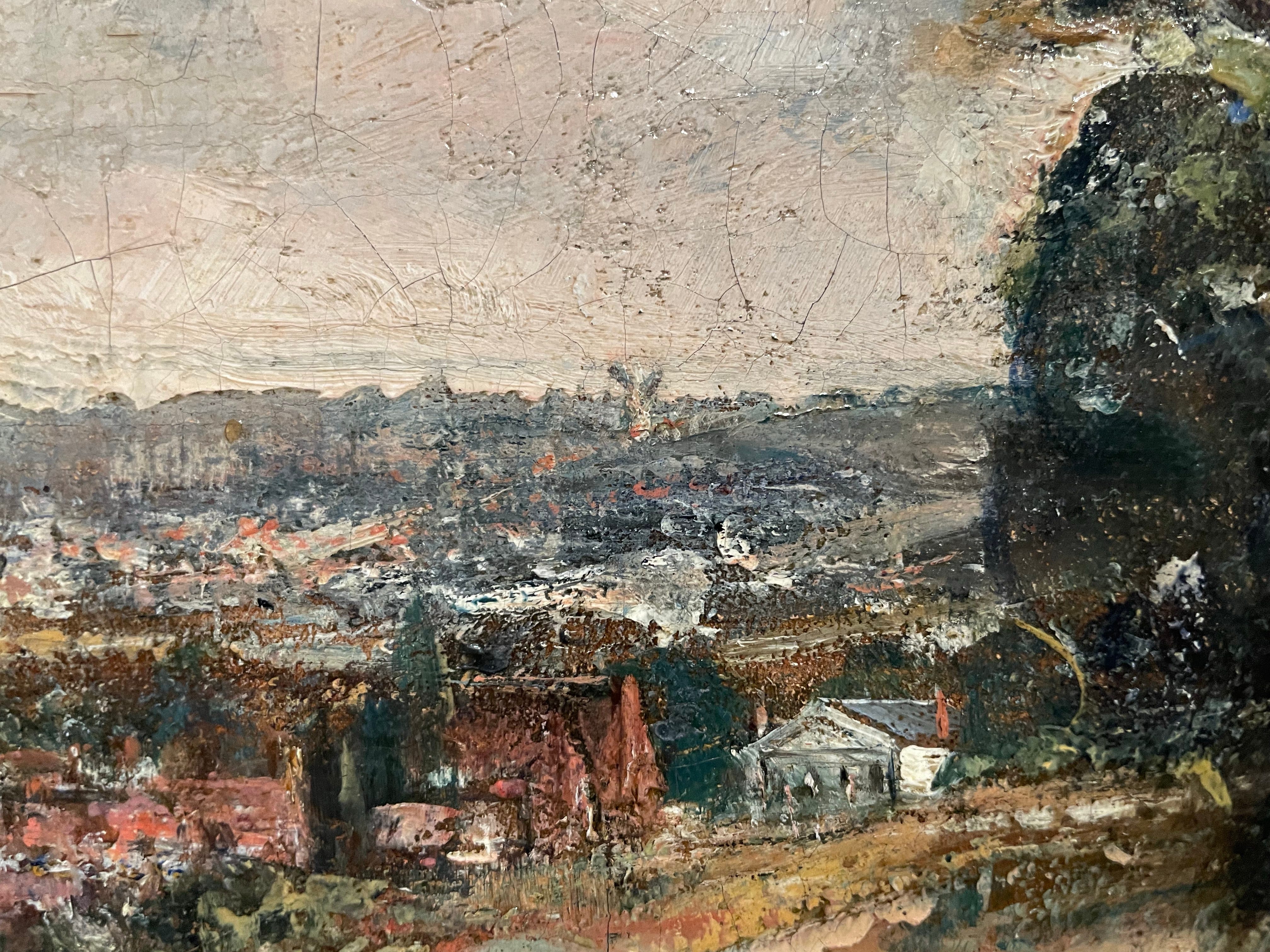
Constable painted Dedham Vale when he was fifty-two, looking back down the Stour, past the tower of Dedham church, to the far reaches of Mistley and the Stour Estuary, and to the symbol at the heart of it all. It is an astonishing painting, quite unlike anything else he created for its topographical accuracy. It’s as if he wanted to fix everything down, once and for all.
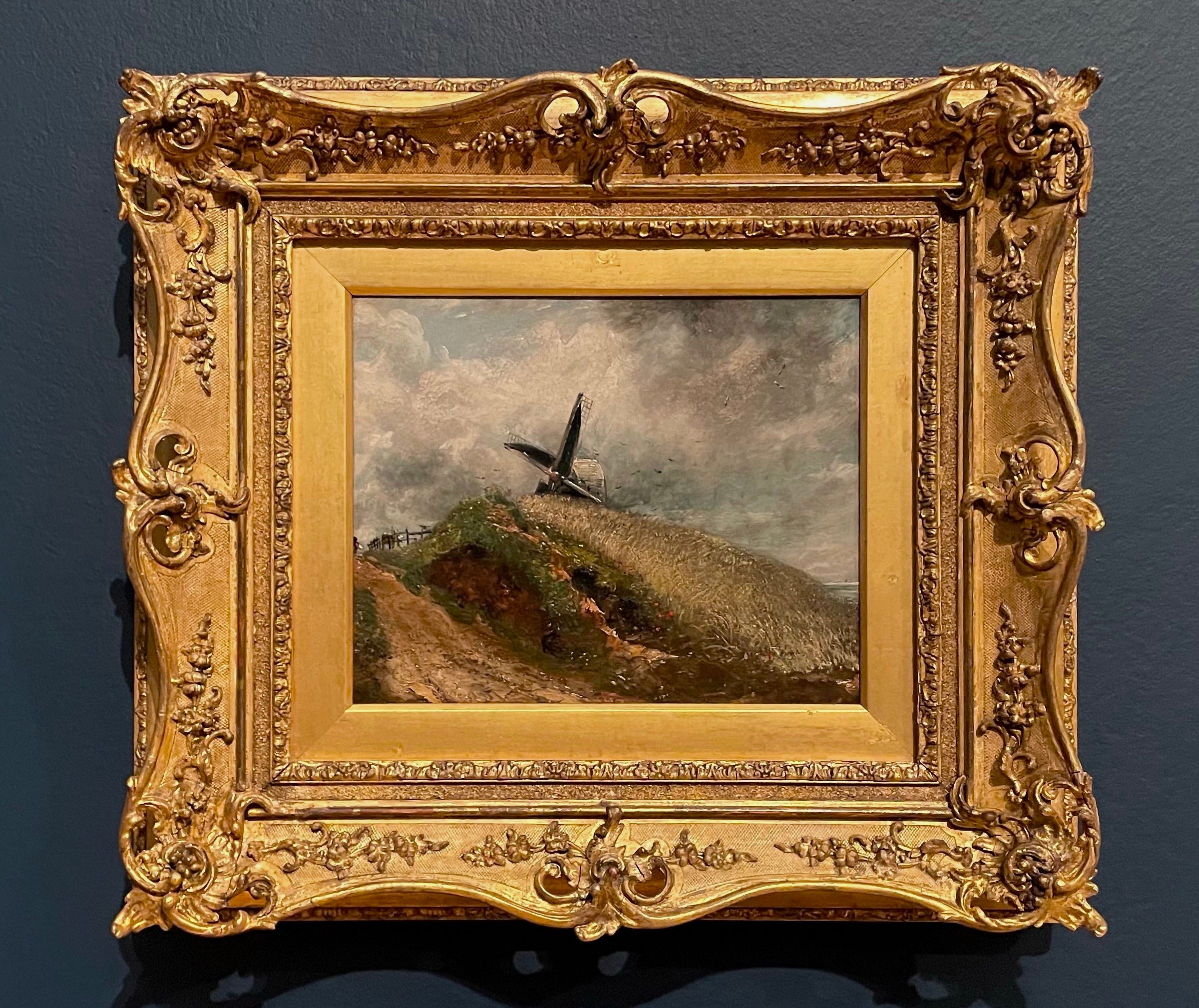
Like the river, windmills can appear as strong psychological symbols in Constable’s world. They can be unsettling, anxious-making. In a painting made in Brighton in 1824, the sails of two mills peek from behind a claustrophobic horizon underneath a darkening sky, with the lonely figure of two gleaners in the foreground.
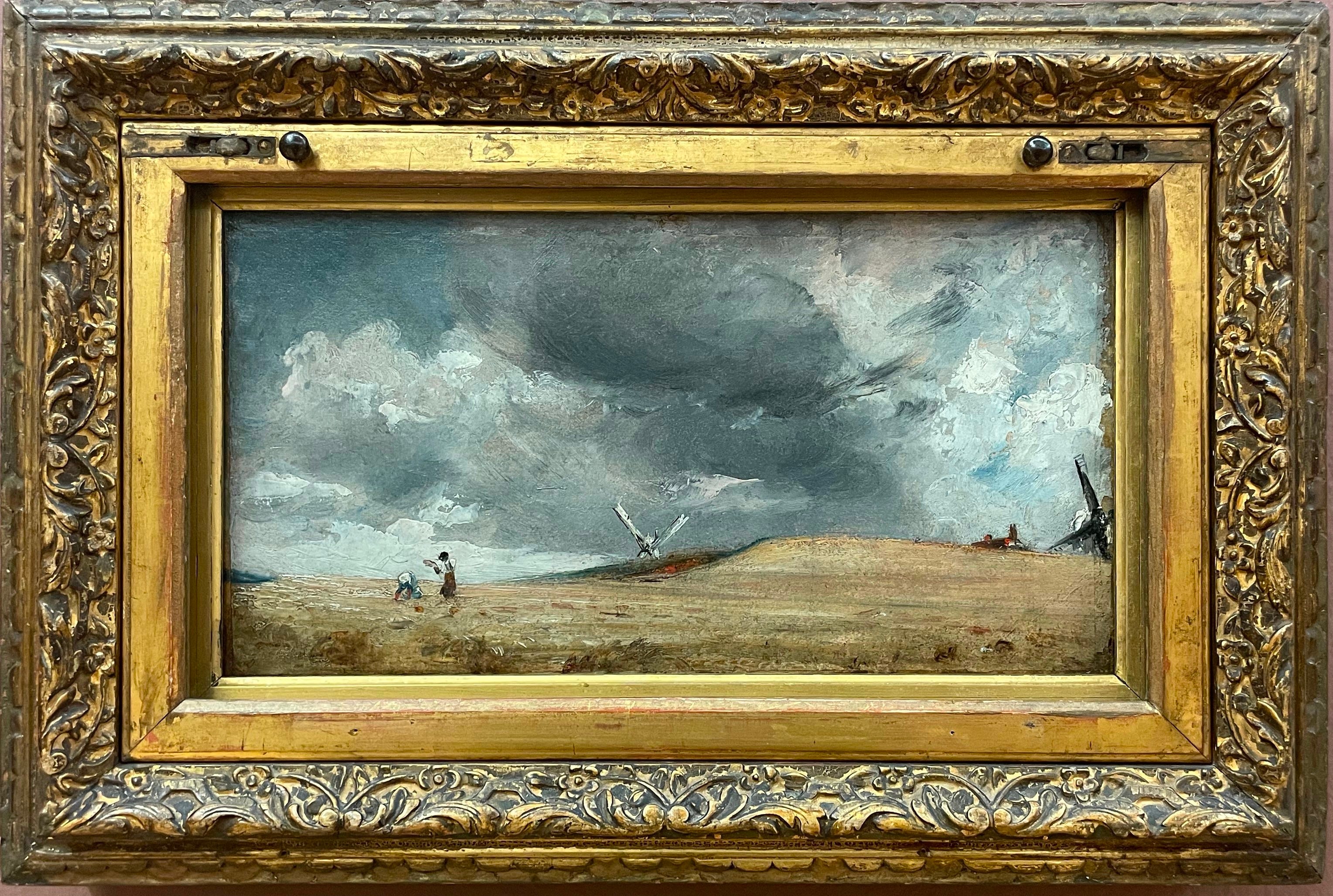
Constable hated Brighton — Piccadilly on sea, he called it — although took his wife Maria there every year for respite from the polluted atmosphere of London. You wonder whether this painting, and another made at the same time, arose from his feeling of distance from the source of his inspiration. ‘My rambles are my ruin’, he once wrote.
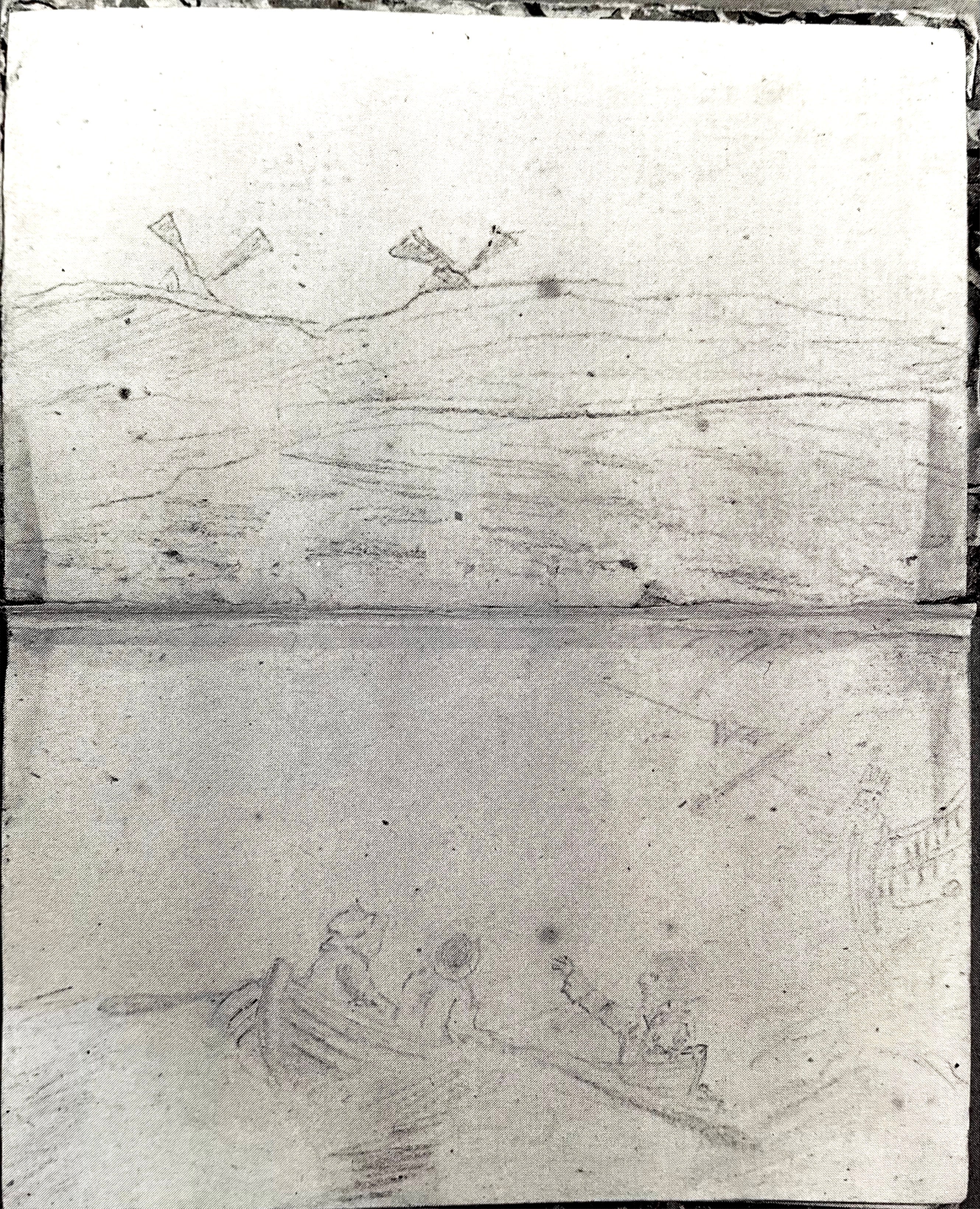
Remarkably, he foretold the composition of the Brighton gleaners in one his earliest known drawings, made on the inside cover of a school exercise book (Juvenile Introduction to History, 1790) when he was fourteen. Two windmills peep rabbit ears over the brow of a horizon. Figures in a boat in a stormy sea — or perhaps a choppy river — are drawn beneath. What does it signify? Did Constable set down his entire career as a painter, absent-mindedly, while the teacher in Dedham Grammar school droned on about the Romans?
ART IS FULL OF TIME. Time is the novelist’s medium, but also, in a different way, the stuff of painting. And unlike the novelist, it is the painter’s task to reconcile different ideas of time, to create an image that is both matrix and microcosm, bringing together the present moment and the longue durée. We have to read a novel over time, but we can look at a painting in a single instant, and make that instant last as long as we care to stand there.
This is where we get to the Wrong Wain.
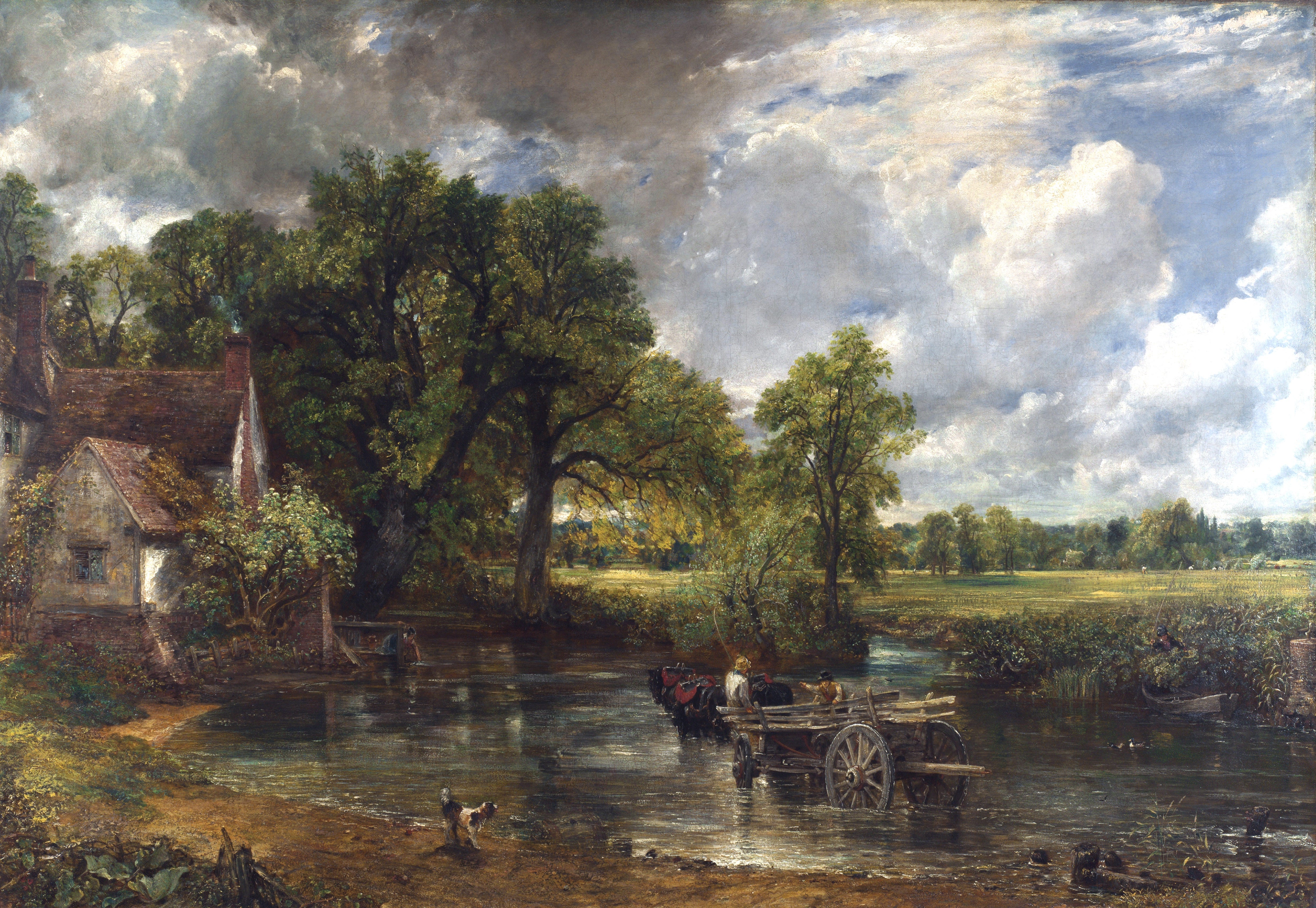
I’ve been going to the National Gallery and looking at The Hay Wain, really looking, and wondering what it all might mean – really mean. And the more you look at it, the stranger and more fascinating it gets.
We all know the scene. The harvest wagon is waiting in the millpond at Flatford Mill, while in the distance men are cutting the hay with sharpened scythes, and pitchforking the cut grass into a wagon.
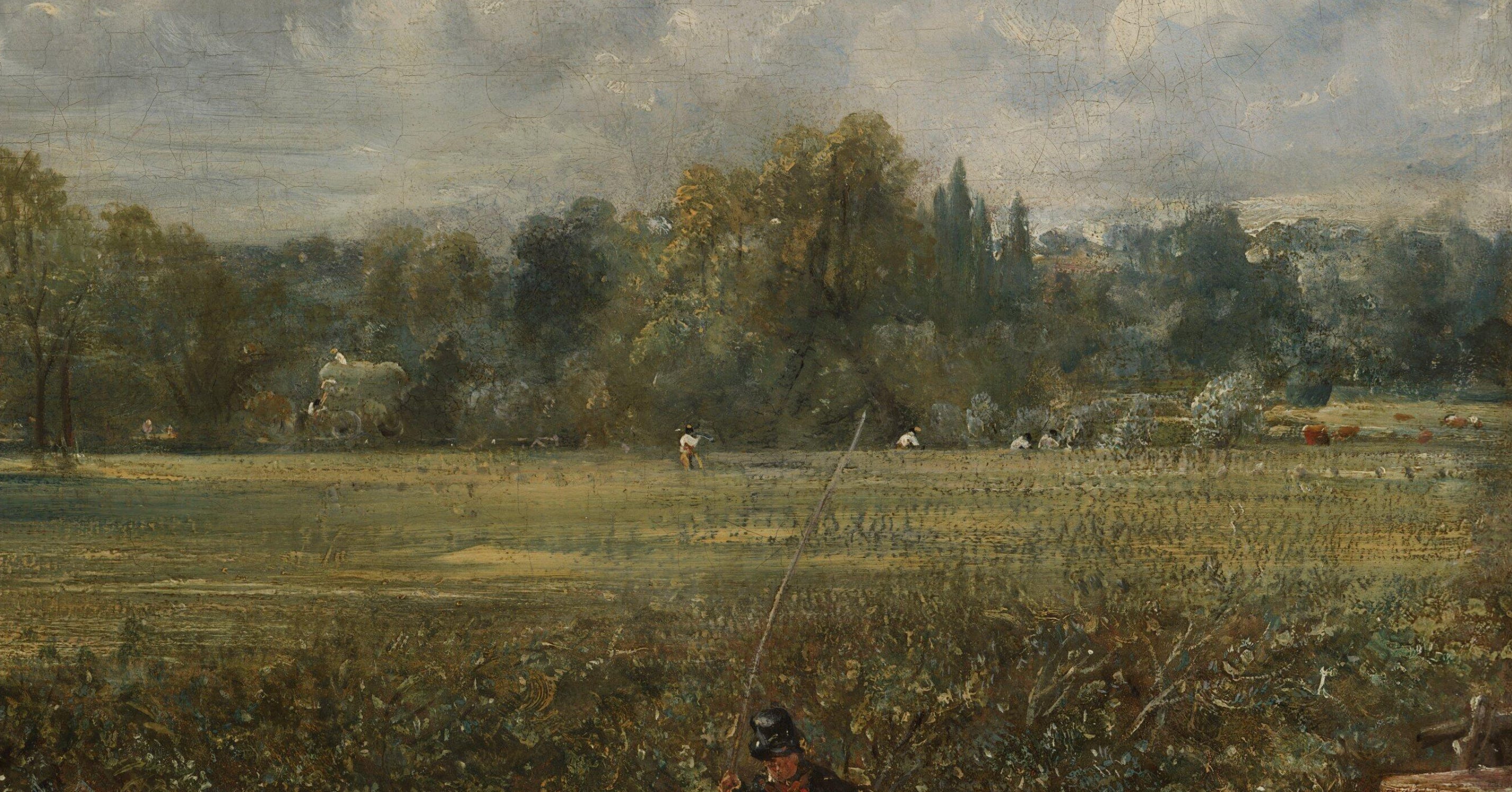
When that wagon trundles back, the famous wain, or wagon, waiting in the Flatford millpond, perhaps cooling its wheels on a hot summer’s day, will take its turn to be loaded up.
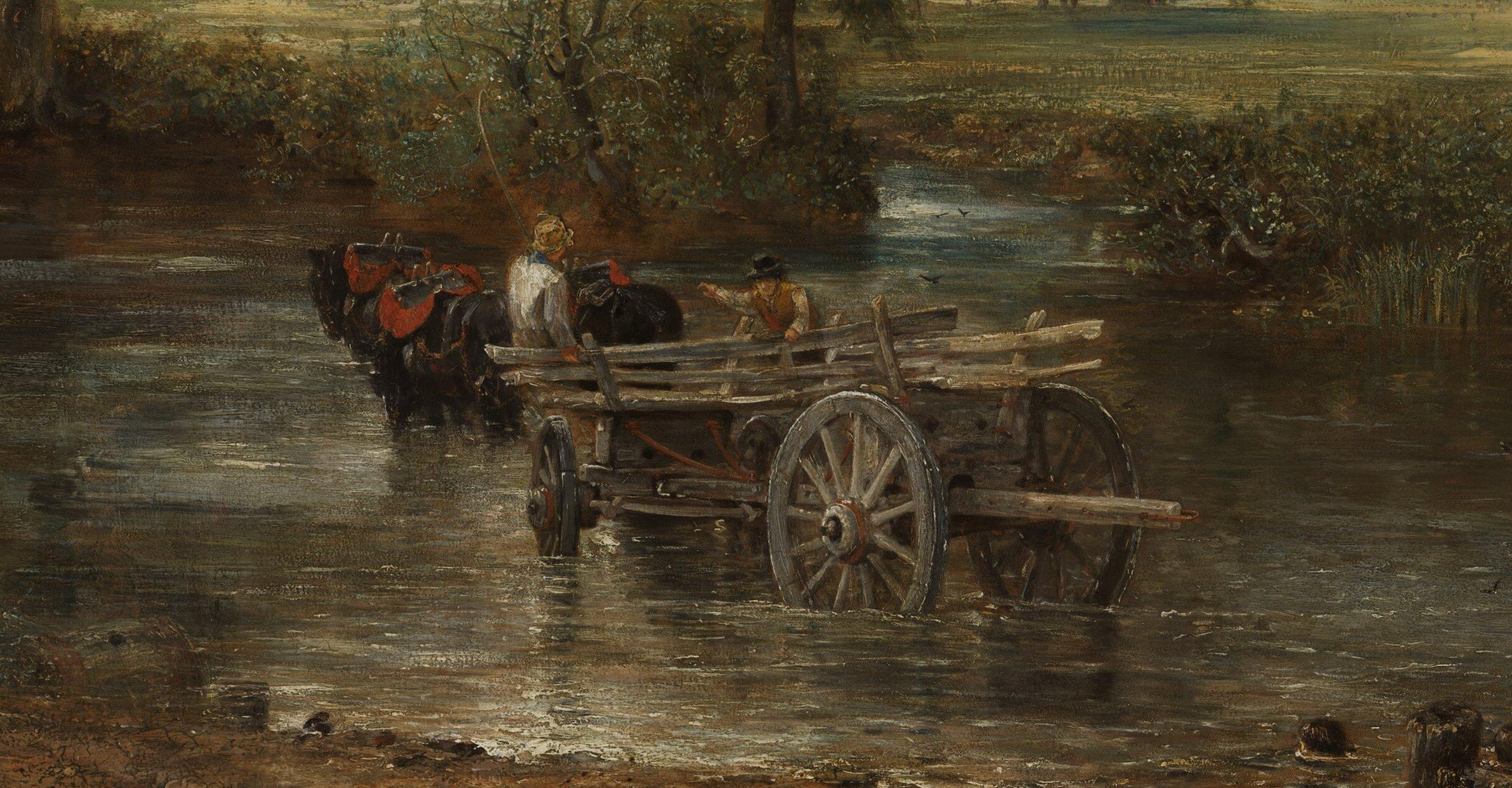
Constable based his wagon on drawings sent by a friend, John Dunthorne, back in East Bergholt. He wanted to get his Suffolk harvest wagon, or scrave, right.
But he didn’t. As countless letters from Suffolk-dwellers to the National Gallery point out (there was a long correspondence on this in the East Anglian Daily Times in 1977), the sides of the wagon are too low. When Constable’s harvest wagon trundles back over the field, all the hay will fall out.
There is no good reason for this, apart from aesthetic license. It simply looks better like this. But there is another oddity — the figure in the wagon who seems to be holding something and gesticulating, pointing. What is he trying to say? Nobody has ever asked this question. Has he suddenly realised that they have got the wrong wain? Is he signalling to the dog to alert Willy Lott to their plight?
Only the dog seems to care — not the washerwoman, or the fisherman, nor the ducks, and certainly not Willy Lott who never emerges from his cottage when Constable is around.
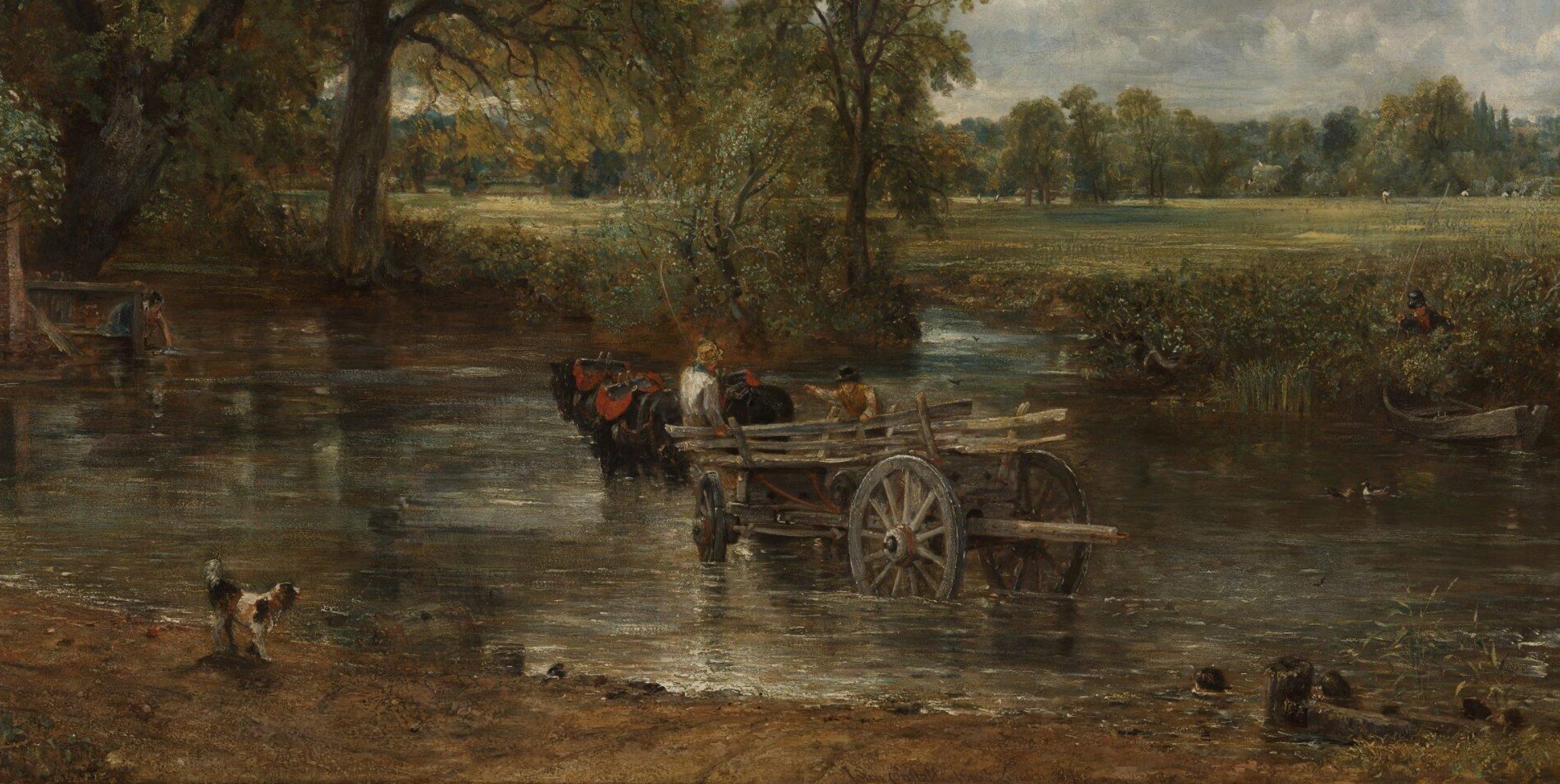
In truth, all these are speculations, and it does not really matter. It is a painting, not reality. The wain is not there to transport hay, but rather to hold the sorts of ideas and impulses, however vagrant, that a painting can hold.
Here is a theory: none of the six-footers (The Hay Wain is number three in the sequence), shows the image of a windmill. When Constable was painting rivers, he was not painting mills; and when he was painting windmills, there is rarely a river in sight.
It is not exactly watertight as a theory, but the point is to suggest how Constable’s paintings might be seen as meditations on different ideas of time. Time as a turning wheel, or time as a river. The endless summers of childhood, and then the relentlessness of work time, of adulthood — the river of life.
And what is The Hay Wain, if not a reconciliation of these two ideas of time?
The surface of the millpond in which the wrong wain cools its wheels is ruffled by the channels of water coming from Flatford Mill. It was a sound that Constable professed to love — ‘the sound of water escaping from a mill dam’.
The sound of the water focuses our minds on the wagon, especially on a detail which, once you have seen, it is hard to un-see.
It is the large back wheel of the wain, brightly illuminated, which stands out so clearly as the centre of the millpond scene, the heart of Constable’s microcosm of Dedham Vale. The wheel should be in shadow, considering the angle of the sun, but instead Constable has made it the dramatic focus of the painting.
You can see this clearer still in the full-sized study for The Hay Wain, in which the wain is all wheel and no wagon.
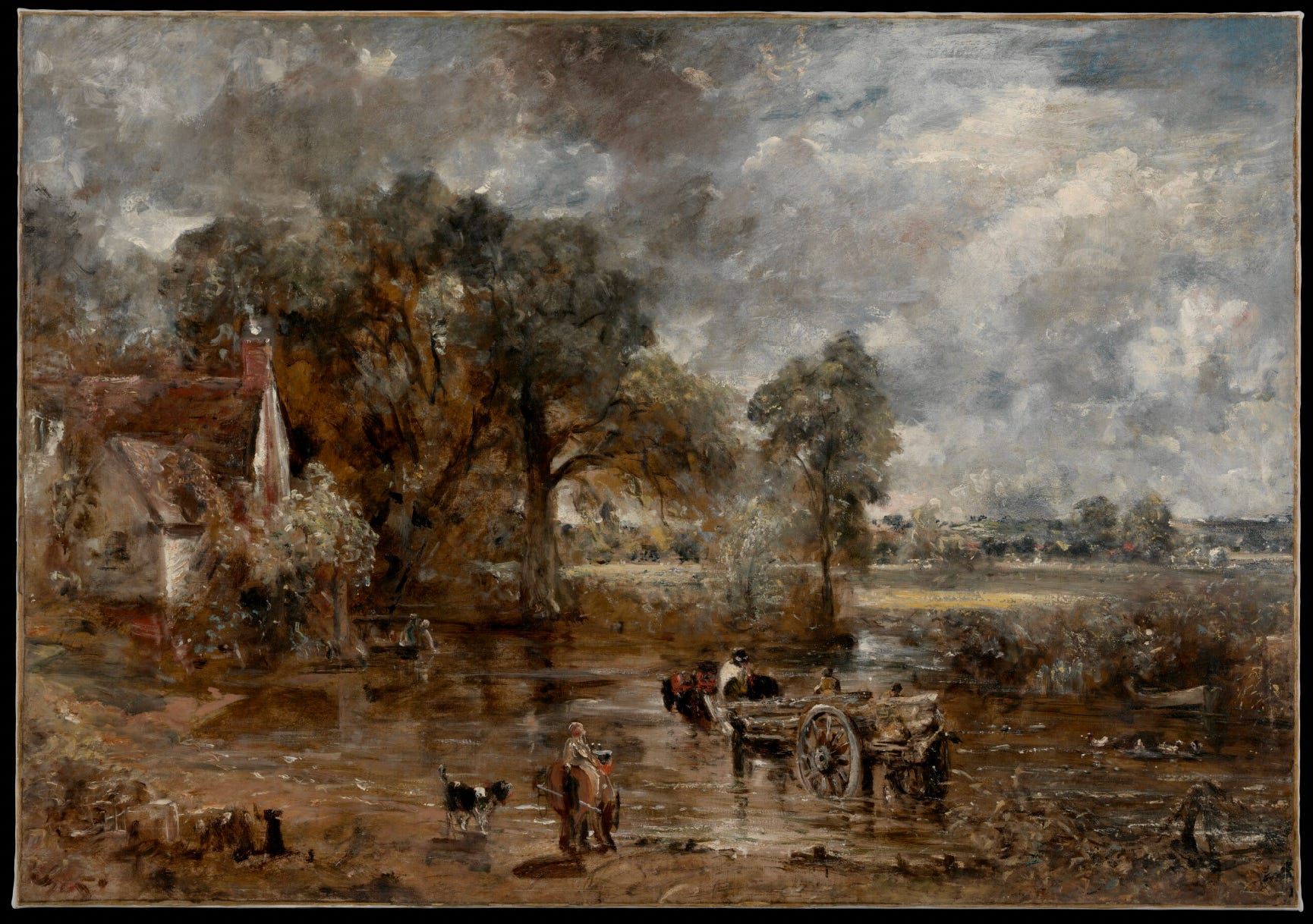
The bright wheel is the mill, the turning sails of the windmill, reconciled with the flowing course of the living river. Time is reconciled with itself, and painting is the place where this happens. Painting as a way of recapturing time, and of regaining the lost time of a childhood spent among water meadows and mills, and along the banks of a living river.
‘The Wrong Wain’ is an excerpt from Fen Lane, the first in a series of six lectures on the art of John Constable, running at Snape Maltings, Suffolk from the 23rd February to the 30th March 2026, every Monday at 6.30pm. For tickets follow this link.
Another wonderful piece. Thank you.
Beautiful constructed and original argument. Who else is looking as intently as you at the moment ! Bravo 👏