

Cloud Man
Clouds, trees, stags, death.

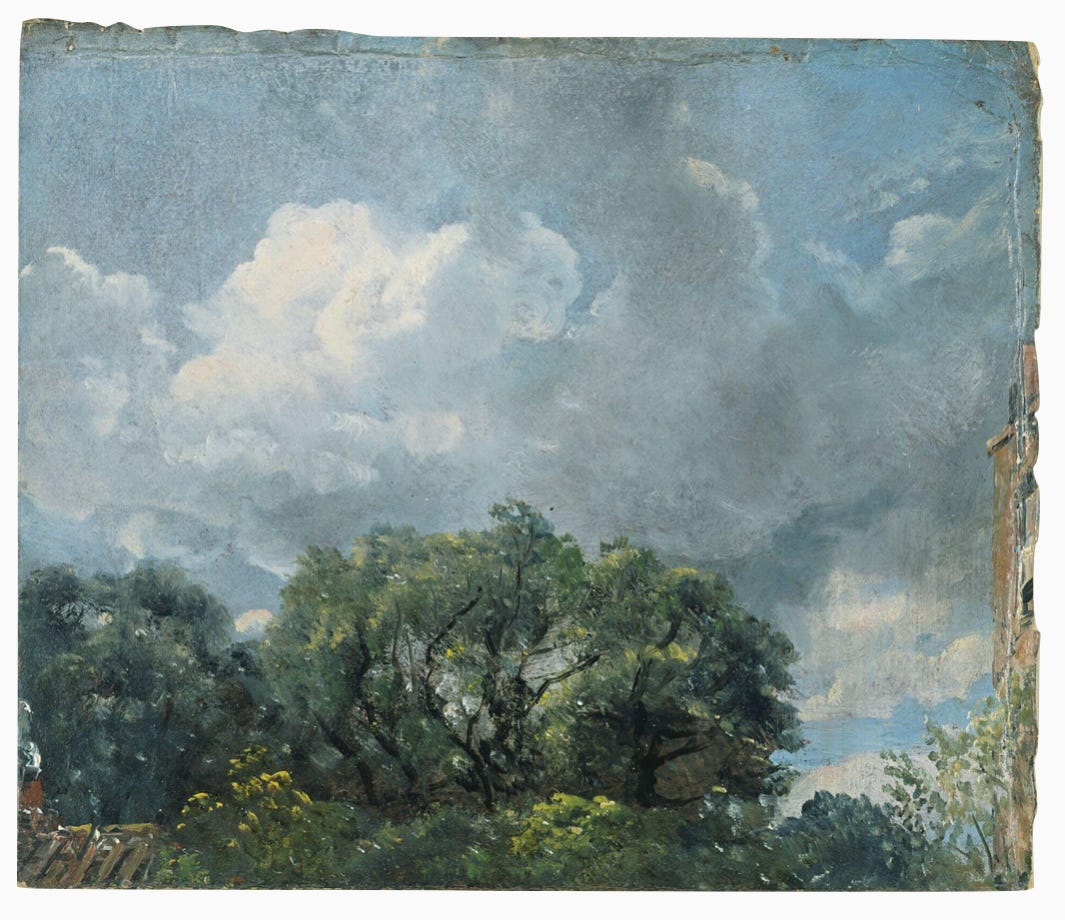
A FEW MONTHS BEFORE HIS DEATH, on the 31st of March 1837, John Constable wrote to a friend of his plans for a lecture on the subject of clouds and skies. He would give it at Hampstead that summer. It would follow from the great success of his four lectures on landscape painting at the Royal Institution the previous year. He had jotted notes on scraps of paper, lying around him, we might imagine, lain up in his winter bed, thinking back to cloud-filled summer skies.
There was to be one lecture on skies and clouds, and another, he suggests to his friend George Constable (no relation), on trees. The more you look at Constable’s paintings, the more you see that these elements, the clouds and trees, are the true subjects — landscapes are stages on which trees act out their arboreal dramas against great backdrops of noon-day cumulus and high-hung cirrus.
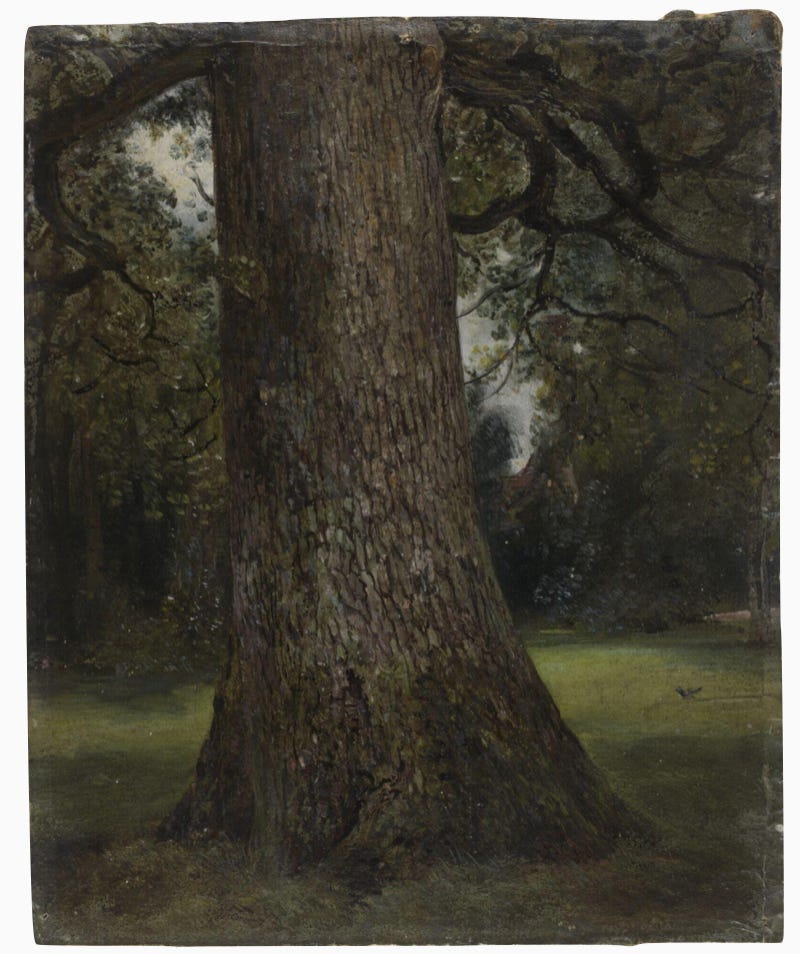
His lecture on trees, we might guess, would have been full of emotion and affection — trees I have loved and drawn and painted. His famous oil sketch of an Elm tree trunk is certainly a portrait of a tree, but a tree transformed into a living being, given two arms and even the suggestion of two feet, and seen from a child’s viewpoint. She — for trees to Constable were mostly female — has emerged from the house hidden in the trees behind. John! You are to come in now!
In his 1836 lectures on landscape he had given a brief guide of how to draw trees, surely mentioning the importance of chiaroscuro, and of creating a system of marks for showing individual leaves without having to draw them laboriously, so that a tree might be shown in all its grandeur and solidity, but still swaying elegantly in the afternoon breeze.
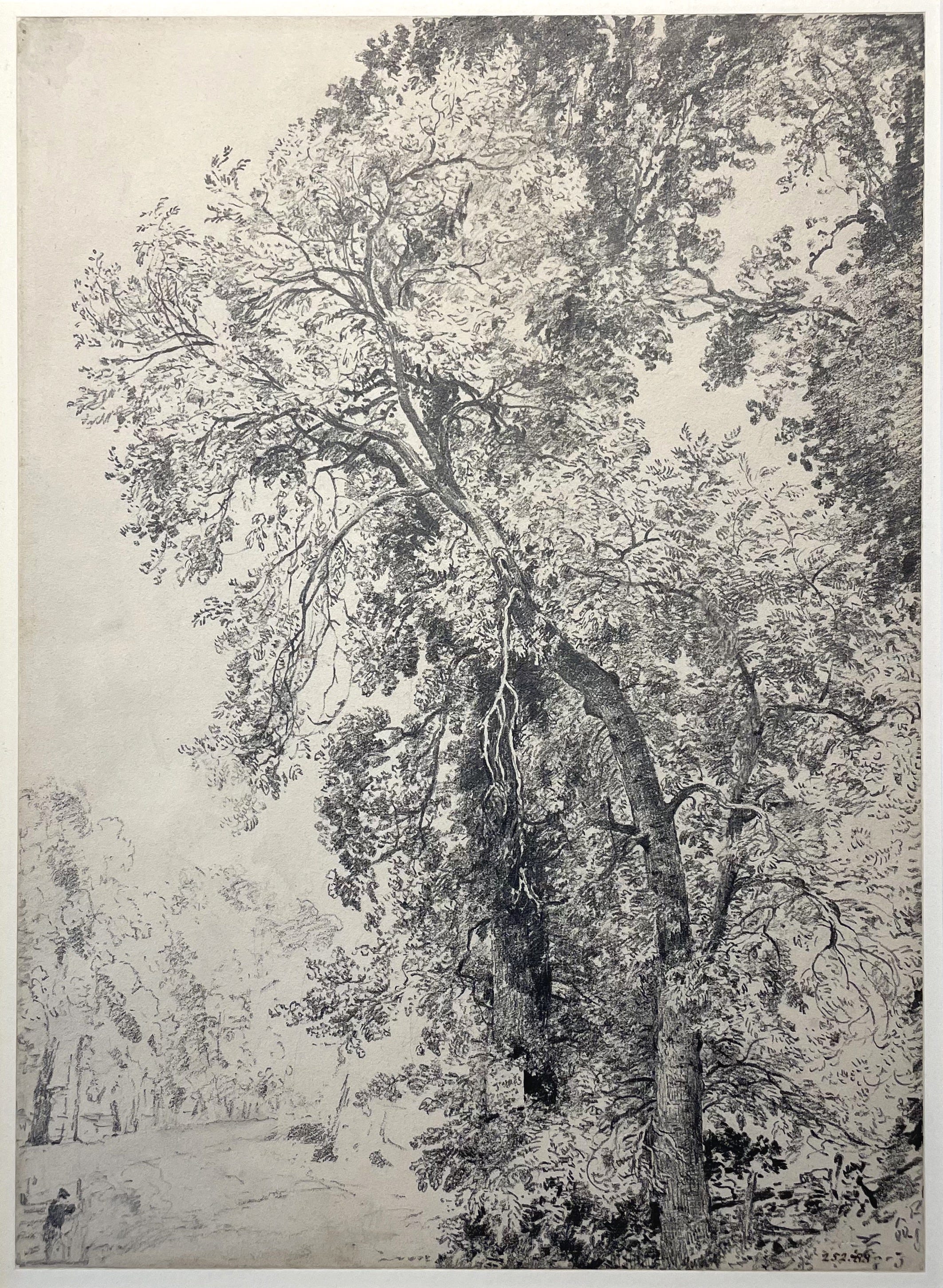
If you want to learn how to draw trees, go to the V&A study room and make a copy of this drawing of ash trees at Hampstead. Constable talked in his 1836 lectures about these particular trees, and noted the importance of the dead branch, hanging down against a dark background at the centre. Once you’ve seen it, you cannot but think of it as the subject of the painting, the drama of a dying tree.
Constable showed an enlarged drawing, and told the story of a sign that had been nailed to the side of this elegant young woman (the tree, that is), and how she had withered at the top, then down one side, then the other, and then been cut down to a stump just high enough to hold the sign, warning off vagrants and beggars.
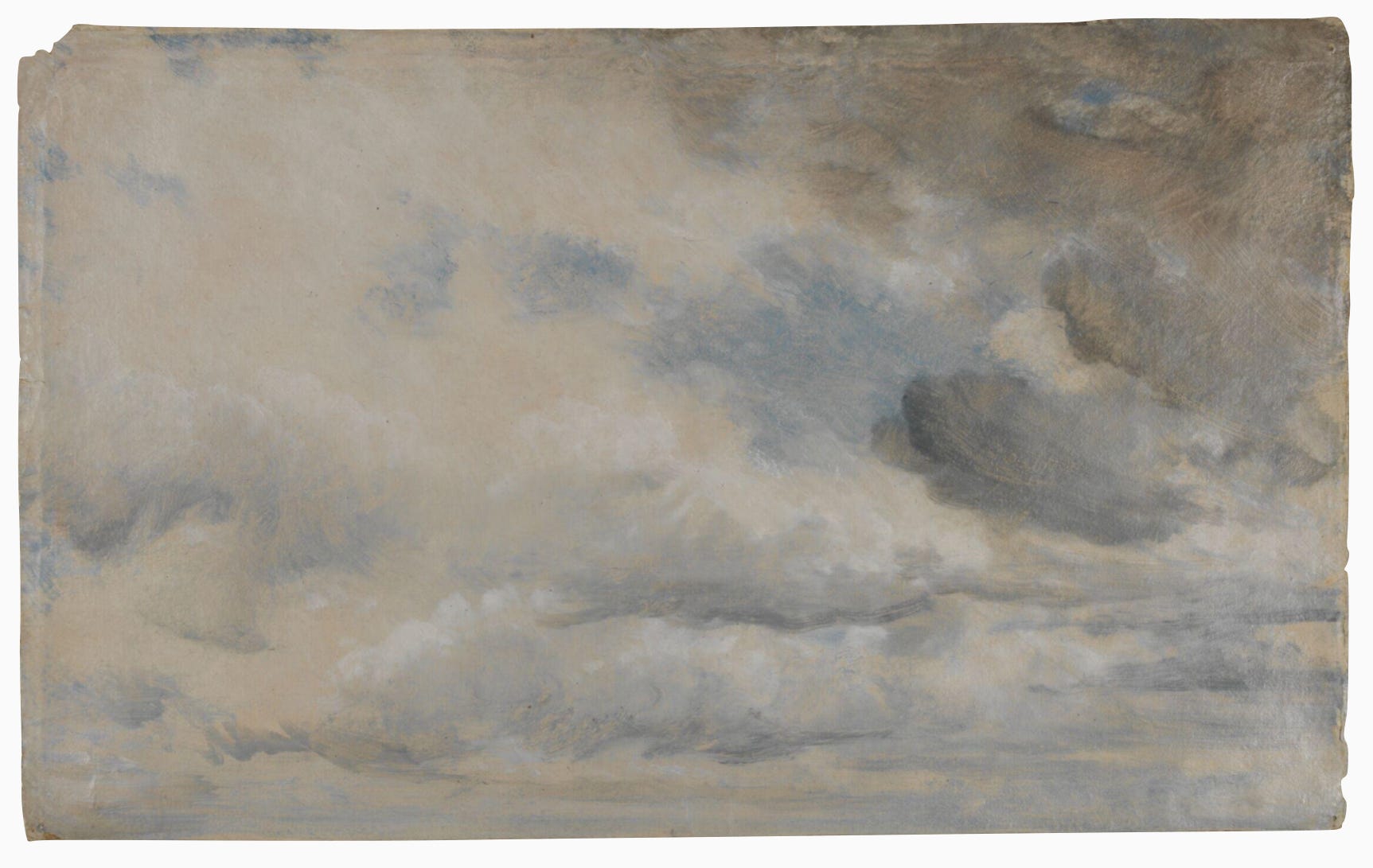
THE LECTURE HE PLANNED BUT NEVER GAVE on clouds would have been a little more scientific. The story of the cloud paintings, or oil sketches, is pretty well known. Over the two summers of 1821 and 1822 he would port his painting box up onto Hampstead Heath, pin down a sheet of paper prepared with a coloured ground, look up and paint what he saw. Weather conditions and time of day he noted on the back.
He was not the first to paint clouds in this way. You could trace a tradition of cloud-hunting artists back to Leonardo da Vinci, and to the first great naturalistic landscape paintings by Giovanni Bellini. In the years before Constable, the french painter Pierre Valenciennes made beautiful studies of cloudy vistas, and in Britain the likes of David Cox and Alexander Cozens were studying the skies intently. Turner, in his ‘Skies’ sketchbook of 1818, threw down watercolour to approximate atmospheric effects in the firmament above.
None, however, had looked with quite the same intelligence as Constable. From childhood he had learned to read clouds, what weather they might portend, working in his father’s mill on East Bergholt Heath.
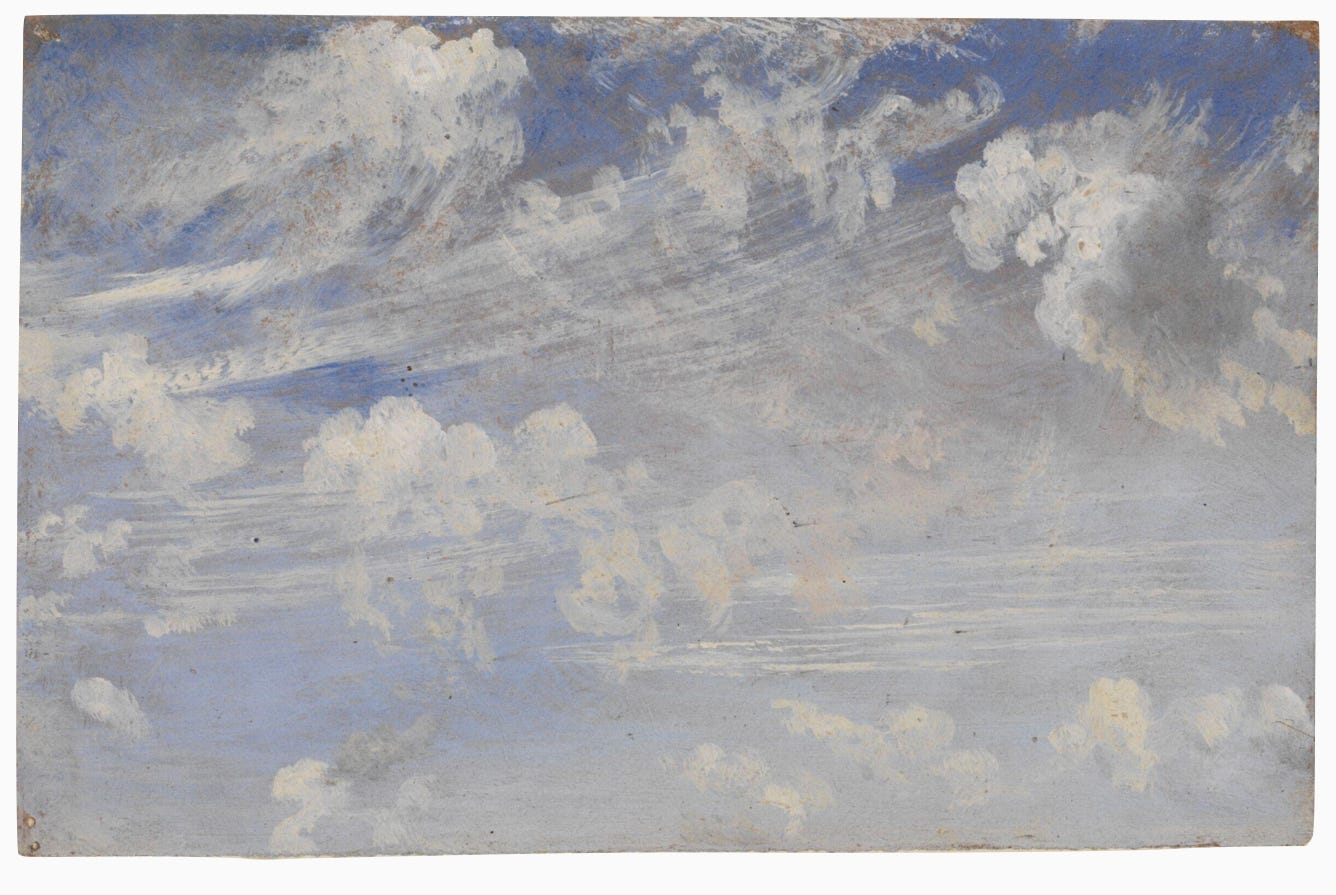
He also knew his meteorology, and was aware of Luke Howard’s great imaginative leap in naming different types of cloud formation — cumulus, nimbus, stratus, cirrus — in his famous 1803 paper On the Modification of Clouds. Although Constable only once used one of these names (the word ‘cirrus’ written on the back of the oil sketch above, most likely in his hand), he knew of the science, and was infused with the spirit of taxonomy — of differentiating and naming — on which it was based.
He made around one hundred cloud studies over those two summers: an archive of clouds that he could refer to back in the studio while working on his large academy landscapes, the ‘six-footers’.
They also, quite beautifully, seem to dramatise the sense we get of Constable taking off at this moment, all of his ideas coming together and defying painterly gravity to create such levitatingly magnificent works as his View on the Stour near Dedham, and the two greatest of all The Lock Keeper (my title) and The Leaping Horse.
The earlier cloud studies often include the tops of trees, or the edges of houses, as if an anchor into an older idea of painting.
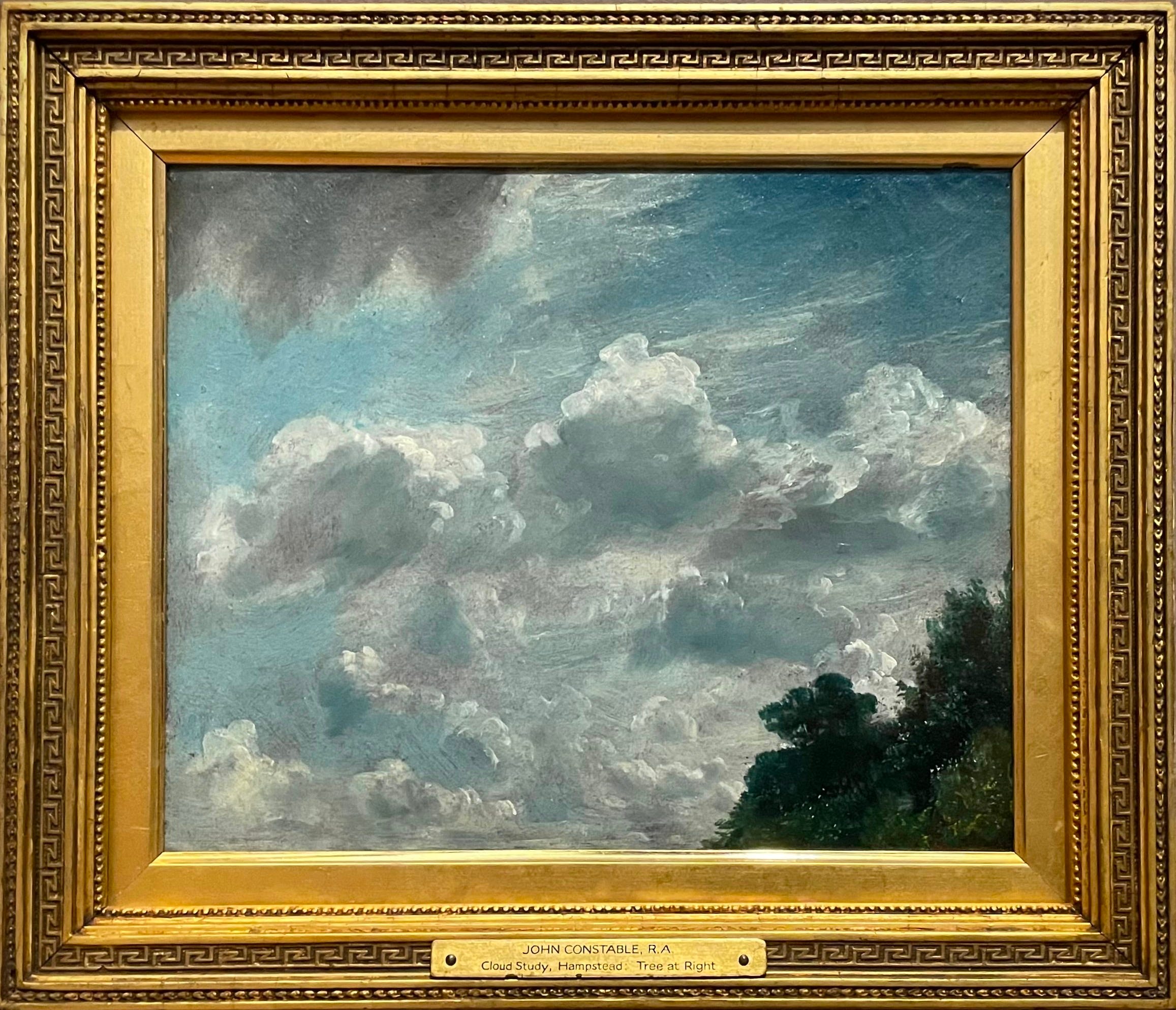
The thin strip of land at the bottom of this cloud study (the Hitchcock version) kept at New Haven, makes it still, just about a ‘landscape’.
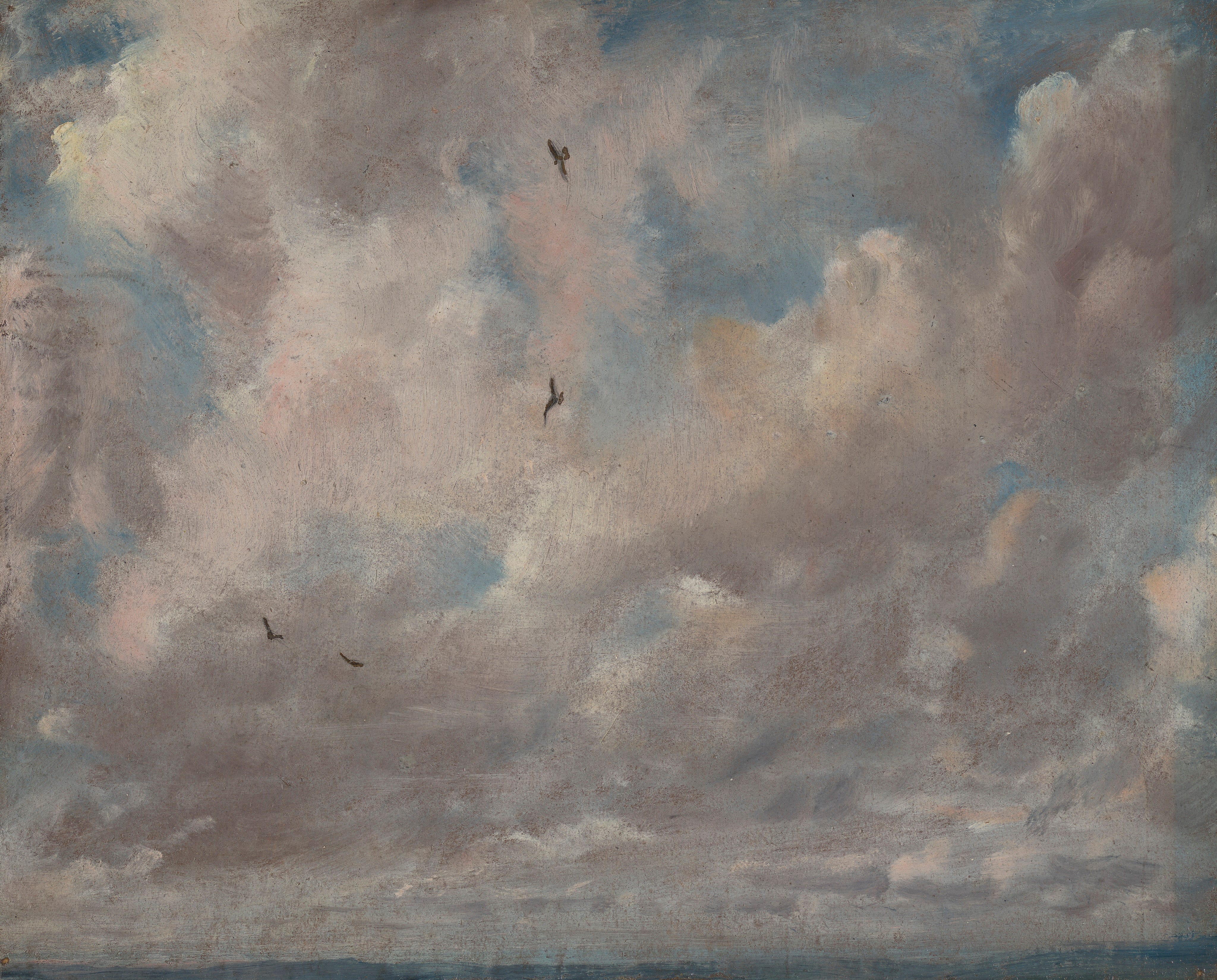
They are painted with feet firmly on the ground, looking up.
Not so the studies of the next summer.
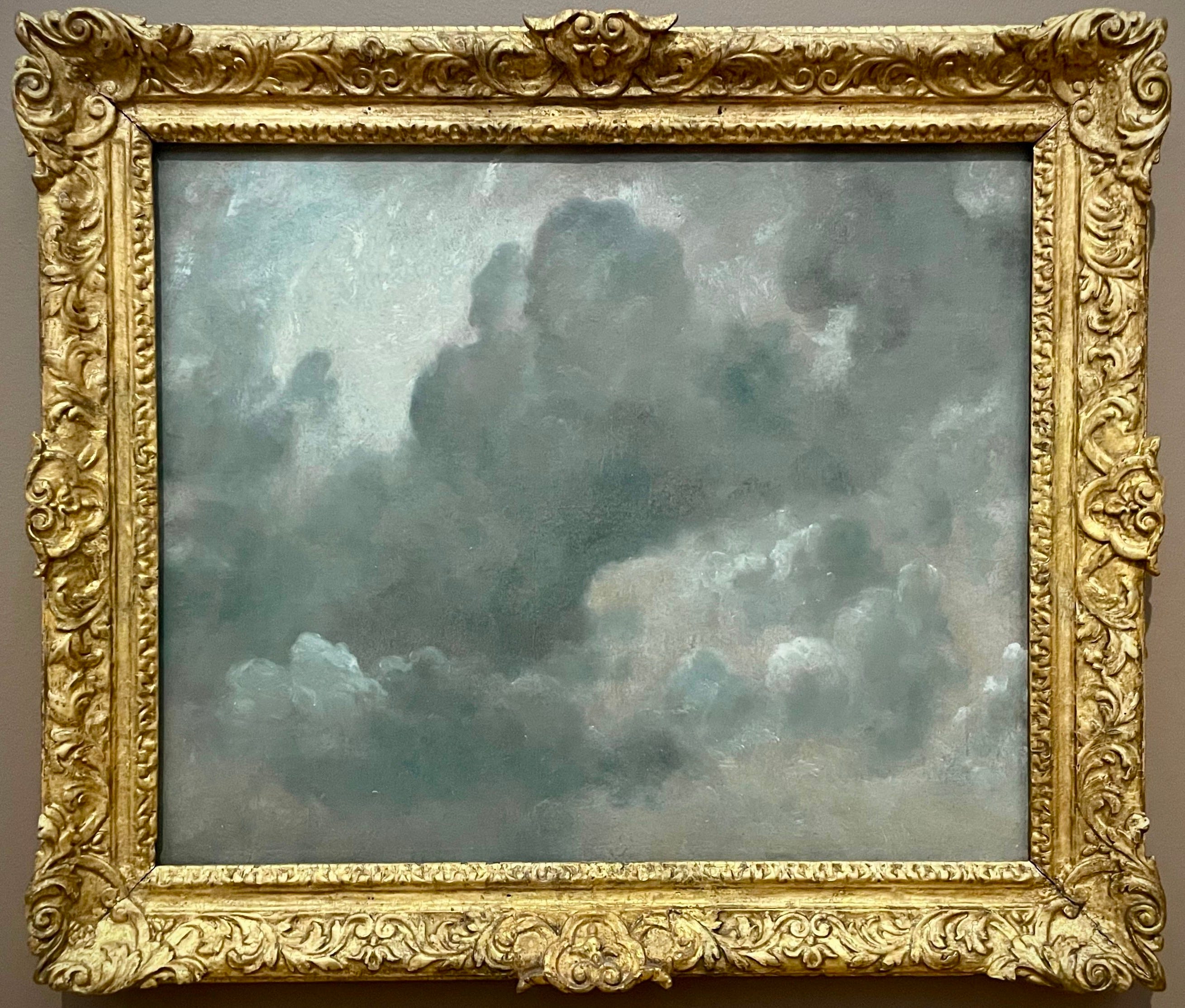
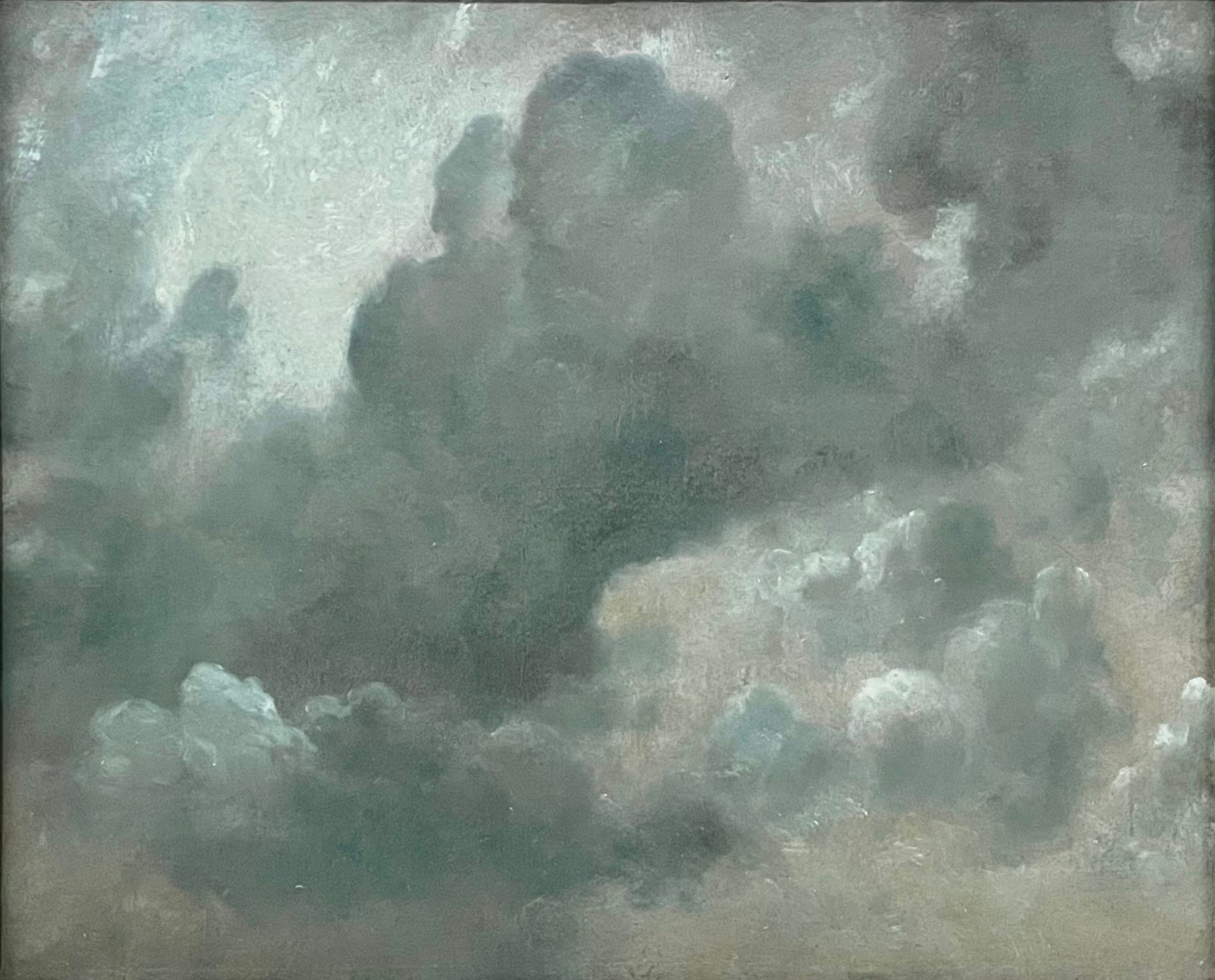
Now we are not looking up, but are among the clouds, flying through the magisterial, unfathomable mass of vapour as if in a dream.
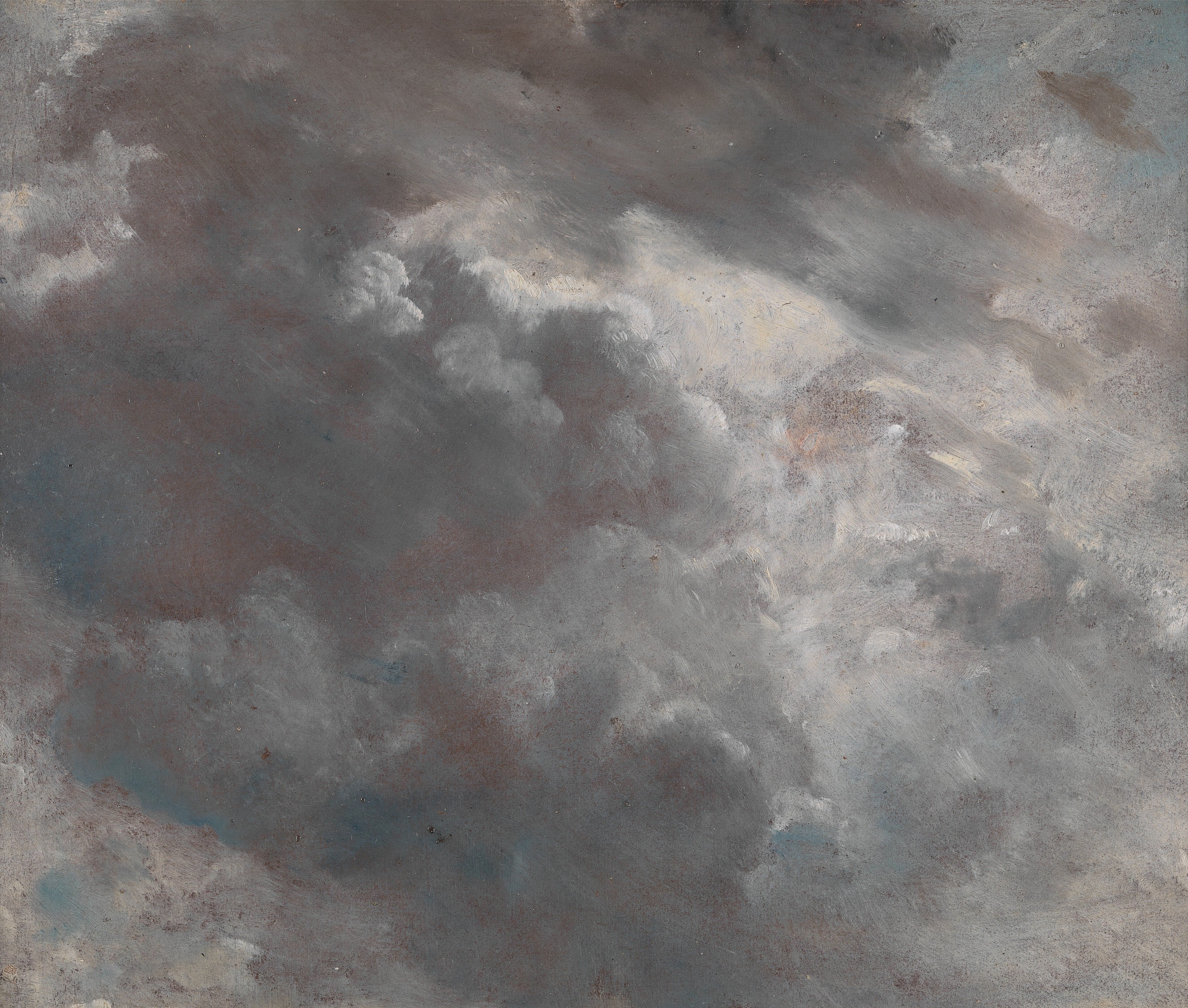
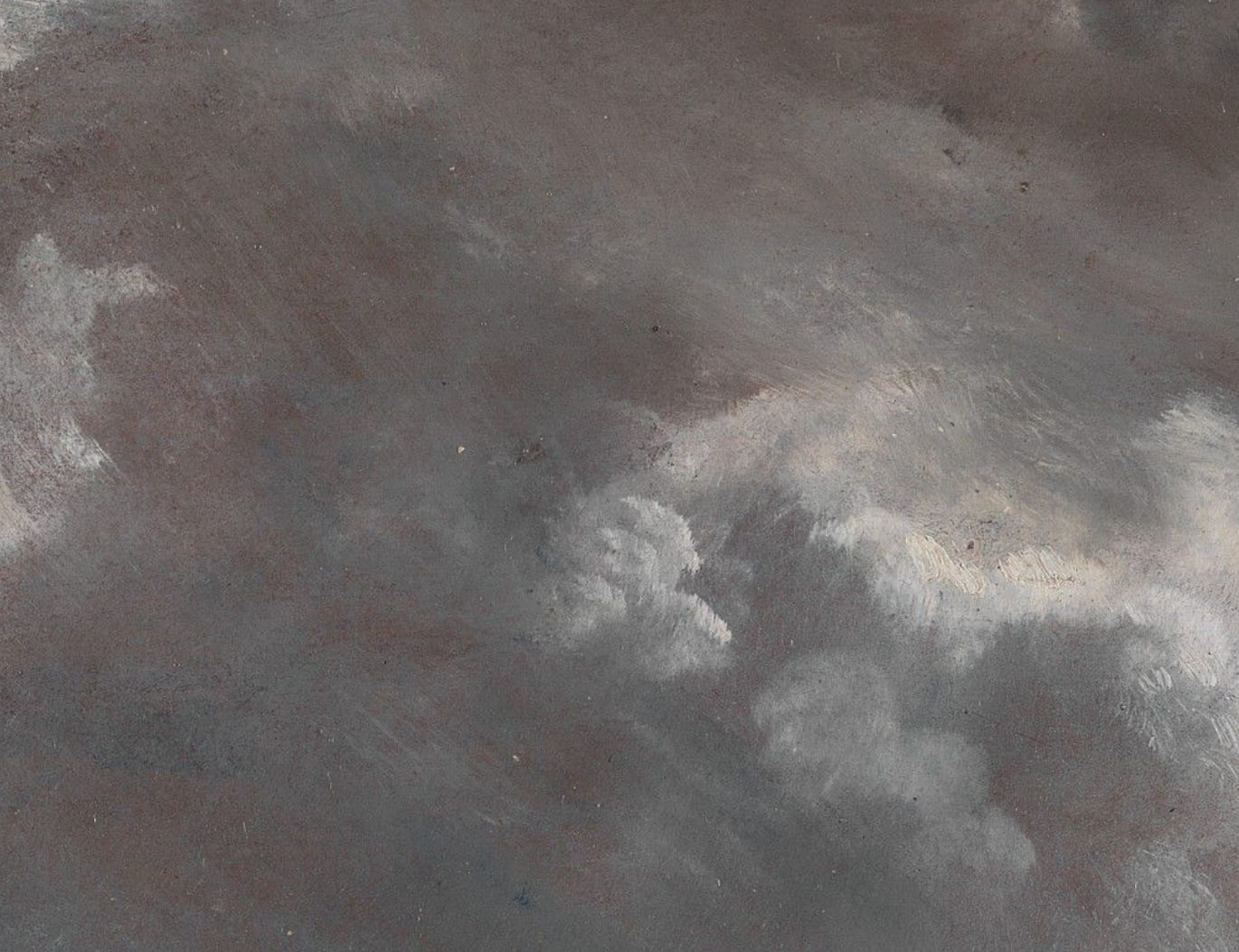
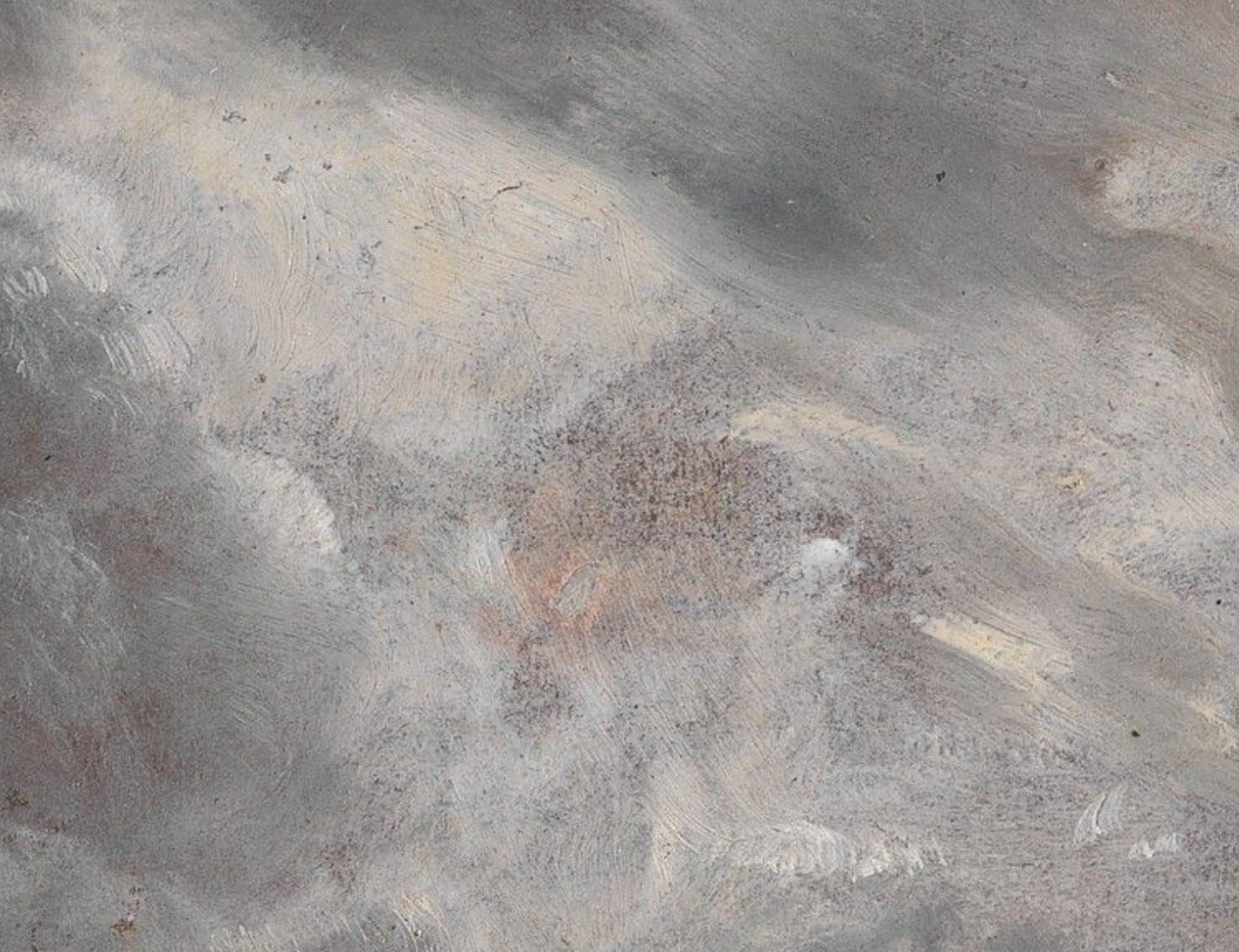
How do you paint a cloud? How to fix something down that is so (literally) nebulous, especially in the tricky medium of oil paint, sitting out in the open on Hampstead Heath. Anything could happen — rain, hunger, forgotten the turpentine…
Therein lies the talent, you might say. And in truth it is the only answer to the question. You practise and practise, until you realise that all there is, is practise, and you simply carry on getting better and better at doing the most difficult things.
But there is another way of seeing Constable’s cloud studies, a more psychological interpretation, that becomes a key to seeing his work as a whole.
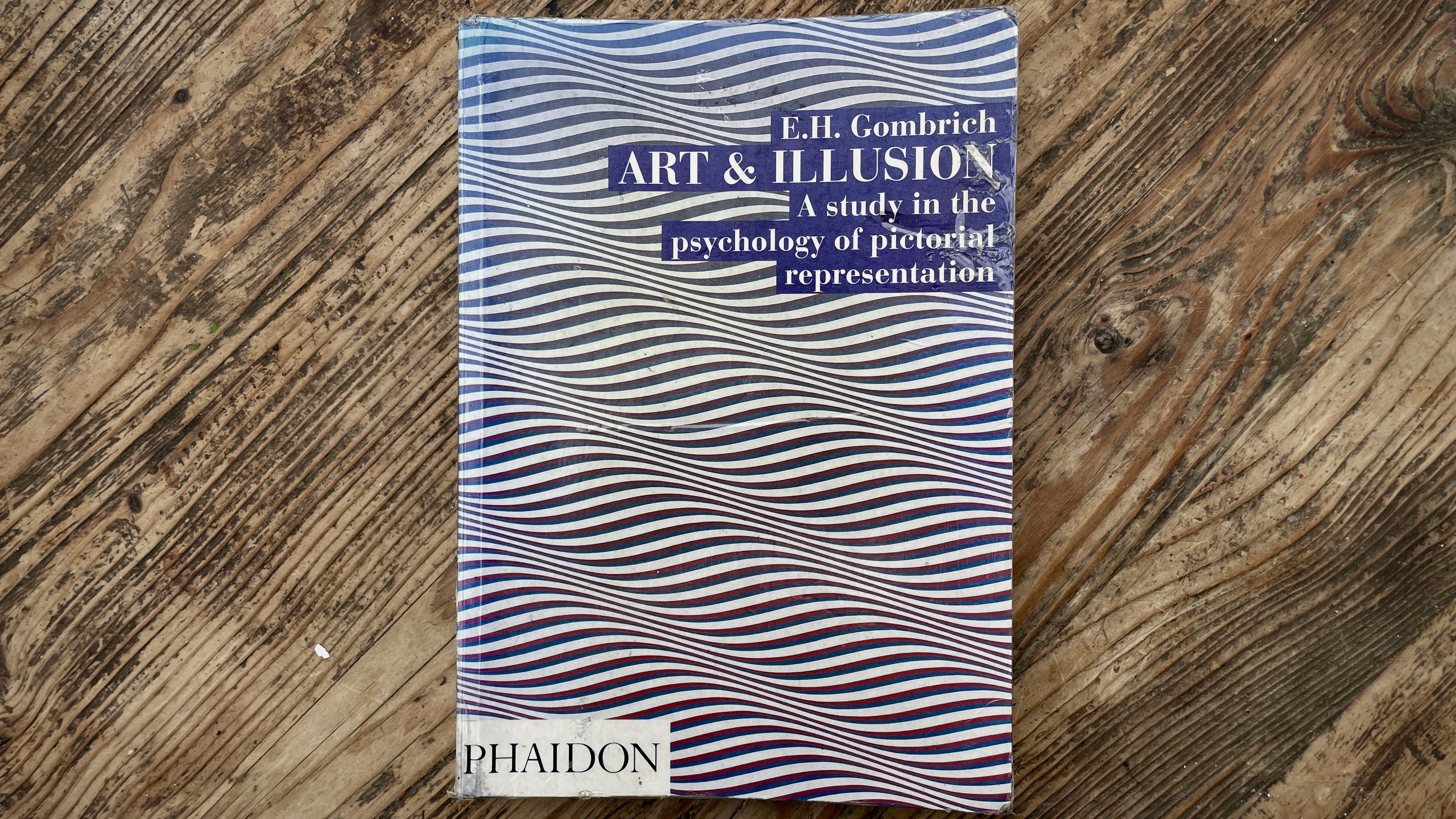
I had a memory of reading such an interpretation in E.H. Gombrich’s 1960 book Art and Illusion. This is beyond any doubt the book that shaped my thinking about art more than any other. I read it at the age of nineteen, just before setting out for art school. For three years I painted and drew, muttering ‘making comes before matching’ under my breath.
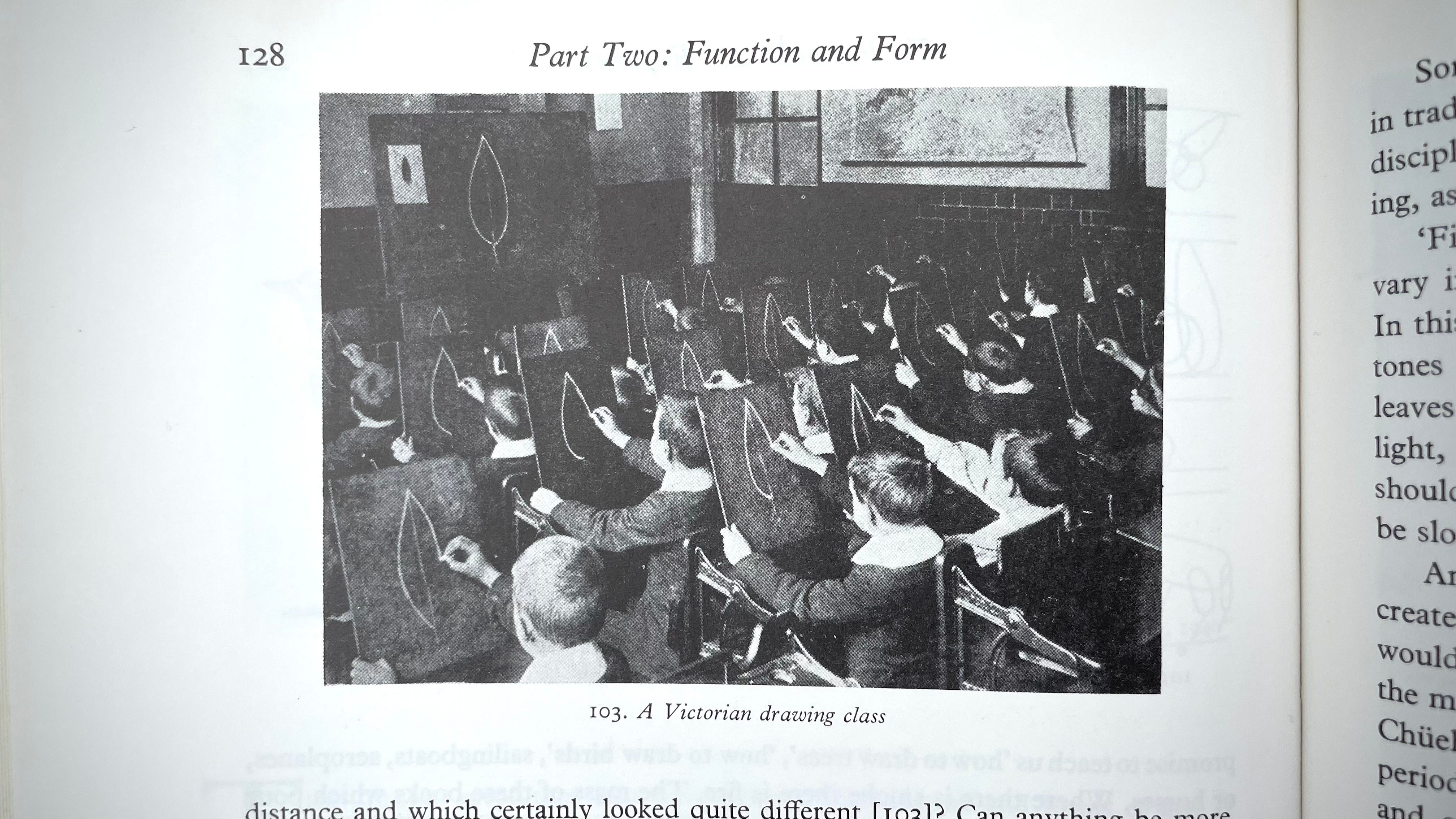
The phrase is part of Gombrich’s explanation of how images are made, by a process of experimentation of making marks on the basis of some pre-existing idea (faces are round and symmetrical), and then adjusting them (the ‘matching’ part) with what we see. We always start with a schema, an idea, and correct it according to the particular object we are looking at. We are all like the Victorian school children, copying a leaf (this is also the only image I have ever seen of synchronised drawing).
Taking down Art and Illusion from the shelf once again, I was struck by how much it is in fact a book about Constable – not entirely, but Gombrich begins and ends with Constable, and refers to him throughout as his prime case.
He is interested in Constable because of the paradox he presents — an artist who said that whenever he sits down to paint, he forgets all previous art, and transcribes the actual appearance of nature, and yet spent his life copying old master paintings.
It is remarkable that Gombrich hinges his argument throughout the book around the painting Wivenhoe Park, a country house portrait commission, and one of Constable's most boring paintings. It was probably to flatter his hosts at the National Gallery in Washington DC, where the painting hangs, and where Gombrich originally gave the lectures that were published as Art and Illusion four years later.
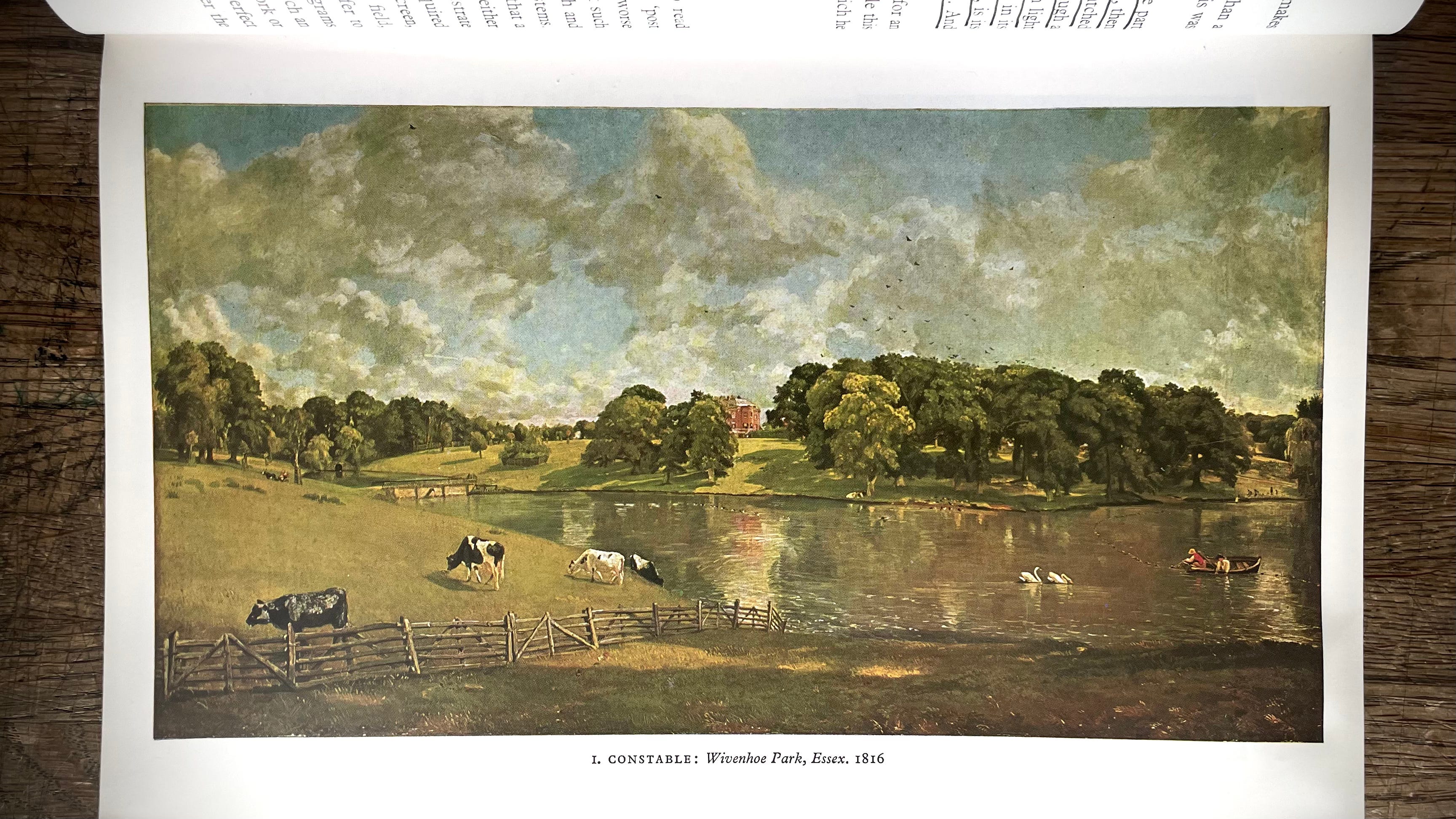
It goes some way to proving his point that what we might see as a 'natural' painting was hardly that, and that the naturalism of Wivenhoe Park would have been far more striking to contemporaries. We have just got used to this sort of thing. Gainsborough would never have made such a painting. It wasn’t poetic enough. It was England, not Italy.
And yet still Constable was drawing on tradition, thinking of Gainsborough, Claude, Poussin — the claim that he could ‘forget’ that he had ever seen a picture when he sat down to sketch from nature was the vital clue. The psychologist hearing of someone ‘trying to forget’ Gombrich writes, always pricks up their ears.
His smoking gun is a set of drawings by Constable he has come across in the collection at the Courtauld Institute of Art (probably in dust-covered boxes in the Witt Library, then house in Portman Square), which had always been overlooked as being of slight artistic value, and which he reproduces for the first time in Art and Illusion.
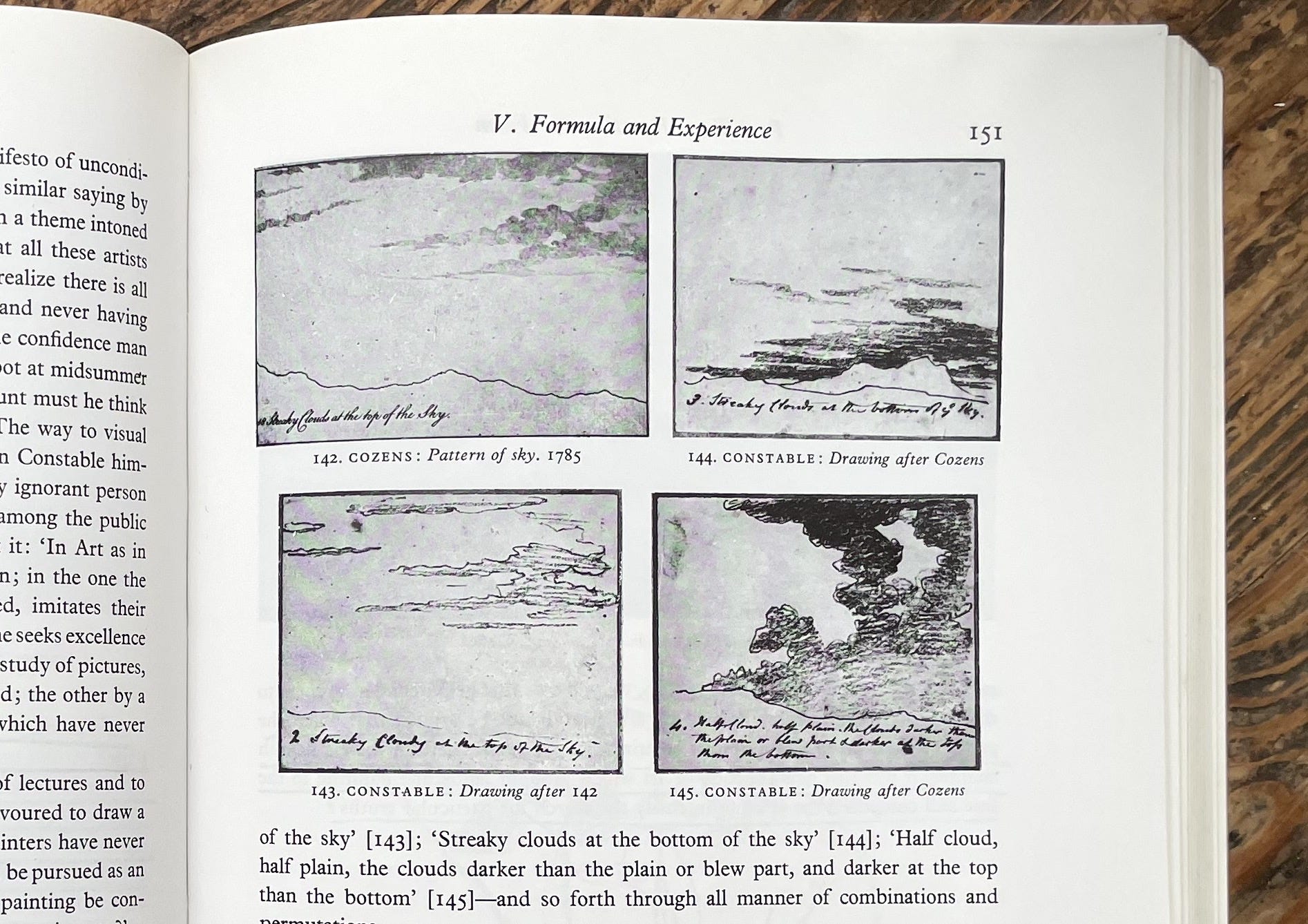
They are drawings Constable made in 1823 (actually after his main cloud-hunting years, but Gombrich glosses over that), copies from a well-known drawing manual from a few decades earlier, A New Method of Assisting the Invention in the Composition of Landscape (1786), by Alexander Cozens.
Cozens was a painter, but more importantly one of the most successful and famous drawing-masters of his age, in an age when being a drawing-master was a thing. He taught the rich (aristos) and famous, and in his later years was unofficial drawing-master to the royal family.
He published numerous ‘how to draw’ books, which were hugely successful. He came up with a system of transforming random ink blots (ala Leonardo) into fully-worked landscape images, which of course went down well with clients who preferred to avoid the hard work of going outside and actually looking at the world, with all its rain and misery and poor people.
For all these reasons, Cozens images of clouds, which are really just compositional aids, might seem an odd choice for Constable to copy. The answer to this riddle (Gombrich suggests), is what Constable learns from Cozens’s cloud images - not how to draw a cloud, but ‘a series of possibilities, or schemata, which should increase his awareness through visual classification’.
Constable himself was aware of the paradox. In his 1836 lectures he spent a great deal of time being rude about Mannerism, by which he meant paintings that come from paintings, second-hand images that tell us nothing about the world, and which reached their giddy gaudy peak in Boucher’s concoctions, like scenery for a provincial opera.
And yet, as Gombrich points out, Constable also admits that ‘even the greatest painters have never been unwholly tainted by manner’. You cannot forget the past — nor should you be afraid of bringing your knowledge of the appearance of things to the world when you begin to sketch from nature, so that sketching itself might well become a scientific pursuit. As Constable put it, ‘Why, then, may not landscape painting be considered a branch of natural philosophy, of which pictures are but experiments?’
Art and Illusion is a book about why art has a history, with Constable as Gombrich’s prime witness. There are some beautiful, if sometimes strange, pages on Constable, especially the final passages, at the end of the chapter From Representation to Expression.
Gombrich is alive to the paradoxes and difficulties of art making, and to the way in which art makes us see the world differently. It is true, after looking at Constable’s cloud studies for a few days, you walk out of the door and are stunned by the massed clouds, the ineffable grandeur of a cloud-filled sky, mesmerising and terrifying by turns — or are utterly disappointed by the boredom of a clear blue sky.
GOMBRICH DOESN’T MENTION where Constable made his drawings based on Cozens’s guide to cloud painting. He was staying at a country house, Coleorton Hall, with his old mentor and supporter Sir George Beaumont. It had been Sir George who had discovered Constable as a youngster in East Bergholt, and encouraged his talent, Sir George who had always spoken well of Constable, and promoted his cause for election at the Royal Academy, and also Sir George who never bought a single one of his paintings.
Still, he invited him to stay at Coleorton Hall, so that they might paint together, and also so that Constable might enjoy Beaumont’s collection of Old Master paintings for one last time in the privacy of a country house. They had been promised as a founding gift to the National Gallery, and a few years later the Claudes, Poussins, Rembrandts and paintings by Rubens left Coleorton for London.
When he is not reading Shakespeare with Beaumont, or admiring, quite guilelessly, Beaumont’s own rather insipid paintings, Constable was copying one of the Claudes, a Landscape with Goats and Goatherds, the original of which now hangs in the National Gallery (Constable’s copy founds its way to Australia).
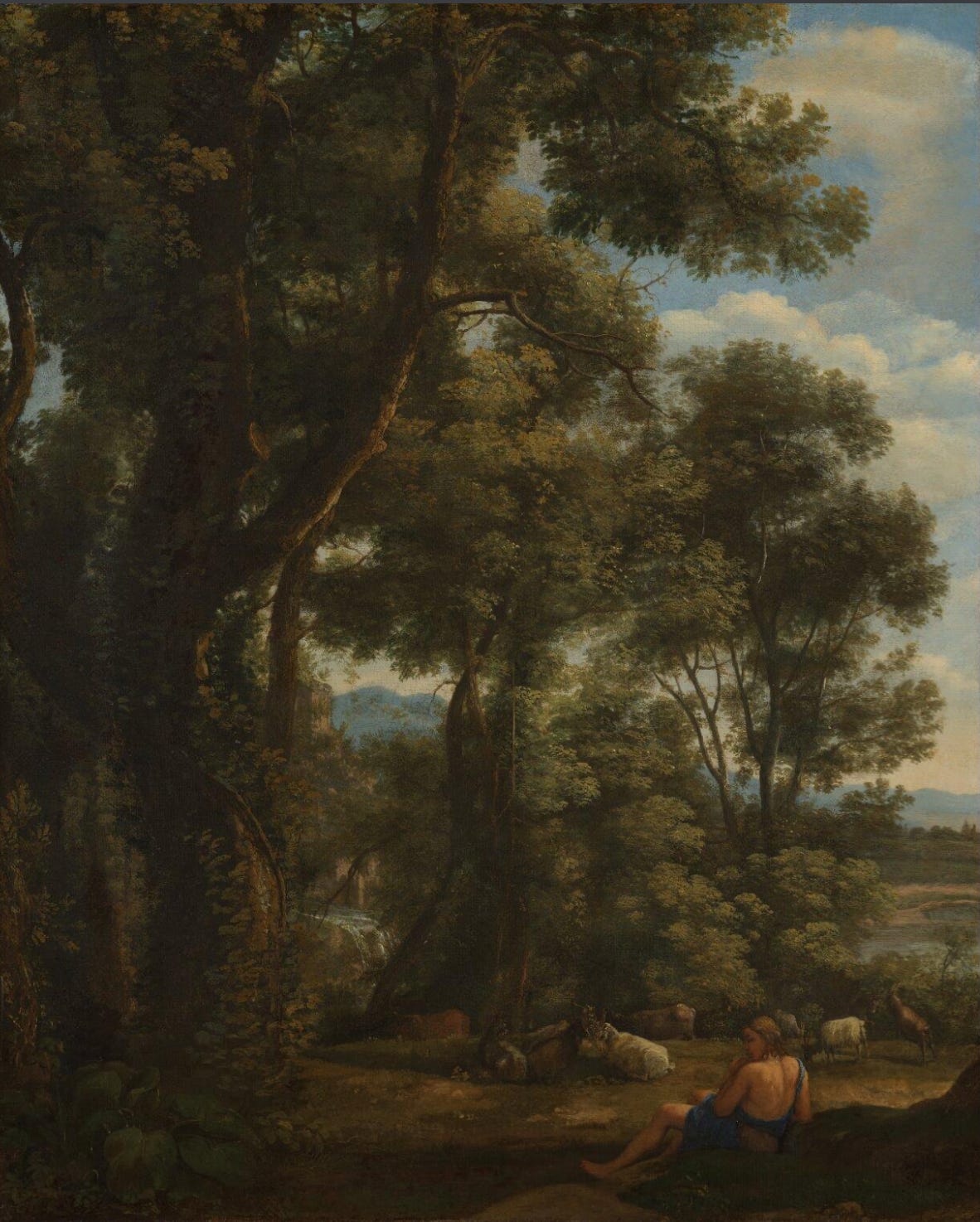
‘It is almost everything that I aspire to in landscape painting’, Constable wrote to his wife, Maria. A strange statement, considering Constable had spent the previous twenty years escaping the poetic lure of Claude, walking out into the clear English light of Dedham Vale.
Maria writes asking when he is going to come back. They have four children. She is unwell. He replies that he still must finish his copy of the Claude, and that he is having an excellent time and that Beaumont is a genial host. Maria replies that if he does not come back soon she will throw his paintings out of the window.
At the end of November, after six weeks at Coleorton, copying the Claudes, breakfasting with Beaumont, revisiting his fascination with clouds, he takes one last walk around the grounds, probably in Beaumont’s company.
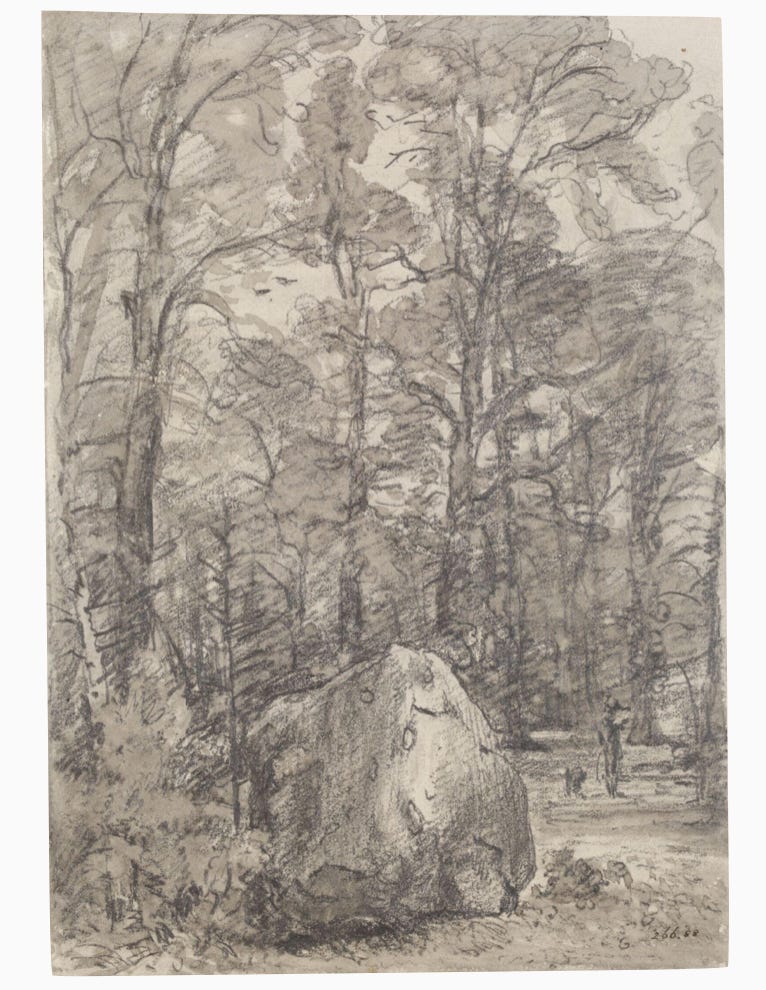
Wandering in a woodland, planted with lime, he comes across a large rock, a memorial Beaumont has placed there to the painter Richard Wilson, along with Gainsborough the greatest landscape painter of the previous century. Constable drew it, while Beaumont, standing in the background, waited.
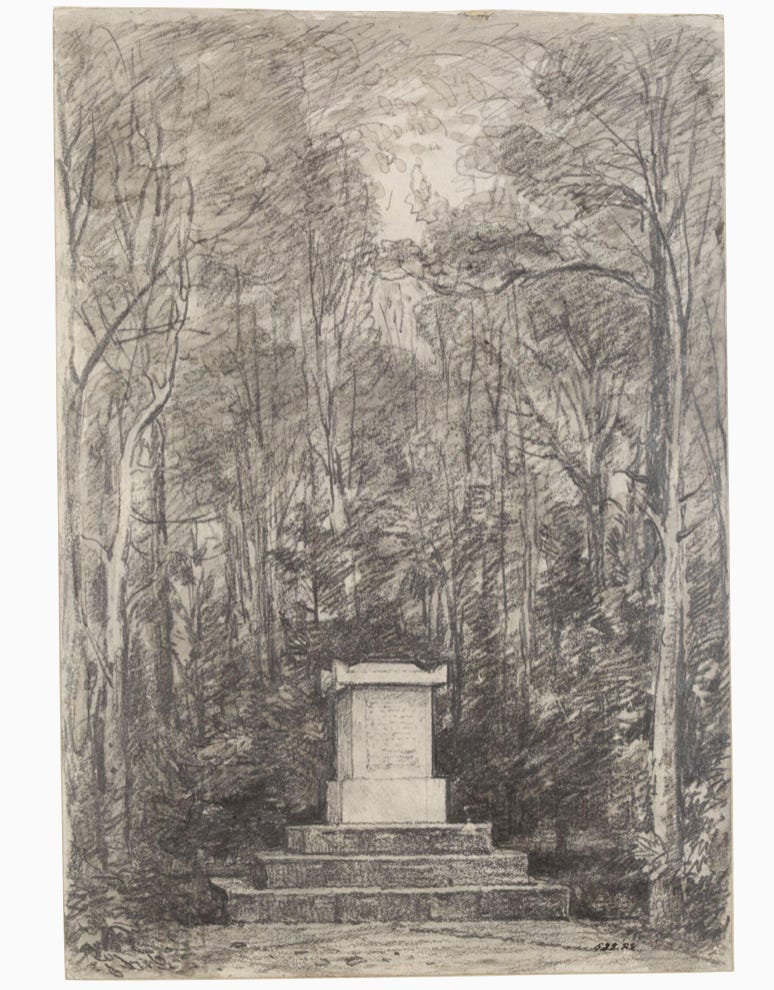
A little further on they come across the memorial ‘urn’ (more like a plinth), that Beaumont had created for Sir Joshua Reynolds, inscribed with a verse he commissioned from Wordsworth, with much about sanctity and patrimonial grounds, and what England had lost when Reynolds died, and so on. Constable drew this one too.
And then he returned home, full of apologies and stories that Maria did not want to hear.
THE COLEORTON DRAWINGS ARE IMPORTANT as they led to one of Constable’s greatest paintings — and also one of his last.
Thirteen years later, in 1836, he began work on a canvas that he knew would be the last of his works to be exhibited at the Royal Academy in Somerset House (it was moving to the National Gallery the next year).
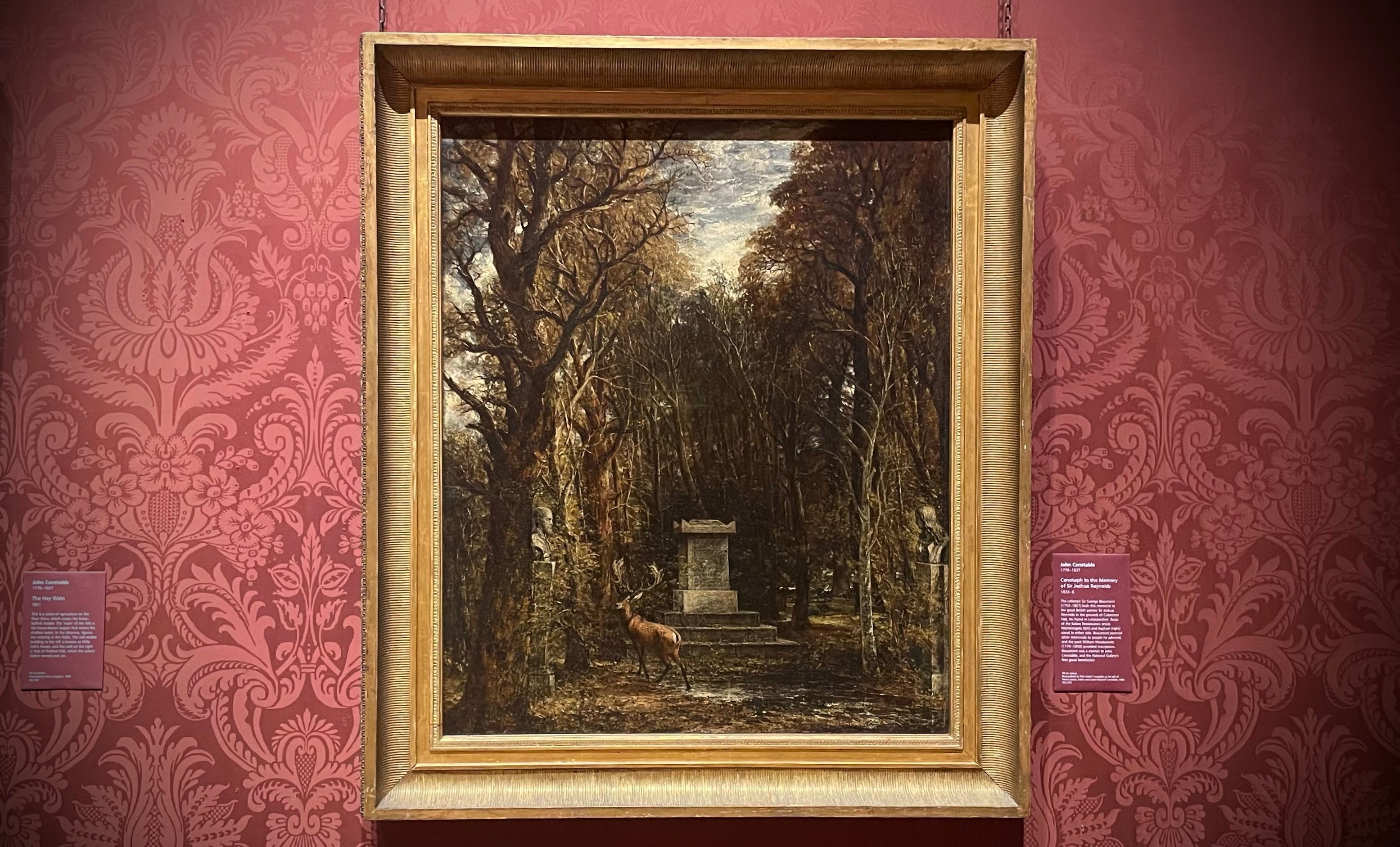
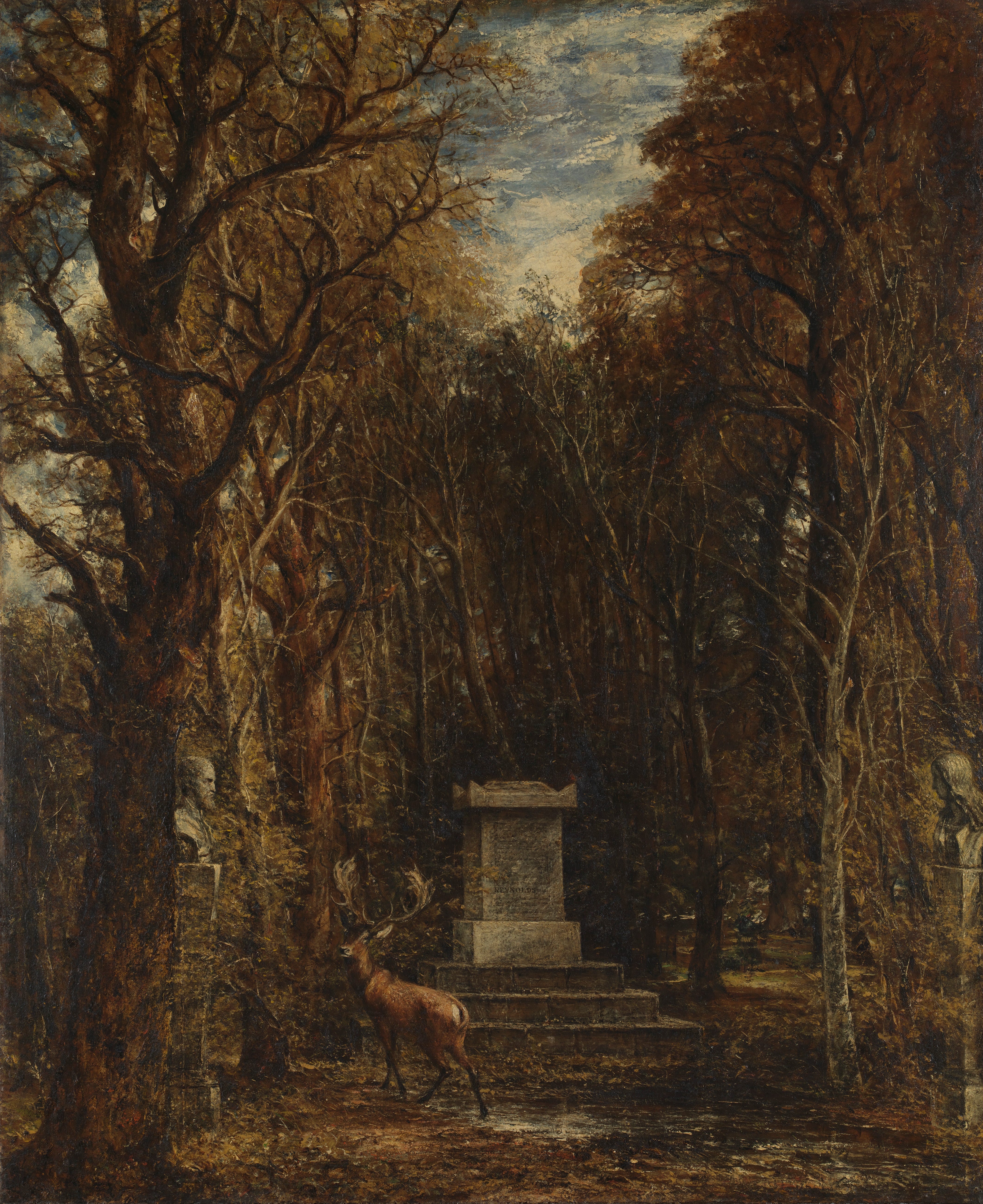
It is a painting I have always loved for its forest feeling, for the antiquarian mystery of a memorial lost in a woodland glade, and for the sense of memory embedded in a wilderness, the stag turning with mournful mien, caught for a moment between the busts of Michelangelo and Raphael, as if it too has paid homage to Reynolds and the great tradition of art for which he stood.
There are some intriguing details.
The robin perched on the cenotaph, a tiny smudge of red against the dark depths beyond.
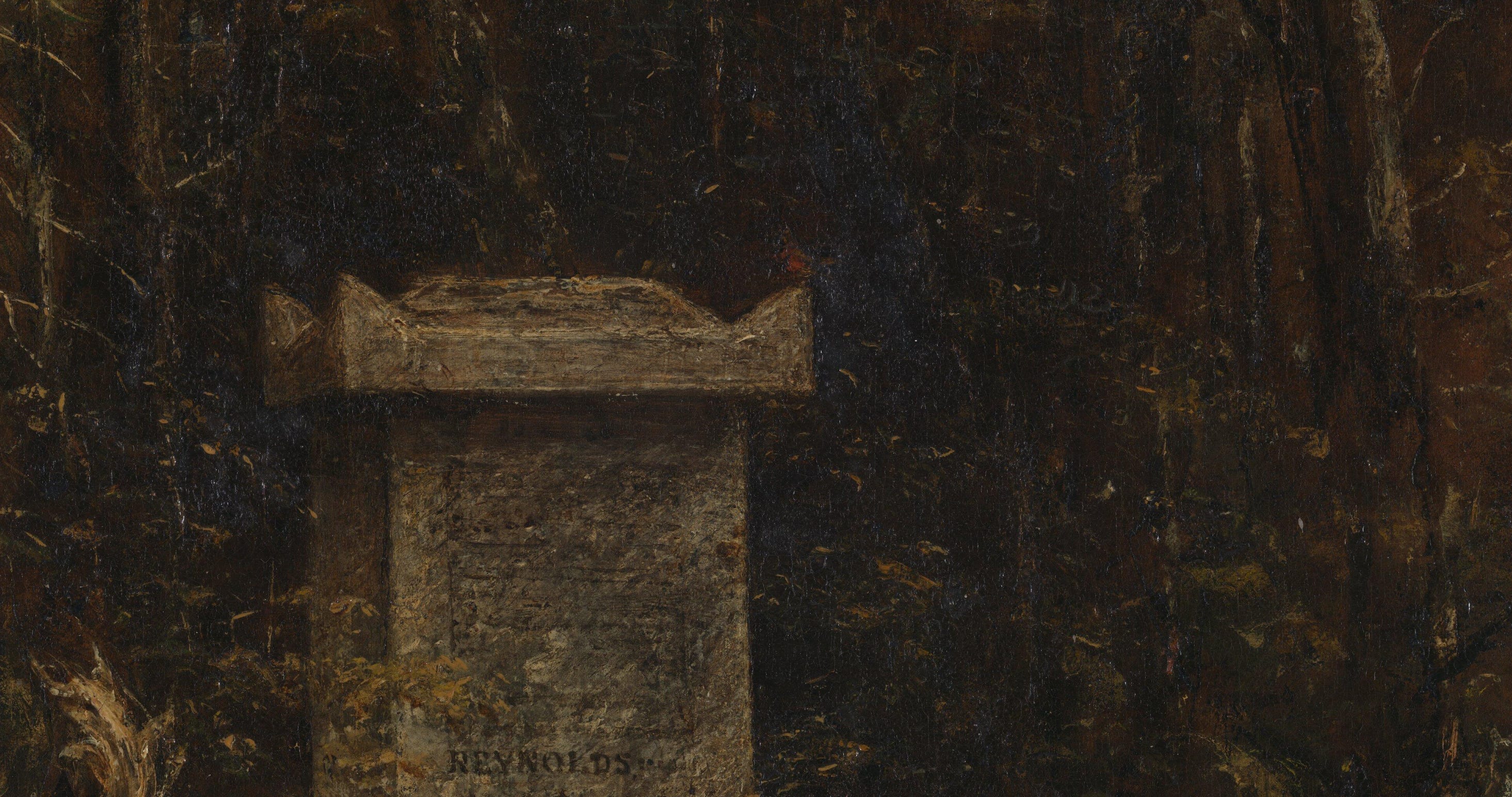
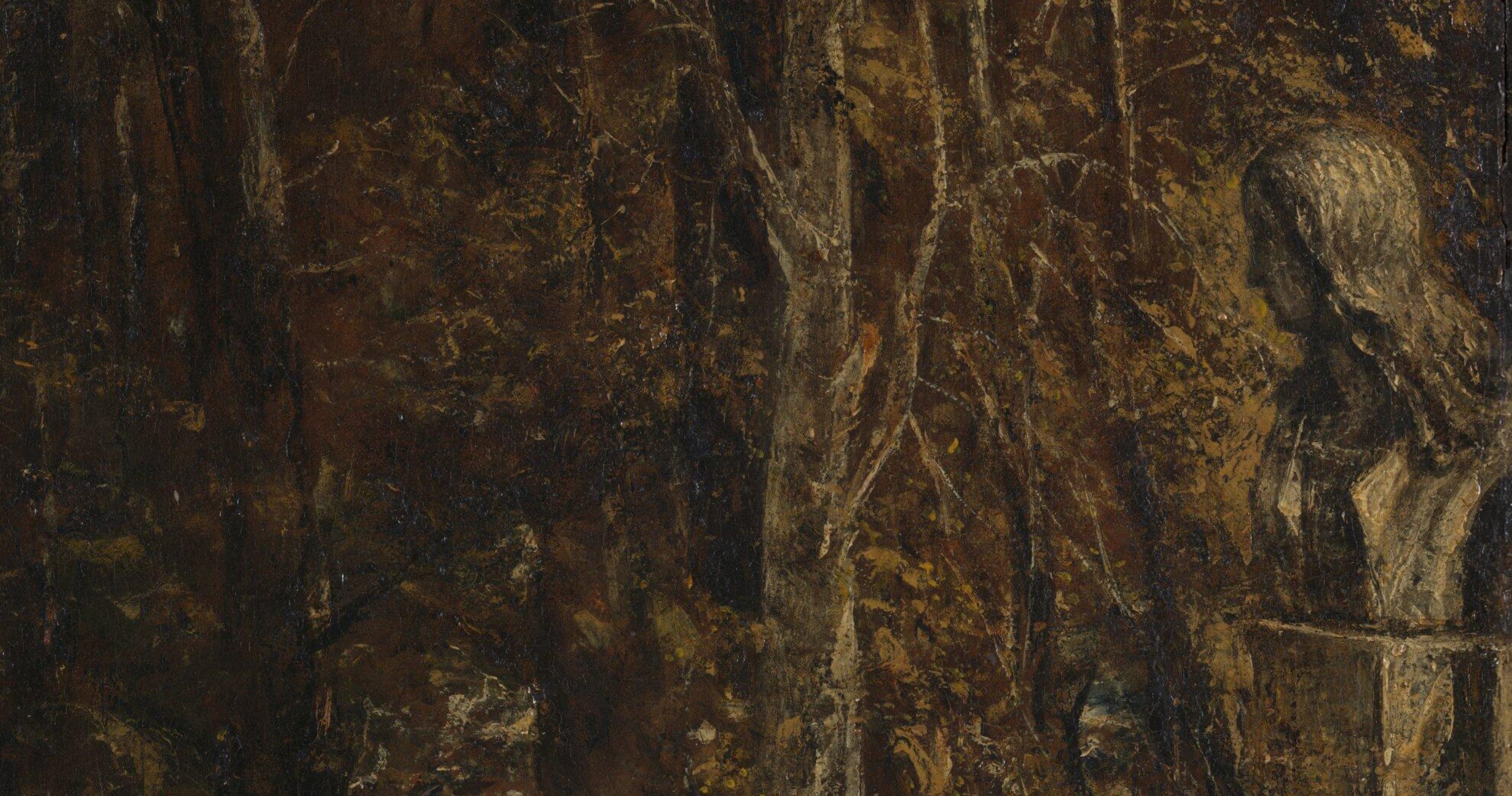
The bust of Raphael, looking solemnly towards the cenotaph.
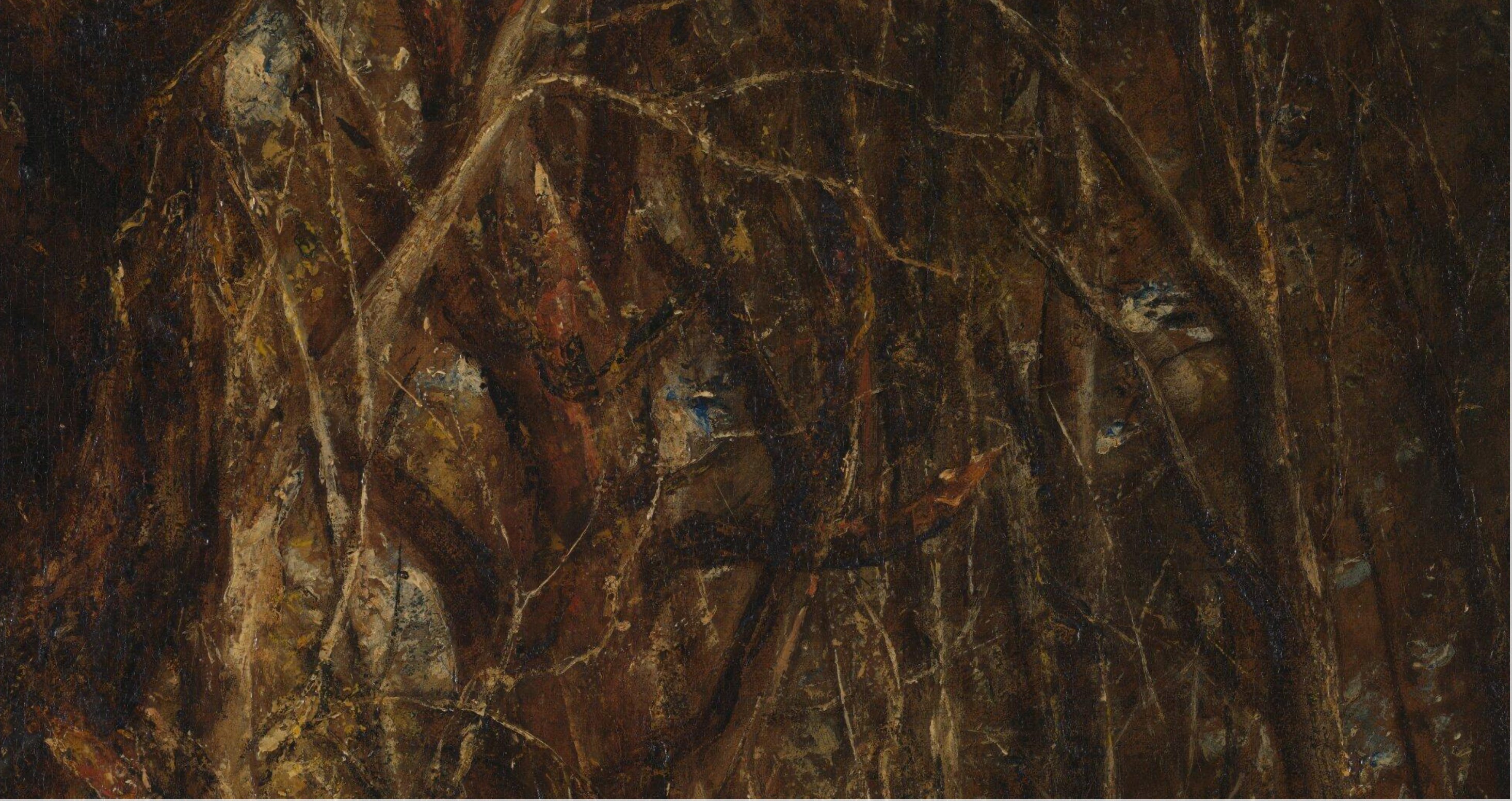
Smudges of blurs of palette-knifed colour, like birds amongst the branches.
And, strangest of all, and never before noticed (or at least written about), a ghostly figure behind the cenotaph, painted with the palette knife in smears of coloured pigment, as if Constable was for a moment a prophet of Francis Bacon.
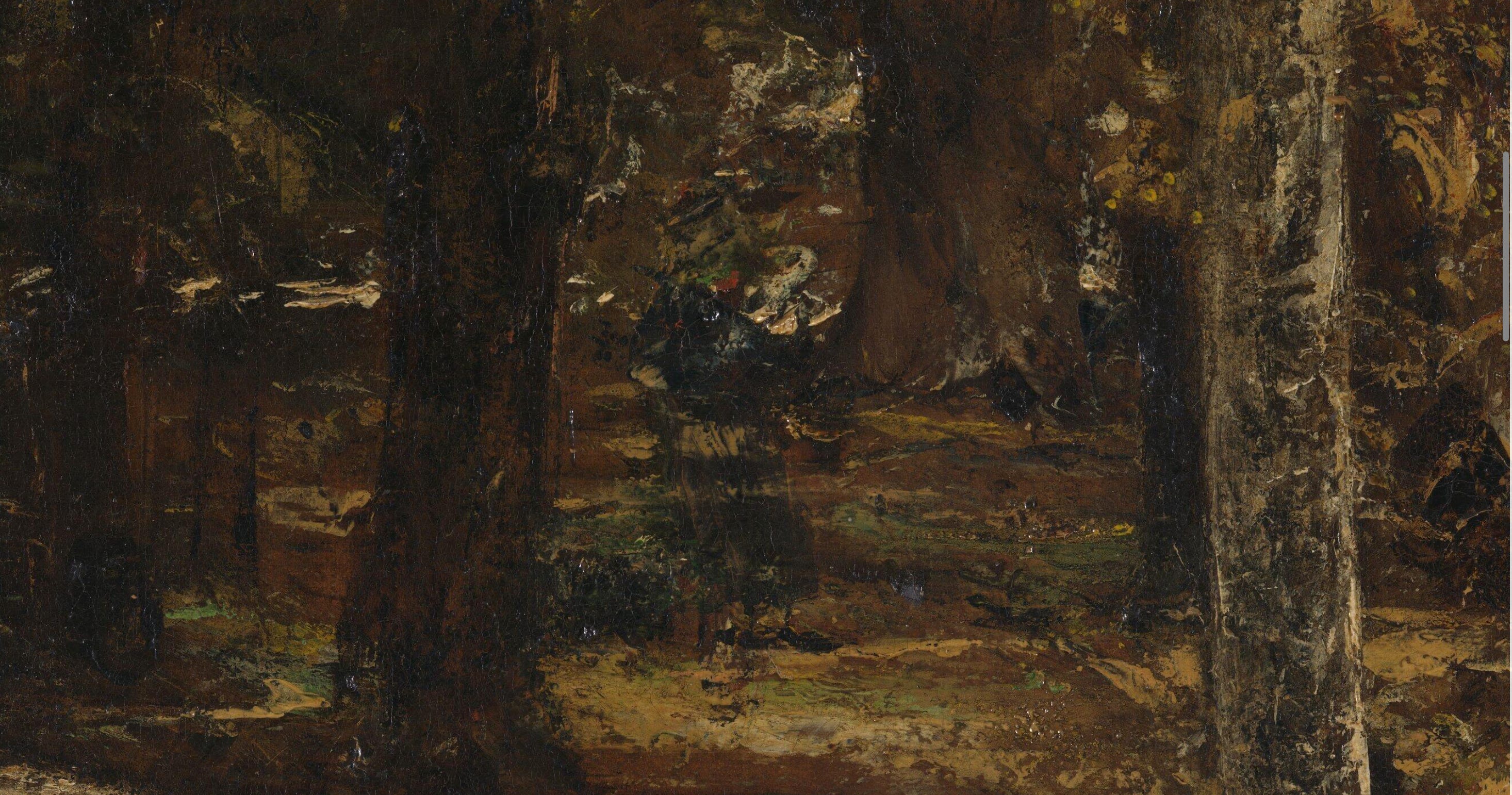
It might be a memory of Beaumont, waiting for Constable to finish his drawing — it might be the image of Reynolds himself, in Constable’s imagination. We will never know, and it doesn’t matter.
And then, the stag.
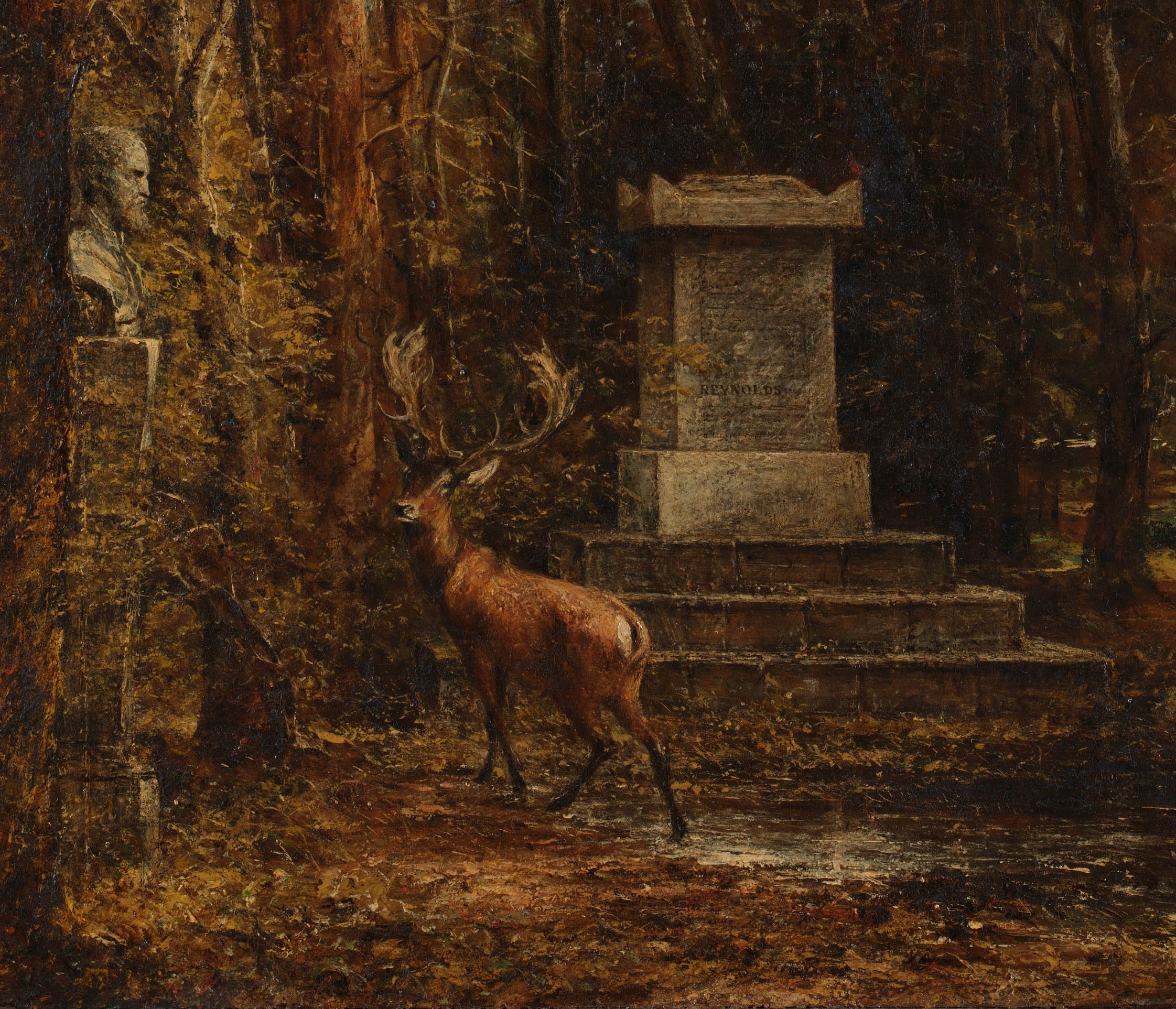
Remarkable that an artist who spent his life painting images of the human landscape, tamed and cultivated, where most animals were either livestock or sheepdogs, should at the end of his life confront the wilderness of life, and death, in the image of an animal.
The journey into the past is always a journey into the night, into what remains only as memory. Ineffable as a cloud, beyond language like the gaze of an animal, or the indescribable thereness of a tree.
Cenotaph to the Memory of Joshua Reynolds was Constable’s final exhibit at the Royal Academy.
Nobody bought it.
Thankyou so much for this piece, I've learned so much! Off to the N.Gallery now to look at the last picture.
thank you and especially for the little close-ups