

The Leap

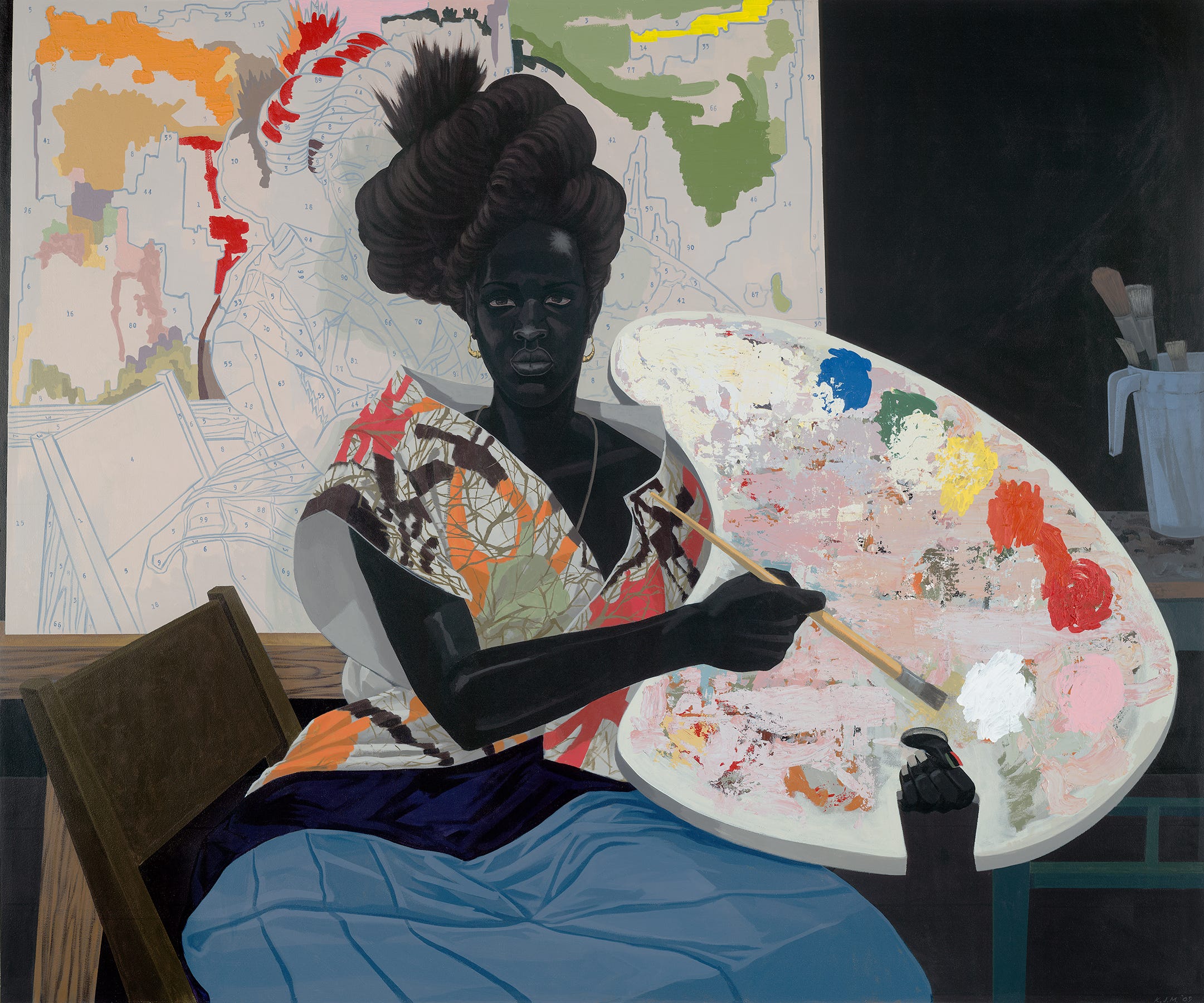
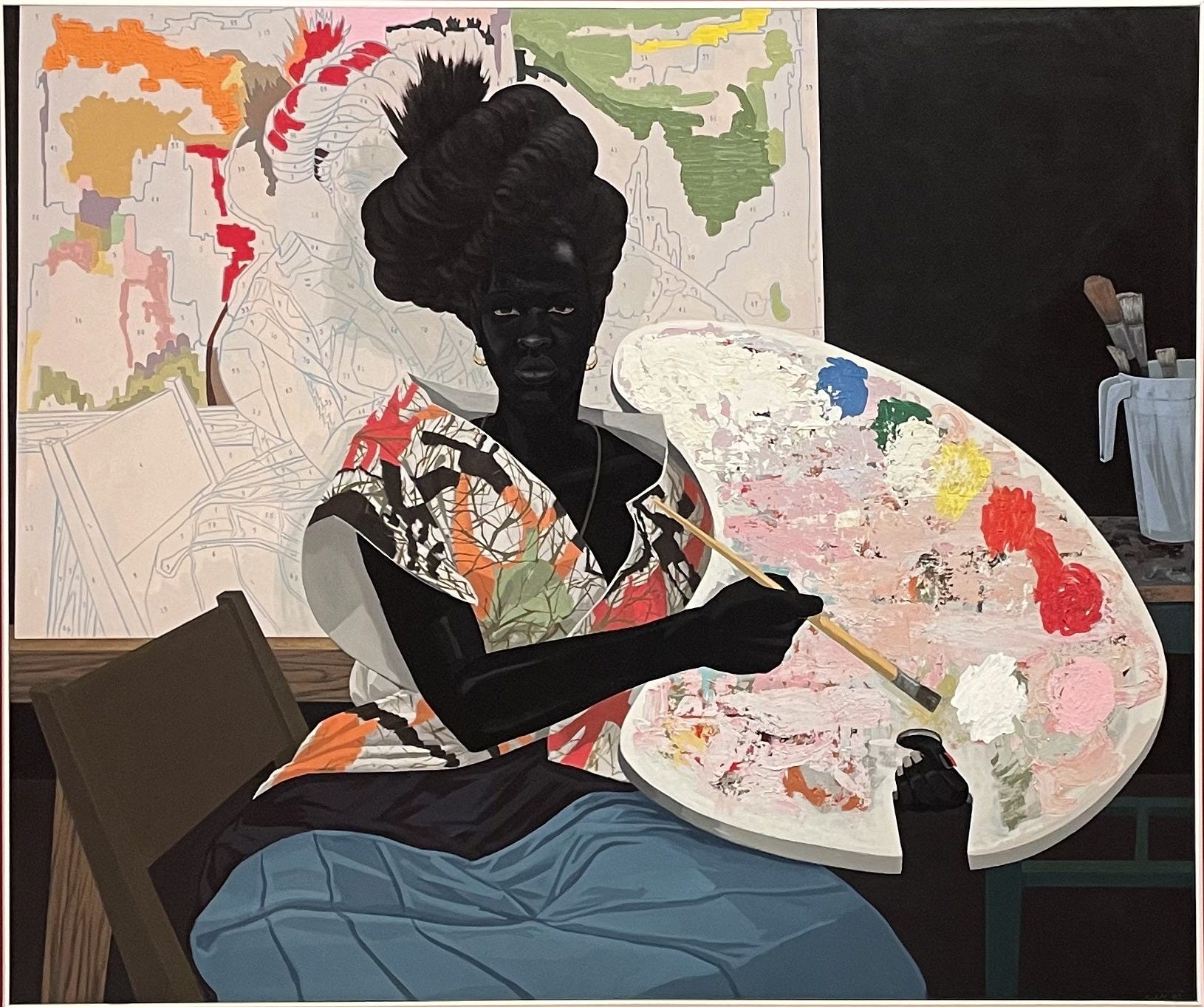
Here is Kerry James Marshall’s 2009 painting of an imaginary artist holding a gigantic slab-of-marble-like palette, Untitled:
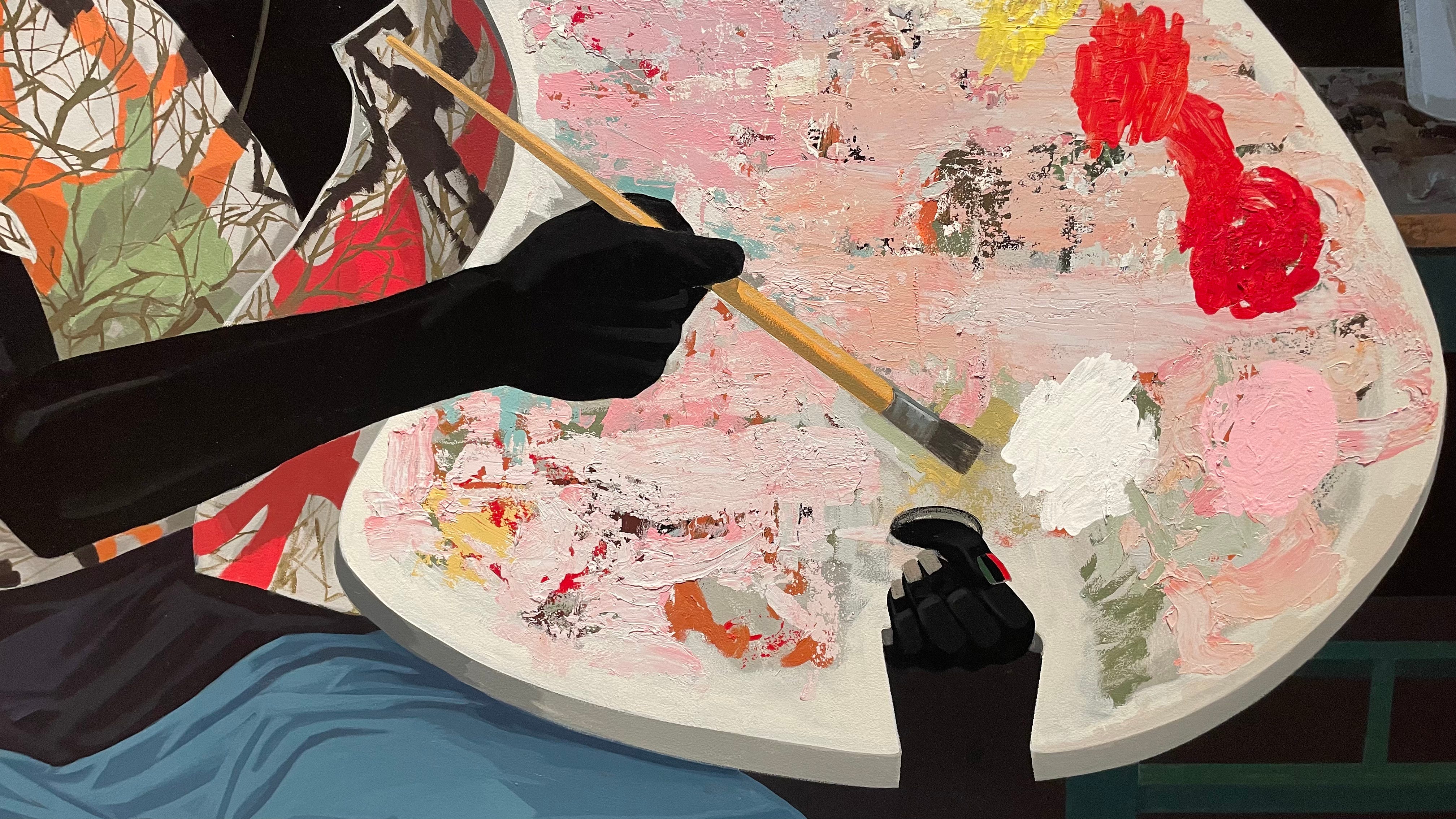
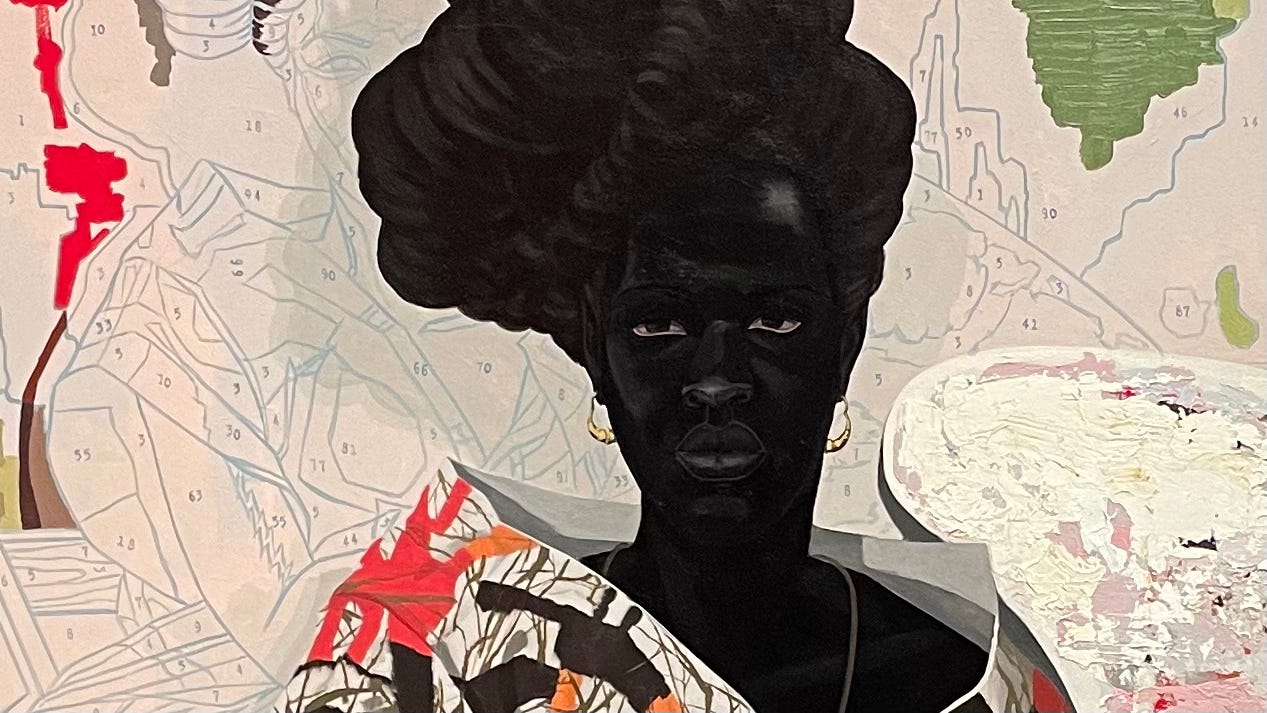
Here are some details.
And here is Untitled hanging in the exhibition Kerry James Marshall. The Histories at the Royal Academy of Arts, London, in January 2026.1
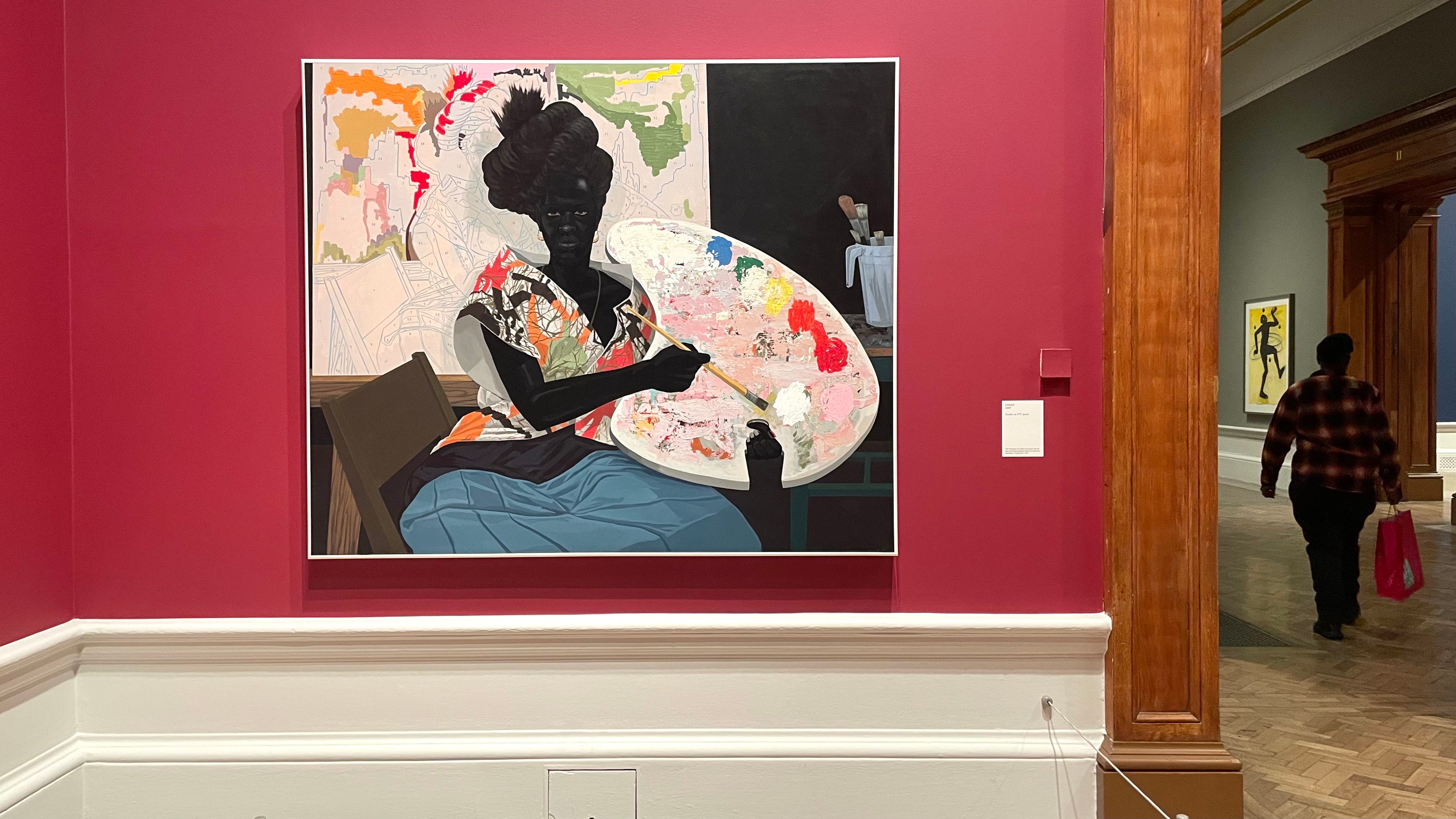
Untitled offers, or seems to offer, a clue to Marshall’s work. Something about the poetics of painting, the ungraspability of paintings about painting. A painter who makes paintings about painting, making a painting about a painter making a painting about painting.
What gets my interest in Untitled, is the sense of something being said about pigment, painting style, and what Marshall calls, with pithy brilliance, the ‘self-possession’ of his subjects; especially in the numerous portraits he makes of other artists, historical and imaginary.
As we read in the rather wordy exhibition catalogue, the great turning point in Marshall’s career was his decision to stop using white pigment to represent black skin.2
Neither is he interested in a naturalistic representation of black skin, but rather combining a range of black hues - Mars Black, Bone black, Carbon black, with other pigments, to create his own version of how black skin might be shown.
The imaginary artist portrayed in Untitled, whose skin and hair are painted Marshall-black (if that is what we can call it) holds a palette messy with light, white-mixed tones, as if to say: this is not how we do it.
It is an anti-lesson in painting. As is the ‘paint by numbers’ picture on the easel behind. This is not how painting is done if it wants to be self-possessed.
I love the way the thick palette is turned to greet us face on, and looks like an armoured shield. I love the wideness of the figure, and her utterly self-possessed appearance. I love the changes in register throughout the painting of different levels of ‘realism’, or ‘naturalism’, or whatever you want to call it, and the clever way the palette, unfinished picture, and clothes of the painter are balanced out with colour.
What matters is the feeling you get from such a painting, and how you might begin to process this into an idea that you can then apply to other paintings. There is no ‘theory’ that can help with this, despite what you might read in the wordy catalogue. You have to look and think and make your own mind up.
Painting is an inchoate art — something that is always coming into being, roughly, suggestively — and it is for us to take up the offer and make of it what we will.
Untitled makes me think how important in painting is the distinction between ‘local’ colour — patches of uniform colour representing objects, like the same yellow used for a field of corn, or the same tone used to represent a particular shade of skin – and what we might call ‘broken’ colour, where touches of pigment show the way reflected light makes any surface a motley appearance of different hues and tones, often very close.
Untitled to this end, also makes me think of an entirely different painting — a painting that at first sight might seem to come from a different world.
I have no idea how it would look if these two paintings were hung side by side — probably awful (views?) — but this doesn’t stop the two associating themselves in my mind.
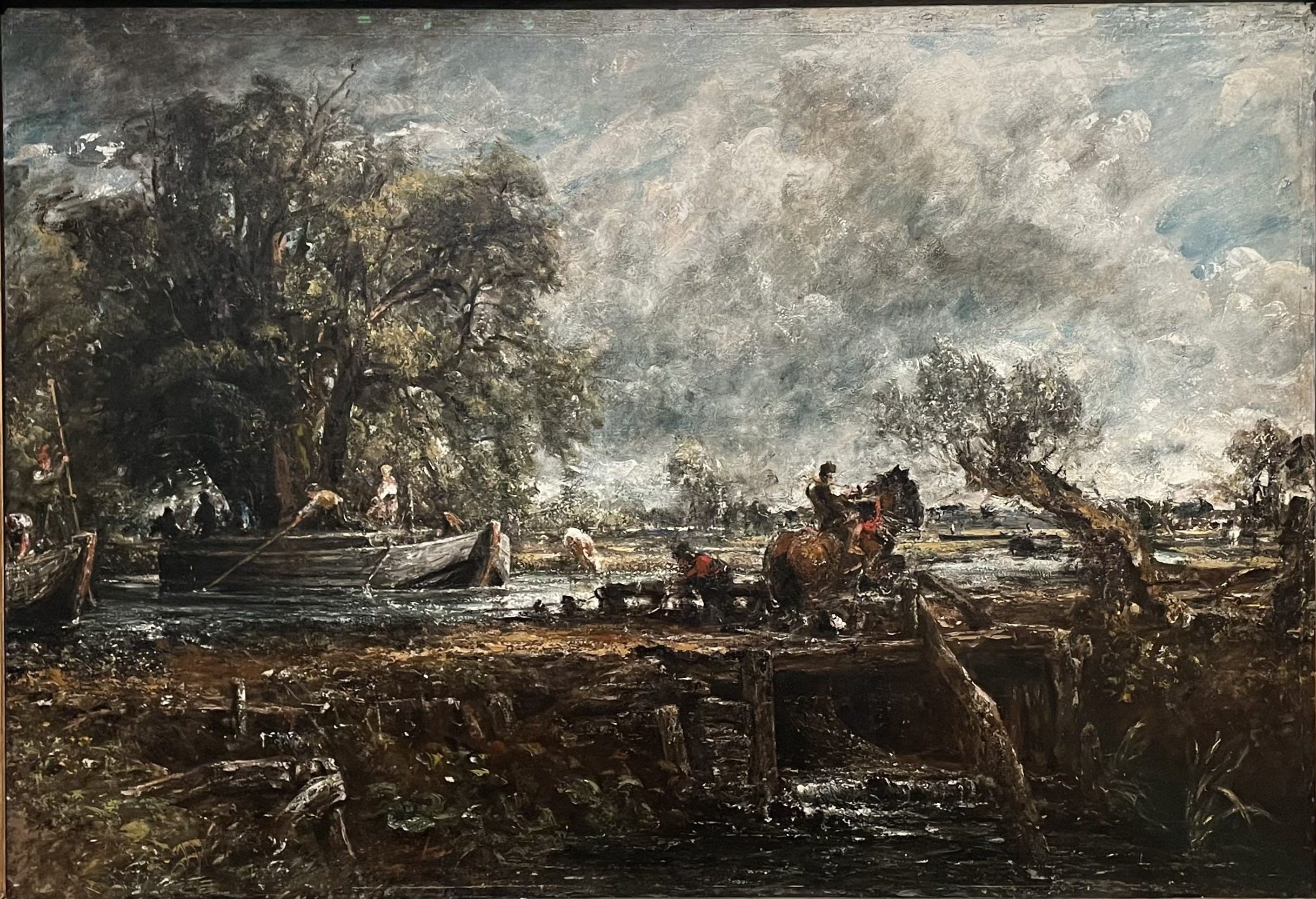
This is the painting — once called ‘the greatest painting ever painted’ by Lucian Freud (he didn’t always talk sense, but here he has a point). The one to the right of the doorway.
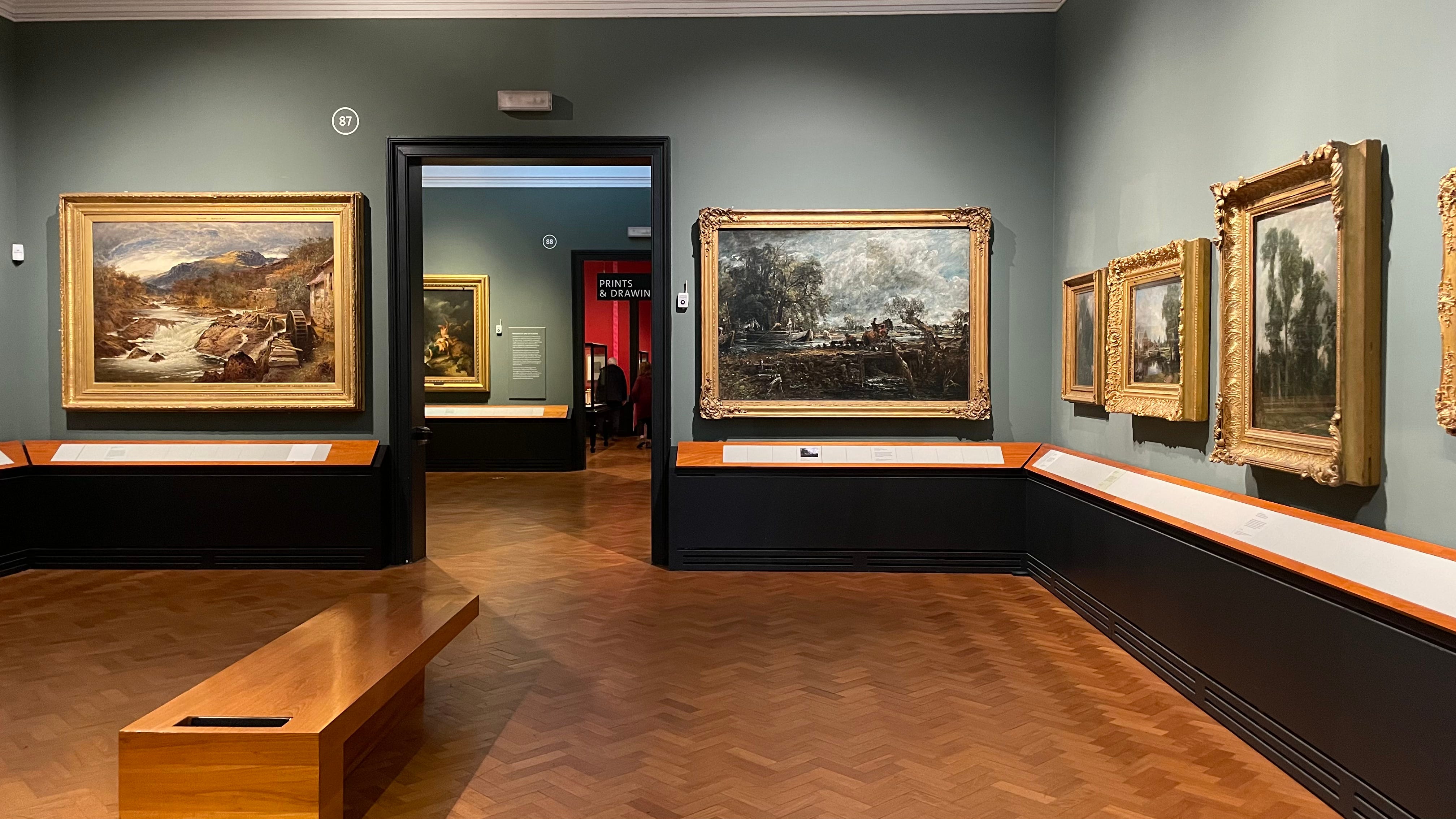
It is full-scale study for The Leaping Horse, painted in 1825 by John Constable.
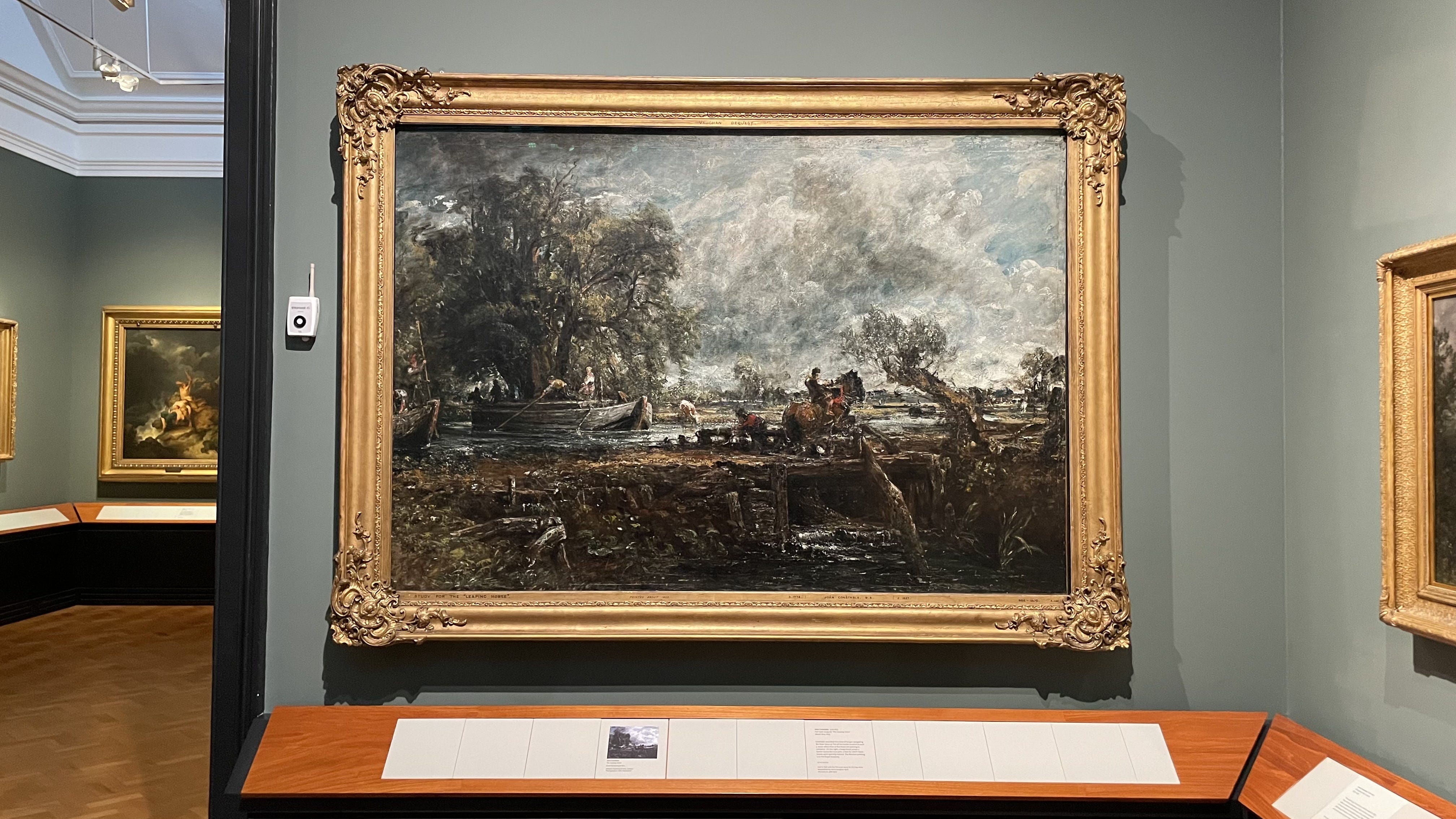
Let’s get closer.
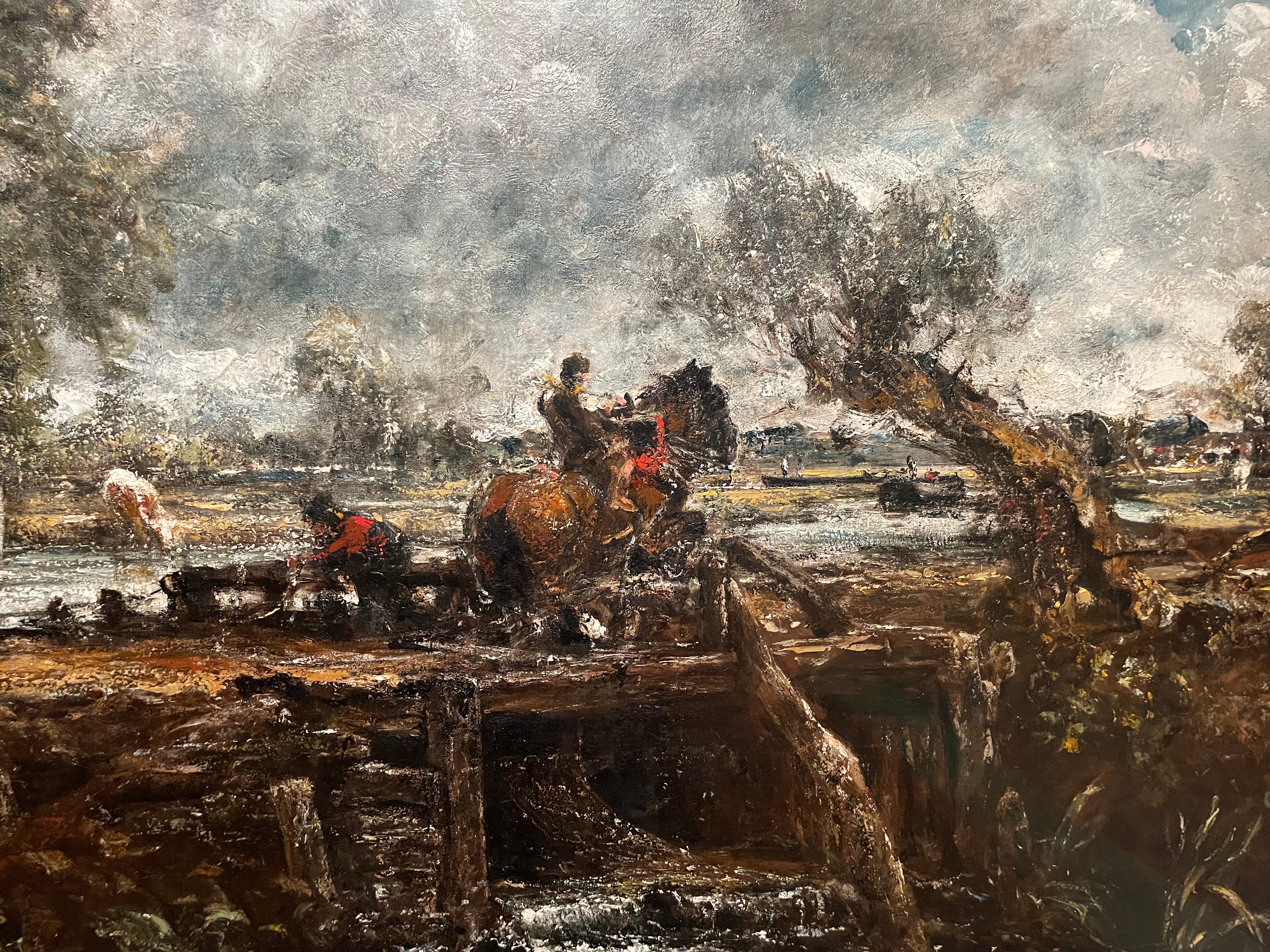
And closer still.
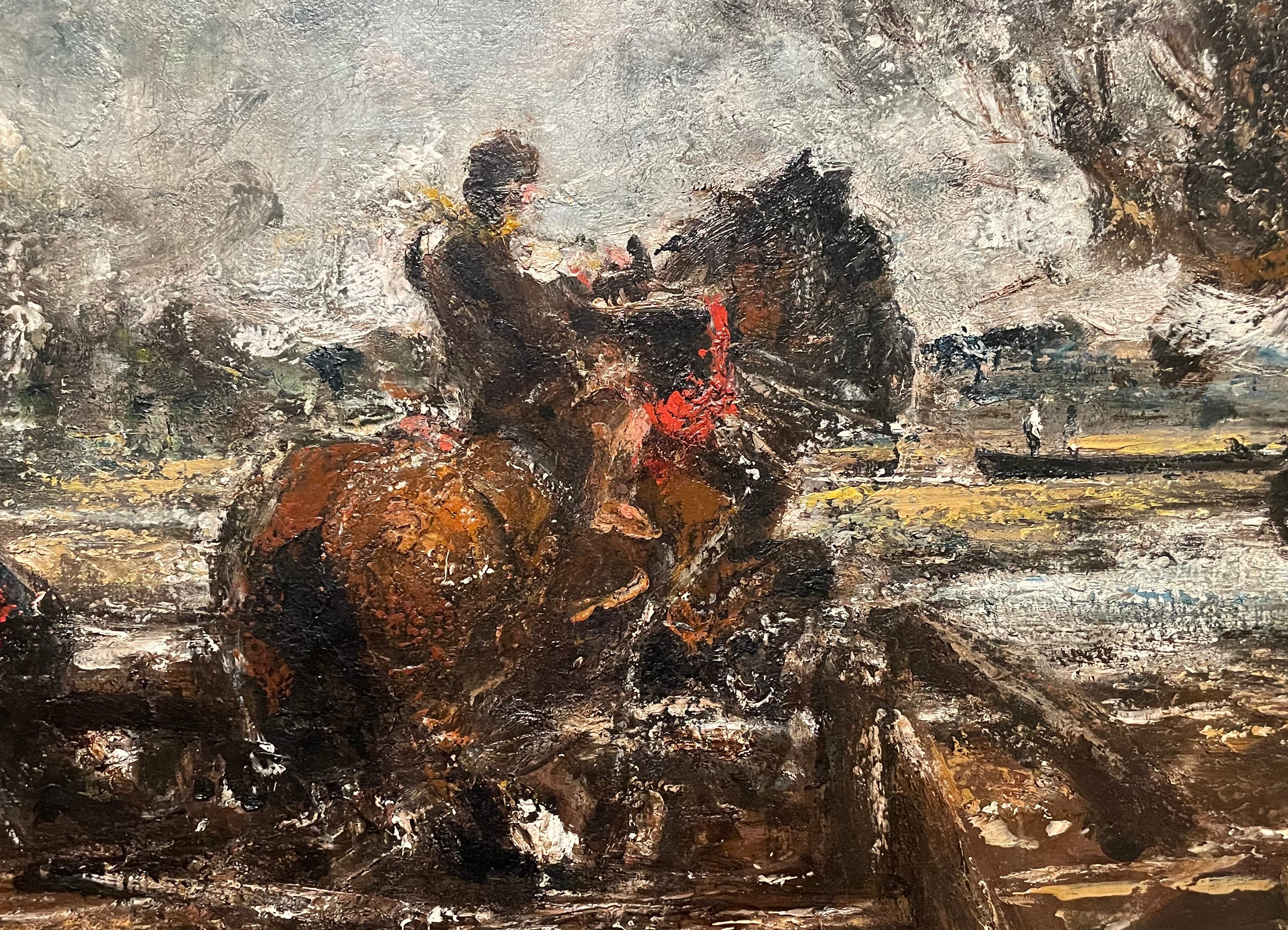
Look at the sheer mystery of that paint — like matter forming before your eyes. We might have set off the alarms, but it was worth it. Freud was right. (If you are not setting off alarms looking at painting, you are not looking closely enough).
There are two versions of The Leaping Horse — the full-sized (not ‘full-scale’, which doesn’t mean anything, sorry to be so pedantic) ‘study’, hanging here in the V&A, and the ‘finished’ painting, usually hanging a good twenty-minute walk up Cromwell Road and Piccadilly, in the Royal Academy of Arts, but for the moment hanging in this remarkable room at Tate Britain, in the exhibition Turner & Constable.
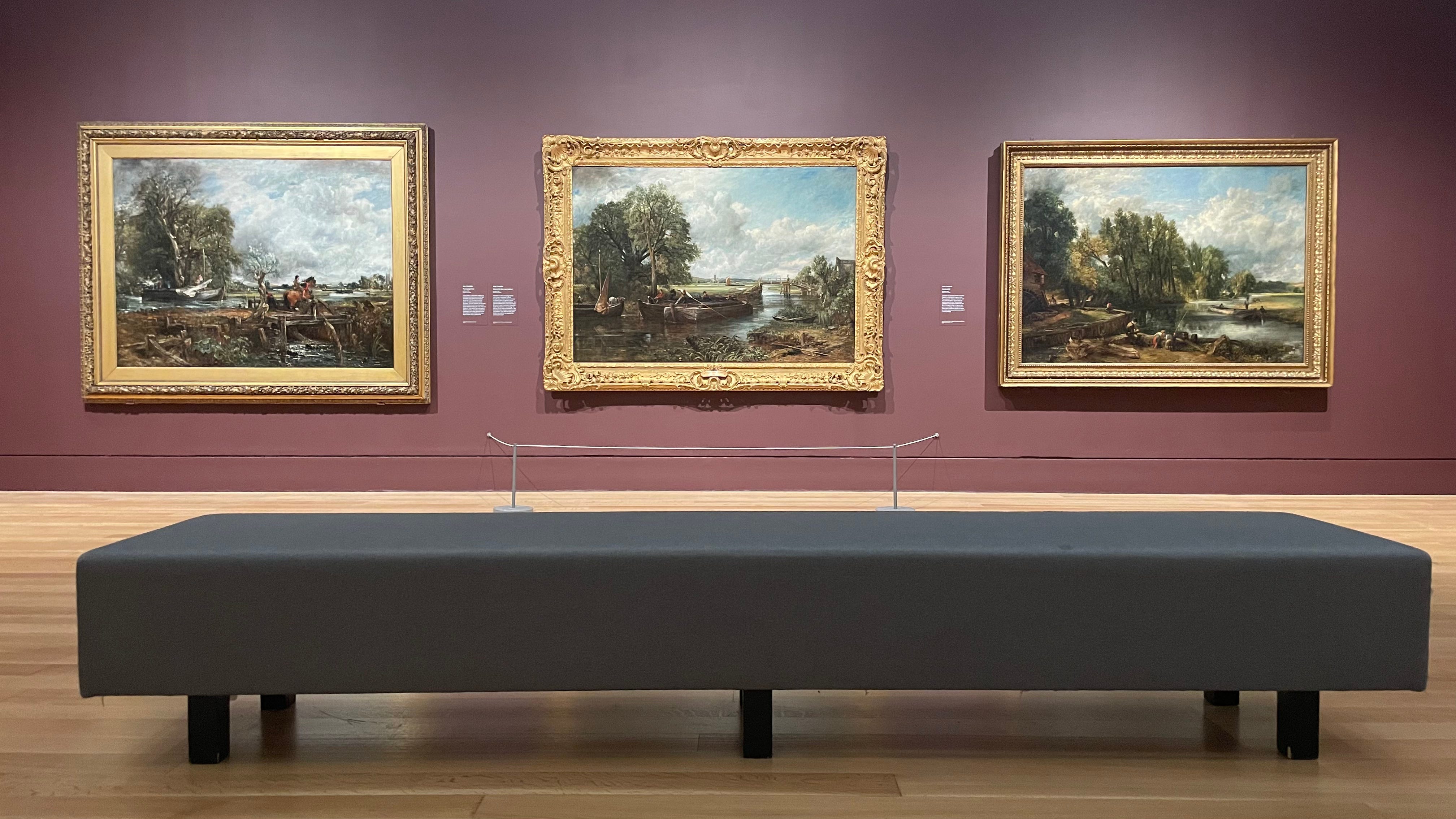
The one on the left.
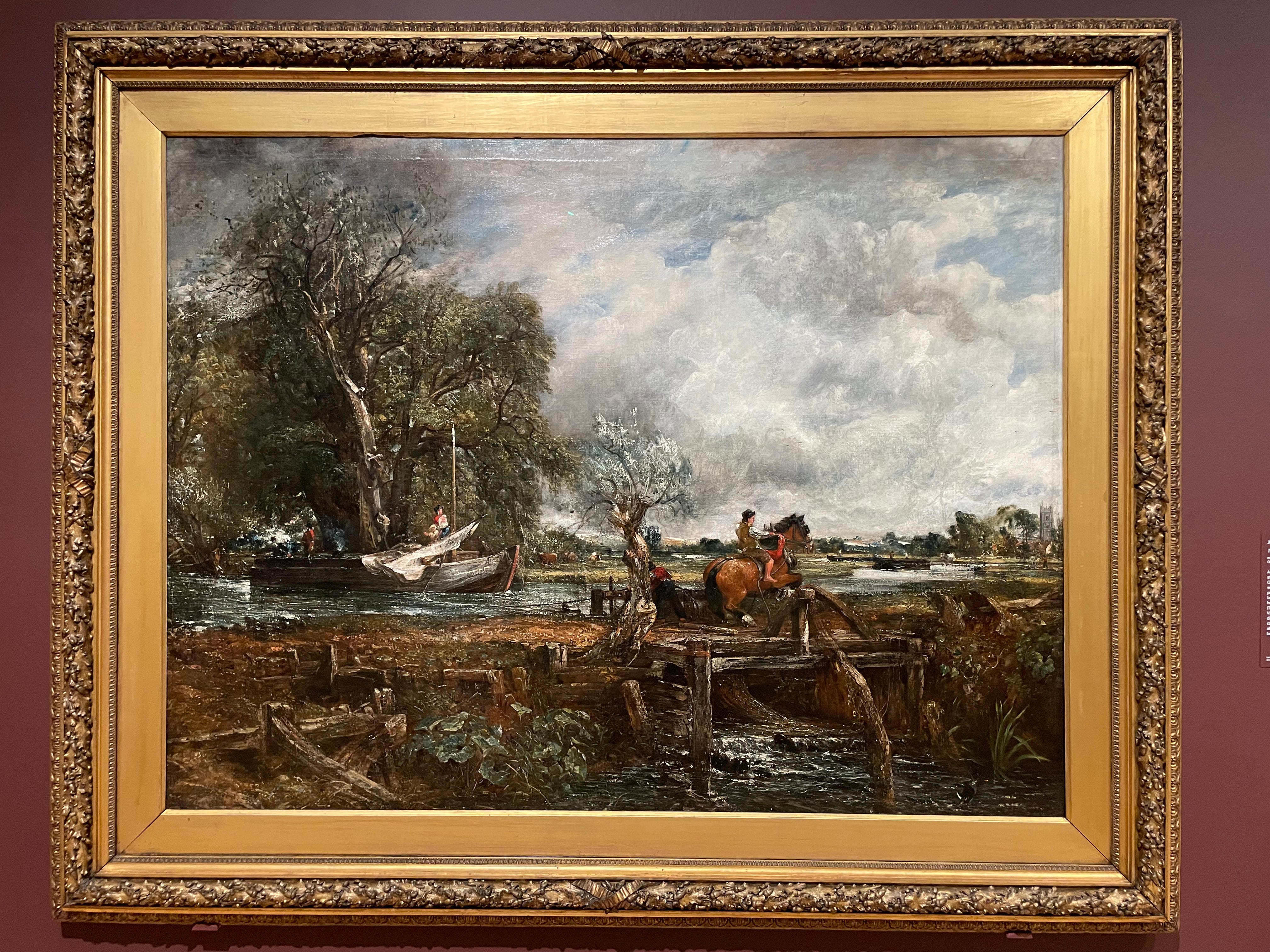
Constable often painted full-sized studies for his big academy pictures, but only with The Leaping Horse are the versions so close in appearance. Both are animated by Constable’s ability to give such, well, ‘self-possession’, to borrow the term from Marshall, to his pictures, thanks to the confidence and daring with which they are painted.
There is much more to say about The Leaping Horse: how Constable moves the willow stump, with its remarkable silver leaves (one of his favourite motifs) between versions from before to behind the horse, as if to indicate a brief passage of time; how Constable has twisted the topography to suit his picture making, the tower of Dedham church, painted in such strange detail, totally out of keeping with the rest of the picture… hang on, here it is…
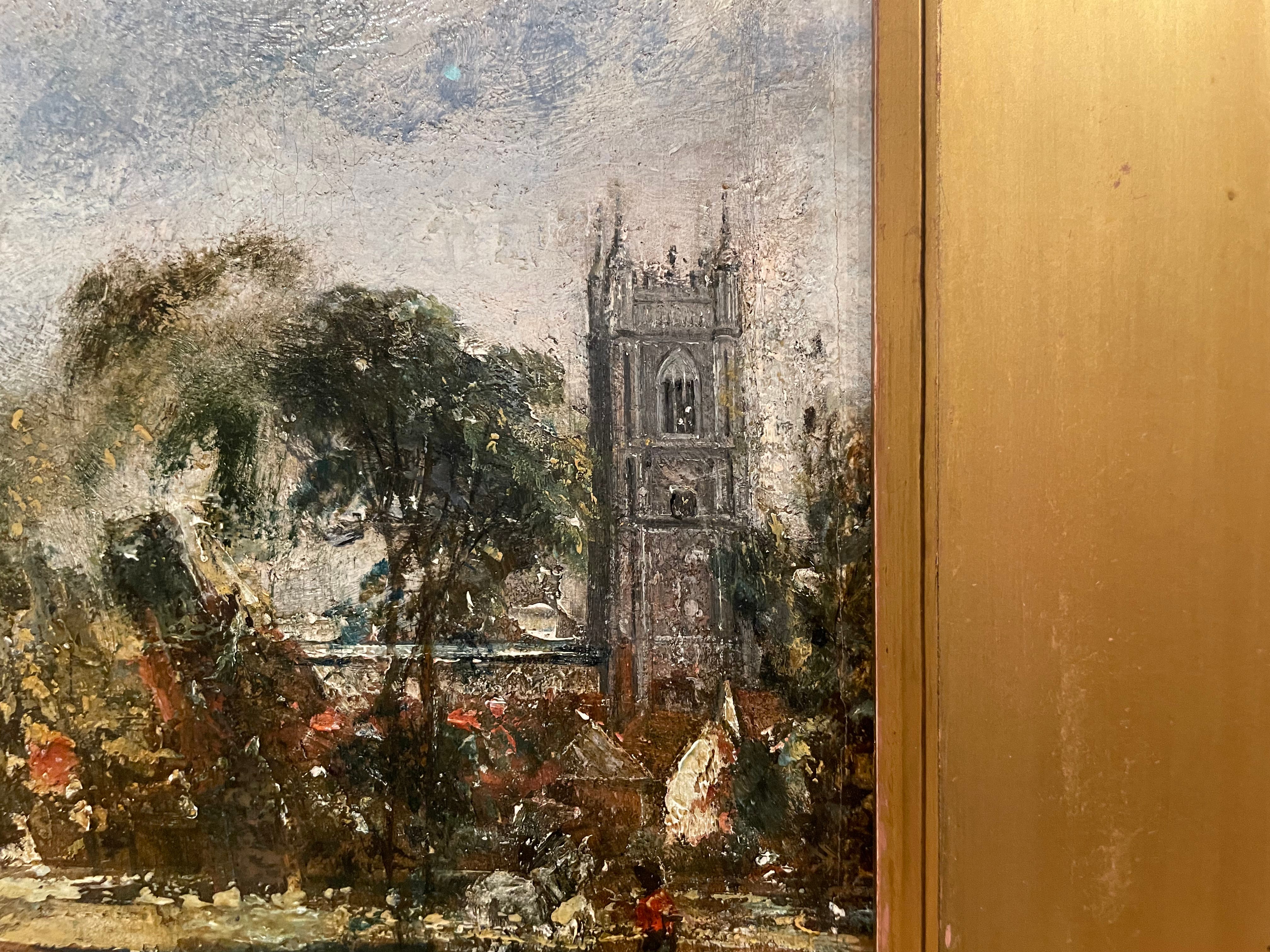
The famous church tower, which appears all over the place in Constable’s imaginings of Dedham Vale, is in reality behind the viewer, or painter, if you stand in the location on the river Stour where Constable imagined his horse in action.
Or the fact — which I am not sure has ever been pointed out — that horses don’t ‘leap’ but rather ‘jump’, and that the pose of this horse is clearly not a ‘jumping’ horse, but one that seems rather balanced on its back legs, in a dressage position known as ‘levade’.
But with Marshall in mind, what really matters is the way Constable paints with such ‘broken’ tones, the feature that Freud so admired. It is not simply a case of messiness with paint, but the studied avoidance of any sense in which colour is a ‘given’, a mental construct. The avoidance of accepting grass as simply green, corn as yellow, or the sky as blue. Or ‘black’ or ‘white’ skin as black or white.
This (in painting landscapes) was Constable’s great innovation, one that was recognised by Delacroix and many artists after him. Marshall makes it his own in a different way, without any claim to be a naturalistic painter. Broken colour, it might be called. The realisation that whenever we look at a coloured surface, it is full of different types of reflected tints and hues, ineffably complex.
Perhaps it is something Constable realised as a boy, staring for hours at the river Stour, fishing for pike or rudd, or waiting for his father Golding Constable to finish work at the water mill.3
Perhaps it is something that any painter worth their salts eventually realises: that the world cannot be reconciled with paint, and neither can paint be reconciled with the world. What James Joyce called the ‘ineluctable modality of the visible’ calls for a modality of painting that at least recognises how impossible it is to paint anything at all.
This is why painting calls for a leap into self-possession.
That is when it becomes great.
Curated by Mark Godfrey.
Madeleine Grynsztejn, ‘After Histry. The Labout and Legacy of Kerry James Marshall’, in: Mark Godfrey, ed., Kerry James Marshall. The Histories, exh.cat., London (Royal Academy of Arts), 2025-26, pp.210-218. The exhibition travels to Zürich (Kunsthaus) 27th February to the 16th August, and the Musée d’Art Modern de Paris, 18th September - 24th January 2027.
He was also given a spur in this direction by a friend of his youth, John Thomas Smith, who wrote a short book about painting rural scenery, derelict cottages in particular, with instructions of how to recognise the ‘broken’ colours of nature.
I know the Marshall painting well but never learned to appreciate Constable. With your essay and your placement of these paintings side by side, you've opened a visual portal.
The Kerry James Marshal was an inspirational exhibition for me, and this piece of writing , well… amazing! Thank you John-Paul. How painting can be magical.